
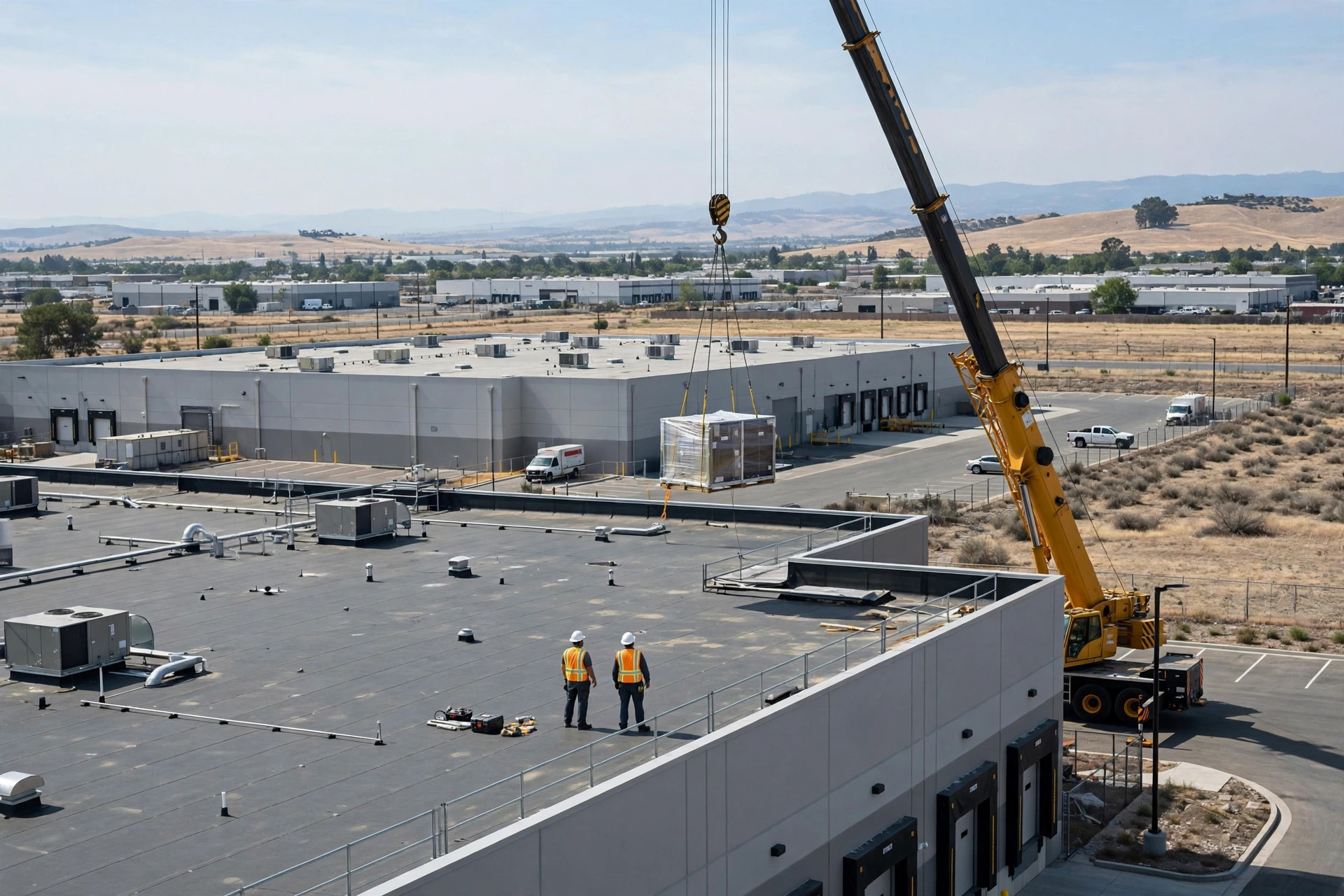
Commercial HVAC installers are the technicians and companies that put new heating, cooling, and ventilation equipment into commercial buildings. The install decides how the system performs for its entire life. A quality install delivers full efficiency, quiet operation, and years of reliable service. A poor install brings high bills, comfort complaints, and early breakdowns, no matter how good the equipment is.
Studies of HVAC performance have found that installation quality affects efficiency as much as the equipment rating. This guide gives eight tips for hiring commercial hvac installers, explains what a quality install includes, lists cost factors, and answers the questions owners ask most.
Tip 1: Verify Commercial Experience in Commercial HVAC Installers
Ask how much of the company’s work is commercial and what size systems they install. Commercial hvac installers should handle rooftop packaged units, split systems, boilers, and controls as routine work, not rare exceptions.
Ask about the largest recent installs and the equipment brands they know well. A firm that mostly installs home systems may not understand commercial load calculations, duct design, or building automation. Match the installer’s experience to the building. For help finding specialists, see how to find a commercial HVAC contractor.
Tip 2: Insist on Proper Load Calculations
Every quality install starts with a load calculation based on the building’s size, insulation, windows, occupancy, and equipment heat. This calculation decides the right system size. Never accept a bid that sizes the new system by copying the old one’s tonnage or by rule of thumb.
Oversized equipment short cycles, wastes energy, and leaves humidity problems. Undersized equipment runs nonstop and wears out early. Ask the bidder to show the calculation. Commercial hvac installers who do this step right earn trust from the start.
Tip 3: Check Licenses, Insurance, and Certifications
Verify the state HVAC license and any local permits for commercial work. Confirm general liability and workers’ compensation insurance. Check technician credentials including NATE certification and EPA Section 608 certification for refrigerant handling.
Manufacturer certifications matter for installs. Factory-trained commercial hvac installers can offer stronger warranties and know the equipment deeply. Ask which brands they are certified to install.
Tip 4: Demand Detailed Written Bids from Commercial HVAC Installers
A useful bid names the equipment by brand and model, lists efficiency ratings, describes ductwork and control work, includes crane and rigging where needed, and gives a clear schedule with payment milestones. Vague bids hide costs.
Get at least three detailed bids and compare them line by line. Make sure each covers the same scope. The bid from commercial hvac installers should also state who pulls permits and handles inspections.
Tip 5: Ask How They Handle Ductwork and Controls
New equipment on bad ducts performs badly. Ask whether the bid includes duct inspection, sealing, or modification. Ask about thermostat and control work: new thermostats, sensor placement, and integration with any building automation.
Controls setup is where many installs fall short. A system with default settings wastes energy for years. Good commercial hvac installers program schedules, set staging properly, and verify economizer operation before leaving.
Tip 6: Check the Install Day Plan
Ask how the crew manages install day. For rooftop units, crane scheduling drives the plan. Ask about the sequence: old equipment removal, curb work, new unit setting, connections, and startup testing.
Ask how they protect the building during the work and what happens if weather turns. A clear plan shows professionalism. For related replacement context, see commercial HVAC service.
Tip 7: Require Startup Testing and Commissioning
A quality install ends with thorough testing, not just flipping the switch. The crew should verify refrigerant charge, measure airflow, test all modes and stages, check safety controls, and confirm the system meets the design specs.
Ask for the startup report with the measured numbers. This document proves the install was done right and serves as the baseline for future service. Commercial hvac installers who commission properly stand behind their work with data.
Tip 8: Get Warranties and Training in Writing
Get the manufacturer warranty on equipment and the contractor warranty on workmanship in writing. Understand what voids each one. Register the manufacturer warranty promptly.
Also ask for owner training. Building staff should know how to operate thermostats, change filters, and spot trouble. A short training session prevents years of misuse. The US Department of Energy offers commercial HVAC guidance at energy.gov. ENERGY STAR lists certified efficient commercial equipment at energystar.gov.
What a Quality Install Includes: Checklist
Use this checklist to judge any install by commercial hvac installers:
- Load calculation shown and explained.
- Equipment sized to the real load, not guessed.
- Ductwork inspected and fixed as needed.
- Proper curb, mounting, and vibration isolation.
- Correct refrigerant charge verified by measurement.
- Airflow measured and balanced across zones.
- Controls programmed, not left on defaults.
- Safety devices tested and working.
- Startup report with numbers delivered.
- Owner training completed and documented.
If a bid skips several of these, keep shopping.
Commercial HVAC Installers Cost Factors
Use this checklist to understand pricing.
- System type and size. Larger tonnage and complex systems cost more.
- Number of units. Multiple units may earn better per-unit pricing.
- Ductwork work. New or heavily modified ducts add significant cost.
- Controls upgrades. Automation and new thermostats add upfront cost.
- Crane and rigging. Rooftop units need crane time.
- Electrical and gas work. Panel upgrades or new lines add cost.
- Permits and inspections. Required in most cities.
Red Flags Among Commercial HVAC Installers
Watch for these warnings when hiring commercial hvac installers:
- No load calculation offered, just a rule-of-thumb size.
- Bids that copy the old unit’s tonnage without question.
- No license number or proof of insurance.
- Quotes given without visiting the building.
- No mention of ductwork, controls, or startup testing.
- Pressure to sign immediately for a special price.
- Demands for most of the money before work starts.
- No written workmanship warranty.
Any of these is reason to keep looking. Quality commercial hvac installers welcome scrutiny because their process holds up to it. The install is too important to trust to a firm that cuts corners before the job even begins.
Commercial HVAC Installers FAQs
How long does a commercial HVAC install take?
A single rooftop unit swap often finishes in one to two days. Multi-unit projects with ductwork and controls take one to several weeks. Weather, crane scheduling, and permits affect timing.
Can the building stay open during the install?
Usually yes. Work happens in phases so only part of the system is down at a time. Temporary heating or cooling may bridge the gap. Good installers plan the sequence to minimize disruption.
Should I replace all units at once?
If several are near end of life, doing them together often costs less per unit with one round of disruption. If only one is failing, replace it now and plan the rest. Service records guide the timing.
What efficiency rating should I choose?
Balance upfront cost against long-term savings. Higher ratings cost more now and save more over time. Ask each bidder to show the payback math using your current energy bills.
How do I know the install was done right?
The startup report with measured numbers is the proof. Independent commissioning adds verification. Clean workmanship, proper documentation, and a thorough walkthrough are all good signs.
Next Steps for Building Owners
Hiring commercial hvac installers is about diligence, not luck. Insist on load calculations, verify credentials, demand detailed bids, and require startup testing with a written report. The install sets the system’s future, so give this decision the care it deserves.
Start the process before the old system fails. Emergency replacements force rushed choices and premium prices. With time on your side, you can compare three qualified firms, check their references, and watch how each one handles the bidding process. The firm that is thorough and transparent before the sale will be thorough and transparent on install day.
After the install, keep the startup report with the building records and set up the maintenance schedule right away. Most warranties require documented upkeep from day one. Train the staff, program the controls for the real occupancy schedule, and review energy bills after the first full season to confirm the savings.
A well-installed system is a quiet partner in the building’s success. It holds temperatures steady, keeps energy costs in check, and rarely demands attention. That is the reward for hiring right and managing the install with care. Take the time to do it properly, and the building will thank you for years. Good installations are remembered in comfort and savings, while bad ones are remembered in repair bills. Choose the path of diligence, and the new system will serve the building faithfully for a long time. That is the outcome every owner wants and every good installer delivers. Make it happen with careful hiring. Your building deserves nothing less. Start today.



