
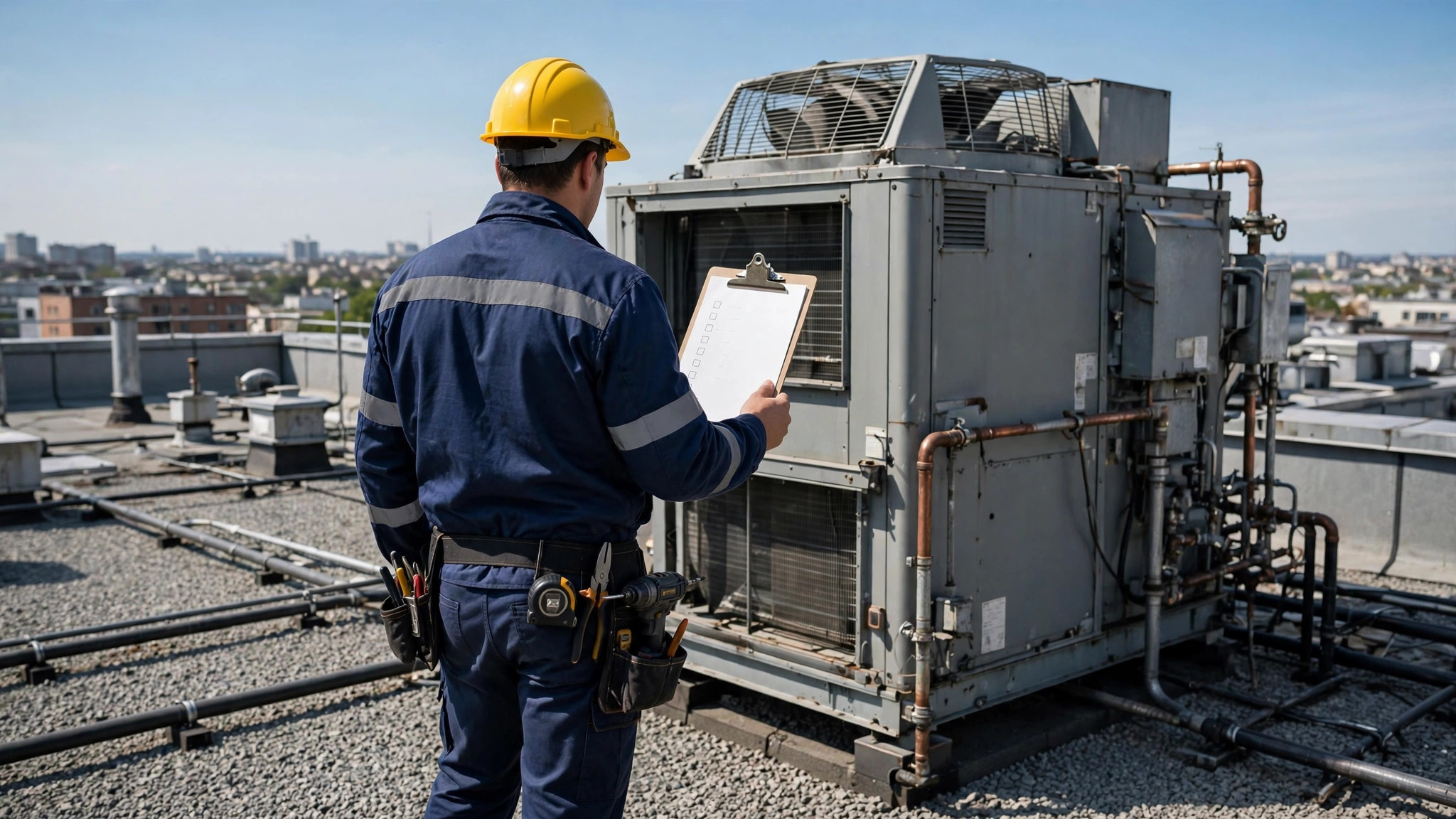
A maintenance contract is the best deal in commercial HVAC. For a fixed yearly price, a pro services your system on schedule, catches problems early, and answers fast when things break. Buildings with a commercial hvac maintenance contract have fewer breakdowns, lower bills, and longer equipment life. But not all contracts are equal. Some cover everything. Some cover almost nothing. The difference is in the clauses. This guide explains the six clauses to check before you sign any commercial hvac maintenance contract.
Clause 1: Scope of Work
This clause lists exactly what the contractor will do. It should name each piece of equipment covered, the number of visits per year, and the tasks per visit. Typical tasks include filter changes, coil cleaning, belt checks, refrigerant checks, control calibration, and drain cleaning. Vague language like “routine maintenance” is not enough. You need a task list.
Check what is not covered too. Most contracts exclude major repairs, refrigerant, and parts. That is normal. But the exclusions should be spelled out, not hidden. If the scope is vague, the contractor can do the minimum and call it done. A strong commercial hvac maintenance contract reads like a checklist, not a slogan.
Clause 2: Response Time and Priority Service
When the system fails, hours matter. This clause should state the guaranteed response time for emergency calls. Four hours is common for contract customers. It should also state priority scheduling: contract customers jump ahead of non-contract calls. Get the numbers in writing.
Ask what counts as an emergency and what the after-hours process is. Who do you call at midnight? How fast do they answer? Response terms are the heart of a commercial hvac maintenance contract. A commercial hvac maintenance contract without clear response terms is just a discount coupon. The real value is knowing help comes fast when you need it most.
Clause 3: Parts and Labor Discounts
Most contracts include discounts on repairs beyond the maintenance visits. Typical terms are 10 to 15 percent off parts and labor. Some include small parts like filters and belts in the contract price. Read this clause carefully. Know what is included, what is discounted, and what you pay full price for.
Watch for markups hidden behind discounts. A 15 percent discount off an inflated parts price is no deal. Ask how parts are priced. Some contractors use list price, some use their cost plus a markup. Transparent pricing beats a big discount percentage every time. Put the pricing method in the contract.
Clause 4: Term, Renewal, and Cancellation
Know how long the commercial hvac maintenance contract lasts. One year is standard. Some run multi-year with locked pricing. Check the renewal terms. Does it auto-renew? How much notice is needed to cancel? Thirty days written notice is common and fair.
Watch for long cancellation penalties. A contract that locks you in for years with heavy exit fees is a trap. Good contractors earn renewals with service, not with penalties. Also check price increase terms. Can the contractor raise the price mid-term? Annual increases should be capped and stated upfront.
Clause 5: Exclusions and Limits
Every contract excludes something. Common exclusions are major component replacement, refrigerant, acts of nature, and damage from neglect or misuse. Read the exclusion list fully. Surprises here cause the worst arguments.
Pay attention to visit limits. Some contracts cap the number of service calls per year. Extra calls cost extra. That is fine if the cap is generous and stated clearly. It is a problem if you discover the cap during a breakdown. Also check equipment age limits. Some contractors will not contract very old equipment, or they charge more for it. Know where you stand before you sign.
Clause 6: Performance Standards and Reporting
The best contracts include accountability. This clause should require written reports after each visit: what was checked, what was found, and what was done. You should get readings like refrigerant pressures and temperature splits, not just “system OK.” Reports prove the work happened and track the system’s health over time.
Some contracts include performance guarantees, like uptime targets or energy benchmarks. These are rare but valuable. At minimum, the contract should state what happens if the contractor misses visits or response times. A credit or a free visit is fair. A commercial hvac maintenance contract with no accountability is a leap of faith. Get the promises in writing.
For related guidance, see hvac service agreement for business and commercial hvac service.
What a Commercial HVAC Maintenance Contract Costs
Pricing is usually per unit per year or a flat fee for the building. Small rooftop units may cost a few hundred dollars each per year. Larger systems cost more. Complex buildings with chillers, controls, and many zones run higher. The price should reflect the equipment count, the visit frequency, and the tasks included.
Compare the contract cost against your current spending. Add up last year’s service calls, emergency premiums, and energy waste from poor maintenance. Most owners find the contract costs less than the unplanned spending it replaces. The U.S. Department of Energy notes that planned maintenance cuts both breakdowns and energy use.
Get quotes from at least three commercial firms. Compare scope, not just price. A cheap contract with vague tasks and no reporting is worse than no contract. It gives false confidence while the system decays. Pay for a real program with real tasks and real reports. A strong commercial hvac maintenance contract is worth every dollar.
Red Flags in a Commercial HVAC Maintenance Contract
Beware of contracts that promise everything in the sales pitch but list little in writing. If it is not in the contract, it does not exist. Beware of very long terms with stiff cancellation fees. One year with easy renewal is the fair standard.
Beware of contractors who will not show you a sample report. Reports are the proof of work. No sample means no standards. Beware of prices far below the market. Cut-rate contracts mean rushed visits and skipped tasks. Your system pays the difference in breakdowns.
Check the contractor’s qualifications. Commercial experience, proper licensing, and insurance are musts. Techs work on roofs and around high voltage. The company should follow OSHA safety rules. Ask for proof of insurance. A cheap uninsured contractor is a liability, not a bargain.
Getting the Most From Your Contract
Sign the contract, then use it. Make sure your staff knows the contractor’s number and the response process. Report problems early. Small issues caught between visits stay small. Keep the visit reports in a file. Review them yearly with the contractor. Trends in the readings predict failures before they happen.
Hold the contractor to the terms. If visits are missed or reports are thin, raise it right away. Good contractors welcome the feedback. Also review the equipment list yearly. New units get added, old ones get replaced. Keep the contract matched to what is actually on the roof. An accurate commercial hvac maintenance contract protects everything you own.
Renewing or Switching Contractors
Review the contract before each renewal. Did the contractor hit response times? Were reports thorough? Did breakdowns drop? If yes, renew with confidence. If not, shop around. Get competing quotes and use them to negotiate better terms or to switch.
Switching is straightforward. Give proper notice per the cancellation clause. Have the new contractor survey the equipment before the old contract ends. Ask the outgoing firm for copies of all service history. Good records transfer smoothly. Do not stay with a weak contractor out of habit. Your commercial hvac maintenance contract should earn its renewal every year.
FAQ
Is a commercial hvac maintenance contract worth it?
For most buildings, yes. Contract customers get fewer breakdowns, lower energy bills, priority service, and longer equipment life. Add up your unplanned repair spending from last year. The contract usually costs less and delivers more. Most owners renew their commercial hvac maintenance contract every year.
How many visits per year should the contract include?
Two is the minimum for most commercial systems: before cooling season and before heating season. Heavy-use buildings and harsh environments need quarterly visits. Match the frequency to your equipment and operating hours.
Can I cancel a maintenance contract?
Most contracts allow cancellation with written notice, often 30 days. Check your specific terms before signing. Avoid contracts with heavy cancellation penalties or multi-year lock-ins without clear exit terms.
Does the contract cover emergency repairs?
It covers priority response and usually discounted rates. The repair itself is typically billed separately unless your contract includes parts and labor coverage. Read the scope clause to know exactly what is included.
What if I have multiple buildings?
Many contractors offer portfolio pricing for multiple sites. One commercial hvac maintenance contract can cover all locations with standardized tasks and reporting. Ask for a multi-site quote. The per-building cost often drops.
Next Steps
Get quotes from three commercial HVAC firms this month. Compare the six clauses above line by line: scope, response time, discounts, term, exclusions, and reporting. Pick the contractor with the clearest scope and the strongest accountability, not just the lowest price. Sign a one-year commercial hvac maintenance contract, file the reports, and review the results yearly. Steady maintenance is the cheapest way to run a commercial HVAC system.



