
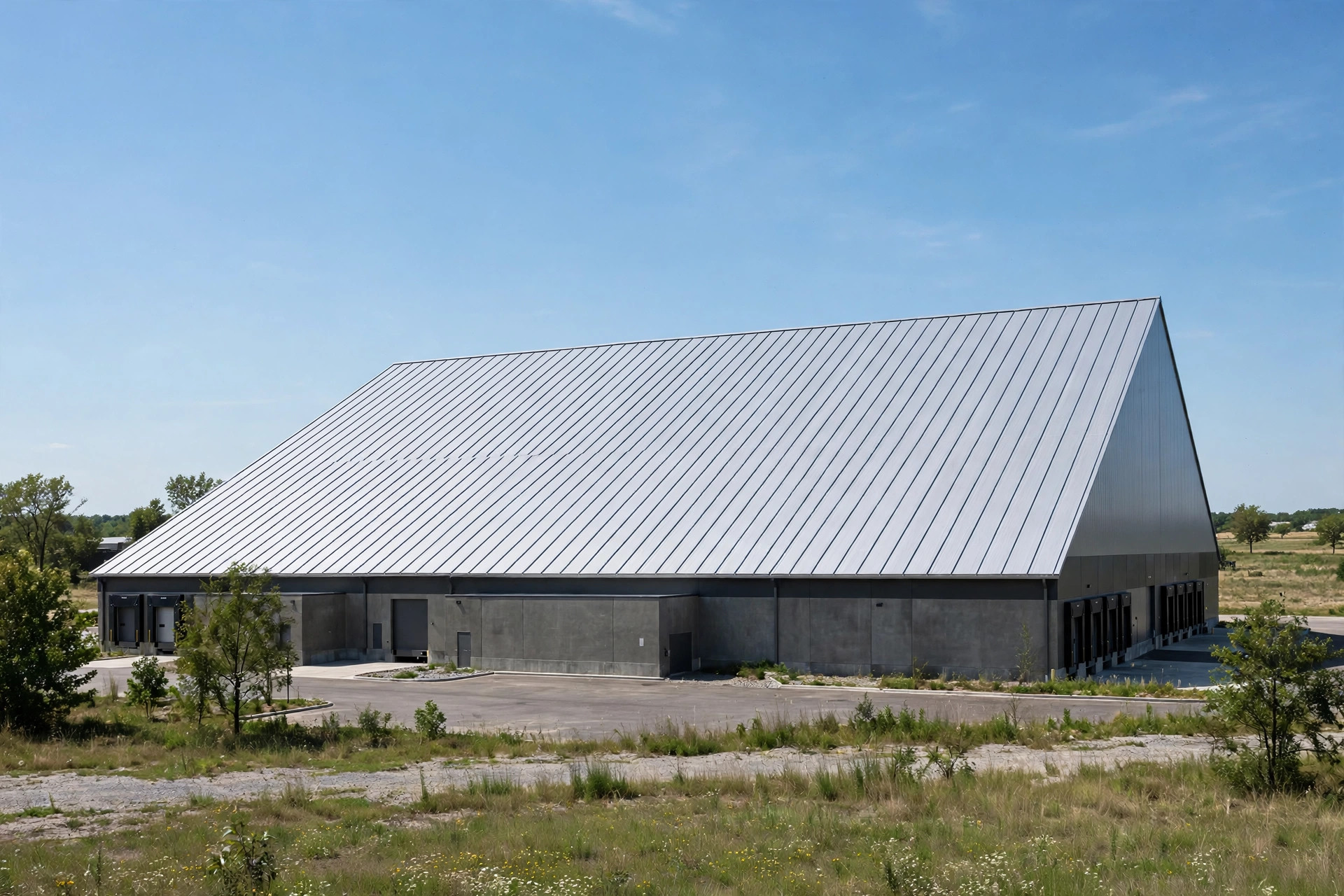
A commercial metal roof is a roofing system made from steel, aluminum, or other metal panels, used on warehouses, offices, retail buildings, and industrial sites. Metal roofs are known for long life, strong weather resistance, and low upkeep. For building owners across the United States, a commercial metal roof is often the premium option: higher upfront cost, but decades of service with fewer headaches.
Metal has roofed American commercial buildings for over a century. Modern systems are far better than the old corrugated sheets. Standing-seam panels, concealed fasteners, and reflective coatings give today’s commercial metal roof clean looks and serious performance. This guide covers why owners choose metal, what it costs, and how to keep it in top shape.
9 Reasons Owners Pick a commercial metal roof
One, long life. A well-installed commercial metal roof can last forty years or more, far beyond most membrane systems. For owners who plan to hold the building long term, this is the top reason to choose metal.
Two, weather resistance. Metal stands up to high wind, hail, and heavy snow. Panels interlock and fasten to the structure, so blow-offs are rare. In storm regions, this resilience cuts insurance claims and downtime.
Three, low maintenance. Metal needs less routine care than membranes. There are no seams to reweld and no coatings to reapply on a schedule. Twice-yearly checks and prompt attention to fasteners keep it sound.
Four, fire resistance. Metal does not burn. In wildfire-prone areas and for buildings with strict fire codes, a commercial metal roof earns top fire ratings. Insurers notice this too.
Five, energy performance. Light-colored metal with reflective coatings bounces solar heat away. This cuts summer cooling loads. The Department of Energy recognizes cool roofing as a real energy saver for commercial buildings.
Six, snow shedding. Metal’s smooth surface sheds snow fast, which cuts structural load in northern climates. Snow guards can be added where falling snow would threaten people or property below.
Seven, recyclability. Steel and aluminum roofs are highly recyclable at end of life. For owners with sustainability goals, metal is one of the greenest roofing choices.
Eight, light weight. Metal panels weigh less than built-up roofing or concrete tile. On some structures, this avoids costly structural upgrades during replacement.
Nine, appearance. Modern metal panels look sharp. Standing-seam profiles give warehouses and offices a clean, current look that can lift curb appeal and property value.
Types of commercial metal roof Systems
Standing-seam is the premium choice. Panels run from ridge to eave with raised seams, and fasteners hide under the seams. No exposed screws means no screw holes to leak. Standing-seam costs the most but performs the best and looks the cleanest.
Exposed-fastener panels, like R-panel and corrugated, cost less. Screws go through the panel face with rubber washers. They work well on warehouses and agricultural buildings. The washers age over time, so plan for fastener maintenance and eventual replacement.
Metal shingles and tiles mimic other materials at a smaller scale. They suit buildings that want a traditional look with metal’s life span. They cost more than large panels and take longer to install.
Retrofit systems put new metal panels over an old flat roof using a framing system that adds slope. This is popular for fixing ponding problems on old low-slope roofs without a tear-off. The added slope moves water off fast.
Coatings can extend the life of an aging commercial metal roof. Elastomeric coatings seal minor rust and seams and add reflectivity. Coating is far cheaper than replacement when the panels are still sound.
Cost Factors for a commercial metal roof
Material type sets the base. Steel is the most common and the most affordable. Aluminum costs more but resists corrosion better, which matters near salt water. Copper and zinc are premium choices with very long lives and high prices.
Panel profile matters. Standing-seam costs more than exposed-fastener panels because the material and labor are greater. But standing-seam’s hidden fasteners mean fewer leak points and less maintenance over the decades.
Roof size and complexity drive labor. Large simple rectangles install fast. Roofs with many penetrations, odd angles, and multiple levels need more flashing work and take longer. Tear-off of the old roof adds labor and disposal cost.
Insulation and underlayment add to the total. Many owners upgrade insulation during replacement to cut energy bills. A quality underlayment under the panels adds moisture protection. These upgrades pay back over the roof’s long life.
Region affects price. Labor rates vary across the country, and material must be shipped to the site. Remote locations pay more. Scheduling in the dry season avoids weather delays.
For repair cost context, see commercial metal roof repair and metal roof leak repair. For upkeep routines, read standing seam metal roof maintenance.
Commercial metal roof: Installation Basics
A good install starts with the deck. The deck must be sound, dry, and able to hold the panels and fasteners. Damaged sections get replaced. Underlayment goes over the deck as a secondary water barrier.
Panels are cut and formed to length, often on site with a roll former for long runs. Fewer end laps mean fewer leak points. Panels fasten to the structure per the maker’s engineering for the local wind zone. In high-wind areas, clip spacing tightens.
Flashing details make or break the job. Pipes, curbs, walls, and edges all get metal flashing sealed to the panels. Good flashing work is skilled and takes time. Rushed flashing is the top cause of leaks in new metal roofs.
Quality control matters. The foreman should check fastener lines, seam engagement, and flashing seals across the whole roof. A final walk with the owner before payment catches anything missed. Get warranty paperwork in writing.
Ongoing Maintenance
Inspect twice a year, spring and fall, plus after major storms. Walk the roof and look for loose fasteners, damaged panels, failed sealant, and debris in valleys and gutters. Check flashings around every penetration.
Tighten or replace loose fasteners. On exposed-fastener roofs, washers dry out and screws back out over time. A maintenance crew can refasten and reseal as needed. Catching this early prevents leaks and panel movement.
Treat rust spots fast. Small rust areas get cleaned, primed, and painted with matching coating. Left alone, rust eats through panels. Coastal buildings need more frequent checks since salt speeds corrosion.
Keep the roof clean. Leaves and debris in valleys hold moisture against the metal. Overhanging branches should be trimmed so they do not scuff the coating. Never let dissimilar metals touch the panels, since that causes galvanic corrosion.
Recoat on schedule if your system uses coatings. Elastomeric coatings wear over time. A recoat every decade or so keeps reflectivity and waterproofing strong. This is far cheaper than panel replacement.
Common commercial metal roof Problems
Fastener back-out is the most common issue on exposed-fastener roofs. Thermal cycling works screws loose over years. Regular refastening during maintenance visits handles it. When washers fail across large areas, a full refasten with new screws is the fix.
Sealant failure shows up at flashings and penetrations. Sun and movement break sealant down. Resealing is a routine maintenance item. Use sealants made for metal roofing, not generic caulk.
Panel damage from foot traffic happens when workers dent panels or scuff coatings. Set walk paths for service techs and use walk pads in high-traffic areas. Dented panels can often be repaired; badly damaged ones get replaced.
Oil canning is a cosmetic waviness in flat panel areas. It does not hurt performance but bothers some owners. Thicker panels, proper installation, and some profiles reduce it. Discuss it with your contractor before install if looks matter.
Leaks at penetrations usually trace to flashing, not the panels. A pipe boot that was fine for fifteen years can crack. Maintenance inspections catch these before water gets in.
Is a commercial metal roof Right for Your Building?
Consider metal when you plan to own the building for decades. The long life pays off over time. It also fits buildings in harsh weather zones, fire-prone areas, and snowy regions where shedding matters.
Consider other options when the budget is tight and the hold period is short. A quality single-ply membrane costs less up front and serves well for twenty years. If you plan to sell in five years, the metal premium may not pay back.
Check the structure. Metal is light, but a retrofit framing system adds weight. An engineer should confirm the structure can carry the new system, especially on older buildings.
Think about noise. Rain on metal is louder than on membranes. Good insulation and ceiling systems handle this in most buildings, but open-warehouse spaces with metal roofs are noticeably louder in storms.
For deeper background on metal systems, the National Roofing Contractors Association publishes technical guidance at https://www.nrca.net/, and the Department of Energy covers reflective metal roofing at https://www.energy.gov/. Bring your maintenance reports to insurance renewals, since a documented metal roof in good condition can support better terms.
How long does a commercial metal roof last?
A well-installed standing-seam commercial metal roof often lasts forty years or more. Exposed-fastener systems last less, typically twenty to thirty years, depending on maintenance and climate.
Is a commercial metal roof noisy in rain?
It can be louder than membrane roofs, especially in open spaces without ceilings. Insulation and interior ceilings cut the noise a lot. Most office and retail buildings notice little difference.
Does a commercial metal roof attract lightning?
No. Metal does not attract lightning. It is noncombustible, so if lightning does strike, a metal roof will not catch fire. Proper grounding follows standard building practice.
Can solar panels go on a commercial metal roof?
Yes. Standing-seam roofs are excellent for solar because clamps grip the seams with no penetrations. Exposed-fastener roofs need sealed mounts. Coordinate the solar and roofing contractors.
How much does a commercial metal roof cost?
Costs vary by panel type, building size, and region. Standing-seam typically runs higher per square foot than single-ply membranes. Get three detailed bids to see real numbers for your building.
Next Steps
If your building is a long-term hold in a tough climate, get three bids for a commercial metal roof from contractors who specialize in metal. Compare panel profiles, metal types, fastening systems, and warranties. Ask for addresses of roofs they installed years ago and go look. A metal roof is a decades-long decision, so choose the crew as carefully as the panels.



