
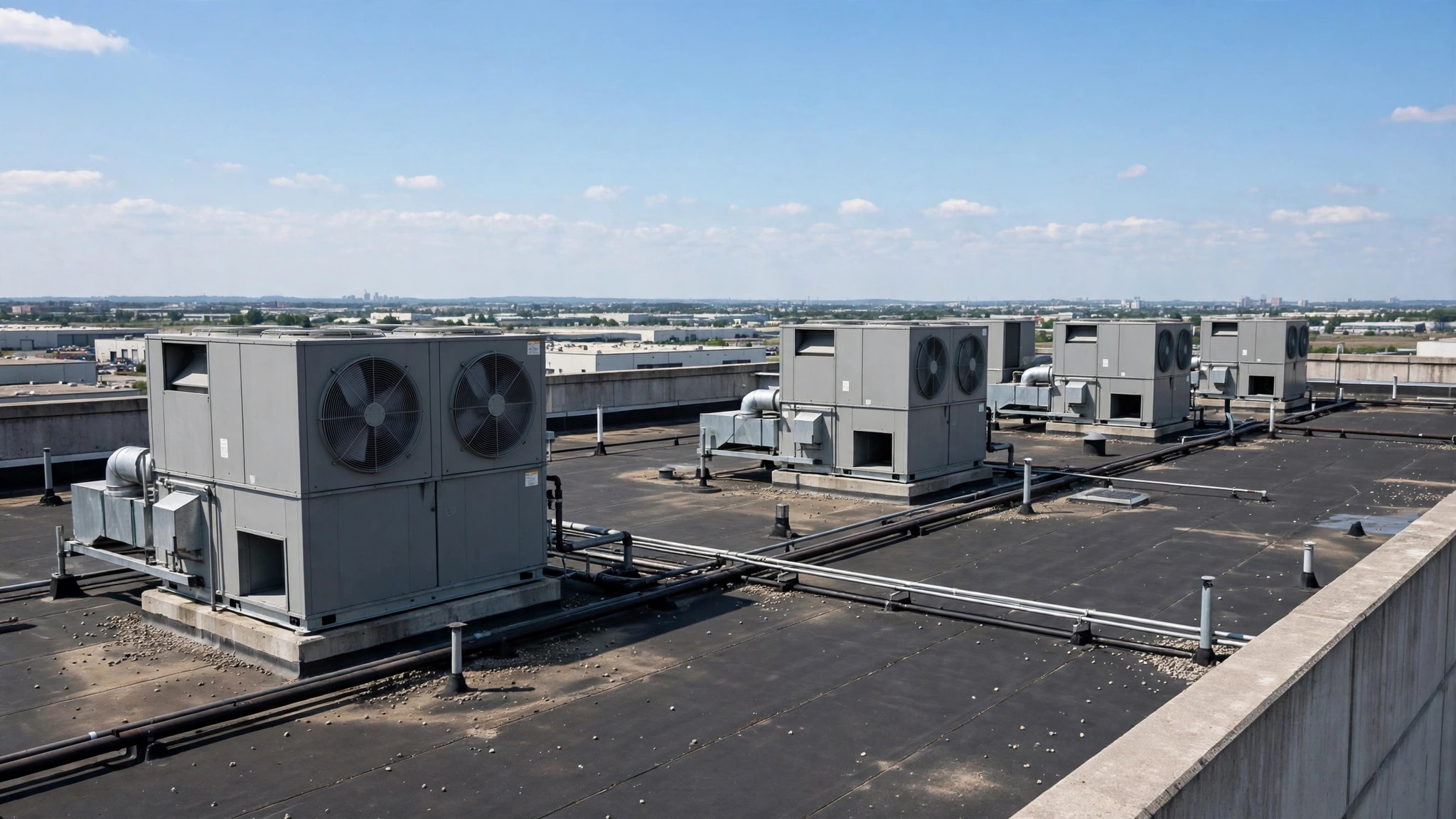
Commercial hvac units are the heating and cooling systems that keep offices, stores, restaurants, and warehouses comfortable. They range from small rooftop boxes to large multi-zone systems. Picking the right one affects comfort, energy bills, and maintenance costs for years.
This guide explains the main types of commercial hvac units, how to size them, what they cost, and how to keep them running. Everything is in plain language, with no jargon.
Main Types of Commercial HVAC Units
They come in several designs. The right type depends on building size, layout, and budget.
Rooftop packaged units are the most common. The whole system sits in one box on the roof. They heat and cool through ducts that drop into the building. Small and mid-size buildings use them everywhere.
Split systems separate the parts. The condenser sits outside while the air handler lives indoors. They suit buildings with equipment rooms and run quieter inside than rooftop boxes. Large buildings often use many splits zoned by area.
Variable refrigerant flow, or VRF, systems use one outdoor unit connected to many indoor heads. Each zone gets its own temperature control. They cost more but save energy in buildings with varied heating and cooling needs.
Chillers and boilers serve large buildings. A chiller makes cold water that cools air handlers across the building. A boiler makes hot water or steam for heat. These systems suit hospitals, schools, and big offices.
Ductless mini-splits fill gaps. They cool single rooms or additions without ductwork. Server rooms and small offices use them as primary or backup cooling. Learn about service options at commercial hvac service.
How to Size Commercial HVAC Units
Sizing starts with a load calculation. The old rule of thumb, tons per square foot, leads to oversized equipment. Oversized units short-cycle, waste energy, and leave air humid.
A proper calculation looks at square footage, ceiling height, and insulation levels. It counts windows, their direction, and shading. It factors in people, lights, and equipment heat. Kitchens and server rooms add big loads.
Usage patterns matter too. A restaurant needs more cooling than an office of the same size. A warehouse with high ceilings needs different airflow than a retail store. The calculation should reflect how the space really works.
Future plans count. If the building will add space or change use, size with that in mind. Slightly oversizing for planned growth beats replacing units early. But do not oversize for growth that may never come.
Always hire a licensed contractor for the calculation. Ask to see the load report before you approve equipment. Right-sized units cost less to buy, cost less to run, and last longer.
Commercial HVAC Units Cost Factors
Commercial hvac units cost more than residential systems because they are bigger, tougher, and built for long run hours. Several factors set the final price.
Capacity leads. More tons mean more money for equipment, electrical work, and installation labor. A twenty-ton system costs far more than a five-ton one, though the price per ton drops with size.
System type changes the number. Packaged rooftop units usually cost least to install. VRF systems cost most but save energy. Chillers and boilers are major capital projects with long paybacks.
Efficiency ratings move the price. Higher SEER2, EER2, and AFUE ratings cost more up front. In buildings that run long hours, efficient units pay back through lower utility bills.
Installation complexity adds cost. Crane lifts, roof curbs, ductwork changes, electrical upgrades, and controls all add lines to the quote. Difficult access or occupied-building rules slow the work and raise labor cost.
Controls and extras finish the quote. Programmable thermostats, building automation, and energy monitoring add upfront cost but cut operating cost. Compare quotes line by line, not just the bottom number.
Commercial HVAC Units Maintenance Plan
They need steady care to reach their full lifespan. A written plan beats memory every time. Build yours around these tasks.
Change or clean filters on schedule. Monthly checks work for most buildings. Dirty filters are the top cause of frozen coils and burned-out motors.
Clean coils twice a year. Dirty condenser coils raise energy use. Dirty evaporator coils cut airflow and grow mold. Both shorten equipment life.
Check belts, bearings, and motors. Worn belts snap on the hottest day. Noisy bearings warn before they seize. Catching wear early keeps small parts from killing big ones.
Test controls and safeties. Thermostats drift. Sensors fail. Safety switches save compressors when drains clog or airflow drops. Test them before the season, not during a breakdown.
Keep a service log. Record every visit, every part, and every reading. The log proves maintenance for warranty claims and shows trends that predict failure. A solid commercial hvac maintenance checklist gives your tech a script to follow.
ASHRAE, the engineering society for heating and cooling, publishes maintenance standards used across the industry. Learn more at https://www.ashrae.org/.
When to Replace Commercial HVAC Units
Most last fifteen to twenty years with good care. Replacement beats repair when several signs stack up.
Age plus a major breakdown is the clearest case. A failed compressor on an eighteen-year-old unit is not worth fixing. New equipment brings a warranty and modern efficiency.
Rising repair frequency signals the end. Two or more service calls a year mean parts are wearing out together. Each fix buys less time than the one before.
Energy bills climbing without rate hikes point to lost efficiency. Old units work harder for the same output. The U.S. Department of Energy notes that efficient replacements cut commercial cooling costs sharply. See https://www.energy.gov/energysaver/central-air-conditioning.
Comfort complaints multiply. Hot and cold spots, humidity problems, and noise all grow as units age. When staff and customers notice, the system is telling you it is done.
Refrigerant phaseouts add pressure. Old units use refrigerants that get pricier every year. A leak recharge can cost more than the unit deserves. New units use current refrigerants at stable prices.
Commercial HVAC Units and Indoor Air Quality
Commercial hvac units do more than set the temperature. They control the air your people breathe all day. Filters catch dust and pollen. Ventilation brings in fresh outdoor air. Humidity control keeps the space from getting sticky or bone dry.
Filtration comes first. Standard filters catch large dust. Upgraded filters catch finer particles, which helps staff with allergies. But tighter filters restrict airflow, so the system must be sized for them. Never upgrade filters without checking with your tech.
Ventilation matters more than most owners think. Building codes set minimum fresh air rates per person. Meeting rooms and gyms need more. Poor ventilation causes that stale, sleepy feeling in crowded spaces. Demand-controlled ventilation adjusts fresh air based on occupancy and saves energy.
Humidity control protects the building. Too much moisture grows mold in ducts and walls. Too little dries out wood, paper, and sinuses. Most commercial hvac units manage humidity as a side effect of cooling, but dedicated dehumidification helps in damp climates.
Ask your contractor about air quality when you buy or service equipment. Small upgrades in filtration and ventilation pay back in fewer sick days and happier tenants.
FAQ About Commercial HVAC Units
How many commercial hvac units does my building need?
It depends on size, layout, and zoning needs. Small open buildings may need one. Large or divided buildings need several zoned units. A load calculation per zone gives the honest answer.
What is the most reliable type of commercial hvac units?
Rooftop packaged units win on simplicity and service access. VRF systems win on efficiency and zone control. Reliability depends more on installation quality and maintenance than on type. Buy the install, not just the box.
Can I mix different commercial hvac units in one building?
Yes. Many buildings mix rooftops, splits, and mini-splits by zone. Each zone gets what fits. Keep one service contractor for all of them so maintenance stays consistent.
How loud are commercial hvac units?
Rooftop units hum but sit away from people. Indoor air handlers need sound planning in quiet spaces like offices and clinics. Ask about decibel ratings and vibration isolation when noise matters.
Do commercial hvac units qualify for rebates?
Often yes. Utilities and government programs rebate high-efficiency commercial hvac units. Check the Database of State Incentives and your local utility before buying. Rebates can cut thousands from the project.
Next Steps for Building Owners
Inventory your commercial hvac units today. Note the age, type, and condition of each from its nameplate. Schedule professional maintenance before the next heavy season. Ask your contractor for a replacement budget and timeline so costs never surprise you. When buying, demand a load calculation, compare efficiency ratings, and get the full scope in writing. Good equipment, sized right and cared for, pays you back for decades. Start with the inventory and the load calculation, and the rest follows from there. Your tenants will feel the difference. Comfortable people get more done. That is the real return. For heating-specific guidance, read commercial heating and cooling.



