
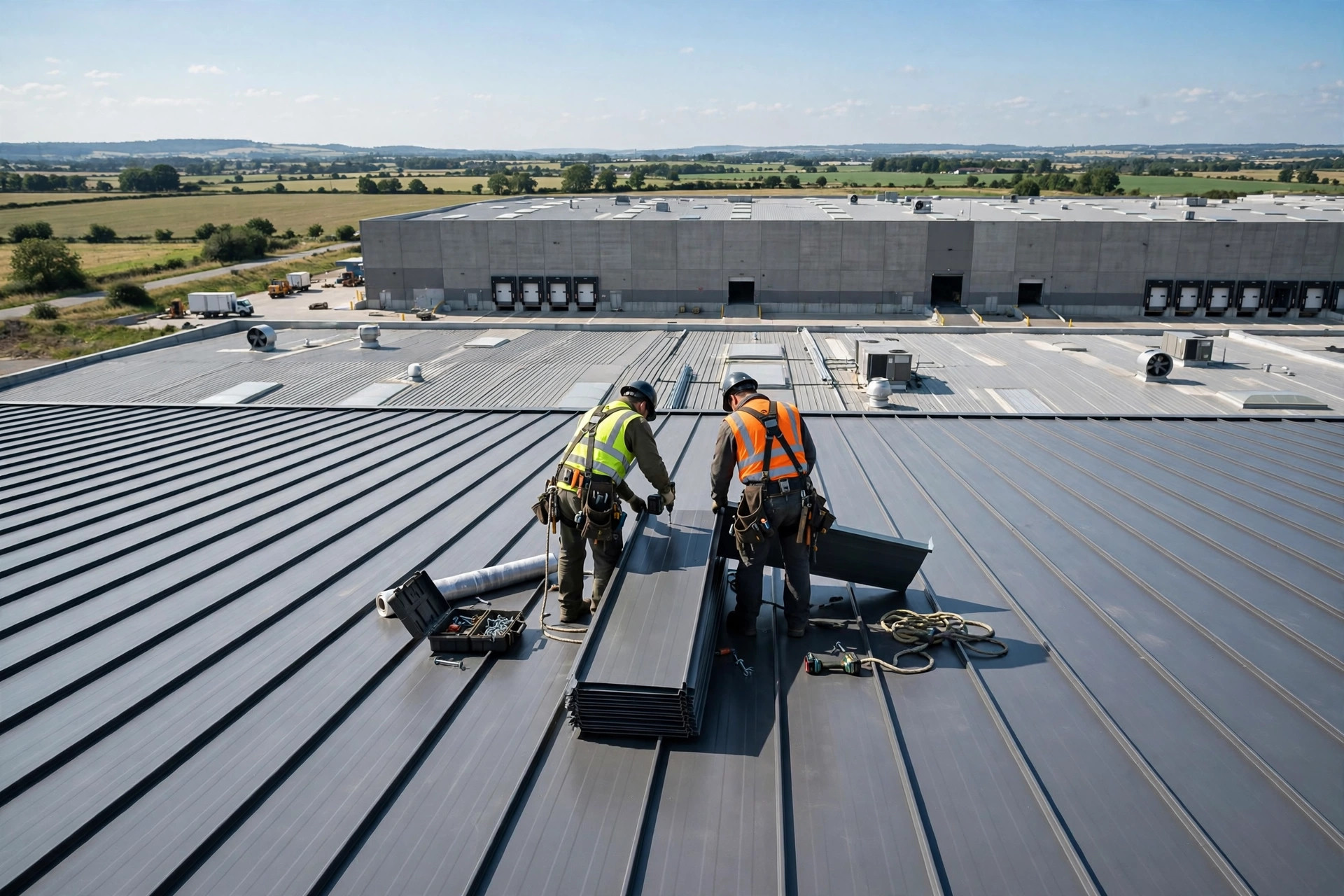
Commercial metal roofing contractors are specialists who install and repair metal roofs on offices, warehouses, factories, stores, and other non-residential buildings. Metal roofing is a big investment, and the quality of the install decides how the roof performs for decades. A skilled crew delivers tight seams, clean flashing, and a roof that shrugs off wind and rain. A poor crew leaves weak points that leak within a few seasons.
Metal roofs on commercial buildings usually take the form of standing seam panels, though corrugated and screw-down systems are also common. The work demands different tools and skills than single-ply membrane jobs. That is why it pays to hire commercial metal roofing contractors with real metal experience rather than a general roofer who rarely touches metal. This guide gives eight hiring tips, the main cost factors, warning signs of a bad bid, and answers to the questions owners ask most.
Tip 1: Look for Metal-Specific Experience in Commercial Metal Roofing Contractors
Ask how many metal roofs the company installs in a typical season. A contractor that does mostly membrane work may not have the crew or tools for quality metal work. You want a team that seamed panels last month, not last year.
Ask to see photos of past jobs similar to yours. Better yet, ask for addresses of finished projects you can drive by. A confident contractor will share a list. Check the details in the photos: straight panel lines, clean flashing, and neat trim work all signal a careful crew.
Tip 2: Verify License, Insurance, and Bonding
Every state has its own licensing rules for roofers. Confirm the license is current and covers commercial work at your project size. Then check insurance. The contractor should carry general liability and workers’ compensation, and the policy limits should fit a commercial job, not a house job.
Ask for certificates of insurance sent directly from the insurer. Bonding is another plus on large projects, since it protects the owner if the contractor fails to finish. Do not take paperwork on faith. A five-minute check can prevent a very costly mistake.
Tip 3: Ask Commercial Metal Roofing Contractors About Manufacturer Certification
Most major metal panel makers run certification programs for installers. Certified commercial metal roofing contractors have passed the maker’s training and can offer the maker’s full system warranty. That warranty often covers more than a contractor-only warranty.
Ask which brands the contractor is certified to install. Then ask what warranty level that certification unlocks. The difference between a basic warranty and a full system warranty can be worth thousands if a panel or finish ever fails.
Tip 4: Get Detailed Written Quotes from Commercial Metal Roofing Contractors
A useful quote reads like a plan, not a guess. It should name the panel type, gauge, finish, and fastener system. It should list underlayment, trim, flashing details, insulation, and the warranty terms. It should show the schedule and the payment milestones.
Compare quotes line by line. If one bid is far lower, look for what it leaves out. Missing items like snow guards, proper edge metal, or thicker panels explain many low prices. Three detailed quotes give you a fair picture of the market price.
Tip 5: Check References and Past Commercial Work
Call at least three references from commercial jobs. Ask whether the crew showed up on schedule, kept the site clean, and finished on time. Ask whether the roof leaked in the first heavy rain. Ask whether the owner would hire the company again.
Online reviews add context, but references tell the deeper story. A contractor with a strong commercial record will have past clients who speak well of the work. For more on vetting firms, read how to choose a commercial roofing contractor, which covers the questions that matter most.
Tip 6: Review the Safety Plan of Commercial Metal Roofing Contractors
Metal roof work involves heights, sharp edges, and heavy panels. A professional contractor brings a written safety plan and uses fall protection, as required on low-slope and steep commercial roofs. The plan should cover ladder safety, panel handling, and protection for people and property below.
Federal safety rules set by OSHA apply to roofing work. A contractor who brushes off safety questions is waving a red flag. Safe crews also tend to be careful crews, and care shows in the finished roof.
Tip 7: Understand the Contract Before You Sign
Read the contract fully. It should spell out the scope, materials, start and completion dates, payment schedule, and warranty terms. It should state who pulls permits and who handles cleanup and disposal. Vague language like “as needed” without detail is a risk.
Watch the payment terms. A deposit is normal, but large upfront payments are not. Tie payments to milestones such as material delivery, panel install, and final inspection. Keep the final payment until the punch list is done.
Tip 8: Plan for Maintenance with Your Commercial Metal Roofing Contractors
A metal roof needs less care than many systems, but it still needs checks. Ask the contractor what maintenance the roof requires and how often. Typical tasks include clearing debris, checking fasteners and sealants, and inspecting flashing after storms.
Many commercial metal roofing contractors offer maintenance plans. A simple plan with twice-yearly visits catches small issues early. It also keeps warranty terms in force, since some makers require documented upkeep. For a related specialty, see commercial metal roof repair to know what service visits should cover.
Cost Factors When Hiring Commercial Metal Roofing Contractors
Metal roof pricing moves with several factors. Use this checklist to read any bid.
- Panel type and gauge. Standing seam costs more than exposed-fastener panels. Thicker gauge steel costs more but resists dents and wind better.
- Finish and color. Premium paint finishes with strong fade resistance add cost. Standard colors are cheaper than custom ones.
- Roof size and complexity. Simple rectangles cost less per square foot. Many penetrations, valleys, and odd angles add labor.
- Tear-off needs. Removing an old roof adds labor and disposal fees. Some jobs can go over one existing layer where code allows.
- Insulation and underlayment. Higher R-value insulation and premium underlayment raise the price and improve performance.
- Structural work. New purlins, deck repairs, or added support for snow loads add cost.
- Location and season. Labor rates vary by region, and storm seasons can push prices up.
Also ask each bidder how long their price is good for. Steel prices move with the market, and a quote that expires in a week may look different in a month. Locking the material price in the contract protects both sides from surprise swings.
The National Roofing Contractors Association publishes owner guidance on metal systems and contractor selection. Their resources at NRCA are a solid second opinion on any major bid.
Warning Signs of a Bad Bid
Watch for these red flags when comparing commercial metal roofing contractors:
- A quote given without walking the roof or measuring it.
- No license number, insurance proof, or business address on the paperwork.
- Pressure to sign on the spot for a “today only” price.
- A demand for most of the money before work starts.
- No mention of permits, warranty, or cleanup.
Any one of these is reason to keep looking. A good contractor is transparent, patient, and happy to put details in writing.
Commercial Metal Roofing Contractors FAQs
How much does a commercial metal roof cost?
Prices vary by panel type, gauge, roof size, and region. Standing seam systems cost more than screw-down panels but last longer with less upkeep. Get three detailed quotes to find the fair market price for your building.
How long does a commercial metal roof last?
A well-installed metal roof often serves 40 years or more. The finish warranty and the panel gauge affect the real-world life. Regular checks of fasteners, sealants, and flashing keep it at its best.
Can commercial metal roofing contractors install over an old roof?
Often yes, where local code allows one recover layer and the structure can carry the added weight. An overlay saves tear-off cost. The contractor must first confirm the old roof is sound and dry underneath.
What gauge metal is best for a commercial roof?
Many commercial jobs use 24 or 26 gauge steel. Thicker 24 gauge resists dents and wind uplift better. The right gauge depends on the span, wind zone, and budget. Ask each bidder to justify their gauge choice.
Do metal roofs make buildings hotter?
Bare dark metal absorbs heat, but most commercial panels use reflective paint finishes that bounce much of the sun’s energy away. Light-colored standing seam with a cool finish can cut cooling loads noticeably. Check the finish ratings when comparing panels.
Next Steps for Building Owners
Hiring the right commercial metal roofing contractors starts with homework. Verify metal experience, license, and insurance. Demand detailed quotes and real references. Read the contract, tie payments to milestones, and plan maintenance from day one. Do this, and the metal roof will pay back the effort for decades.



