
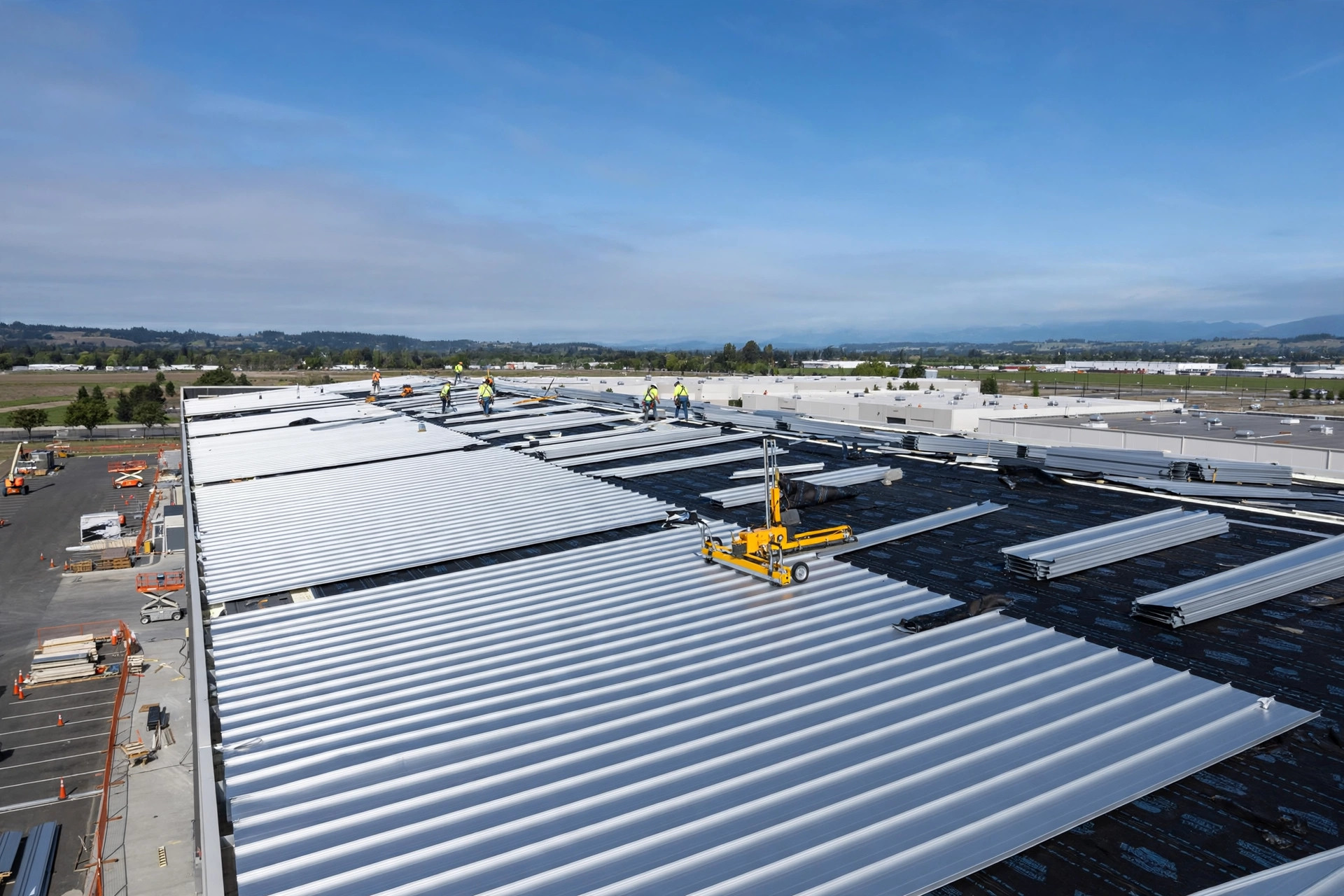
Commercial metal roofing covers commercial buildings with steel, aluminum, or other metal panel systems. It is the long-life premium option in commercial roofing: higher upfront cost than membranes, but decades of service with modest upkeep. For building owners across the United States who plan to hold their properties long term, commercial metal roofing often delivers the lowest cost per year of any roof system.
Metal roofing has sheltered American commercial buildings for generations, and modern systems keep improving. Concealed fasteners, reflective coatings, and engineered attachment have made today’s commercial metal roofing tougher and better looking than ever. This guide covers the cost factors, system types, and care routines that decide its value.
10 Cost Factors in commercial metal roofing
One, panel profile. Standing-seam panels with concealed fasteners cost more than exposed-fastener panels like R-panel. The hidden-fastener design eliminates thousands of potential leak points, which justifies the premium for many owners.
Two, metal type. Galvanized steel is the standard and most affordable. Aluminum costs more but resists corrosion, making it the pick near salt water. Copper and zinc are premium metals with exceptional life and high prices.
Three, metal gauge. Thicker metal costs more and resists denting, oil canning, and storm damage better. Commercial jobs typically use heavier gauges than residential. Do not let a bid substitute thin metal to cut price.
Four, roof size. Larger roofs cost more in total but less per square foot. Small roofs pay higher per-foot rates since crew mobilization and equipment setup do not shrink.
Five, roof complexity. Simple rectangles install fast. Multiple levels, odd angles, dormers, and heavy penetrations need custom flashing and slow the crew. Each penetration is skilled labor.
Six, tear-off. Removing the old roof adds labor and disposal cost. Some metal systems can retrofit over old roofs with a framing system, which skips tear-off but adds framing cost. An engineer must verify the structure.
Seven, insulation upgrades. Many owners add insulation during replacement to cut energy bills. Rigid insulation under metal panels improves thermal performance. This adds upfront cost with long-term payback.
Eight, finish and coating. Premium paint finishes with strong warranties cost more than basic coatings. Reflective cool-roof finishes add cost and cut cooling bills. In hot climates, the upgrade often pays back.
Nine, location and access. Labor rates vary by region. Tight urban sites with difficult material handling cost more than open industrial sites. Remote locations add delivery cost.
Ten, warranty level. Longer weathertight warranties require specific details, thicker materials, and certified installers. Decide what warranty the building needs and get bids that meet it.
For repair cost context, see commercial metal roof repair and metal roof leak repair. For upkeep, read standing seam metal roof maintenance.
Types of commercial metal roofing Systems
Standing-seam systems are the top tier. Panels run continuously from ridge to eave with raised seams that snap or mechanically lock together. Fasteners hide beneath the seams. The result is clean looks, minimal leak points, and excellent wind resistance.
Exposed-fastener systems use panels screwed through the face with gasketed screws. They cost less and install fast. They suit warehouses, agricultural buildings, and budget projects. Plan for fastener maintenance as gaskets age.
Metal retrofit systems install new metal over an existing flat roof on a light framing grid that adds slope. This solves ponding problems without tear-off. It is popular for aging low-slope roofs that are structurally sound.
Metal shingles and tiles give a traditional look at commercial durability. They cost more per square foot than large panels and take longer to install. They suit buildings where appearance matters most.
Insulated metal panels combine metal skins with foam cores. They serve as both roof and insulation in one product. They suit new construction and buildings needing a thermal upgrade with the reroof.
Pros and Cons of commercial metal roofing
The pros start with life span. A quality commercial metal roofing system can last forty years or more, roughly double most membrane systems. For long-hold owners, this dominates the value calculation.
Weather resistance is outstanding. Metal handles high wind, hail, and snow loads well. Interlocked panels resist blow-off. In storm-prone regions, this cuts damage claims and downtime.
Maintenance is light. No seams to reweld, no coatings on a fixed schedule for most systems. Twice-yearly inspections, fastener checks, and prompt attention to damage keep it sound.
Fire safety is excellent. Metal does not burn and earns top fire ratings. This matters in wildfire zones and for buildings with strict code requirements. Insurers recognize the benefit.
Energy performance is strong with reflective finishes. Cool metal roofs bounce solar heat away and cut summer cooling loads. The Department of Energy supports cool roofing for commercial buildings.
The cons start with upfront cost. Commercial metal roofing costs more per square foot than single-ply membranes. The payback comes over decades, not years. Short-hold owners may not recover the premium.
Noise is higher in rain. Without ceilings or insulation, rain on metal is loud. Most commercial buildings have enough ceiling and insulation to manage this, but open warehouses notice it.
Denting is possible. Hail and foot traffic can dent thinner panels. Heavier gauges resist better. Walk pads and traffic rules protect the roof after install.
Oil canning bothers some owners. This cosmetic waviness in flat panel areas does not affect performance. Thicker metal and proper install reduce it. Discuss expectations before the project.
Installing commercial metal roofing: What to Expect
The project starts with deck and structural checks. The deck must be sound and able to hold the panels and fasteners. Damaged sections are replaced. For retrofits, an engineer verifies the structure can carry the framing and panels.
Underlayment goes over the deck as a secondary water barrier. Quality underlayment matters; it is the backup if wind-driven rain ever gets past the panels. Do not accept thin or skipped underlayment to save money.
Panels are formed and installed. Long panels may be roll-formed on site to avoid end laps. Each panel fastens per the maker’s engineering for the local wind zone. Clip spacing tightens in high-wind areas.
Flashing details are the skilled work. Pipes, curbs, walls, valleys, and edges all get custom metal flashing. Good flashing is neat, tight, and sealed with products made for metal roofing. This is where experienced crews earn their pay.
Quality control and closeout finish the job. The foreman checks fastener lines, seam engagement, and every flashing. You walk the roof before final payment. Warranty documents, in both material and workmanship, go into your files.
Maintaining commercial metal roofing
Inspect in spring and fall, plus after major storms. Look for loose or backed-out fasteners, damaged panels, failed sealant, and debris in valleys and gutters. Check every flashing and penetration.
Service the fasteners. On exposed-fastener roofs, gaskets age and screws loosen with thermal cycling. Periodic refastening with new gasketed screws keeps the roof tight. When large areas need it, a full refasten is the fix.
Treat rust early. Small rust spots get cleaned, primed, and coated with matching finish. Left alone, rust spreads and eats through panels. Coastal and industrial environments need more frequent checks.
Keep it clean and clear. Remove debris from valleys and gutters. Trim branches that scuff the finish. Never let debris pile against panels where it holds moisture.
Manage traffic. Set walk paths for service techs and use walk pads in traffic areas. Dented panels from careless traffic are preventable. Require trades to stay on the paths.
Recoat when specified. Some systems use protective coatings that need renewal on a schedule. A timely recoat extends finish life far beyond the original term. Put the date on the building calendar.
Is commercial metal roofing Right for You?
Choose metal when the hold period is long. The value of commercial metal roofing compounds over decades of low maintenance and no replacement. Owners planning to keep a building twenty-plus years are the best candidates.
Choose metal for tough exposures. Hurricane zones, hail belts, heavy snow regions, and wildfire areas all reward metal’s strengths. The resilience cuts both repair costs and business interruption.
Consider alternatives for short holds or tight budgets. A quality membrane roof serves well for twenty years at lower upfront cost. If a sale is planned within a few years, the metal premium may not return.
Check compatibility with plans. If solar is planned, standing-seam is ideal for clamp-on mounts. If rooftop equipment will change often, plan curbs and access to protect the panels.
The National Roofing Contractors Association publishes metal roofing guidance at https://www.nrca.net/. The Department of Energy covers cool metal roofing at https://www.energy.gov/.
For long-hold owners, commercial metal roofing remains one of the lowest cost-per-year roof systems available.
How long does commercial metal roofing last?
Standing-seam systems often last forty years or more with maintenance. Exposed-fastener systems typically last twenty to thirty years. Climate, gauge, and care determine the actual life.
Is commercial metal roofing worth the extra cost?
For long-hold owners, usually yes. The cost per year of service often beats membranes when spread over forty years with light maintenance. For short holds, membranes may be the better value.
Can metal roofing go over my existing roof?
Sometimes, with a retrofit framing system, if the structure is verified and codes allow. An engineer must confirm load capacity. A moisture survey of the old roof is still wise.
Does commercial metal roofing need a lot of maintenance?
Less than most systems. Twice-yearly inspections, fastener service on exposed-fastener roofs, rust treatment, and debris clearing are the routine. No scheduled recoating for most bare and painted systems.
Will a metal roof make my building hotter?
No, the opposite with reflective finishes. Cool-rated metal reflects solar heat and can lower cooling loads compared to dark membranes. Color and coating choice determine the effect.
Next Steps
If your building is a long-term hold, get three bids for commercial metal roofing from contractors who specialize in metal. Compare panel profiles, metal types and gauges, finishes, attachment engineering, and warranties. Ask for addresses of roofs installed a decade ago and go see them. Choose the crew as carefully as the panels, and the roof will outlast most other building systems.



