
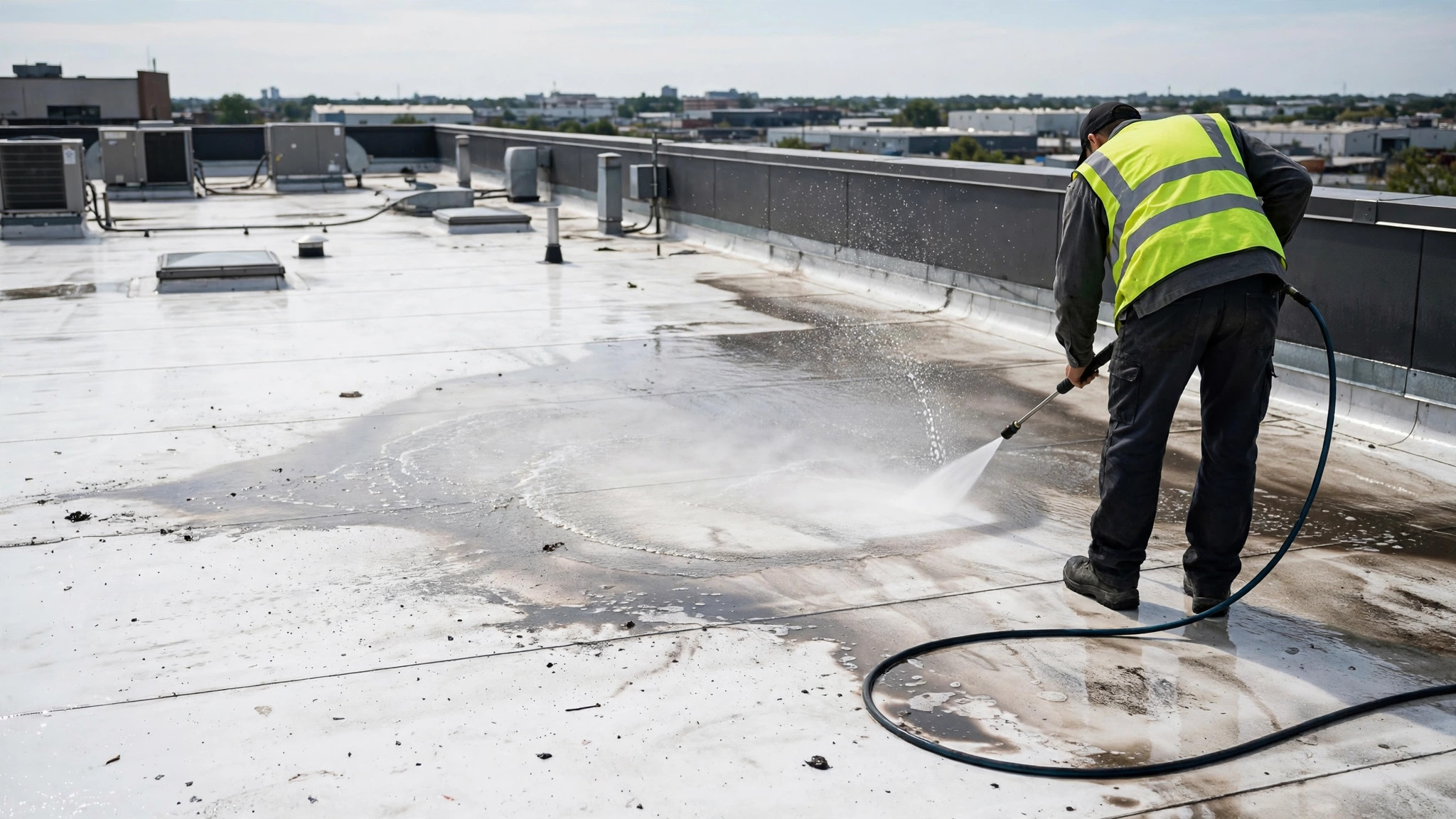
Dirt kills roofs slowly. Leaves pile up in drains. Algae eats at the surface. Bird droppings stain and corrode. Grease from kitchen vents coats the membrane. None of it looks urgent. All of it shortens roof life. Commercial roof cleaning is the simple fix. A professional wash clears debris, kills growth, and lets the inspector see what is really going on up there. This guide explains what commercial roof cleaning includes, how it is done, what it costs, and how often your building needs it.
Why Commercial Roof Cleaning Matters
A dirty roof fails faster than a clean one. Debris holds water against the membrane. Standing water soaks into seams and adds weight the structure was not built for. Leaves and trash clog drains, and clogged drains cause ponding. Ponding is one of the top killers of flat roofs.
Growth is the second problem. Algae and moss hold moisture and break down roofing surfaces over time. On white reflective roofs, dark growth kills the reflectivity. The roof absorbs more heat, the building uses more cooling energy, and the membrane ages faster. The U.S. Department of Energy notes that clean, reflective roofs cut cooling loads in warm climates.
Grease is the third problem, common on restaurants and food plants. Kitchen exhaust coats nearby roofing with fats. Grease breaks down many membranes and voids some warranties. Regular commercial roof cleaning around exhaust fans prevents damage that a roof replacement would be needed to fix.
A clean roof is also easier to inspect. An inspector cannot judge seams and flashing under a layer of grime. Schedule commercial roof cleaning before your annual inspection and the report will be far more accurate.
What Commercial Roof Cleaning Includes
A full commercial roof cleaning covers the whole surface and the drainage system. Crews start by removing loose debris by hand or with blowers. Leaves, branches, trash, and old equipment get hauled off. Next comes washing. The method depends on the roof type.
Low-pressure washing is the standard for most commercial roofs. High pressure can cut into membranes, force water under seams, and void warranties. A good crew uses low pressure with the right cleaners for the soil type. Algae and moss get a biocide treatment that kills growth down to the root. Grease areas get a degreaser rated safe for the membrane. Always ask what chemicals will be used. Some cleaners damage certain roof types.
Drains and gutters get special attention during commercial roof cleaning. Crews clear strainers, flush drain lines, and check that water flows freely. Scuppers get cleared of nests and trash. The crew should also flag any damage they spot, like open seams or cracked flashing, so you can call a roofer.
The job ends with a rinse and a walkthrough. Ask for before and after photos. They prove the work was done and give you a baseline for next time.
6 Ways Commercial Roof Cleaning Saves Your Roof
1. It keeps drains working. Clear drains move water off the roof fast. Flowing water cannot soak in. Most ponding problems start with a clogged drain, not a bad roof. Regular cleaning prevents the clog in the first place.
2. It stops algae and moss. Growth holds water against the surface around the clock. Killing it during commercial roof cleaning breaks the cycle. The membrane stays dry and lasts longer.
3. It protects reflective coatings. Dirt and growth darken white roofs. A clean white roof reflects heat. A dirty one absorbs it. Cleaning restores reflectivity and cuts cooling costs.
4. It finds problems early. Wash crews see the whole roof up close. They spot punctures, loose flashing, and failing seams while the problems are small. Early finds mean cheap fixes.
5. It protects your warranty. Many manufacturer warranties require regular maintenance, including cleaning. Skipping commercial roof cleaning can void coverage. Keep receipts and photos as proof.
6. It extends roof life. A roof that stays clean, dry, and inspected lasts years longer than a neglected one. The cost of cleaning is small next to the cost of early replacement. For more on long-term care, see the commercial roofing maintenance guide.
How Often to Schedule Commercial Roof Cleaning
Most buildings need commercial roof cleaning once or twice per year. Buildings under trees need more. Leaves fall all season and pile up fast. Restaurants and food plants need grease-area cleaning every few months. Kitchens never stop producing exhaust.
Schedule one cleaning in spring to clear winter debris and one in fall to clear leaves before the cold season. Add extra visits after big storms. Wind drops branches and trash on roofs overnight. A quick debris check after a storm takes minutes and prevents drain clogs.
Match the cleaning schedule to your inspection schedule. Clean first, then inspect. The inspector will thank you, and the report will be better. The NRCA recommends regular maintenance as the key to full roof life, and cleaning is a core part of any maintenance plan.
What Commercial Roof Cleaning Costs
Price depends on roof size, soil level, and access. Small roofs may cost a few hundred dollars. Large roofs run into the thousands. Heavy grease or deep moss adds cost because it needs more chemical treatment and labor. Buildings with poor roof access cost more too, since crews spend extra time getting equipment up and down.
Get the quote in writing with the method spelled out. The bid should state whether pressure washing or low-pressure washing will be used, which chemicals are included, and whether drains are part of the job. A bid that is far below the rest may skip steps or use damaging high pressure. Ask questions before you hire.
Compare the cost against the alternative. A neglected roof that needs early replacement costs many times what years of cleaning cost. Commercial roof cleaning is one of the cheapest maintenance items on the building budget.
Choosing a Commercial Roof Cleaning Company
Not every pressure washing company should touch a commercial roof. Ask for commercial roofing experience specifically. Ask what pressure they use and why. Low pressure with proper chemicals is the right answer for most membranes. Ask for proof of insurance. Crews work at height, and OSHA fall protection rules apply.
Ask for references from other building owners. Call them and ask if the crew was careful, on time, and thorough. Check that the company knows your roof type. What cleans an EPDM roof safely may damage a coated roof. A good company adjusts its method to the membrane.
Finally, ask what they do if they find damage. The best crews photograph problems and report them to you. That early warning is worth as much as the cleaning itself. For related upkeep, the commercial roof maintenance checklist pairs well with a cleaning schedule.
What to Do Between Cleanings
You do not need a crew on the roof every month. Between visits, do a simple ground-level check after storms. Look for debris blown onto the roof edge and for water stains on walls below the roofline. Inside, glance at ceilings for new stains. These quick checks take minutes. If you spot trouble, call your roofer before the next scheduled cleaning. Small action between visits keeps small problems small.
FAQ
Can I pressure wash my own commercial roof?
You can, but it is risky. Too much pressure cuts membranes and forces water under seams. Wrong chemicals damage roofing or void warranties. Working at height without fall protection is dangerous. For most owners, hiring a pro for commercial roof cleaning is safer and cheaper than fixing a DIY mistake.
Will cleaning damage my roof coating?
Proper low-pressure cleaning does not damage sound coatings. High pressure or harsh chemicals can. Tell the cleaning company what coating you have. Ask them to confirm their method is safe for it. When in doubt, ask the coating manufacturer what cleaning they recommend.
How long does commercial roof cleaning take?
A small roof may take half a day. Large roofs take one to three days. Heavy soil, grease, or moss adds time. Ask for a time estimate when you book so you can plan around the work.
Do I need to close the building during cleaning?
Usually not. Cleaning happens on the roof, away from daily operations. Crews may need access through the building to reach the roof hatch. Brief your staff so nobody is surprised. Kitchen exhaust fans may need a short shutdown during degreasing.
What time of year is best for commercial roof cleaning?
Spring and fall suit most buildings. Spring clears winter debris. Fall clears leaves before cold weather. Avoid freezing days, since water on the roof can ice over and chemicals work poorly in the cold.
Next Steps
Walk your roof or hire a pro to look at it this month. If you see debris, growth, or grease, book a commercial roof cleaning before your next inspection. Get the method and price in writing. Then put two cleanings per year on the maintenance calendar. A clean roof drains right, inspects well, and lasts longer. That is an easy win for any building owner.



