
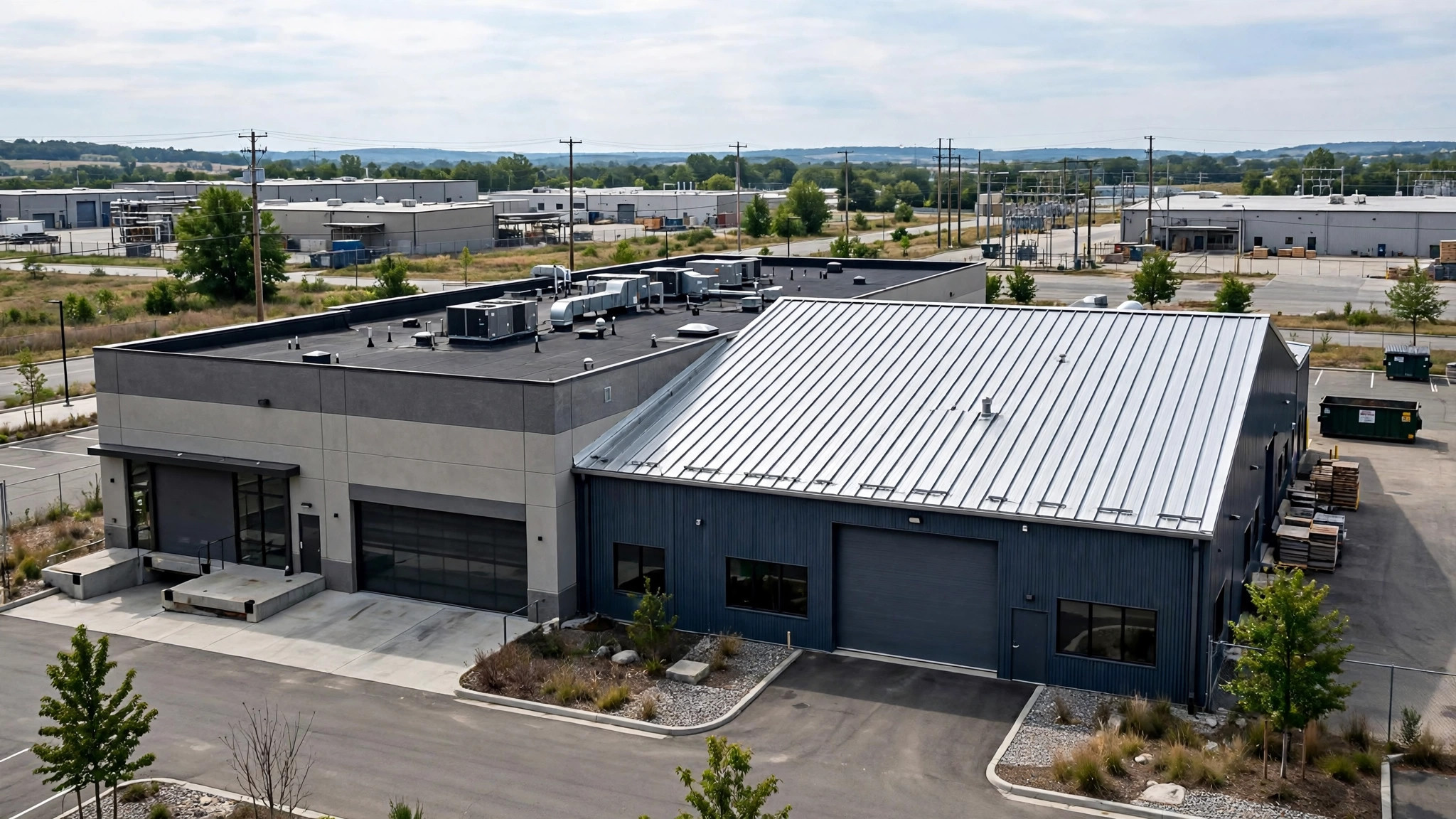
Every commercial building needs a roof that fits its shape, its climate, and its budget. But owners often hear only about the one system their contractor sells. Knowing the main commercial roof types helps you ask better questions and spot a bad recommendation.
This guide compares seven common commercial roof types. You will see how each one works, what it costs, how long it lasts, and where it fits best. No sales pitch. Just the clear facts you need to choose well.
Why commercial roof types differ from home roofs
Home roofs are steep. Water runs off fast. Shingles or tiles shed it with ease. Commercial buildings are different. Most have flat or low slope roofs where water moves slowly and needs drains.
That slow water changes everything. Commercial roof types must seal tight against standing water. They must handle foot traffic from service crews. They must carry heavy HVAC units. Home roofing materials would fail fast under these demands.
1. TPO membrane
TPO is a white single-ply membrane. Heat welding fuses the seams into one sheet. It leads new commercial roof installations in many markets.
Best for: owners who want energy savings at a fair price. The reflective surface cuts cooling costs in warm states.
Watch for: quality spread between brands. Buy from an established maker. Sixty mil thickness or more holds up best.
Life span: twenty to thirty years with care.
2. EPDM rubber membrane
EPDM is a black synthetic rubber sheet. It has served commercial roof types for decades. Large sheets mean fewer seams.
Best for: budget jobs and cold climates. The rubber stays flexible in freezing weather.
Watch for: black color absorbs heat. Repairs use tape and adhesive rather than heat welding.
Life span: twenty to thirty years with care.
3. PVC membrane
PVC is a single-ply membrane with strong chemical resistance. It heat welds like TPO but shrugs off grease and fumes.
Best for: restaurants, factories, and any building with grease or chemical exhaust on the roof.
Watch for: higher price than TPO. It needs skilled installers to avoid shrinkage issues.
Life span: twenty to thirty years with care.
4. Built-up roofing (BUR)
BUR layers felt and asphalt into a thick stack, topped with gravel or a cap sheet. It is the classic among commercial roof types.
Best for: roofs with heavy foot traffic. The many layers resist punctures well.
Watch for: heavy weight that the structure must carry. Install is slow and produces fumes. Fewer crews do it now.
Life span: twenty to thirty years, sometimes more.
5. Modified bitumen
Modified bitumen rolls add rubber or plastic to asphalt for flexibility. Install methods include torch, hot mop, and self adhesive.
Best for: smaller roofs and complex details around penetrations. Self adhered versions avoid open flames.
Watch for: torch work brings fire risk. Seams demand skill. Dark colors run hot unless coated.
Life span: fifteen to twenty five years.
6. Metal roofing
Standing seam steel panels lock together with hidden fasteners. Among commercial roof types, metal lasts longest.
Best for: sloped commercial roofs and owners planning to hold the building for decades.
Watch for: higher up front cost. Needs a skilled metal crew. Very low slopes need special details. See our commercial steel roofing guide for full details.
Life span: forty years or more.
7. Spray polyurethane foam
Spray foam goes on as liquid and hardens into a seamless insulated layer. A protective coating tops it.
Best for: odd shaped roofs and buildings that need extra insulation without adding weight.
Watch for: the top coat needs recoating on schedule. Hail can damage the foam. Applicator skill decides the result.
Life span: twenty years or more with recoating.
Commercial roof types at a glance
Here is a quick side by side summary. Use it to shortlist two or three systems, then dig into each one.
- TPO: reflective, mid price, heat welded seams, twenty to thirty years
- EPDM: low price, flexible in cold, black surface, twenty to thirty years
- PVC: grease resistant, higher price, heat welded seams, twenty to thirty years
- BUR: very tough, heavy, slow install, twenty to thirty plus years
- Modified bitumen: strong, good for details, torch risk, fifteen to twenty five years
- Metal: longest life, highest up front cost, forty plus years
- Spray foam: seamless, adds insulation, needs recoating, twenty plus years
No system wins on every measure. The right pick balances price, climate, and how long you will own the building.
Commercial roof types: cost factors compared
No single price fits all. But these factors move every bid:
- Roof size in square feet
- System type and material brand
- Insulation thickness required by code
- Tear-off versus overlay
- Number of penetrations and drains
- Deck condition underneath
- Warranty length
- Local labor rates
Metal costs most up front and least over time. EPDM usually costs least up front. TPO sits in the middle for most buildings. But material price is only part of the story. Energy costs, maintenance, and life span decide the true cost. Our commercial roof repair cost per square foot guide explains pricing in detail.
Checklist: picking from the commercial roof types
- What slope does your roof have?
- How long will you own the building?
- What does the deck look like, and what can it carry?
- How much foot traffic hits the roof?
- Are there grease or chemical exhausts?
- What insulation value does your climate zone require?
- What is your budget for install versus long term cost?
- Which systems do local contractors install well?
- What warranties come with each bid?
- How will each choice affect energy bills?
Answer these before you meet contractors. You will quickly narrow the field. Bring your answers to each bid meeting. Contractors give better advice when they understand your goals. The National Roofing Contractors Association offers system selection guidance at https://www.nrca.net/.
How climate shapes the choice
Hot southern states favor reflective membranes. White TPO and PVC bounce heat away and cut cooling bills. Dark EPDM and BUR run hotter unless coated. The Department of Energy explains cool roof benefits at https://www.energy.gov/.
Cold northern states need membranes that flex in freezing weather. EPDM handles cold well. TPO works too, but check the brand’s cold weather record. Insulation thickness matters more up north. Thicker insulation pays back through lower heating bills.
Hurricane and high wind zones need strong attachment. Mechanically fastened and fully adhered systems resist uplift better than ballasted ones. Ask for the wind rating of any system you consider.
Hail zones favor tough systems. Thicker membranes and metal resist dents. Check with your insurer about hail ratings and possible premium breaks.
Maintenance across all commercial roof types
Every system lasts longer with twice yearly inspections. Clear drains each spring and fall. Look for open seams, cracked flashing, and worn spots at penetrations. Fix small problems fast.
Keep foot traffic on walkway pads. Log every inspection with photos. File warranties where you can find them. These habits add years to any of the commercial roof types.
Learn the warning signs of trouble. Our common commercial roof problems guide shows what to watch for. When you need a contractor, our commercial roofing companies guide helps you choose one.
Frequently asked questions about commercial roof types
Which of the commercial roof types lasts longest?
Metal roofing lasts longest, often forty years or more. Single-ply membranes and built-up systems typically run twenty to thirty years. Spray foam lasts twenty plus with recoating.
Which commercial roof types work on flat roofs?
TPO, EPDM, PVC, BUR, modified bitumen, and spray foam all suit flat and low slope roofs. Metal needs enough slope. Check the minimum slope for any system you consider.
What is the cheapest of the commercial roof types?
EPDM usually costs least to install. But compare total cost over the roof’s life. Energy use, maintenance, and replacement timing can flip the ranking.
Can I mix commercial roof types on one building?
Yes, when done right. A building might use TPO on the main roof and metal on a sloped entry canopy. Each section needs proper flashing where systems meet. One contractor should handle the transitions.
How do I know which of the commercial roof types my building has?
Look at the surface. White heat welded sheets suggest TPO or PVC. Black rubber sheets suggest EPDM. Gravel over layers suggests BUR. Standing seams suggest metal. A roofer can confirm during an inspection. Our commercial roof inspections guide explains what a pro checks.
The seven commercial roof types give you real choices. Match the system to your slope, climate, budget, and ownership plans. Get itemized bids from certified contractors. Ask about energy costs, not just install price. Then inspect twice a year and fix small problems fast. Do that, and whichever of the commercial roof types you pick will serve your building well.



