
Choosing among commercial roof solutions feels overwhelming. Membranes, coatings, metal, built-up systems. Each contractor pushes a favorite. Each product claims to be the best. Building owners need a straight comparison, not a sales pitch. This guide compares seven commercial roof solutions side by side. It covers what each one is, where it fits, what it costs, and how long it lasts. Everything is written in plain language for US building owners and facility managers.
What counts as commercial roof solutions
The term commercial roof solutions covers every way to build, replace, or restore a commercial roof. Most commercial buildings have flat or low-slope roofs. Water does not run off fast, so the roofing must be fully waterproof, not just water-shedding like steep shingles. The seven options below all serve flat or low-slope buildings. They differ in material, installation, cost, and lifespan.
No single option wins for every building. A warehouse in a mild climate has different needs than a restaurant with rooftop grease or a hospital that cannot shut down. Budget, roof condition, foot traffic, and local weather all shape the choice. The right of these commercial roof solutions is the one that fits your building, not the one with the flashiest brochure.
Option 1: TPO membrane
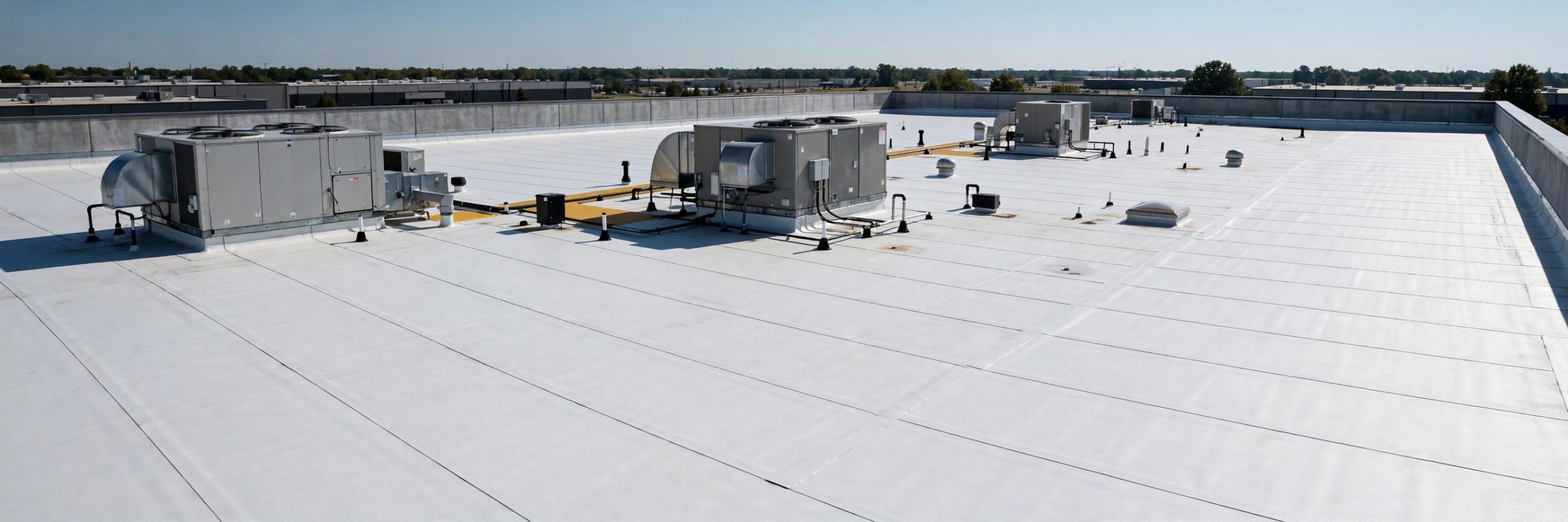
TPO, or thermoplastic polyolefin, is the most popular of today’s commercial roof solutions for new flat roofs. It is a white single-ply membrane, heat-welded at the seams. The white surface reflects sun and cuts cooling costs. Installation is fast. Large sheets cover big areas quickly.
TPO suits most offices, retail buildings, and warehouses. It handles foot traffic reasonably and resists punctures better than some membranes. Lifespan often runs fifteen to twenty-five years. Cost sits in the middle range. The main weakness is quality variation. TPO formulas changed over the years, and early versions had seam problems. Buy from an established manufacturer and use a certified installer. For cost detail, see our guide on commercial roof repair cost per square foot.
Option 2: EPDM membrane
EPDM is a black rubber membrane and one of the oldest modern commercial roof solutions. It has been used for decades. The material resists UV, ozone, and temperature swings. Seams are glued or taped rather than heat-welded. Installation is simple, and repairs are easy with rubber patch kits.
EPDM fits buildings where reflectivity is not a priority. The black surface absorbs heat, which can raise cooling costs in hot climates. White-coated versions exist. Lifespan often reaches twenty to thirty years, among the longest of single-ply options. Cost is usually lower than TPO. It is a proven, no-drama choice. Our article on epdm roof repair covers keeping it in shape.
Option 3: PVC membrane
PVC is a heat-welded single-ply membrane like TPO but with a longer track record. It resists chemicals, grease, and oils better than most commercial roof solutions. That makes it the pick for restaurants, food plants, and buildings with rooftop exhaust that drops grease. Seams weld strong and stay strong.
PVC costs more than TPO or EPDM. Lifespan often runs twenty to thirty years. The material stays flexible and handles ponding water well. One concern is plasticizer loss over very long periods, though modern formulas improved this. For buildings with chemical exposure, PVC is often worth the premium.
Option 4: Built-up roofing (BUR)
Built-up roofing is the classic of commercial roof solutions. Layers of asphalt and felt build up into a thick, tough membrane, finished with gravel or a cap sheet. It has protected commercial buildings for over a century. The layered design resists punctures and foot traffic well. Repairs are straightforward.
BUR suits buildings with heavy rooftop traffic and equipment. The gravel surface protects against sun and damage. Downsides include weight, installation odor, and fewer contractors who still do it well. Lifespan often reaches twenty to thirty years. Cost is moderate but labor-intensive. In an era of single-ply membranes, BUR remains a solid heavy-duty pick.
Option 5: Modified bitumen
Modified bitumen, or mod-bit, is asphalt improved with rubber or plastic modifiers. It comes in rolls applied with heat, cold adhesive, or self-adhesive backing. It is one of the most installer-friendly commercial roof solutions. Many roofing crews know it well. It handles foot traffic and resists tears.
Mod-bit fits small to mid-size commercial buildings and works as both a new roof and an overlay. Lifespan often runs fifteen to twenty-five years. Cost is moderate. The granule-surfaced cap sheets come in colors including white for reflectivity. It is a practical middle choice when you want proven performance without premium pricing.
Option 6: Metal roofing
Metal is the long-life star among commercial roof solutions. Standing seam metal roofs last forty years or more with basic care. They shed water fast, resist fire, and handle wind well. On low-slope commercial buildings, mechanically seamed metal works down to gentle slopes. Metal suits owners who want to roof once and forget it.
The trade-offs are cost and noise. Metal costs more upfront than membranes, often much more. Installation needs skilled crews. Rain noise can bother occupants without proper insulation. But the lifespan math is strong. One metal roof can outlast two membrane roofs. For cost detail, see commercial roof replacement financing and our maintenance guide standing seam metal roof maintenance.
Option 7: Roof coatings
Coatings are the restoration option among commercial roof solutions. Instead of tearing off the old roof, a contractor cleans it, repairs seams and flashing, and applies a waterproof coating. Acrylic and silicone are the common types. Coatings cost far less than replacement and add ten to fifteen years of life.
Coatings fit roofs that are basically sound but aging. The existing roof must be dry and well attached. A moisture survey finds wet insulation that must be replaced first. Coatings cannot fix structural problems. But for the right roof, they are the best value in commercial roofing. Our guide on commercial roof coating contractors explains hiring, and the National Roofing Contractors Association offers technical guidance at https://www.nrca.net/.
Side-by-side comparison of commercial roof solutions
Here is how the seven options stack up on the factors owners care about most.
- TPO: mid cost, fifteen to twenty-five year life, good reflectivity, fast install.
- EPDM: lower cost, twenty to thirty year life, proven rubber, black surface absorbs heat.
- PVC: higher cost, twenty to thirty year life, best chemical resistance, strong welded seams.
- Built-up: moderate cost, twenty to thirty year life, very tough, heavy and labor-intensive.
- Modified bitumen: moderate cost, fifteen to twenty-five year life, installer-friendly, good all-around.
- Metal: highest cost, forty-plus year life, longest lasting, needs skilled installers.
- Coatings: lowest cost, ten to fifteen year added life, no tear-off, needs a sound existing roof.
Climate shifts the ranking. Hot sunny regions favor white reflective options like TPO, PVC, and white coatings. Cold regions care less about reflectivity and more about toughness. Chemical exposure pushes toward PVC. Heavy foot traffic favors BUR, mod-bit, or metal with walkway pads.
Cost factors across commercial roof solutions
Roof size sets the base price. Larger roofs cost less per square foot. Tear-off adds cost when the old roof must come off. Many buildings can add one new layer over the old, but codes usually limit the total layers. Deck repairs, new insulation, and tapered insulation for drainage add to every option.
Access and complexity matter. A simple rectangular warehouse roof costs less per square foot than a cut-up roof with many penetrations, curbs, and drains. Each penetration needs flashing detail. Tall buildings need more staging. Regional labor rates vary widely across the United States. Always get at least three bids with the same scope so the numbers compare fairly.
Energy costs belong in the math too. A reflective white roof can cut summer cooling bills noticeably in hot climates. The Department of Energy discusses cool roofing benefits at https://www.energy.gov/. Over a twenty-year roof life, energy savings narrow the gap between cheap dark roofs and pricier white ones.
How to choose the right option
Start with a professional roof inspection. Know your current roof type, its age, its condition, and where water stands. A moisture survey shows wet insulation. This information rules options in or out. A soaked roof cannot take a coating. A sound roof may not need full replacement.
Next, set your time horizon. If you plan to sell the building in five years, a coating or a mid-range membrane makes sense. If you will own it for decades, metal or a premium membrane pays off. Match the roof life to your ownership plans. Also consider disruption. Tear-off replacement is noisy and messy. Coatings and overlays disrupt tenants far less.
Finally, check the contractor more than the product. Among commercial roof solutions, installation quality decides real-world performance. A great membrane installed badly fails early. An average product installed well lasts. Verify licensing, insurance, manufacturer certifications, and local references. Our guide on how to choose a commercial roofing contractor walks through vetting.
FAQ about commercial roof solutions
Which of the commercial roof solutions lasts the longest?
Standing seam metal lasts longest, often forty years or more. Among membranes, EPDM, PVC, and built-up roofing often reach twenty to thirty years. Coatings add ten to fifteen years to an existing roof. Real lifespan depends on installation quality and maintenance.
What is the cheapest of the commercial roof solutions?
Roof coatings cost the least when the existing roof qualifies. Among full replacements, EPDM and TPO are usually the most affordable. Metal costs the most upfront but can be cheapest per year over a long ownership.
Can I put a new roof over the old one?
Often yes. Building codes in most US areas allow one overlay, meaning two total roof layers. The old roof must be dry and sound. A moisture survey confirms this. An overlay saves tear-off cost and disruption but adds weight.
How do I know if my roof needs replacement or just repair?
Age, leak frequency, and moisture survey results decide. A roof near the end of its rated life with widespread wet insulation needs replacement. A younger roof with isolated leaks usually needs repair. An independent inspection gives an honest answer.
Do white roofs really save energy?
Yes, in cooling-dominated climates. White reflective roofs bounce solar heat away and lower rooftop temperatures. That cuts air conditioning load. In hot southern states the savings are significant. In cold northern states the benefit is smaller. Energy Star explains cool roof performance at https://www.energystar.gov/.
Next steps
Schedule an independent roof inspection with a moisture survey. Get the roof type, age, condition, and problem areas in writing. Decide your ownership time horizon. Then get three bids from licensed contractors, each proposing the best of the commercial roof solutions for your specific building. Compare total cost, lifespan, warranty, and disruption side by side. Choose the option that fits your building and budget, and set up a maintenance plan from day one. The right choice among commercial roof solutions is the one you make with full information.



