
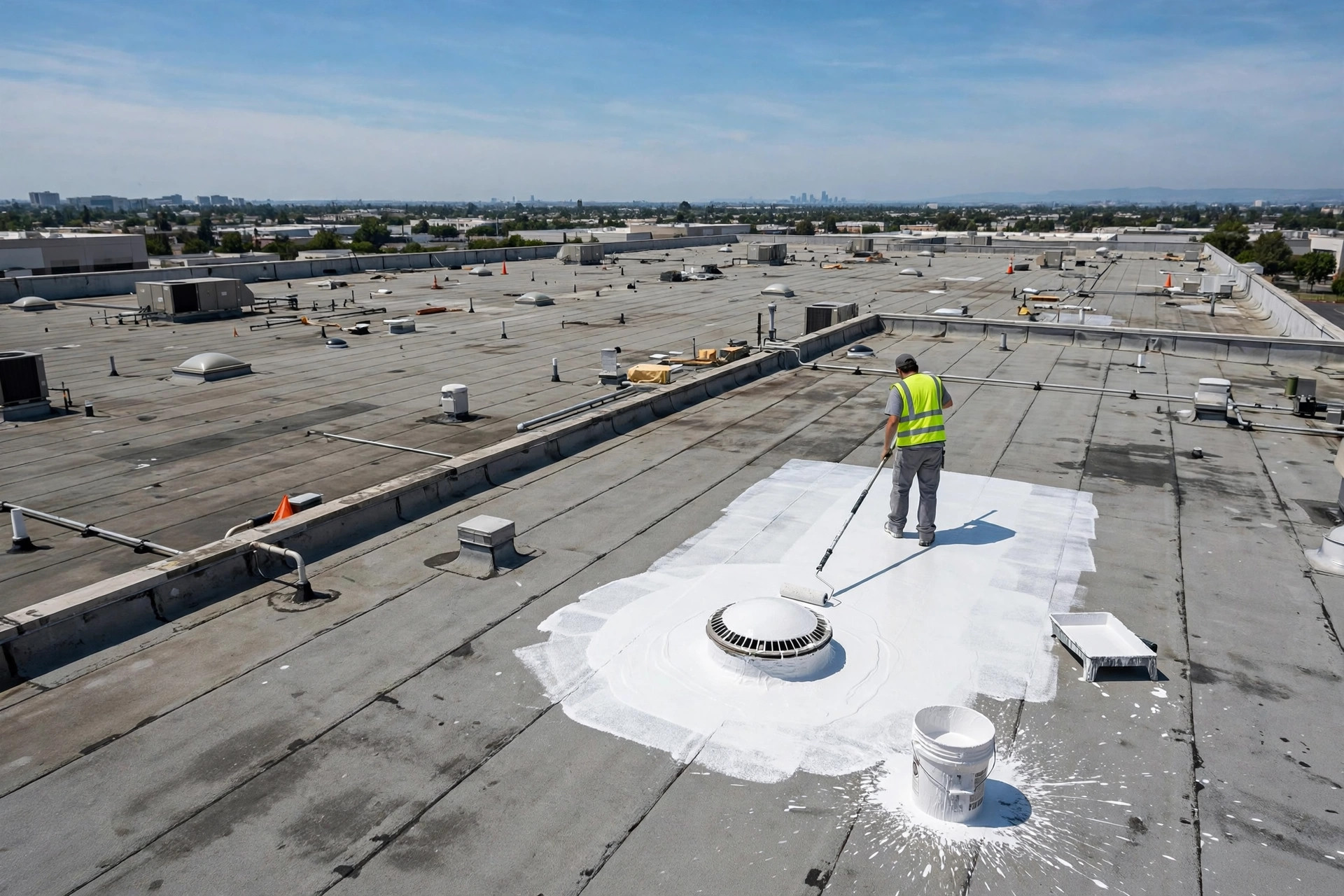
Commercial roof waterproofing is the set of methods that keep water out of a commercial building through its roof. Every roof system waterproofs in its own way: membranes shed water, coatings seal surfaces, and flashings guard the joints. For building owners across the United States, understanding commercial roof waterproofing helps you choose the right system, judge contractor proposals, and fix leaks at their source.
Water is the enemy of every building. It rots decks, ruins insulation, stains ceilings, grows mold, and damages inventory and equipment. A roof does not need to collapse to cause major harm; a slow leak over a storeroom can cost more than the roof repair itself. This guide compares the main waterproofing methods so you can match the right one to your building.
7 Methods of commercial roof waterproofing
One, single-ply membranes. Sheets of TPO, EPDM, or PVC cover the roof in large pieces with sealed seams. This is the most common waterproofing for new commercial flat roofs. Seams are heat-welded or taped, and flashings seal penetrations. It is proven, cost-effective, and repairable.
Two, built-up roofing. Multiple layers of asphalt and felt, topped with gravel or a cap sheet, create a thick waterproof barrier. This classic system is heavy and labor-intensive but very durable. It suits buildings that can carry the weight.
Three, modified bitumen. Asphalt sheets modified with polymers come in rolls applied with heat, cold adhesive, or self-stick backing. Often installed in two layers, it offers good puncture resistance and handles foot traffic well.
Four, liquid-applied membranes. Coatings and liquid membranes are rolled or sprayed on and cure into a seamless waterproof skin. Silicone, acrylic, and polyurethane are common. They suit restoration work and complex shapes with many details.
Five, spray polyurethane foam. Foam is sprayed on, expands, and gets a protective coating. The foam both insulates and waterproofs with no seams. It is light and conforms to any shape, but depends on its coating for long-term UV protection.
Six, metal roofing. Standing-seam and other metal panels shed water with interlocking joints and concealed fasteners. Metal lasts for decades and handles steep and low slopes. It is the premium option with the longest life.
Seven, below-membrane systems for special roofs. Plaza decks, green roofs, and parking structures use waterproofing under pavers or soil. These are specialized systems with drainage layers and root barriers, designed by engineers for the specific use.
Choosing the Right commercial roof waterproofing Method
Match the method to the roof slope. Flat and low-slope roofs need true waterproof membranes, since water sits on them. Steeper slopes can use water-shedding systems like metal. Putting a water-shedding system on a flat roof invites leaks.
Consider the building’s use. Restaurants with grease exhaust need chemical-resistant membranes like PVC. Warehouses with heavy foot traffic need tough systems like modified bitumen. Buildings planning solar need membranes that handle mounts and penetrations cleanly.
Weigh budget against life. Single-ply membranes balance cost and performance for most buildings. Coatings cost less but need renewal. Metal costs more but lasts longest. Calculate cost per year of expected life, not just install price.
Check the structure. Heavy systems like built-up roofing and ballasted membranes need structural capacity. An engineer should verify older buildings before adding weight. Light systems like fully adhered single-ply or foam fit more structures.
Think about maintenance appetite. Every system needs twice-yearly checks, but some need more. Foam needs recoating on schedule. Coatings need renewal. Metal needs fastener attention. Pick a system your building will actually maintain.
Commercial roof waterproofing: Critical Details
Flashings decide success or failure. Most leaks start where the roof meets something else: pipes, curbs, walls, drains, and edges. Whatever waterproofing method you choose, the flashing details must be designed and installed with care. Ask contractors to explain their flashing approach.
Drainage is waterproofing too. A membrane cannot protect a roof that holds water for weeks. Drains, scuppers, gutters, and slope must move water off quickly. Ponding voids some warranties and shortens every system’s life. Fix drainage as part of any waterproofing project.
Penetrations need planning. Every pipe, vent, and unit curb is a hole in the waterproofing. Cluster penetrations where possible to reduce flashing count. Seal abandoned penetrations properly instead of leaving capped stubs that leak later.
Transitions matter. Where the roof meets walls, parapets, or a different roof section, the waterproofing must turn up and terminate correctly. These transitions see the most movement and the most weather. They deserve the best materials and the most skilled labor.
Compatibility counts in repairs. Patch materials must bond to the existing system. The wrong sealant on the wrong membrane fails fast. Maintenance crews should know your roof type and carry compatible repair materials.
Cost Factors for commercial roof waterproofing
System choice is the biggest lever. Coatings and restoration are the lowest cost per square foot. Single-ply membranes sit in the middle. Built-up, foam, and metal run higher. Match the spend to the building’s value and hold period.
Roof condition sets prep cost. A sound roof preps quickly for coating or overlay. A roof with wet insulation, bad decking, or heavy contamination needs tear-off and repair first. A moisture survey before budgeting avoids surprises.
Size and complexity drive labor. Large simple roofs cost less per foot than small cut-up roofs. Every penetration, curb, and angle adds detail labor. Access difficulty adds hours on tight sites.
Drainage upgrades add cost and value. Tapered insulation, new drains, and crickets fix ponding while the roof is open. This work pays back in longer system life and fewer leaks.
Warranty level affects price. Longer warranties often require thicker materials, specific details, and certified contractors. Decide what warranty you need and get bids that meet it.
For cost benchmarks, see commercial roof repair cost per square foot. For contractor vetting, read how to choose a commercial roofing contractor. For coating options, see commercial roof coating contractors.
Maintaining commercial roof waterproofing
Inspect twice a year without fail. Spring checks find winter damage. Fall checks prepare for winter. Walk the whole roof, check flashings, clear drains, and photograph everything. Written reports with photos build the record that warranties require.
Clear drainage at every visit. Leaves, trash, and sediment block drains and cause ponding. This simple task prevents more leaks than any other maintenance item. Check interior drains too, not just the roof surface.
Repair damage fast. Punctures, torn flashings, and open seams let water in from the first rain. Small repairs cost little. The water damage they prevent costs a lot. Keep compatible patch materials on hand or a contractor on call.
Control roof traffic. Every trade that crosses the roof risks damage. Require walk pads on service paths, insist trades report their roof work, and inspect after major work. A sign-in log for roof access helps.
Recoat and renew on schedule. Coatings, foam topcoats, and sealants wear out. Missing the renewal window exposes the system underneath. Put these dates on the building’s long-term calendar and budget for them.
The National Roofing Contractors Association publishes waterproofing guidance at https://www.nrca.net/. The Department of Energy covers roofing and energy performance at https://www.energy.gov/.
When to Restore vs Replace
Restore when the roof is mostly sound. If the membrane is intact, insulation is dry, and leaks are few and local, a coating or restoration system adds years at a fraction of replacement cost. A moisture survey confirming dry insulation is the green light.
Replace when damage is widespread. Wet insulation across large areas, failing seams everywhere, or a deck in poor shape means restoration would bury problems. Tear-off and replacement fix the structure, not just the surface.
Consider the numbers. Get prices for both restoration and replacement. Divide each by the expected added years. Sometimes replacement’s longer life makes its yearly cost lower than a short-lived restoration. Run the math before deciding.
Factor in disruption. Restoration is usually faster and less disruptive than tear-off replacement. For occupied buildings where downtime is costly, this can tip the decision even when replacement pencils out slightly better.
Effective commercial roof waterproofing is a system, not a product: membrane, flashings, drainage, and maintenance all working together. When planning commercial roof waterproofing, fix drainage first, because no membrane survives permanent ponding. The right commercial roof waterproofing method depends on slope, use, budget, and structure, so match the system to the building. After any commercial roof waterproofing project, twice-yearly inspections and prompt repairs protect the investment.
What is the best commercial roof waterproofing method?
There is no single best method. Single-ply membranes suit most flat roofs. Coatings suit sound roofs needing renewal. Metal suits long holds and steep slopes. Match the method to slope, use, budget, and structure.
How long does commercial roof waterproofing last?
It depends on the system and care. Coatings may last ten to fifteen years before renewal. Single-ply membranes often last twenty to thirty years. Metal can exceed forty. Maintenance determines where in the range you land.
Can waterproofing fix an actively leaking roof?
It can, but the leak source must be found and fixed first. Coating over an unrepaired leak or wet insulation hides the problem. Proper diagnosis, repair, then waterproofing is the right sequence.
Does commercial roof waterproofing require a permit?
Many US cities require permits for roofing work, especially tear-offs and structural changes. Simple maintenance usually does not. Your contractor should know local rules and handle permits.
How do I find leaks in commercial roof waterproofing?
Start with a visual inspection of flashings and seams. For hidden leaks, contractors use infrared scans, electronic leak detection, or flood testing. These methods pinpoint breaches without tearing up the roof.
Next Steps
Get a professional roof assessment with a moisture survey to learn your roof’s true condition. Then decide: maintain, restore, or replace. Get three detailed bids for the chosen path, with materials, details, and warranties specified. Whatever commercial roof waterproofing method you pick, back it with twice-yearly maintenance and prompt repairs. Dry buildings are profitable buildings.



