
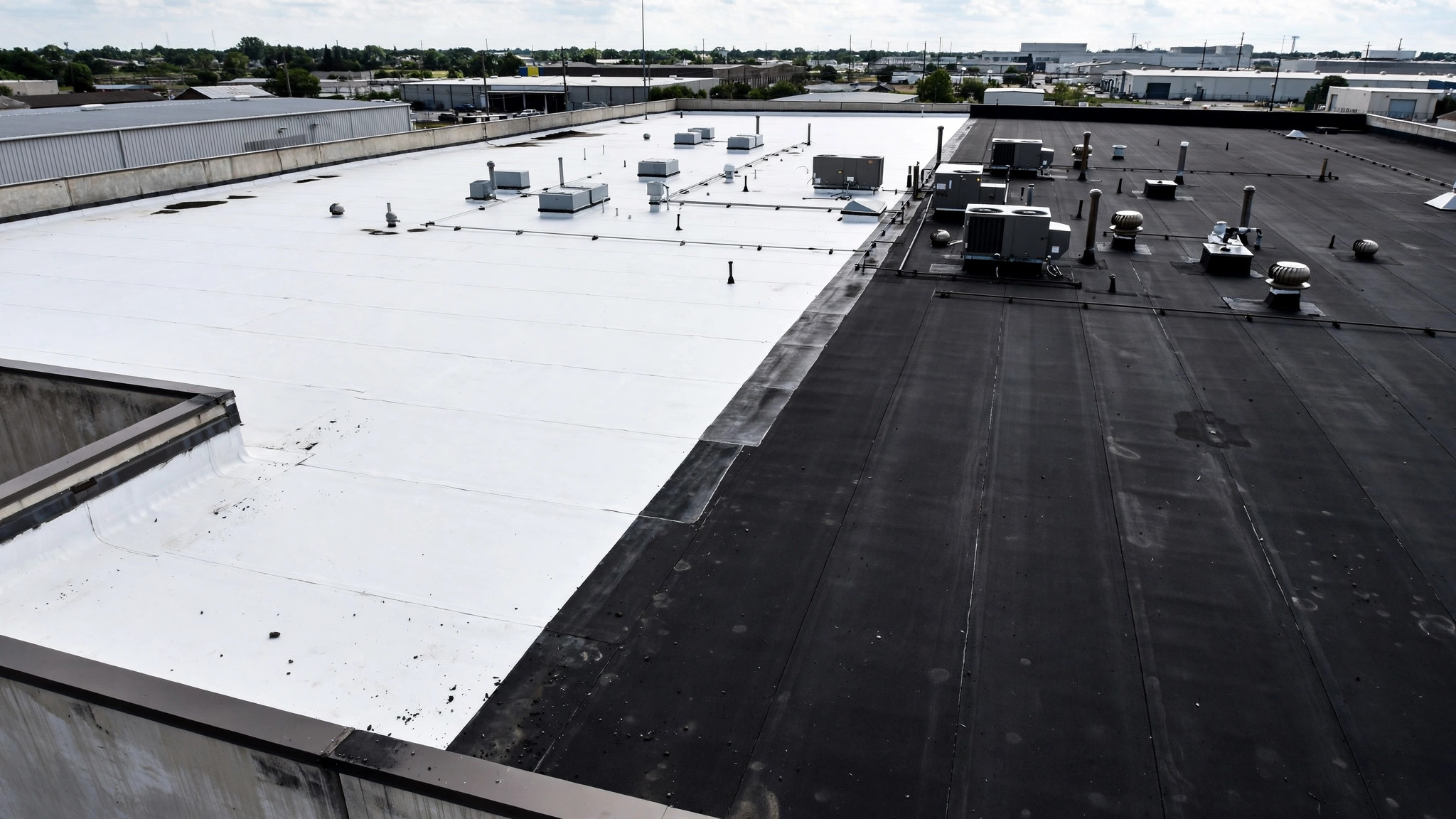
Choosing commercial roofing materials is one of the biggest decisions a building owner makes. The roof protects everything under it, and the material you pick decides how long it lasts, how much it costs, and how it handles sun, wind, and rain. Pick well and you forget about the roof for decades. Pick badly and you pay for it twice.
This guide walks through the main commercial roofing materials used on flat and low-slope buildings across the United States. You will learn what each one costs, how long it lasts, and where it works best. Use it to talk with contractors from a position of knowledge.
The most common commercial roofing materials
TPO is the most popular of the commercial roofing materials for new flat roofs today. It is a single-ply white membrane that reflects sunlight and keeps the building cooler. TPO installs fast, costs a moderate amount, and carries warranties of fifteen to twenty years from the major makers. It handles ponding water well and resists punctures better than older single-ply options.
EPDM is the black rubber membrane that has been around for decades. It is one of the most proven commercial roofing materials, with roofs still performing after thirty years. EPDM costs less than TPO in many markets. The black color absorbs heat, which can be a plus in cold climates and a minus where cooling bills dominate. White-coated EPDM is available for owners who want the long track record with better reflectivity.
PVC is a single-ply membrane known for standing up to grease and chemicals. Restaurants and food plants often choose it because kitchen exhaust eats lesser membranes. It also welds into strong seams, which is the weak point of any membrane roof.
Modified bitumen is an asphalt-based system built up in layers. It is one of the older commercial roofing materials, and roofers know it well. It handles foot traffic better than most single-ply membranes, which matters on roofs with lots of equipment to service. The layered build makes repairs simple. It does not reflect much sun unless it gets a reflective coating on top.
Metal and built-up commercial roofing materials
Standing seam metal is a top choice among commercial roofing materials for sloped commercial roofs. Panels run from ridge to eave with raised seams and hidden fasteners. A metal roof can last forty years or more with basic care. It costs more up front than membrane systems, but the long life and low maintenance often win the long-term math. Metal also sheds snow and handles high winds well.
Built-up roofing, often called BUR, is the classic tar-and-gravel system. Layers of asphalt and felt build a thick, tough roof. It is heavy, so the building structure must be able to carry it. Among commercial roofing materials, BUR has one of the longest track records. New installs are less common than they once were, but it remains a solid pick for buildings that already have it and want a matching system.
Spray polyurethane foam with a protective coating is a seamless option. The foam is sprayed on and rises to form insulation and roofing in one step. There are no seams to fail. The coating on top must be recoated on schedule, or the sun will break the foam down. For odd-shaped roofs with many penetrations, foam can be the simplest way to get a watertight surface.
Matching commercial roofing materials to your climate
Climate should shape your pick of commercial roofing materials more than brand names do. In the hot South and Southwest, reflectivity is king. White TPO, PVC, or a coated membrane bounces the sun back and keeps cooling bills down. Dark membranes in these regions can reach surface temperatures far above the air temperature, which ages the material faster and heats the building.
In the cold North, the priorities flip. Snow loads, freeze-thaw cycles, and ice dams test every seam and flashing. EPDM has a long record in cold climates because it stays flexible when the temperature drops. Metal roofs shed snow well, which takes load off the structure. Whatever you choose, make sure the system is rated for the snow and wind loads your local code requires.
Hail country needs impact resistance. Some membranes carry ratings for hail impact, and thicker membranes or a cover board under the membrane add protection. In hurricane zones along the coasts, edge metal and fastening patterns matter as much as the membrane itself, because most wind failures start at the roof edge. Ask your contractor which options carry the ratings your insurance company wants to see.
Building use narrows the list further. A restaurant needs a membrane that resists grease at the exhaust fans. A chemical plant needs resistance to whatever vents onto the roof. A school needs quiet and durability under foot traffic from maintenance staff. Match the material to what the building actually does, not just to what costs the least.
How to compare commercial roofing materials on cost
Upfront price is only part of the story. The cheapest of the commercial roofing materials to install is not always the cheapest to own. A membrane that costs less today but needs replacement in fifteen years can cost more over thirty years than a metal roof that lasts forty. Ask every bidder for the installed price and the expected service life, then divide price by years to get a rough yearly cost.
Energy performance changes the math too. White reflective membranes cut cooling loads in hot climates. The U.S. Department of Energy explains how cool roofing lowers peak cooling demand at https://www.energy.gov/. In cold climates, a dark membrane can trim heating costs slightly, though the effect is smaller than most people expect.
Maintenance needs differ as well. All commercial roofing materials need inspections twice a year and after big storms. But some need more: foam needs its coating watched closely, and modified bitumen benefits from a reflective top coat to slow aging. When you compare options, ask each contractor what the maintenance plan looks like and what it costs per year.
Warranties are the last piece. Membrane makers offer warranties from ten to thirty years, but the fine print matters. Some cover only the material, not the labor to fix a failure. Some require the owner to prove regular maintenance. Read the warranty before you pick, not after. The National Roofing Contractors Association publishes owner guidance on roofing warranties at https://www.nrca.net/.
Commercial roofing materials: a selection checklist
Walk through this checklist with your contractor before you choose.
- Confirm your roof slope: flat, low-slope, or steep, since that rules some materials out.
- List every rooftop unit, vent, and penetration the new roof must flash around.
- Check the building structure: can it carry a heavy system like built-up roofing?
- Ask about local wind and hail ratings, and which materials meet them.
- Compare installed price per square foot across at least three bids.
- Ask for expected service life and the yearly cost over that life.
- Review the maintenance plan and its yearly cost for each option.
- Read the full warranty terms, including what voids the coverage.
- Ask for two local references with the same material, and call them.
When bids follow the same checklist, comparing commercial roofing materials stops being guesswork.
For help vetting the firms behind the bids, read how to choose a commercial roofing contractor. To understand what goes wrong with each system, see common commercial roof problems. And when you are ready to hire, our guide to finding a commercial roofing company walks through the process.
Questions owners ask about commercial roofing materials
Which of the commercial roofing materials lasts the longest?
Standing seam metal usually wins on lifespan, often forty years or more. EPDM and built-up roofing can reach thirty years with good care. TPO and PVC typically carry twenty-year warranties. Foam lasts as long as its coating is maintained.
Can I put a new roof over the old one?
Often yes, if the old roof is dry and the structure can take the weight. Many codes allow two roof systems before a full tear-off is required. A moisture survey will tell you whether the old roof is dry enough to cover.
Do white roofs really save money?
In hot climates, yes. A reflective white membrane can cut peak roof temperatures by a large margin, which trims cooling costs. The savings are smaller in mild or cold climates, where heating dominates the bill.
How do I know which material my building already has?
A roofer can tell in one visit. Black rubber-like sheets are usually EPDM. White heat-welded sheets are TPO or PVC. Layered asphalt with gravel is built-up roofing. Ribbed panels with raised seams are standing seam metal.
What is the biggest mistake owners make when picking commercial roofing materials?
Choosing on price alone. The cheapest bid often leaves out proper flashing, edge metal, or warranty coverage. Those missing pieces are where leaks start. Compare the full scope, not just the bottom line.
Your next steps
Narrow your list of commercial roofing materials to two or three that fit your slope, structure, and climate. Get three detailed bids on the same scope, check references, and read the warranties. A roof is a twenty-year decision, so spend the time now. The right material, installed by the right crew, will protect your building quietly for decades.



