
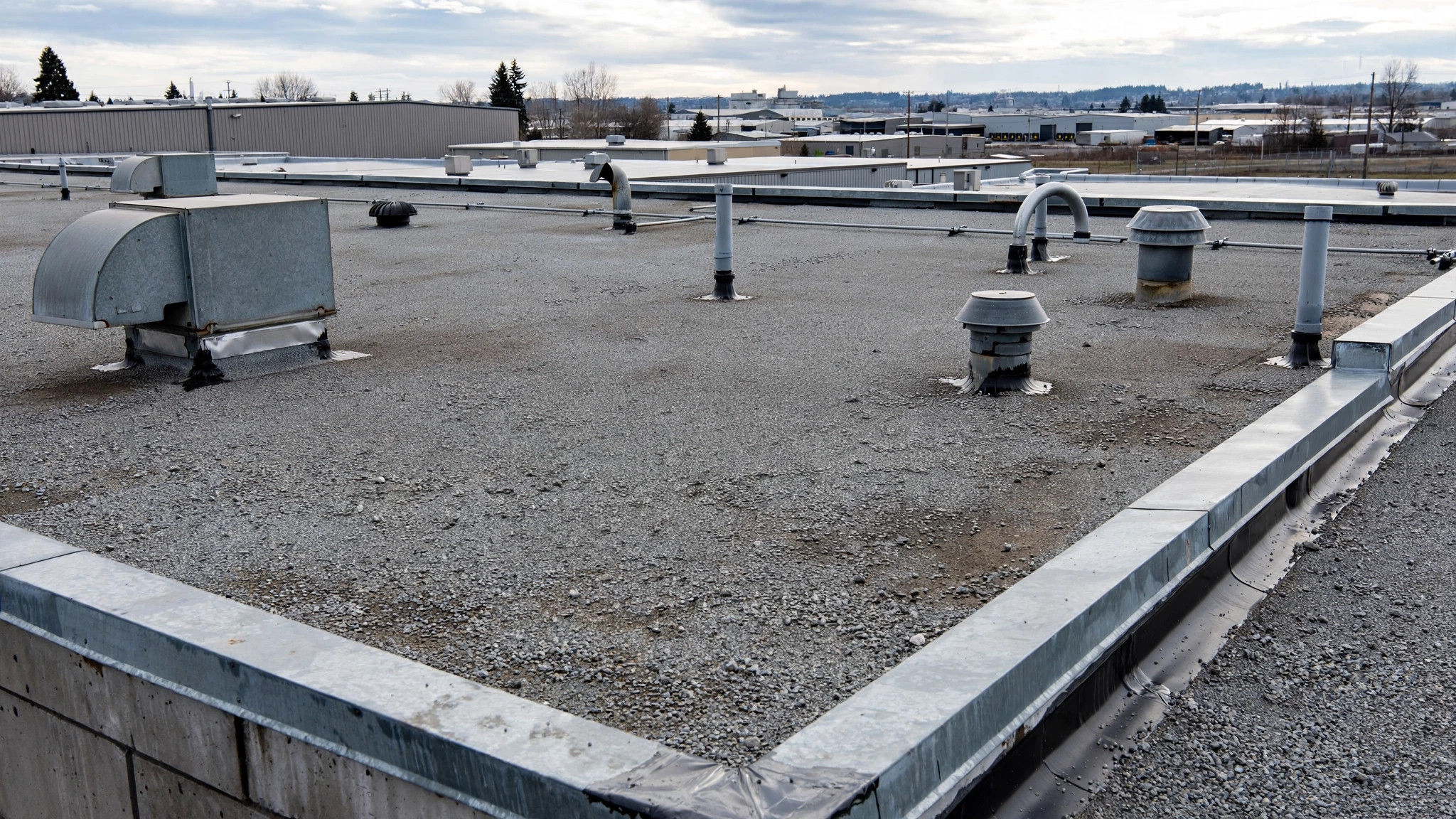
Every commercial building needs a roof that fits its structure, climate, and budget. The options can confuse owners who only buy a roof once every few decades. This guide explains the main commercial roofing types in simple terms so you can compare them fairly.
You will learn what each system is, what it costs, how long it lasts, and which situations suit it best.
The Main commercial roofing types
TPO
TPO is a white single-ply membrane with heat-welded seams. It reflects sunlight, which cuts cooling costs. It installs quickly and costs moderately. Lifespan runs 20 to 25 years. Among commercial roofing types, TPO is one of the most popular for new low-slope roofs.
EPDM
EPDM is a black rubber membrane with a long proven history. It stays flexible in cold weather and resists UV well. Seams glue or tape together. It costs less than most commercial roofing types and lasts 25 to 30 years. Owners who value track record choose EPDM.
PVC
PVC is a single-ply membrane that resists chemicals and grease. It welds like TPO. It costs more but lasts 20 to 30 years. Restaurants and industrial buildings pick PVC for its chemical resistance.
Built-Up Roofing
BUR layers felt and asphalt into a thick redundant system. It has protected buildings for over a century. Installation is labor-heavy. It lasts 20 to 30 years. Owners who trust multi-layer protection still choose it among commercial roofing types.
Modified Bitumen
Modified bitumen uses polymer-modified asphalt sheets. It installs in fewer layers than BUR with torch, mop, or peel-and-stick methods. It lasts 20 to 25 years at moderate cost. It suits smaller commercial buildings.
Metal
Standing seam metal is the longest-lasting of the commercial roofing types at 40+ years. It sheds water well and needs little maintenance. Upfront cost is highest, but lifetime value can be best for long-term owners.
Coatings
Liquid coatings restore aging roofs without tear-off. They cost far less than replacement and last 10 to 15 years. They suit sound roofs needing extended life.
Comparing Costs
Initial installed cost generally ranks: coatings lowest, then EPDM, TPO, modified bitumen, PVC, BUR, and metal highest. But purchase price is only part of the story. Divide by expected lifespan for true comparison.
Include the full project cost. Tear-off, insulation, deck repair, and code upgrades apply to every option. Detailed quotes let you compare the commercial roofing types fairly.
Comparing Lifespan
Metal leads at 40+ years. EPDM, PVC, and BUR reach 25 to 30. TPO and modified bitumen reach 20 to 25. Coatings last 10 to 15. These ranges assume proper installation and maintenance. Neglect cuts every number sharply.
Energy Performance
White reflective commercial roofing types like TPO and PVC cut cooling costs. Dark roofs like EPDM and BUR absorb heat. Insulation under any system matters greatly. The Department of Energy explains cool roof savings at https://www.energy.gov/.
Choosing the Right System
Consider structure first. Heavy systems need strong decks. Consider climate next. Hot regions favor reflective membranes. Cold regions need flexibility. Wind zones need rated attachment.
Consider building use. Chemical exposure favors PVC. Heavy traffic favors tough membranes. Consider your timeline. Short holds favor value options. Long holds justify premium commercial roofing types like metal.
Get professional input. The National Roofing Contractors Association offers guidance at https://www.nrca.net/. A qualified contractor assesses your building and recommends honestly.
Installation Quality
Across all commercial roofing types, installation quality decides real performance. Seams, flashing, and drainage details matter most. Hire certified installers with local references. Supervise detail work at penetrations.
Safety is part of professionalism. OSHA standards at https://www.osha.gov/ govern roof work. Hire contractors with written safety programs.
Maintenance Basics
All commercial roofing types need regular care. Inspect twice yearly. Keep drains clear. Fix small problems immediately. Document everything for warranty support.
Tailor care to the system. Check membrane seams, metal fasteners, or coating condition as appropriate. Warranties require documented maintenance. Without records, claims fail.
For repair topics, see our guides to TPO roof repair and commercial metal roof repair. For restoration options, read about commercial roof coating contractors.
Single-Ply vs. Multi-Ply commercial roofing types
The commercial roofing types split into two families. Single-ply systems use one waterproof membrane layer. TPO, EPDM, and PVC are single-ply. Multi-ply systems stack several waterproof layers. BUR and modified bitumen are multi-ply. Each approach has logic behind it.
Single-ply systems install faster with less labor. Large sheets cover big areas quickly. Heat-welded or adhered seams create the waterproof layer. Quality depends heavily on seam work and flashing details. One layer means one chance to get it right.
Multi-ply systems build redundancy. If one layer gets damaged, others still protect. BUR with four plies tolerates minor damage that would breach a single-ply. The trade-off is weight, labor cost, and installation mess.
Which is better? It depends on priorities. Single-ply commercial roofing types dominate new construction for speed and cost. Multi-ply suits owners who value redundancy and have structure for the weight. Both last decades when installed well.
Hybrid approaches exist. Some owners install single-ply over multi-ply in reroofing. Some use multi-ply base with single-ply cap. Your contractor should explain the assembly logic, not just the membrane name.
Questions to Ask Roofing Contractors
Good questions reveal good contractors. Ask these when comparing commercial roofing types and bids.
Ask which systems they install most and why they recommend one for your building. Listen for building-specific reasons, not generic sales points. A good answer mentions your roof slope, structure, climate, and use.
Ask about the full assembly, not just the membrane. What insulation type and thickness? What attachment method? How will they flash penetrations? Vague answers signal shallow knowledge.
Ask for references from similar buildings with the same system. Call the references. Ask about leaks, callbacks, and whether the contractor honored the warranty. Past performance predicts future results.
Ask about the crew. Who supervises? How many similar roofs have they installed? Subcontracted labor is common; ask who is responsible for quality. A named supervisor beats an anonymous crew.
Ask about schedule and weather plans. Roofing needs dry weather. What happens if rain interrupts? How do they protect open roofs? Professional answers show experience.
Ask about cleanup and protection. Tear-off creates debris. How will they protect landscaping, cars, and building entrances? Who pays if something gets damaged? Get it in writing.
Planning Your Roofing Budget
A new roof among the commercial roofing types is a capital expense. Plan it like one. Start with professional assessment years before failure. A roof survey with moisture scanning tells you remaining life.
Build the budget from detailed quotes. Include tear-off, deck repair allowance, insulation upgrades, permits, and contingency. Ten percent contingency covers surprises hidden under the old roof.
Consider financing. Roof replacement loans, equipment financing, and property improvement loans all exist. Some contractors offer financing. Compare total cost, not just monthly payments.
Time the project well. Mild weather seasons offer better scheduling and pricing. Emergency replacements cost the most. Planning ahead is the cheapest decision you make.
Track the investment. A new roof adds building value and cuts energy costs. Document the system, warranty, and maintenance plan. Good records support the building’s value at sale or refinancing.
Sustainability and commercial roofing types
Roofing choices affect the environment. Reflective commercial roofing types cut cooling energy and urban heat. TPO and PVC qualify for cool roof programs in many areas. Some utilities offer rebates for reflective roofs.
Recyclability varies. TPO and PVC membranes can be recycled at end of life. Metal roofs are highly recyclable. EPDM recycling options are growing. Ask manufacturers about take-back programs.
Tear-off waste is a real impact. Overlay options that reuse the old roof avoid landfill waste. Coating restoration extends life without any tear-off. When replacement is needed, ask the contractor about recycling old materials.
Longer life is the greenest choice. A 40-year metal roof uses fewer resources over time than two 20-year membranes. Factor lifespan into sustainability thinking, not just material labels.
Frequently Asked Questions
What are the most common commercial roofing types?
TPO, EPDM, PVC, built-up roofing, modified bitumen, and metal dominate. Coatings restore aging roofs. TPO and EPDM lead new installations.
Which commercial roofing types last longest?
Metal at 40+ years. Among membranes, EPDM and PVC reach 30 years with good care and installation.
Which commercial roofing types are cheapest?
Coatings cost least. Among full systems, EPDM is usually cheapest initially. Compare lifetime cost, not just initial price.
Can I change commercial roofing types when reroofing?
Usually yes, if the structure supports the new system. Your contractor should verify deck capacity and drainage compatibility.
How do commercial roofing types affect energy bills?
Reflective surfaces and insulation levels drive costs. White membranes and upgraded insulation cut heating and cooling bills for decades.
Next Steps
Shortlist two or three commercial roofing types that fit your building and budget. Get detailed quotes from certified contractors. Compare lifetime costs, warranties, and installer qualifications. The right choice protects your building reliably for its full planned life.



