
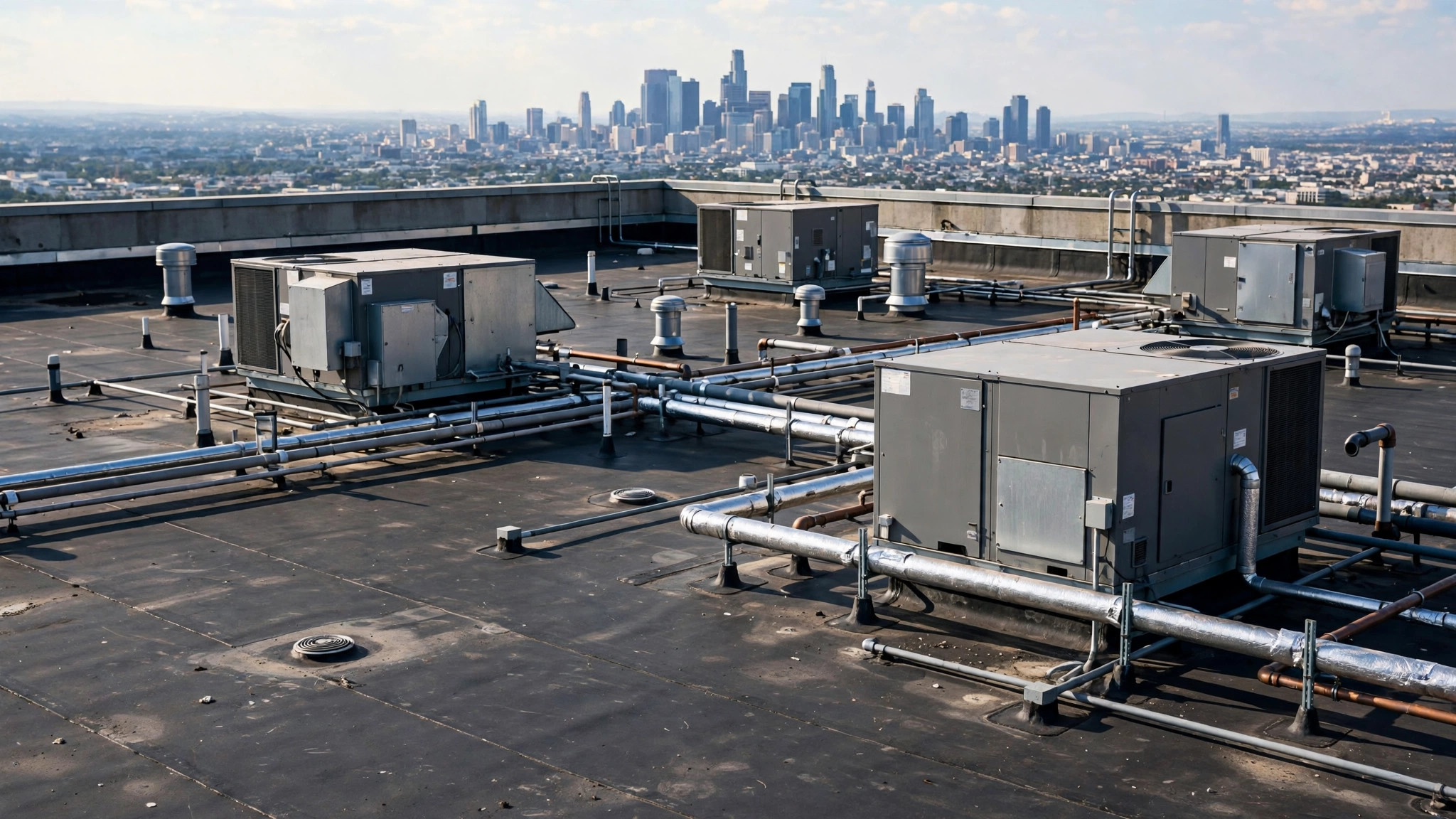
The commercial rooftop is the hardest-working part of your building. It carries the roof membrane, the HVAC units, vents, drains, and sometimes solar panels. It takes sun, wind, rain, and foot traffic every day. Most owners rarely go up there. That neglect is why small rooftop problems turn into big repair bills.
This guide explains what lives on a commercial rooftop, how to inspect it, and the maintenance steps that prevent costly damage. Follow these tips and your roof will last longer with fewer surprises.
What Lives on a commercial rooftop
A typical commercial rooftop holds more equipment than most owners realize. Packaged HVAC units sit on curbs, connected by ductwork and piping. Exhaust fans, vents, and skylights poke through the membrane. Drains and scuppers move water off the surface. Pipes, conduit, and cable trays cross the roof to serve equipment.
Each penetration is a potential leak point. Flashing seals the gap where equipment meets the membrane. Over time, flashing cracks, sealant shrinks, and fasteners loosen. Every item on the commercial rooftop needs periodic attention.
Traffic patterns matter too. Technicians walk the same paths to reach equipment. Those paths wear faster than the rest of the roof. Without walk pads, foot traffic grinds dirt into the membrane and causes punctures.
8 Commercial rooftop Maintenance Tips
1. Inspect Twice a Year
Walk the entire commercial rooftop every spring and fall. Look for ponding water, clogged drains, damaged flashing, open seams, and punctures. Check around every penetration. Bring a camera and photograph problem areas to track changes.
2. Keep Drains Clear
Clogged drains cause ponding, and ponding destroys roofs. Clear leaves and debris from every drain, scupper, and gutter. Check that water flows freely. A commercial rooftop with poor drainage ages twice as fast.
3. Control Access
Limit who goes on the commercial rooftop. Issue keys only to staff and contractors who need them. Require visitors to sign in. Every unnecessary trip adds wear and puncture risk.
4. Install Walk Pads
Place walk pads on paths to HVAC units and other frequently serviced equipment. Pads spread weight and protect the membrane. They are cheap compared to puncture repairs.
5. Check Flashing and Sealant
Flashing at curbs, pipes, and edges is the most common leak source on a commercial rooftop. Look for cracks, gaps, and loose sections. Reseal small problems promptly before water gets in.
6. Watch the HVAC Units
Rooftop units vibrate, leak condensate, and drip oil. Check curbs for cracked seals. Make sure condensate drains flow away from the roof, not onto it. Ask HVAC technicians to report roof damage they notice.
7. Trim Nearby Trees
Overhanging branches drop leaves that clog drains. Branches rubbing the roof wear the membrane. Falling limbs puncture it. Keep trees cut back from the the rooftop.
8. Document Everything
Keep a log of inspections, repairs, and contractor visits. Note dates, findings, and costs. A good record supports warranty claims and helps you plan replacement budgets.
Common commercial rooftop Problems
Ponding water tops the list. It adds weight, breeds algae, and breaks down membranes. If water stands more than two days after rain, drainage needs fixing. Tapered insulation or additional drains solve most ponding.
Membrane punctures come next. Dropped tools, dragged equipment, and storm debris all punch holes. Small punctures are cheap to patch. Ignored punctures let water into the insulation.
Flashing failures cause many leaks. Sealant dries out, metal corrodes, and movement opens gaps. Regular inspection catches these early. For a deeper look at issues, see our guide to common commercial roof problems.
HVAC-related damage is common on a busy the rooftop. Condensate overflow, oil leaks, and vibration all harm the membrane. Coordinate with your HVAC contractor to keep equipment from damaging the roof. Our article on commercial rooftop AC unit repair covers the equipment side.
Safety on the commercial rooftop
Falls kill more roof workers than any other hazard. Anyone on a the rooftop needs fall protection near edges, openings, and skylights. Skylights are especially dangerous because old plastic domes can break under weight.
As the owner, you share responsibility. Hire contractors with written safety programs. Make sure roof hatches are secured and ladders are safe. Post rules for roof access where staff can see them.
The Occupational Safety and Health Administration sets fall protection standards at https://www.osha.gov/. Heat illness is another risk on summer roofs. Schedule work for cooler hours and provide water.
Planning Repairs and Replacement
Small the rooftop repairs are routine. Patching punctures, resealing flashing, and clearing drains cost little when caught early. Budget a small annual amount for these fixes.
Larger problems need professional assessment. Wet insulation, widespread seam failure, or structural concerns call for a full survey with moisture scanning. The National Roofing Contractors Association recommends professional evaluation before major decisions. See https://www.nrca.net/.
When replacement comes, consider upgrades. Better insulation, improved drainage, and reflective membranes cut energy costs. The Department of Energy explains roof energy options at https://www.energy.gov/. A new the rooftop is a chance to fix every old problem at once.
Keep up with routine care using our commercial roof maintenance checklist. For ponding specifically, read about flat roof ponding water fixes.
Coordinating Equipment Work on a commercial rooftop
The the rooftop is shared space. Roofers, HVAC technicians, electricians, and solar installers all work up there. Without coordination, one trade damages another trade’s work. The owner sets the rules that prevent this.
Require every contractor to report roof damage they see or cause. A simple rule in every work order covers it: if you damage the membrane, you report it the same day. HVAC technicians should photograph the curb and flashing before and after equipment service. That habit ends most blame disputes.
Schedule major work in the right order. If the roof needs replacement and HVAC units need swapping, do the roof first or coordinate both. Setting new units on an old failing roof wastes the curb work. If new penetrations are planned, have the roofer flash them, not the equipment installer. Roofers flash better.
Keep a roof plan on file. Mark equipment locations, walk paths, drains, and no-step zones. Give a copy to every contractor who goes up. A clear plan reduces random foot traffic across the membrane. Update the plan when equipment changes.
Cost Planning: Budgeting for commercial rooftop Care
A the rooftop needs an annual budget line, not just emergency funds. Plan for three cost levels. Routine maintenance covers inspections, drain cleaning, and minor sealant work. This is the smallest line but the most important. Skipping it multiplies the other two.
Minor repairs cover puncture patches, flashing reseals, and small membrane fixes found during inspections. Budget based on roof age and condition. Older roofs need more. A roof with heavy foot traffic needs more.
Capital reserves cover restoration or replacement. Divide the expected project cost by the years of remaining life. Save that amount yearly. A roof with ten years left and a six-figure replacement cost needs serious annual savings. Starting late means catching up fast.
Track spending per square foot. That metric lets you compare buildings in a portfolio and spot the problem roofs. A commercial rooftop that costs far more per square foot than its peers needs attention, whether that means better maintenance or earlier replacement.
Commercial rooftop Record Keeping
Good records turn a commercial rooftop from a mystery into a managed asset. Keep a file for each building with the roof type, install date, warranty terms, and contractor contacts. Add inspection reports, repair invoices, and photos with dates.
Warranty claims depend on records. Manufacturers ask for proof of maintenance before honoring claims. Without inspection logs, a valid claim can be denied. Insurance claims work the same way. After a storm, dated photos and maintenance history prove the roof was sound before the damage.
Share key records with your property manager and maintenance staff. When everyone can see the roof history, small problems get reported faster. A shared file beats a memory every time.
Frequently Asked Questions
How often should a commercial rooftop be inspected?
At least twice a year, in spring and fall, plus after major storms. Roofs with heavy equipment or foot traffic benefit from quarterly checks. Document every inspection.
Who is allowed on the commercial rooftop?
Only people with a work reason: maintenance staff, HVAC technicians, roofers, and inspectors. Limit keys, require sign-in, and brief visitors on walk paths and safety rules.
What causes most commercial rooftop leaks?
Failed flashing at penetrations, clogged drains causing ponding, punctures from traffic and debris, and open seams. Regular inspection catches all of these early.
Can solar panels go on a commercial rooftop?
Yes, but plan carefully. Panels add weight and penetrations. The roof must have enough remaining life to outlast the panels. Coordinate roofing and solar contractors so warranties stay valid.
How do I know if my commercial rooftop needs replacement?
Widespread wet insulation, frequent leaks in different areas, and a roof past its rated life point to replacement. A moisture survey gives the definitive answer.
Next Steps
Schedule a commercial rooftop inspection this season if one is overdue. Clear every drain and photograph the roof condition. Install walk pads on technician paths. Start a maintenance log if you do not have one. These simple steps cost little and prevent the expensive failures that catch owners off guard.



