
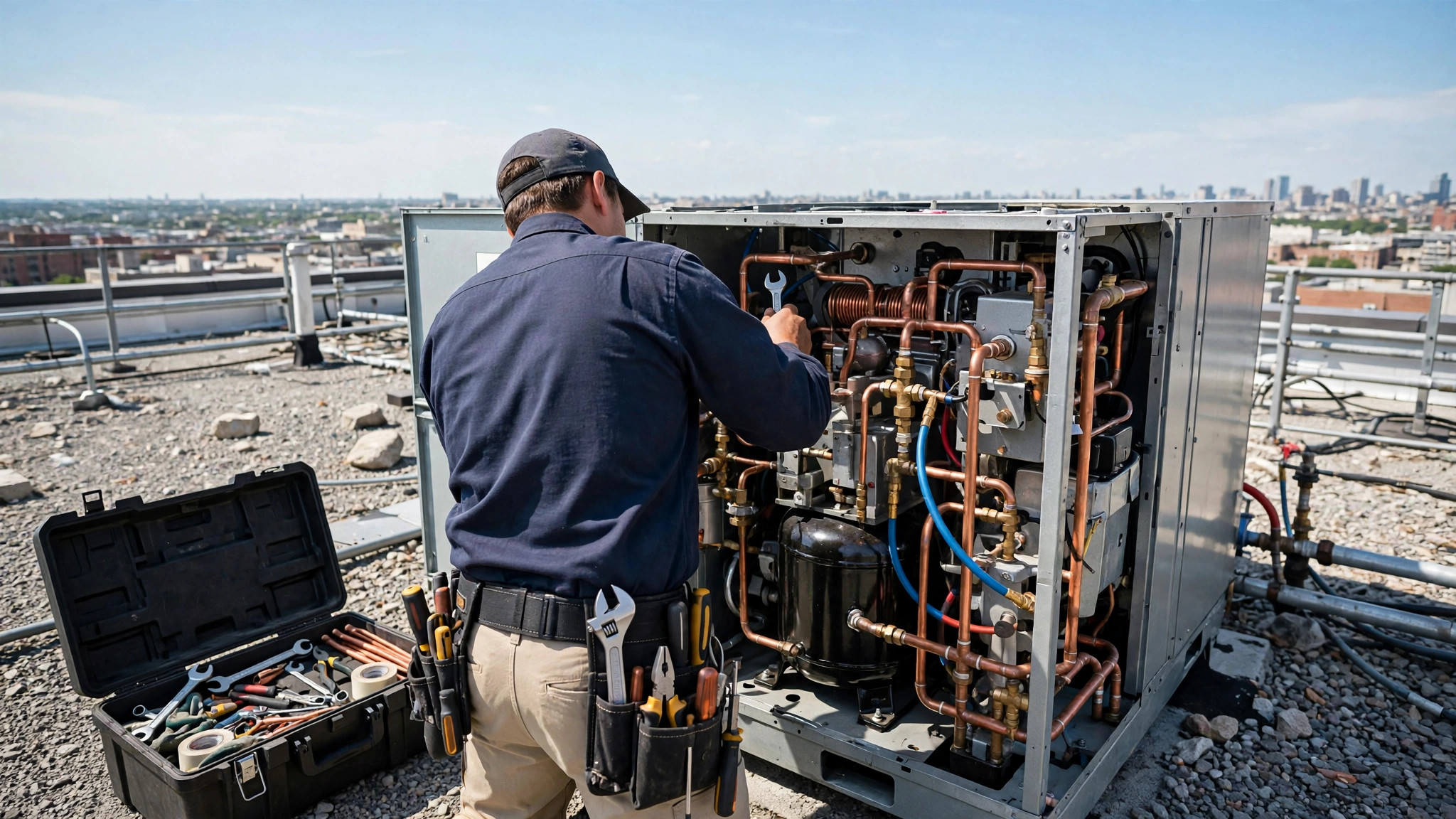
The compressor is the heart of any air conditioning system. It pumps refrigerant through the coils and makes cooling possible. When it fails, the whole system stops. Building owners then face a hard question: repair the compressor or replace the unit? The answer starts with understanding compressor replacement cost and what drives it.
This guide breaks down the real price factors, typical ranges, and the math behind repair versus replacement. You will finish with a clear framework for the next time a technician says the compressor is dead.
What the Compressor Does and Why It Fails
The compressor squeezes refrigerant gas into a hot, high-pressure state so the system can move heat outdoors. It runs whenever the system calls for cooling. Because it works so hard, it wears out over time. Most compressors last 10 to 15 years in commercial service.
Common failure causes include electrical problems, overheating from dirty coils, low refrigerant from leaks, and acid buildup from moisture in the lines. Lightning strikes and power surges kill compressors too. Many failures trace back to skipped maintenance. A compressor that fails under warranty is a different story from one that dies at year fourteen.
When a technician diagnoses a failed compressor, ask for proof. A good tech shows you electrical readings or a mechanical test. Compressor replacement cost is too high to approve on a guess.
Typical compressor replacement cost Ranges
Actual compressor replacement cost varies by system size and type. For small commercial units, expect the lower end of the range. Large rooftop units and chillers cost much more. Prices also vary by region and contractor.
As a rough guide, replacing a compressor in a small packaged unit can run from a few thousand dollars into the low five figures. Mid-size rooftop units run higher. Large systems with multiple compressors can reach the high five figures or more. These are installed prices, including parts, labor, refrigerant, and testing.
Beware of quotes that seem too low. A real compressor replacement cost includes more than the part. Refrigerant recovery, new filter driers, system flushing, leak testing, and recharging all take time and materials. A quote that skips these steps will cost you later.
What Drives compressor replacement cost
Use this checklist to understand any quote you receive.
- Compressor size and type. Larger tonnage and specialty types like screw or scroll compressors cost more than standard ones.
- Equipment brand. OEM parts cost more than aftermarket. Some brands have long lead times that add downtime cost.
- Refrigerant type. Older refrigerants are expensive and harder to find. A system recharge can add thousands to the total compressor replacement cost.
- Accessibility. Rooftop units need crane lifts in some cases. Tight mechanical rooms slow the work.
- System flushing and cleanup. Burnout failures contaminate the lines. Proper cleanup adds labor but protects the new compressor.
- Electrical work. Failed compressors sometimes damage contactors and wiring that must also be replaced.
- Labor rates. Commercial HVAC labor varies by market. Emergency or after-hours work costs more.
- Warranty terms. Longer part warranties may raise the price but lower long-term risk.
Always get the quote in writing with parts and labor separated. That makes it possible to compare bids fairly.
The Repair-vs-Replace Decision
A failed compressor forces the classic question. Here is a framework owners use.
First, check the age. If the system is under eight years old and otherwise sound, compressor replacement cost is usually worth paying. The unit has years of life left. If the system is past twelve years, put the repair quote next to a replacement quote.
Second, use the half rule. If the repair costs more than half of a new system, replacement usually wins. A new unit brings a fresh warranty and better efficiency.
Third, consider refrigerant. Systems on phased-out refrigerants face rising recharge costs. Spending big on compressor replacement cost for a system with obsolete refrigerant is often poor value.
Fourth, look at the rest of the system. Coils, fans, and controls wear out on the same schedule. A new compressor in a system with failing everything else buys little time.
Our guide to AC repair vs replace for commercial buildings walks through this math in detail. For typical service pricing, see commercial HVAC repair cost. If the system is still worth saving, read about commercial AC repair options.
How to Keep the New Compressor Alive
A replacement compressor should last its full rated life if the system is treated right. Start with the root cause. Ask the technician what killed the old one and fix that problem. Installing a new compressor into a system with dirty coils or a refrigerant leak repeats the failure.
Keep up with maintenance. Clean coils, correct refrigerant charge, tight electrical connections, and good airflow all protect the compressor. The Department of Energy explains how maintenance affects equipment life at https://www.energy.gov/.
Watch electrical supply too. Voltage problems and short cycling stress compressors. A phase monitor on three-phase equipment is cheap insurance. Surge protection at the panel helps in storm-prone areas.
Getting Fair Quotes
Get three quotes for any major compressor replacement cost. Make sure each contractor diagnoses the same problem. Ask each one to list the compressor model, refrigerant type and amount, parts replaced beyond the compressor, labor hours, and warranty terms.
Ask about the warranty carefully. Compressor warranties cover the part, not always the labor. Some require registration or professional maintenance to stay valid. Get the terms in writing before work starts.
Check the contractor’s commercial experience. Compressor work on large systems needs different skills and tools than home units. Ask for references from buildings with similar equipment.
The Occupational Safety and Health Administration sets standards for safe refrigerant handling at https://www.osha.gov/. A professional contractor follows them. ENERGY STAR also lists efficient replacement options at https://www.energystar.gov/.
Preventing Compressor Failure
Most compressor failures are preventable. The prevention list is short and cheap compared to compressor replacement cost.
Change filters on schedule. Dirty filters starve the system of air and overwork the compressor. Clean condenser coils at least yearly. Outdoor coils collect dirt that blocks heat transfer and raises operating pressure.
Keep refrigerant charge correct. Both low and high charge damage compressors. Only a trained technician should adjust charge. Fix leaks promptly instead of topping off repeatedly.
Service electrical components yearly. Loose connections and weak capacitors cause hard starting and overheating. A technician can spot these during routine maintenance.
Signs Your Compressor Is Failing
Compressors rarely die without warning. Watch for these signs so you can plan instead of scrambling. A loud or unusual noise from the outdoor unit is a common early sign. Grinding, rattling, or hard starting sounds point to internal wear. A system that runs but blows warm air may have a compressor that can no longer build pressure.
Tripped breakers are another warning. A failing compressor draws excess current and trips the breaker again and again. Do not just reset it and hope. Repeated trips damage wiring and can be a fire risk. Shaking or vibration from the unit also signals trouble, often from worn internal mounts.
Rising energy bills without a change in use can mean the compressor is working harder to do the same job. Efficiency drops as internal parts wear. If your bills climb while comfort drops, have the system checked. Catching a failing compressor early sometimes allows a planned replacement instead of an emergency call.
What Happens on Replacement Day
Knowing the process helps you plan around the work. The technician starts by recovering the refrigerant. Federal rules require recovery rather than venting. The old compressor comes out after electrical connections and refrigerant lines are disconnected. On rooftop units, a crane may be needed if the unit design requires it.
Next comes cleanup. The technician installs new filter driers, flushes the lines if the old compressor burned out, and checks for acid and moisture. Skipping this step is the fastest way to kill a new compressor. Then the new compressor goes in, lines are brazed, and the system is pressure tested for leaks.
Finally, the system is evacuated and recharged with refrigerant. The technician runs the unit and checks pressures, temperatures, and electrical draw against specifications. Expect the whole job to take a full day for most commercial units. Plan for the space to be without cooling during that time and warn tenants in advance.
Frequently Asked Questions
How much is typical compressor replacement cost?
It depends on system size, but small commercial units often run from a few thousand dollars to the low five figures installed. Mid-size and large systems cost more. Always get written quotes with parts and labor separated.
Is it worth paying compressor replacement cost on an old unit?
Usually not if the system is past twelve years and the repair exceeds half the price of replacement. Factor in efficiency gains and refrigerant availability. A new unit often pays back through lower energy bills.
How long does compressor replacement take?
Most jobs take one to two days, including recovery, installation, leak testing, and charging. Burnout cleanups and hard-to-reach equipment take longer. Parts availability can add days if the compressor is not in stock.
Will a new compressor lower my energy bills?
Slightly, if the old one was failing. But a new compressor in an old inefficient system will not match the savings of a full high-efficiency replacement. Compare both options before you decide.
Does the compressor warranty cover labor?
Usually not. Most warranties cover the part only, and some require professional maintenance or registration. Read the terms before work starts so there are no surprises.
Next Steps
When a compressor fails, pause before you approve the work. Get the diagnosis in writing, get three quotes, and run the repair-versus-replace math with honest numbers. Fix the root cause so the new compressor survives. A careful decision on compressor replacement cost protects both your budget and your building.



