
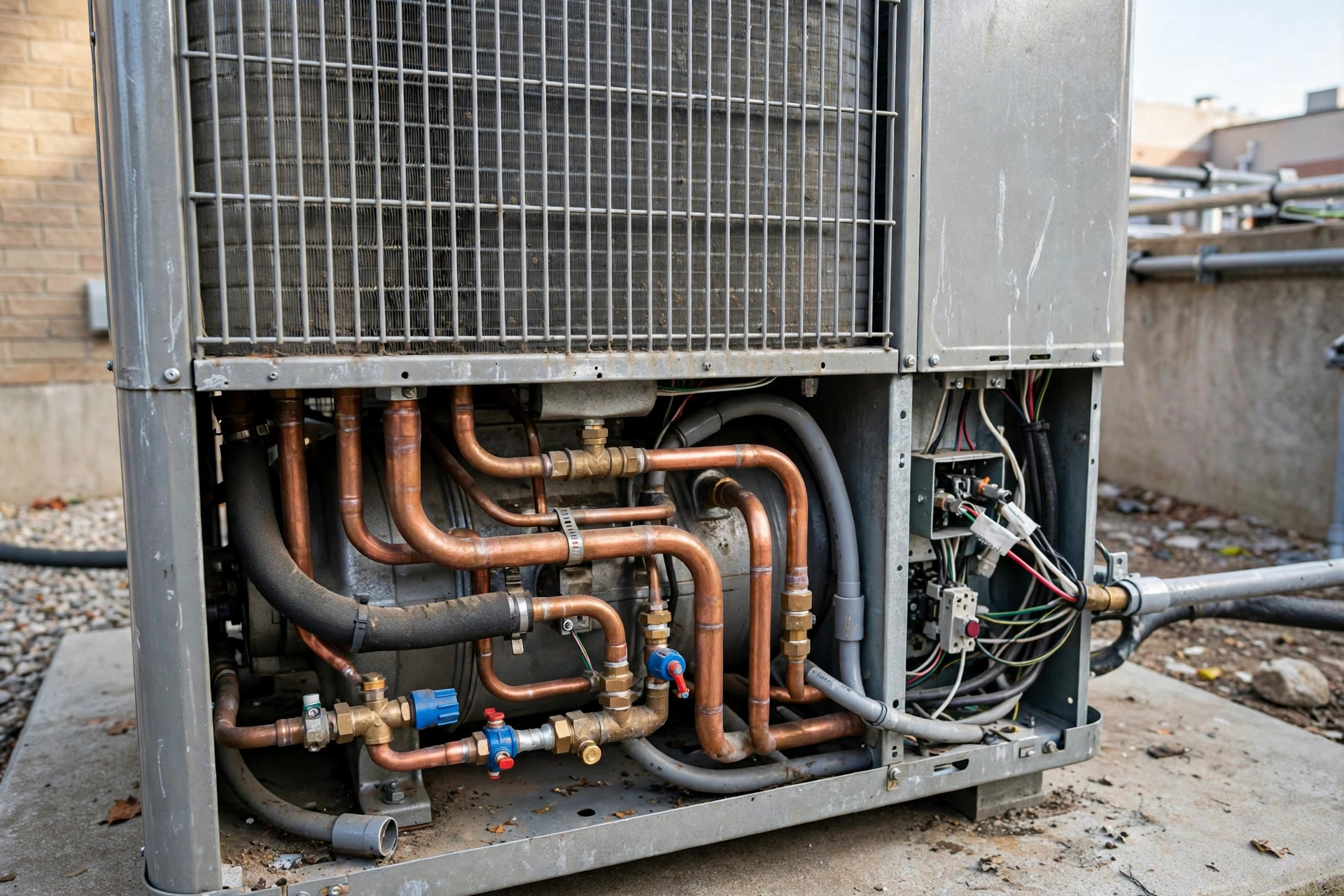
The compressor is the heart of any air conditioning unit. It pumps refrigerant through the system, and when it fails, cooling stops. Understanding the compressor for air conditioning unit cost helps you budget for the part, judge contractor quotes, and decide between repair and replacement with clear eyes.
This guide breaks down the compressor for air conditioning unit cost into parts and labor, explains the types of compressors you will encounter, and gives you eight tips for getting a fair price on commercial work.
What Makes Up the Compressor for Air Conditioning Unit Cost
The total compressor for air conditioning unit cost has two big pieces: the part and the labor. The part, meaning the compressor itself, runs four hundred to two thousand five hundred dollars for most commercial sizes. Small five ton scroll compressors sit near the low end. Large twenty ton commercial compressors sit at the high end.
Labor adds one thousand to two thousand five hundred dollars. Replacing a compressor is skilled, time heavy work. The technician recovers the refrigerant, cuts out the failed compressor, brazes in the new one, installs a new filter drier, pressure tests with nitrogen, pulls a deep vacuum, recharges the system, and runs full operational tests. Expect most of a working day, sometimes two for large or hard to reach units.
Tip one: always get the part and labor split in writing. The compressor for air conditioning unit cost looks very different when you can see that the part is nine hundred dollars and the labor is sixteen hundred. That split also lets you check whether the part price is fair.
Refrigerant adds to the bill. A commercial system holds many pounds of refrigerant, and a full recharge after compressor replacement runs several hundred to over a thousand dollars depending on type and amount. If the system uses phased out R-22, the refrigerant alone can cost more than the compressor.
Types of Compressors and Their Prices
Not all compressors cost the same. The type in your unit shapes the compressor for air conditioning unit cost directly.
Scroll compressors dominate modern commercial equipment. They have fewer moving parts, run quietly, and handle liquid slugging better than older designs. A commercial scroll compressor runs five hundred to one thousand eight hundred dollars depending on size. Most five to twenty ton units use scrolls.
Reciprocating compressors, the older piston style, still serve in many existing systems. They run four hundred to one thousand two hundred dollars. They are rugged but noisier and less efficient than scrolls. When a reciprocating compressor fails in an old unit, owners often replace the whole unit instead.
Rotary compressors appear in smaller commercial and ductless units. They are compact and cheap, two hundred to six hundred dollars, but they top out at smaller capacities.
Tip two: match the replacement to the system. The new compressor must match the old one’s capacity, voltage, phase, and refrigerant. A mismatch voids warranties and kills performance. Trust the nameplate data, not a guess.
8 Tips for a Fair Compressor for Air Conditioning Unit Cost
Tip three: verify the diagnosis before you approve anything. Compressor failure should be confirmed with electrical tests, not just a guess because the unit will not cool. Ask what tests were run. A second opinion costs little compared with the compressor for air conditioning unit cost.
Tip four: check the warranty first. Compressors often carry five to ten year parts warranties from the manufacturer. If your unit is covered, you pay labor only. Have the contractor run the serial number before you authorize the job. Missed warranty coverage is one of the most common ways owners overpay.
Tip five: ask about the core charge. Some suppliers add a core charge of fifty to two hundred dollars, refunded when the old compressor is returned. Make sure the quote says who keeps the core refund. It should be you.
Tip six: bundle related parts. A smart replacement includes a new filter drier, contactor, and capacitor. These parts are cheap next to the compressor for air conditioning unit cost, and they protect the new compressor. A quote that reuses a worn contactor is cutting the wrong corner.
Tip seven: insist on proper cleanup after a burnout. When a compressor burns out, acid contaminates the refrigerant lines. The system needs flushing and sometimes suction line filter driers. Skipping cleanup is the top reason replacement compressors die young. Ask the tech to explain the cleanup steps in the quote.
Tip eight: compare against replacement using real numbers. Get one quote for the compressor job and one for a full unit replacement. If the compressor for air conditioning unit cost exceeds half the replacement price and the unit is over ten years old, replacement usually wins. Our detailed walkthrough at https://commercialguides.com/ac-repair-vs-replace-commercial/ covers this decision.
OEM vs Aftermarket Compressors
One more decision affects the compressor for air conditioning unit cost: original equipment manufacturer parts versus aftermarket. OEM compressors come from the unit’s maker or its designated supplier. They fit exactly, carry the full factory warranty, and cost more. Aftermarket compressors from independent makers cost less, sometimes twenty to forty percent less, and good ones perform well.
For units under warranty, use OEM to protect coverage. For older units out of warranty, a quality aftermarket compressor from a known maker is a reasonable way to trim the compressor for air conditioning unit cost. Avoid no-name bargain compressors. The savings vanish if the part fails in two years and you pay labor all over again.
Where Owners Overpay on Compressors
Emergency premiums are the biggest overpay. A failed compressor in July with a rush parts order and overtime labor can add five hundred to fifteen hundred dollars to the compressor for air conditioning unit cost. If the building can tolerate a few days with portable cooling, standard scheduling saves real money.
Unnecessary upselling is next. Some contractors push a full system replacement when only the compressor failed on a young unit. Others push premium compressors where a standard OEM equivalent would do. Get the facts: unit age, warranty status, and the fifty percent rule.
Refrigerant overcharging happens too. The quote should state the refrigerant type and the number of pounds included. Vague refrigerant line items hide padding. Ask for specifics.
The Department of Energy publishes guidance on commercial cooling equipment at https://www.energy.gov/. ENERGY STAR also lists efficient commercial air conditioning products to compare when replacement is on the table, at https://www.energystar.gov/. For warning signs that a compressor is struggling, see https://commercialguides.com/signs-your-commercial-hvac-needs-repair/.
Preventing the Next Compressor Failure
The best way to control the compressor for air conditioning unit cost over time is to stop killing compressors. Most failures trace back to preventable causes.
Keep filters changed. Dirty filters starve the evaporator, drop suction pressure, and overheat the compressor. This is the number one killer across all commercial systems.
Keep coils clean. A dirty condenser coil cannot reject heat, so the compressor runs hot. A dirty evaporator coil freezes and sends liquid refrigerant back to the compressor. Both shorten its life sharply.
Fix leaks early. Low refrigerant charge overheats the compressor and washes oil from its bearings. Topping off without leak repair just postpones the failure.
Maintain electrical health. Tighten connections, replace weak capacitors, and check voltage. Electrical stress burns windings. A twice yearly tune-up catches these problems for a few hundred dollars, against thousands for the compressor for air conditioning unit cost when one fails.
Give the unit air. Keep three feet clear around condensers and rooftop units. Blocked airflow raises operating temperatures every hour the system runs.
For a seasonal plan that covers all of this, see https://commercialguides.com/commercial-hvac-maintenance-checklist/.
Frequently Asked Questions
What is the average compressor for air conditioning unit cost?
Two thousand to four thousand five hundred dollars installed for most commercial units, covering part, labor, and refrigerant. Larger systems run higher.
How long does compressor replacement take?
Usually one full working day. Burnout cleanup, rooftop access issues, or parts delays can extend it to two days.
Should I replace the compressor or the whole unit?
Replace the compressor if the unit is under ten years old and otherwise healthy. Replace the whole unit if it is over twelve years old, uses R-22, or the compressor for air conditioning unit cost tops half the replacement price.
Does warranty cover the compressor?
Often yes for the part. Many manufacturers cover compressors for five to ten years. Labor is usually separate, so check both before you approve the work.
How long will a new compressor last?
Eight to twelve years in a healthy system with proper installation and maintenance. Burnout cleanup quality and fixing the original cause of failure decide whether it reaches that.
Next Steps
Get the failure confirmed with real test data and check your warranty coverage today. Get two itemized quotes showing part, labor, and refrigerant separately, plus one replacement quote for comparison. Then decide with the fifty percent rule and the unit’s age. A clear head and clear numbers turn the compressor for air conditioning unit cost from a crisis into a business decision.



