
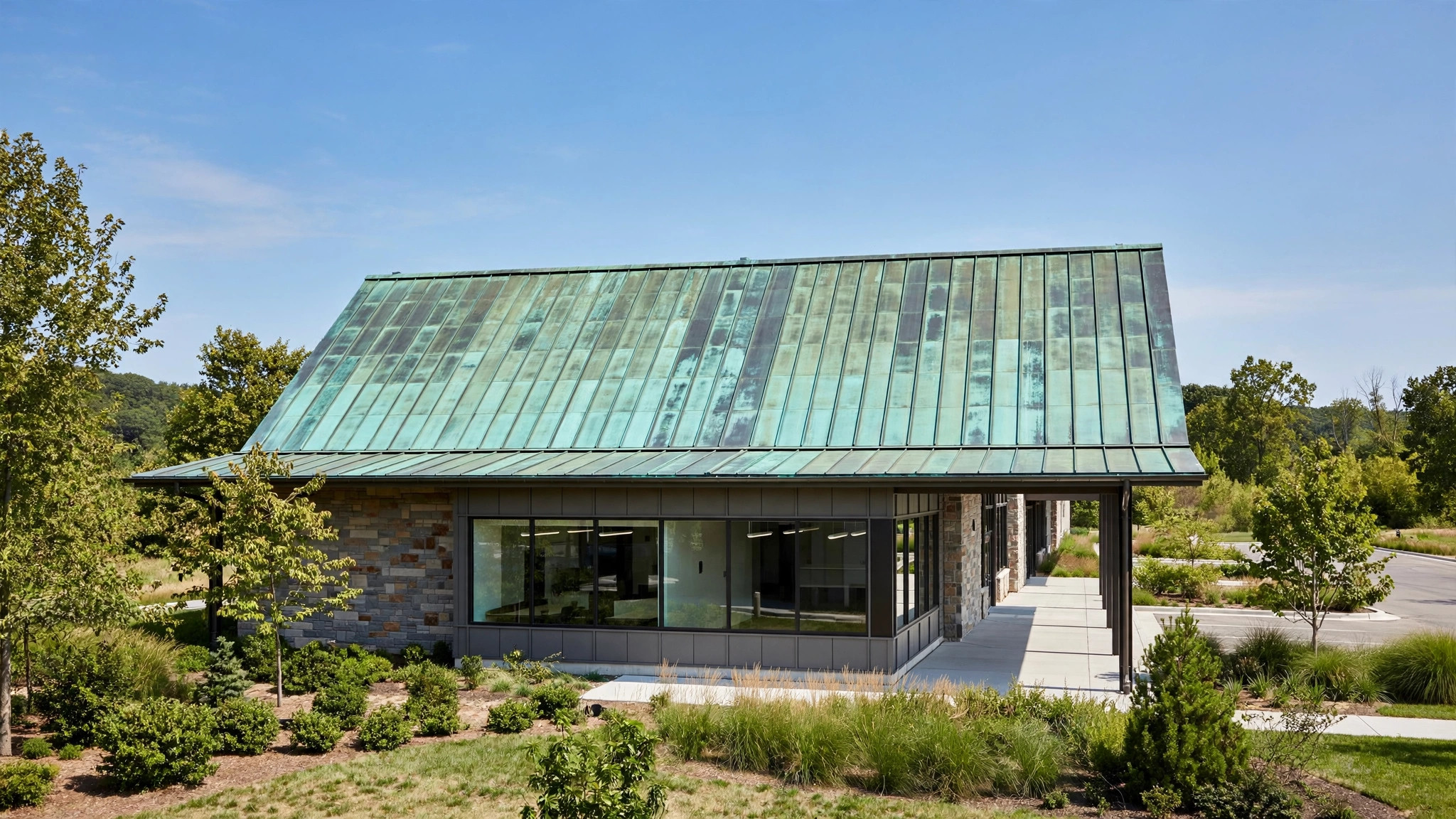
Copper roof panels give a commercial building a roof that can last a hundred years. Few roofing materials can make that claim. Copper resists corrosion, needs almost no care, and grows a green patina that many owners love.
Copper roof panels cost far more than steel or aluminum up front. The payoff is a roof you may never replace. This guide covers the panel types, the real costs, how patina forms, and what to ask a contractor.
What Are Copper Roof Panels
Copper roof panels are thin sheets of pure copper shaped into standing seam or shingle profiles. They cover low-slope and steep-slope commercial roofs alike. Churches, courthouses, museums, and high-end office buildings all use them.
The most common style is standing seam. Long copper panels run from ridge to eave. Raised seams join each panel to the next. No screws pierce the surface, so water has no entry points.
Copper shingles and tiles are another option. Small copper pieces lock together in rows. They suit steep slopes and decorative towers or entry canopies on a commercial building.
Copper is a soft metal. Panels are usually sixteen or twenty ounce copper, which is thick enough to resist dents yet light enough for standard roof framing. A structural engineer should confirm the framing when a copper roof replaces a heavier roof like slate or tile.
Copper Roof Panels Cost Factors
Copper is a premium choice, and the price shows it. Material alone costs many times more than steel panels. Here are the factors that move the number up or down.
Panel style changes the price. Standing seam panels cost less than hand-formed shingles or decorative diamond panels. Simple layouts with long straight runs are the cheapest to install.
Copper weight matters. Sixteen ounce copper is standard for most jobs. Twenty ounce copper is thicker, tougher, and pricier. The thicker stock suits roofs that take foot traffic or sit in hail zones.
Roof complexity drives labor cost. Valleys, dormers, skylights, and equipment curbs all need custom copper flashing. Each one is cut and soldered by hand. A plain rectangular roof costs far less per square foot than a cut-up one.
Removal of the old roof adds cost. Copper roof panels often go over a new underlayment on clean decking. Tearing off the old system and repairing bad deck boards adds labor and dump fees.
Contractor skill is the biggest hidden factor. Few crews install copper every week. A specialist charges more but gets the seams and soldering right. Poor copper work fails early and looks bad, so hire for skill, not just price.
Why Copper Roof Panels Last So Long
Copper roof panels survive a century because copper protects itself. When air and rain touch the surface, a thin oxide layer forms. That layer seals the metal below and stops further corrosion.
Salt air, acid rain, and city pollution barely touch copper. Steel rusts. Aluminum pits. Copper roof panels shrug off both. That is why so many copper roofs from the last century are still working today.
The seams are another reason. Standing seam copper panels expand and contract with temperature. Clips hold the panels while letting them slide. The roof moves without tearing itself apart, season after season.
Fire cannot hurt a copper roof. Copper melts at a temperature far above any building fire. Hail dents it but rarely punctures it. A falling branch may dent the panels, but the dents are cosmetic and the roof keeps working.
Maintenance is light. Copper needs no paint, no coating, and no sealant. A yearly look for slipped clips, clogged gutters, and debris is enough. The National Roofing Contractors Association at https://www.nrca.net/ lists metal systems among the longest-lived commercial roof options.
The Patina Question: Green or Bright
New copper shines like a new penny. Within months they darken to brown. Over years they turn the famous green called patina. The full change can take five to twenty years, depending on climate and air.
Coastal air speeds the change. Dry inland air slows it. Some owners love the green look and wait for it. Others want the bright metal to last. Clear coatings can slow patina, but they need reapplying and add maintenance cost.
Patina is not damage. It is a hard mineral skin, and it is what makes copper roofs last. Never let a contractor clean it off or sandblast it. Removing patina removes the protection.
If your building sits in a historic district, check local rules. Some districts require copper to keep its natural patina and forbid bright coatings.
Installation Basics for Copper Roof Panels
Copper goes over solid decking with a high-heat underlayment. Standard felt can melt under hot copper, so copper jobs use special high-temperature underlayment. This detail separates good contractors from bad ones.
Panels arrive long and straight. The crew cuts them to length on site and forms the seams with hand tools or a seaming machine. Clips fasten to the deck, and the panel edges fold around the clips. The fold hides the fasteners and allows movement.
Flashing takes the most skill. Chimneys, walls, and equipment curbs need soldered copper flashing. Soldered joints last as long as the panels. Caulked joints do not, and caulk has no place on a copper roof.
Foot traffic needs care. Copper dents under boots. Crews should use walk boards. After installation, limit roof visits and keep a clear path to any equipment that needs service.
Safety on site matters. Copper work means soldering torches and sheet metal edges. OSHA rules for fall protection apply to every commercial roof job. Review the basics at https://www.osha.gov/ before work starts, and confirm your contractor follows them.
Copper vs. Steel: A Quick Comparison
Copper and steel both serve as standing seam metal roofs, but they play different roles. Steel costs far less and installs faster. Most commercial owners pick steel for that reason alone. It lasts thirty to fifty years with a good coating.
Copper wins on lifespan and looks. It needs no coating and never needs paint. The metal heals itself with patina while steel depends on its factory finish. When the steel finish wears, rust follows. Copper has no such weak point.
Weight is close between the two. Copper is a bit heavier per square foot, but both work on standard commercial framing. Steel panels span longer distances, which can cut support costs on wide roofs.
Repairs differ too. A damaged steel panel can be replaced or coated over. A damaged copper section gets cut out and a new piece soldered in. Both jobs need a metal roofing specialist.
Choose copper for landmark buildings and long ownership. Choose steel for budget jobs and shorter holds. Either way, hire a crew that works with metal every day.
FAQ About Copper Roof Panels
How long does a copper roof really last?
Copper roof panels commonly last sixty to one hundred years or more. Many copper roofs on old public buildings are still working after a century. No other common commercial roof material matches that record.
Can copper go on a flat commercial roof?
Yes, with limits. Low-slope standing seam copper roof panels work on slopes as low as three in twelve with the right seam design. Truly flat roofs need a different system, like a single-ply membrane. Ask a specialist before choosing.
Does a copper roof make noise in rain?
Standing seam copper roof panels can sound louder than shingles during heavy rain. Solid decking, insulation, and underlayment cut the noise a lot. Most commercial buildings with ceilings below the deck never notice it.
Will copper roof panels stain my walls?
Runoff from new copper can stain light-colored walls and sidewalks green. Gutters and downspouts catch most of it. The staining slows as patina forms. Plan the drainage path before installation.
Are copper roof panels worth the cost?
They are worth it when the building will stand for decades. A school, church, or landmark office gets a roof that outlives several steel replacements. For a short-term hold or a tight budget, a quality steel system costs far less. Compare with commercial metal roof repair costs to see how other metals perform.
Next Steps Before You Buy
Get quotes from at least two contractors who show real copper roof panels experience, not just metal roofing. Ask for addresses of copper jobs they finished years ago, then go look at the seams and flashing. Check their plan for underlayment, clips, and soldered flashing. A good copper installer will talk about those details without being asked. For help choosing the right crew, read how to choose a commercial roofing contractor and standing seam metal roof maintenance to plan the care your new roof will need. Get everything in writing, from the copper weight to the soldered flashing details, and ask how the crew protects the panels from foot traffic during the job. A careful installer is worth the wait. Copper rewards patience with a roof that may outlast the building itself.



