
Few building expenses surprise owners like the cost of hvac system and installation. A commercial HVAC project can run from the tens of thousands into six figures, and the range confuses even experienced owners. Why does one building pay far less than another for what looks like the same job? The answer lies in a set of factors that shape every quote.
This guide explains the cost of hvac system and installation in plain terms. You will learn typical price ranges, the nine factors that move your number up or down, and how to compare contractor bids so you get solid value for a system that will serve your building for years.
Typical cost of hvac system and installation Ranges
Commercial HVAC comes in many forms, from single rooftop package units to complex multi zone systems. A small building replacing one package unit faces a very different cost of hvac system and installation than a mid size office adding a full VRF system.
As a rough guide, replacing a single commercial rooftop unit often lands in the low five figures, including equipment and labor. Multi unit projects and larger buildings climb from there. Full system replacements with new ductwork, controls, and electrical work can reach well into six figures. These ranges are broad on purpose. Your building’s size, layout, and needs decide the real number.
What matters more than any national average is your building’s load. A proper load calculation tells you how much heating and cooling each space needs. Oversized equipment costs more to buy and wastes energy for years. Undersized equipment runs constantly and still leaves rooms uncomfortable. Never let a contractor size your system by rule of thumb or by matching the old unit’s size without checking the building’s current needs.
9 Factors That Drive the cost of hvac system and installation
These nine factors explain most of the difference in the cost of hvac system and installation from one project to the next.
First, system type. Packaged rooftop units cost less than split systems with separate indoor and outdoor parts, which cost less than VRF or chilled water systems. Each step up in complexity adds equipment and labor cost.
Second, capacity. Bigger buildings need more tons of cooling, and cost rises with capacity. But bigger is not automatically pricier per ton. Large systems can be more efficient per unit of capacity than several small ones.
Third, number of zones. Each zone needs its own controls, and often its own indoor unit or damper. A building with twenty zones costs more than an open warehouse with one, even at the same total square footage.
Fourth, ductwork. New ducts add major cost. Reusing existing ducts saves money but only works if they are sized right, sealed well, and in good shape. Leaky or undersized old ducts will cripple a new system’s performance.
Fifth, electrical work. Larger or more efficient systems may need panel upgrades, new circuits, or disconnects. Older buildings often need electrical improvements to support modern equipment. Get the electrical scope clear before work starts.
Sixth, controls. Basic thermostats cost little. A full building automation system with scheduling, remote access, and energy tracking adds thousands but can pay back through lower bills and fewer complaints.
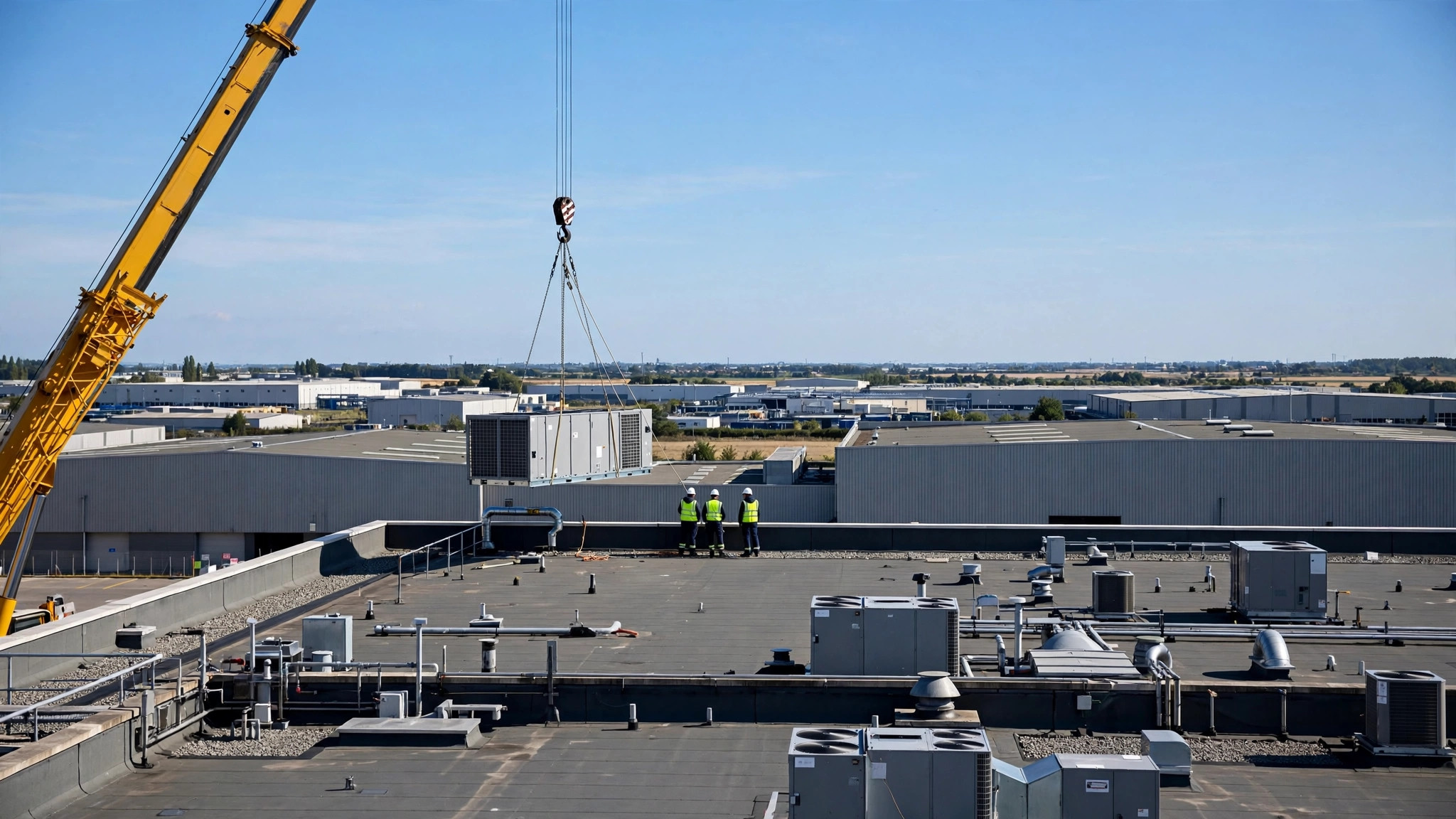
Seventh, installation difficulty. Rooftop units need crane lifts. Tight mechanical rooms slow crews. Buildings that must stay open during work need phased schedules that add labor hours. All of this raises the cost of hvac system and installation.
Eighth, efficiency level. Higher efficiency equipment costs more upfront and less to run. The payback depends on your utility rates and operating hours. Buildings that run long hours benefit most from premium efficiency.
Ninth, local market. Labor rates, permit fees, and code requirements differ by area. Strict energy codes may require higher efficiency equipment or added ventilation, which raises first cost while cutting operating cost.
Equipment vs Labor: Where the Money Goes
When owners see the cost of hvac system and installation, they often wonder how much is equipment and how much is labor. The split varies, but labor, including design, permits, rigging, installation, and startup, often makes up a large share of a commercial project. Complex installs with cranes, ductwork, and controls tilt further toward labor.
This is why the cheapest equipment quote is rarely the cheapest project. A low bid may use smaller crews, skip commissioning, or rush the startup. Poor installation wastes the efficiency you paid for in the equipment. Studies by the Department of Energy have shown that faulty installation can cut system efficiency sharply, which is worth remembering when you compare bids. See their commercial building resources at energy.gov.
Pay for quality installation. Proper refrigerant charging, airflow setup, and control programming decide how your system performs for its whole life. Ask each bidder to describe their startup and commissioning process. The good ones will have a clear answer.
How to Compare HVAC Bids
Comparing bids for the cost of hvac system and installation takes care, because no two proposals are exactly alike. Start by making sure every bidder quotes the same scope. Give each contractor the same building plans, the same load requirements, and the same list of zones. Otherwise you are comparing different projects.
Each bid should name the equipment brand and model, efficiency ratings, and warranty terms. It should describe the ductwork scope, controls, electrical work, crane and rigging, permits, and startup testing. It should state the project timeline and payment schedule. If a bid lacks these details, ask for them before you compare.
Be cautious with bids far below the rest. They may omit needed work like duct sealing, condensate drainage, or controls programming. Those gaps become change orders later, often at premium prices. A fair bid for the cost of hvac system and installation is detailed, clear, and willing to answer questions.
Check each contractor’s credentials too. Look for proper licensing, insurance, and manufacturer training on the equipment they sell. Our guide on how to find a commercial HVAC contractor walks through the vetting process step by step.
Ways to Manage the cost of hvac system and installation
You have more control over the cost of hvac system and installation than it may seem. Phasing is one tool. If the budget is tight, you can replace the worst units now and schedule the rest later, as long as the plan keeps the building comfortable and the phases work together.
Rebates and incentives help too. Many utilities offer commercial rebates for high efficiency equipment. Some states and local programs add more. Ask your contractor and your utility what is available before you buy. ENERGY STAR lists certified commercial equipment and efficiency guidance at energystar.gov.
Financing spreads the cost. Equipment loans and energy service agreements let you pay over time, often with payments offset by energy savings. Compare the total cost of financing, not just the monthly number.
Right sizing saves twice. A proper load calculation may show you need less capacity than the old system had, especially if you have added insulation or efficient lighting since it was installed. Smaller right sized equipment costs less to buy and less to run.
Finally, bundle maintenance. Many contractors discount a multi year service agreement when you buy the system from them. Steady maintenance protects your warranty and keeps efficiency high. Pair your new system with a solid commercial HVAC repair cost awareness so small issues never grow into big ones.
Installation Day: What to Expect
Knowing the process helps you judge whether the cost of hvac system and installation is buying you a professional job. A good project starts with protection of your property, clear staging areas, and a safety plan. Old equipment comes out, often by crane, and the crew inspects curbs, platforms, and roof penetrations before setting the new units.
New equipment is set, connected to ducts, piping, and electrical, and then comes the critical part: startup. Technicians should charge refrigerant to exact specs, set airflow for each zone, program controls, and test every mode of operation. This commissioning step is where quality shows. Rushed startups lead to years of poor performance.
Expect some disruption. Plan with tenants or staff around noise, temporary shutdowns, and blocked areas. A good contractor gives you a clear schedule and sticks to it. At handover, you should receive manuals, warranty documents, and basic training for your building staff. ASHRAE publishes commissioning guidance that many engineers follow, available at ashrae.org.
Frequently Asked Questions
What is the average cost of hvac system and installation for a small commercial building?
It varies too much for one average to be useful. A single rooftop unit replacement might land in the low five figures, while a full multi zone system for the same size building can cost several times more. Get a load calculation and three detailed bids for a real number.
Does higher efficiency always pay back?
Not always, but often. Buildings with long operating hours and high utility rates see the fastest payback from premium efficiency. Buildings used a few hours a week may never recover the extra cost. Ask for a simple payback estimate based on your actual bills.
Should I replace ducts with the system?
If the ducts are old, leaky, or wrongly sized, yes. New equipment on bad ducts performs badly. If the ducts are in good shape and match the new system’s airflow needs, reusing them saves a lot. Have them tested before you decide.
How long does commercial HVAC installation take?
A single unit swap can take a day or two. Multi unit projects take one to several weeks depending on ductwork, controls, and electrical scope. Your contractor should give a written schedule with milestones.
Can I phase the cost of hvac system and installation over time?
Yes. Many owners replace equipment in stages, starting with the oldest or most failure prone units. Make sure the phases form a coherent plan so controls and capacities work together at the end.
Next Steps
You now know what shapes the cost of hvac system and installation and how to compare bids like a pro. Start with a professional load calculation so every bid is based on your building’s real needs. Invite three qualified contractors to quote the same scope, and weigh equipment quality, installation thoroughness, and warranty together. If the numbers work, lock in a maintenance agreement at purchase to protect your investment. A well planned project keeps the cost of hvac system and installation fair and delivers comfort and efficiency for years.



