
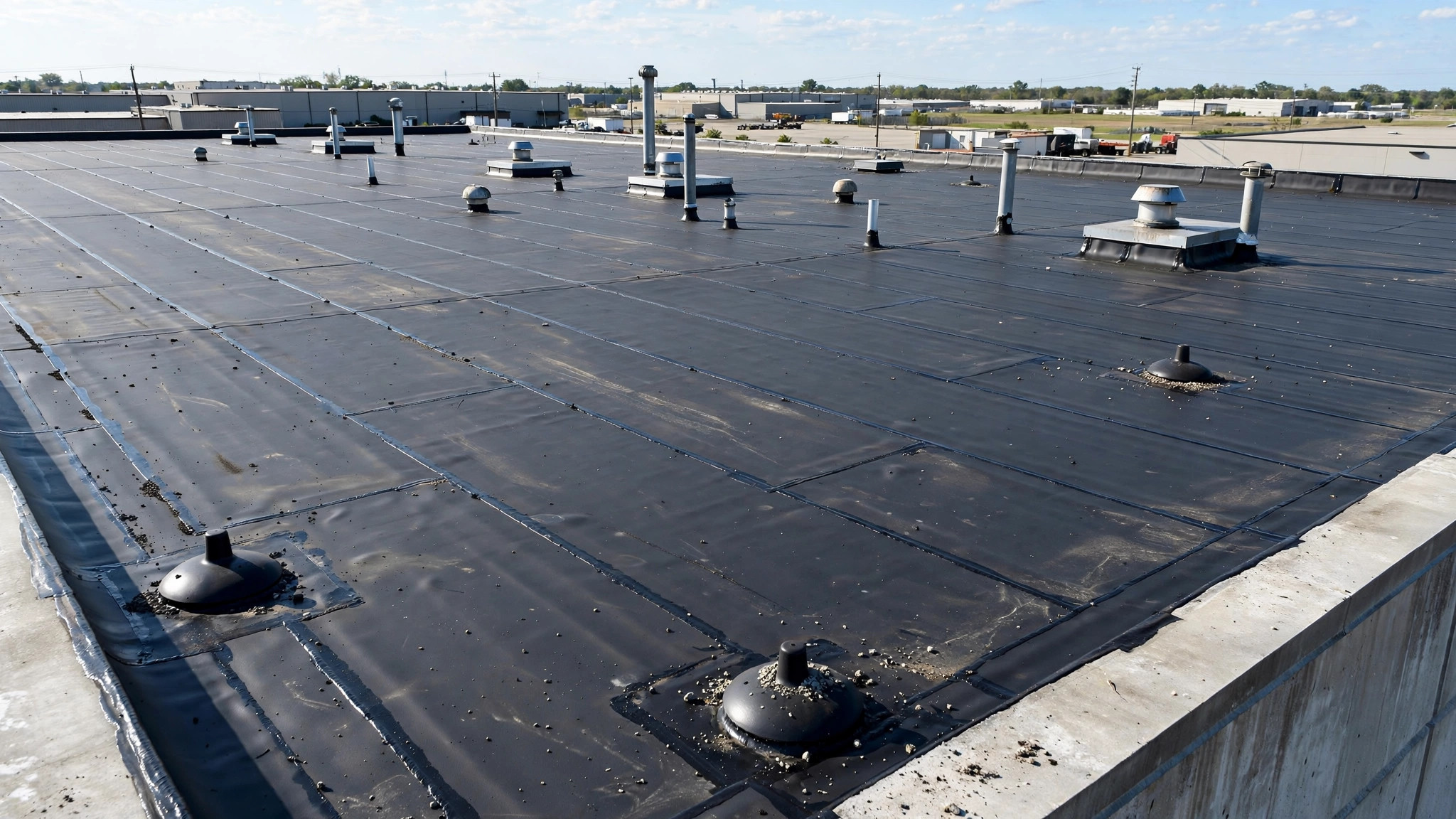
The epdm roof membrane is the veteran of commercial roofing. This black rubber sheet has covered American flat roofs for decades, outlasting trends and earning a reputation for toughness. If you want a roof with the longest proven track record, EPDM deserves your attention.
This guide gives you eight facts about the epdm roof membrane: what it costs, how long it lasts, where it beats the competition, and what to watch for when you buy.
Fact 1: What an EPDM Roof Membrane Is
EPDM stands for ethylene propylene diene monomer, a synthetic rubber. An epdm roof membrane is a single-ply sheet, usually forty five, sixty, or ninety mils thick, rolled out over insulation and secured by ballast, mechanical fasteners, or full adhesion. Seams are joined with tape or adhesive rather than heat welding.
The rubber stays flexible in extreme cold and handles building movement well. It resists hail, UV, and ozone. Decades of installations prove the material. When owners ask for the safe long term pick among single-ply membranes, the EPDM is usually the answer.
Fact 2: An EPDM Roof Membrane Lasts 25 to 35 Years
Fact two is the lifespan. With proper installation and basic maintenance, an epdm roof membrane lasts twenty five to thirty five years. That is among the longest for any single-ply system and a big reason for its loyal following.
What affects life? Seam quality first. Taped seams depend on clean surfaces and proper technique. Ballasted systems protect the membrane from UV and foot traffic but add weight. Fully adhered systems perform well in high wind. The National Roofing Contractors Association covers single-ply selection at https://www.nrca.net/.
Neglect shortens any roof. Twice yearly inspections, prompt puncture repairs, and clear drains keep an epdm roof membrane at the high end of its range.
Fact 3: EPDM Roof Membrane Cost Runs $4 to $8 Per Square Foot
Installed, an epdm roof membrane system typically costs four to eight dollars per square foot, including insulation and flashing. A twenty thousand square foot roof lands between eighty thousand and one hundred sixty thousand dollars.
That makes EPDM one of the most affordable commercial membranes per year of service. Divide by a thirty year life and the annual cost beats nearly everything except coatings. Thicker sixty and ninety mil sheets cost more upfront and pay back in durability, especially under foot traffic.
Compared with TPO at five to nine dollars and PVC at six to ten, the EPDM competes hard on price while leading on proven longevity.
Fact 4: Black Surface: Pro in the North, Con in the South
Fact four is the color question. A standard epdm roof membrane is black, which absorbs sun. In northern climates, that is a plus: it melts snow faster and trims heating costs slightly. In southern climates, it is a minus: the roof runs hotter and air conditioning works harder.
White EPDM exists for owners who want the rubber’s durability with reflectivity. It costs more than black but delivers cool roof benefits. ENERGY STAR lists reflective roofing products at https://www.energystar.gov/.
Fact four takeaway: match the color to your climate. Black epdm roof membrane for the north, white for the south, and either where cooling and heating loads balance.
Fact 5: EPDM Handles Cold and Movement Best
Fact five is where EPDM beats every competitor. The rubber stays flexible far below freezing, so it does not crack in cold snaps. It stretches with building movement without stressing seams. Hail that dents metal barely marks it.
This makes the EPDM the pick for northern buildings, structures that move or settle, and roofs that take abuse. If your building has a history of cracked or split membranes in winter, EPDM solves that problem permanently.
Fact 6: Seams Need Skill and Attention
Fact six is the honest weakness. An epdm roof membrane joins with tape or adhesive, not heat welding. Good seams last decades. Bad seams peel. The difference is surface preparation, correct primer, proper pressure, and dry conditions during installation.
Vet the installer on seams specifically. Ask how they prepare and prime, how they roll the seams, and how they inspect them. Ask for references on EPDM jobs of similar size. Manufacturer certification matters for warranty coverage.
Inspect seams at every maintenance visit. Catching a lifting seam early means a simple repair. Catching it late means water under the membrane and a bigger bill. For repair specifics, see https://commercialguides.com/epdm-roof-repair/.
Fact 7: EPDM Roof Membrane Repairs Are Simple
Fact seven is good news. The epdm roof membrane patches easily with primer and peel and stick flashing or uncured flashing formed to the repair. Punctures, tears, and seam issues are routine work for any commercial roofer.
Keep repair materials compatible. Use EPDM specific primers and flashings, not generic products. Keep a few scraps of membrane on site so patches match. Walkway pads around rooftop equipment prevent most puncture calls in the first place.
For keeping the whole roof healthy, follow https://commercialguides.com/commercial-roof-maintenance-checklist/. For flat roof specific issues, see https://commercialguides.com/commercial-flat-roof-repair/.
Fact 8: EPDM and Rooftop Equipment Get Along
Fact eight matters because commercial roofs are crowded. An epdm roof membrane tolerates rooftop HVAC service traffic better than thinner membranes, especially at sixty or ninety mils. Still, protect it: install walkway pads on service paths and around every unit.
Coordinate equipment work with roof care. Every new curb, every replaced unit, every service visit is a chance for damage. Require contractors to protect the membrane and report any damage they cause. A simple roof access log, noting who went up and why, catches problems early.
The rubber also resists most rooftop chemicals, though petroleum products and animal fats can degrade it. Restaurant roofs with grease vents need grease guards regardless of membrane type.
EPDM Attachment Methods Compared
An EPDM goes down three ways, and the choice affects cost and performance.
Ballasted systems lay the membrane loose and hold it with stone or pavers. This is the cheapest installation and the membrane is easy to inspect and repair, since it lifts freely. But ballast adds major weight, around ten pounds per square foot, so the structure must handle it. Wind can shift ballast in storms.
Mechanically fastened systems screw plates and fasteners through the membrane into the deck at the seams, then cover the fasteners with seam tape. This suits most buildings and resists wind well. Fastener rows create slight stress points, so proper layout matters.
Fully adhered systems glue the entire epdm roof membrane to the insulation. This gives the smoothest look, the best wind resistance, and the best performance on odd shapes. It costs the most in labor and adhesive. For high wind zones and visible roofs, fully adhered is worth the premium.
EPDM vs Other Membranes: Quick Reference
Owners often ask for the short version. Here it is. Against TPO: the epdm roof membrane wins on proven life and cold weather, TPO wins on reflectivity and welded seams. Against PVC: EPDM costs less and lasts as long, PVC wins on chemical and grease resistance. Against built-up roofing: EPDM installs faster and costs less, BUR wins on puncture resistance from its layered build.
There is no universal winner. Northern buildings with cold snaps favor EPDM. Hot southern buildings with big cooling bills favor white TPO. Restaurants with grease exhaust favor PVC. Match the membrane to the building and the climate, and any of them serves well.
Cost Factors Checklist
- Membrane thickness: 45, 60, or 90 mil
- Attachment: ballasted, mechanically fastened, or fully adhered
- Insulation type and R-value
- Seam method and installer certification
- Color: black standard or white reflective
- Warranty length and terms
- Walkway pads and equipment protection
Frequently Asked Questions
How long does an EPDM last?
Twenty five to thirty five years with proper installation and maintenance. Thicker membranes and good care reach the high end.
What does an epdm roof membrane cost?
Four to eight dollars per square foot installed. It is among the best values per year of service in commercial roofing.
Is EPDM better than TPO?
EPDM wins on proven longevity and cold weather performance. TPO wins on reflectivity and heat welded seams in hot climates. Both are solid. Pick by climate and priorities.
Can you walk on an epdm roof membrane?
Yes, but protect it. Use walkway pads on service paths. Thicker membranes handle traffic better. Limit access to people who need to be up there.
Does black EPDM raise cooling costs?
Somewhat in hot climates. White EPDM or a reflective coating solves it. In northern climates the black surface is a mild benefit.
Next Steps
If you are choosing a membrane, get three bids on an epdm roof membrane specifying thickness, attachment method, and warranty, and check each installer’s certification and seam references. If you own one, schedule the twice yearly inspection and walk the seams yourself once a year. The EPDM rewards steady care with the longest service life in its class.



