
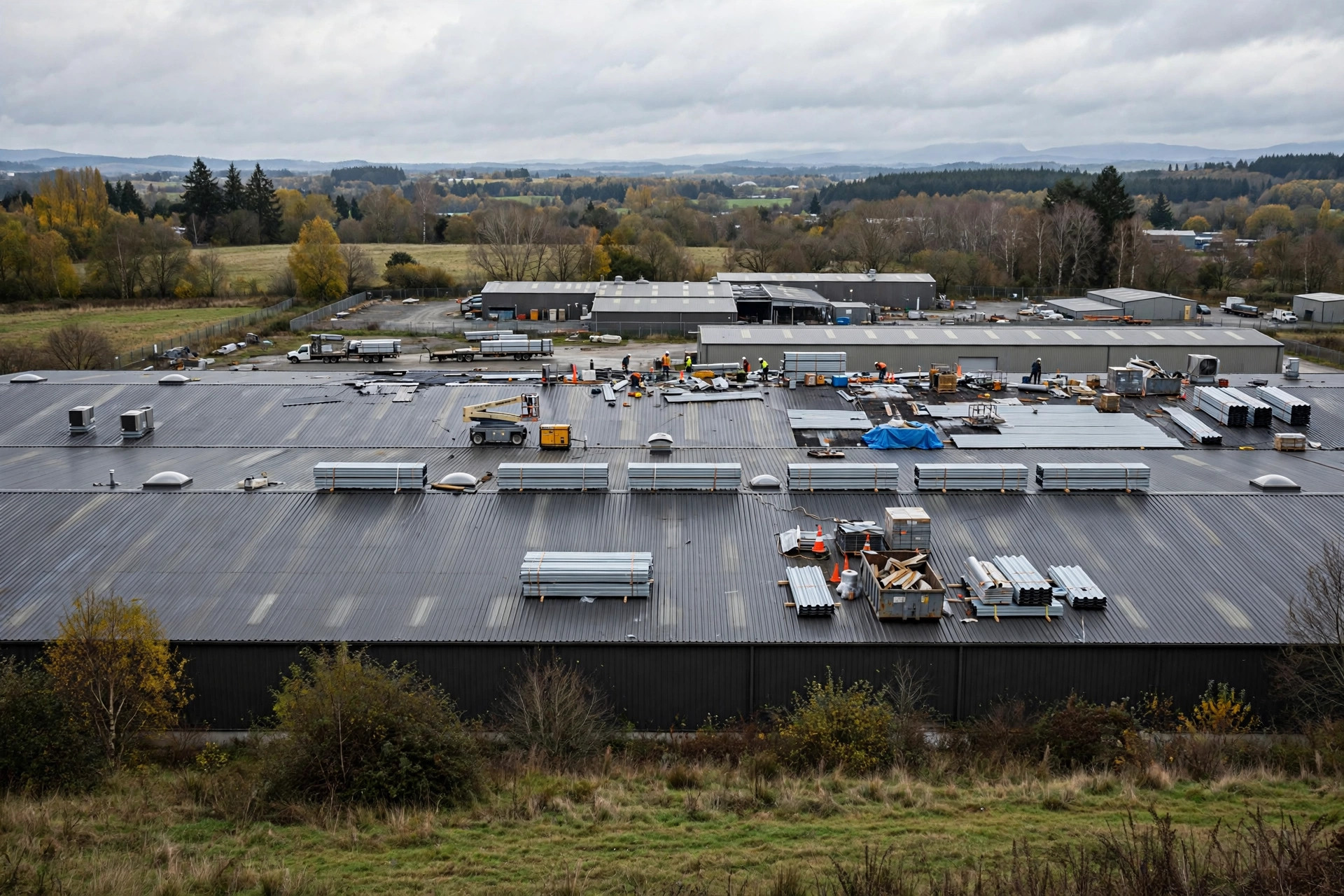
Your warehouse floor has a puddle that was not there last month. Production cannot stop. Every rain brings new stains on the ceiling. You need industrial roof repair, and you need it planned around your operations. This guide shows you the warning signs, the costs, and how to get the work done without shutting down.
Industrial roofs take harder punishment than office roofs. Heavy equipment, chemical exhaust, constant foot traffic, and wide open spans all add stress. Repairs need crews who understand industrial buildings. A residential roofer will not do. Read this guide and hire like you mean it.
8 Warning Signs You Need industrial roof repair
Do not wait for a collapse. These eight signs mean industrial roof repair is due.
- Active leaks over production areas. Water near equipment or inventory is urgent. Move goods first, then call. Every hour of delay risks damage worth far more than the repair.
- Ponding water after rain. Water that stands more than two days after rain rots membranes and overloads structure. Industrial roofs pond because drains clog or slopes settle. Both need fixing.
- Blistering or bubbling membrane. Trapped moisture or air lifts the membrane in bubbles. Small blisters grow. Large ones split. Both let water in.
- Rust on metal panels or fasteners. Industrial exhaust speeds corrosion. Surface rust is treatable. Rust that eats through panels means replacement of those sections.
- Cracked or split seams. Heat cycles open seams over time. Walk the roof and look. Failed seams are the most common leak source on industrial buildings.
- Damaged flashing around vents and curbs. Industrial roofs bristle with penetrations: vents, stacks, skylights, equipment curbs. Flashing fails at these points first.
- Sagging areas. A dip in the roofline means the deck or structure beneath is failing. This is structural. Call an engineer as well as a roofer.
- Rising energy bills. Wet insulation loses its R-value. A soaked roof costs you every month in heating and cooling. An infrared scan finds the wet areas.
- Roof size. Bigger roofs cost more total but less per square foot. Staging and setup spread over more area.
- Damage extent. A single leak is cheap. Widespread soaked insulation is not. Infrared scans map the damage before you price.
- Roof system type. Single-ply patches go fast. Built-up roofs need layered work. Metal needs matching panels.
- Access and height. Tall plants need lifts. Tight sites slow material delivery. Both add labor cost.
- Operational constraints. Night and weekend work to avoid production costs a premium. Phased work takes longer.
- Materials. Standard membrane costs less than specialty chemical-resistant systems. Match the material to your plant's exhaust and use.
- Disposal. Tear-off creates tons of waste. Hauling and dump fees are real on industrial-scale jobs.
- Commercial license and full insurance, verified by phone with the board and insurer.
- Industrial references from the last two years, with plant contacts you can call.
- Experience with your exact roof system and your industry's constraints.
- Written line-item quote tied to an inspection report with photos.
- Safety plan meeting OSHA standards, with a named on-site safety lead.
- Workmanship warranty in writing, with clear terms and exclusions.
- Daily communication plan with your operations team.
If you see three or more, schedule a full inspection this month. Planned repair beats panicked repair.
What Makes industrial roof repair Different
Scale is the first difference. Industrial buildings run tens of thousands of square feet. Crews need more people, more material staging, and longer timelines. Logistics matter as much as roofing skill.
Operations are the second difference. Your plant runs during the repair. The crew must work around production schedules, keep noise down during shifts, and protect equipment from debris. A firm used to empty office buildings will struggle with a running factory.
Hazards are the third difference. Chemical exhaust, skylights, open hatches, and heavy rooftop equipment create risks that office roofs lack. OSHA fall protection rules apply with full force on industrial sites. Their guidance at [osha.gov](https://www.osha.gov/fall-protection) is required reading for your safety officer.
Choose a firm with industrial references. Ask what plants they have worked in. Ask how they schedule around production. The answers reveal whether they understand your world.
Common industrial roof repair Methods
Patch and seal. Small punctures, failed seams, and flashing gaps get cleaned, primed, and sealed with compatible materials. Fast and cheap. Right for isolated faults on otherwise sound roofs.
Section replacement. A damaged zone gets cut out and rebuilt: new membrane, new insulation, tied into the old roof. Right for soaked insulation fields and wide blister areas. Costs more but lasts.
Coating systems. After repairs, an elastomeric coating seals the whole surface and adds reflectivity. Right for aging but sound roofs. Buys ten to fifteen years at moderate cost.
Metal panel replacement. Rusted or damaged panels get swapped for matching new ones, with new gasketed fasteners. Right for metal industrial roofs with localized failure.
Full tear-off. When damage is widespread, everything comes off down to the deck. The most expensive option. Necessary when the structure or insulation is shot across the roof.
A good repair plan often mixes methods: section replacement on the bad zones, coating over the rest. Ask your contractor to explain their mix. One method for every problem is a sales pitch, not a plan.
7 Cost Factors in industrial roof repair
Typical ranges: minor industrial roof repair runs 1,000 to 5,000 dollars. Section work runs 5,000 to 25,000 dollars. Major restoration or partial tear-off runs 25,000 to 150,000 dollars. Full replacement runs 8 to 16 dollars per square foot. Get the damage mapped before anyone quotes.
Planning Repairs Around Production
Downtime is the hidden cost. Plan the work to dodge it. Schedule noisy tear-off for off shifts or weekends. Phase the work so only one roof zone is open at a time. Keep production running under the finished zones.
Protect what is below. Cover sensitive equipment with tarps before work starts overhead. Seal interior openings against dust. One dust incident in a food plant or clean room costs more than the roof job. Put protection requirements in the contract.
Coordinate with your operations manager weekly. The foreman and your manager should talk every morning during the job. Surprises are the enemy. A five-minute daily check prevents most of them. Write this communication into the contract.
Consider coating work during slow seasons. Coating needs dry weather and moderate temperatures. It also shuts nothing down. A well-timed coating extends roof life without touching production at all.
Hiring the Right industrial roof repair Crew
Use this checklist for every bidder.
Interview the foreman. Ask how they protect equipment below. Ask how they phase work around production. Ask what they do when rain hits mid-job. Specific answers signal experience. Vague answers signal risk.
The [National Roofing Contractors Association](https://www.nrca.net/) offers owner guides on industrial roofing systems and contractor selection. Their materials help you ask sharper questions. An hour of reading before you sign is cheap insurance.
Related Reading
For general repair costs, see [commercial roof repair](/commercial-roof-repair/). For flat roof systems common on plants, read [commercial flat roof repair](/commercial-flat-roof-repair/). For step-by-step repair prep, see [repair commercial roof](/repair-commercial-roof/).
Maintenance That Prevents the Next industrial roof repair
The repair is done. Now keep it that way. Inspect twice a year and after every major storm. Clear drains and gutters. Industrial debris clogs drains fast. Clogged drains pond water. Ponding water kills roofs.
Limit and manage foot traffic. Every trade that visits the roof wears the membrane. Install walk pads on traffic paths to equipment. Require all contractors to sign in for roof access. Know who is up there.
Keep a roof log. Record every inspection, repair, and visitor. Note ponding spots and watch them. This log proves maintenance for warranty claims and helps the next repair crew diagnose faster. A roof file is worth its weight in avoided emergencies.
Consider a maintenance contract with the firm that did the repair. They know your roof. Regular visits catch new faults early. The annual cost is small next to one emergency call over a production line.
FAQ
How is industrial roof repair different from commercial roof repair?
Scale, operations, and hazards. Industrial buildings are larger, stay in production during work, and carry risks like chemical exhaust and heavy equipment. Crews need industrial experience, not just commercial.
Can industrial roof repair happen while the plant runs?
Yes, with planning. Phase the work zone by zone. Schedule noisy work off-shift. Protect equipment below. Daily coordination between the foreman and your operations manager keeps production safe.
What does industrial roof repair cost?
Minor repairs run 1,000 to 5,000 dollars. Section work runs 5,000 to 25,000 dollars. Major work runs 25,000 to 150,000 dollars. Map the damage with an inspection or infrared scan before accepting any quote.
How long should an industrial roof repair last?
Small patches hold three to five years. Section rebuilds last ten or more. Coating systems add ten to fifteen years. Ask the firm for the expected life of each repair in writing.
Should I repair or replace my industrial roof?
Repair when damage is localized and the structure is sound. Replace when damage is widespread, insulation is soaked across the roof, or the deck is failing. An honest inspection with core cuts or infrared tells you which.
Next Steps
Walk your roof this week with the eight signs above in hand. Photograph everything you find. Get inspections from two firms with real plant references. Compare their damage maps and repair mixes, not just prices. Plan the work around your production schedule. Sign the thorough firm. A well-planned industrial roof repair protects your building, your equipment, and your production line. Start with the walk-through.



