
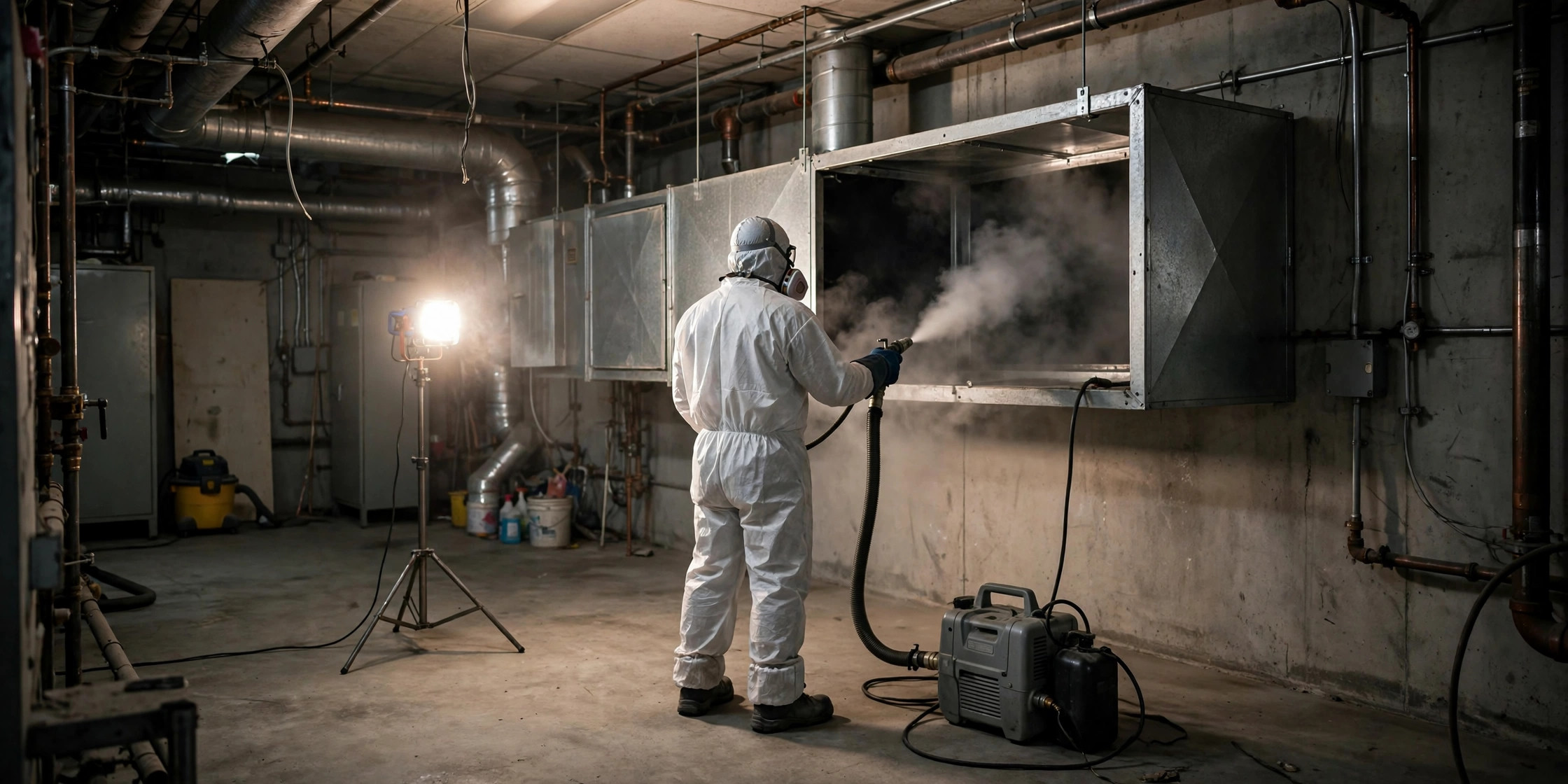
Air duct sanitizing is the application of an antimicrobial treatment inside a building’s air ducts, usually after cleaning. The goal is to kill mold, bacteria, and other microbes living on duct surfaces. For owners of offices, schools, restaurants, and retail buildings across the United States, air duct sanitizing is often sold as an add-on to duct cleaning. Sometimes it is worth the money. Sometimes it is not. This guide gives you the facts to decide.
Ducts move all the air your people breathe. When ducts hold dust, moisture, or mold, the air quality drops. Cleaning removes the debris. Sanitizing treats what cleaning leaves behind. But sanitizers are chemicals, and they must be used correctly to be safe and useful. Knowing the difference between a needed treatment and an upsell protects your budget and your building.
5 Facts About air duct sanitizing
One, sanitizing is not the same as cleaning. Cleaning physically removes dust, debris, and mold from duct surfaces with brushes, vacuums, and air whips. Sanitizing applies a chemical that kills microbes on the surfaces. Sanitizing without cleaning first is nearly useless, since the chemical cannot reach microbes buried under dirt.
Two, it only makes sense when microbes are the problem. If an inspection shows mold growth inside the ducts, sanitizing after cleaning is reasonable. If the ducts are just dusty, cleaning alone is enough. A contractor who recommends sanitizing without showing you evidence of microbial growth is selling, not diagnosing.
Three, the products must be registered for duct use. The EPA registers antimicrobial products and lists their approved uses. A sanitizer used in air ducts must be labeled for HVAC use. Ask the contractor to name the product and show its label. Unregistered or misused chemicals can harm air quality instead of helping it.
Four, the building must be empty or sealed during treatment. Sanitizers need contact time to work, and people should not breathe the mist during application. The contractor should block registers, treat the system, allow dwell time, and ventilate before occupants return. Ask about the re-entry time in writing.
Five, sanitizing does not fix the cause. If mold grows in ducts because of moisture, killing the mold without fixing the moisture means it comes back. Condensation from poor insulation, leaks, or high humidity must be fixed first. Otherwise you will pay for sanitizing again and again.
When air duct sanitizing Makes Sense
Visible mold in the ducts is the clearest case. If an inspection with photos shows mold on duct surfaces or on the air handler coils, cleaning plus sanitizing is the standard response. Fix the moisture source at the same time.
After water damage, sanitizing is smart. A roof leak or pipe burst that wets the ducts can seed mold through the system. Once the ducts are dry and cleaned, sanitizing treats what the drying missed. Coordinate this with the water damage repair.
Buildings with health-sensitive occupants may justify it. Schools, clinics, and elder-care buildings have good reason to be aggressive about microbial control. In these settings, documented sanitizing after cleaning supports a healthy building program.
Musty odors that persist after cleaning point to microbial sources the cleaning missed. If the smell remains once debris is gone, a targeted sanitizing treatment may finish the job. But rule out other odor sources first, like a dry drain trap or a dead pest in a wall.
Post-construction cleanup is another case. Renovation dust and debris can carry microbes into the system. After a major remodel, cleaning plus sanitizing gives the building a fresh start before occupants return.
When air duct sanitizing Is a Waste
Routine sanitizing on a schedule is usually unnecessary. Ducts do not need chemical treatment every year. If inspections show clean, dry ducts, there is nothing to sanitize. A contractor pushing annual sanitizing is selling a subscription you do not need.
Sanitizing as a stand-alone service without cleaning wastes money. The chemical cannot penetrate layers of dust to reach microbes. Any quote for sanitizing that does not include thorough cleaning first should be rejected.
Light dust with no mold needs no chemicals. Most commercial ducts just need periodic cleaning and good filtration. Adding sanitizer to a dust problem is like putting medicine on a healthy person.
Odor problems from outside the ducts will not be fixed. If the smell comes from a dumpster near the intake, a chemical spill, or a dead animal in a wall, sanitizing the ducts treats the wrong thing. Find the source first.
Air duct sanitizing: Methods and Products
Fogging is the most common method. The contractor uses a fogger to mist sanitizer through the duct system while the fan runs. The mist coats interior surfaces. This reaches the whole system, including spots no brush can touch.
Direct spray treats specific areas. For a mold spot on a coil or a section of duct, the tech sprays the product directly. This is precise and uses less chemical. It suits localized problems.
Coil treatment is often paired with duct work. Evaporator coils stay damp and can harbor mold. Cleaning the coil and applying an HVAC-rated antimicrobial is standard practice during a deep system cleaning.
UV lights are a different approach. Installed near the coils, they bathe surfaces in ultraviolet light that kills microbes continuously. UV is not a one-time sanitizing, but a permanent add-on. It suits buildings with ongoing humidity or health concerns. Lamps need periodic replacement.
Whatever the method, the product must be EPA-registered for HVAC use, applied at label rates, and kept away from occupants during treatment. Ask for the product name, the safety data sheet, and the re-entry time before work starts.
For system cleaning basics, see our commercial hvac maintenance checklist. For contractor selection, read how to find a commercial hvac contractor. For air quality context, see signs your commercial hvac needs repair.
Cost Factors for air duct sanitizing
System size sets the base price. More duct means more product and labor. A small office costs far less than a multi-story building. Most contractors price sanitizing per system or per square foot of served area.
Cleaning is usually the bigger cost. Sanitizing is often quoted as an add-on to a cleaning job. The cleaning itself, with brushes and vacuums, is the labor-heavy part. Be wary of cheap cleaning quotes with expensive sanitizing add-ons; the cleaning quality matters more.
Access affects labor. Ducts above open ceilings are quick to treat. Systems with limited access take longer. Buildings that must be empty during treatment may need off-hours scheduling, which costs more.
The product used matters little to the price. Registered HVAC sanitizers are not expensive per job. If a contractor charges a large premium for a “special” product, ask what makes it special and check its EPA registration.
Follow-up testing adds cost but adds proof. Some buildings, especially schools and clinics, test air or surfaces after treatment. This documents the result. For most offices, a visual inspection and the contractor’s report are enough.
Choosing a Provider
Pick a company that inspects before recommending. The tech should look inside the ducts, show you photos, and explain what they found. A recommendation for air duct sanitizing without an inspection is a red flag.
Ask for the product name and label. The contractor should name the sanitizer, confirm it is EPA-registered for HVAC use, and provide the safety data sheet. If they are vague about the product, walk away.
Check the process in writing. The quote should state whether cleaning is included, the application method, the dwell time, the re-entry time, and what areas are treated. Vague quotes lead to thin work.
Verify insurance and training. Techs work with chemicals above occupied spaces. The company should carry liability insurance and train techs on the products they use. Ask how they protect occupants and sensitive equipment during treatment.
Get references for similar buildings. Call and ask whether the problem was actually solved. A sanitizing job is only good if the mold or odor stayed gone.
Prevention Beats Treatment
The best way to avoid needing air duct sanitizing is to keep ducts clean and dry. Change filters on schedule. Clean coils yearly. Fix roof leaks and plumbing leaks fast, before moisture reaches the ducts. Insulate ducts in unconditioned spaces to stop condensation.
Control building humidity. Keep indoor humidity in a moderate range. In humid climates, make sure the HVAC system dehumidifies properly. Oversized units that short-cycle often fail at dehumidification.
Inspect ducts periodically. Add a duct look-see to your seasonal maintenance routine. A quick check with photos catches mold early, when a small fix handles it. Early action is always cheaper than a full system treatment.
The EPA offers guidance on duct cleaning and indoor air quality at https://www.epa.gov/. ENERGY STAR covers building air quality basics at https://www.energystar.gov/.
Remember that air duct sanitizing treats microbes, not dirt, so it should always follow a thorough cleaning, never replace it. If a contractor recommends air duct sanitizing, ask to see inspection photos showing microbial growth and ask for the product name and EPA registration. After air duct sanitizing, fix the moisture source that allowed growth in the first place, or you will be paying for the treatment again.
Is air duct sanitizing safe for occupants?
When done correctly with EPA-registered products, applied at label rates, with the building empty during treatment and proper ventilation after, it is considered safe. Ask for the product name, safety data sheet, and re-entry time in writing.
How often should commercial ducts be sanitized?
Only when needed, not on a schedule. If inspections show mold or microbial growth, sanitize after cleaning and fix the moisture cause. Routine annual sanitizing of clean ducts is unnecessary.
Does air duct sanitizing remove odors?
It can remove odors caused by microbes in the ducts. It will not fix odors from sources outside the ducts, like trash near intakes or pests in walls. Identify the odor source before paying for treatment.
How much does air duct sanitizing cost?
It is usually priced as an add-on to duct cleaning, varying by system size and building access. Get itemized quotes that separate cleaning from sanitizing so you can judge each part.
Can I stay in the building during air duct sanitizing?
No. Occupants should leave during fogging or spraying and return only after the stated re-entry time with ventilation complete. Your contractor should put this in writing.
Next Steps
If you suspect duct contamination, get an inspection with photos before agreeing to anything. Ask the contractor to show evidence of microbial growth, name the product they will use, and put the full process in writing. Fix any moisture source first. After treatment, keep up filter changes and periodic inspections so you never need it again.



