
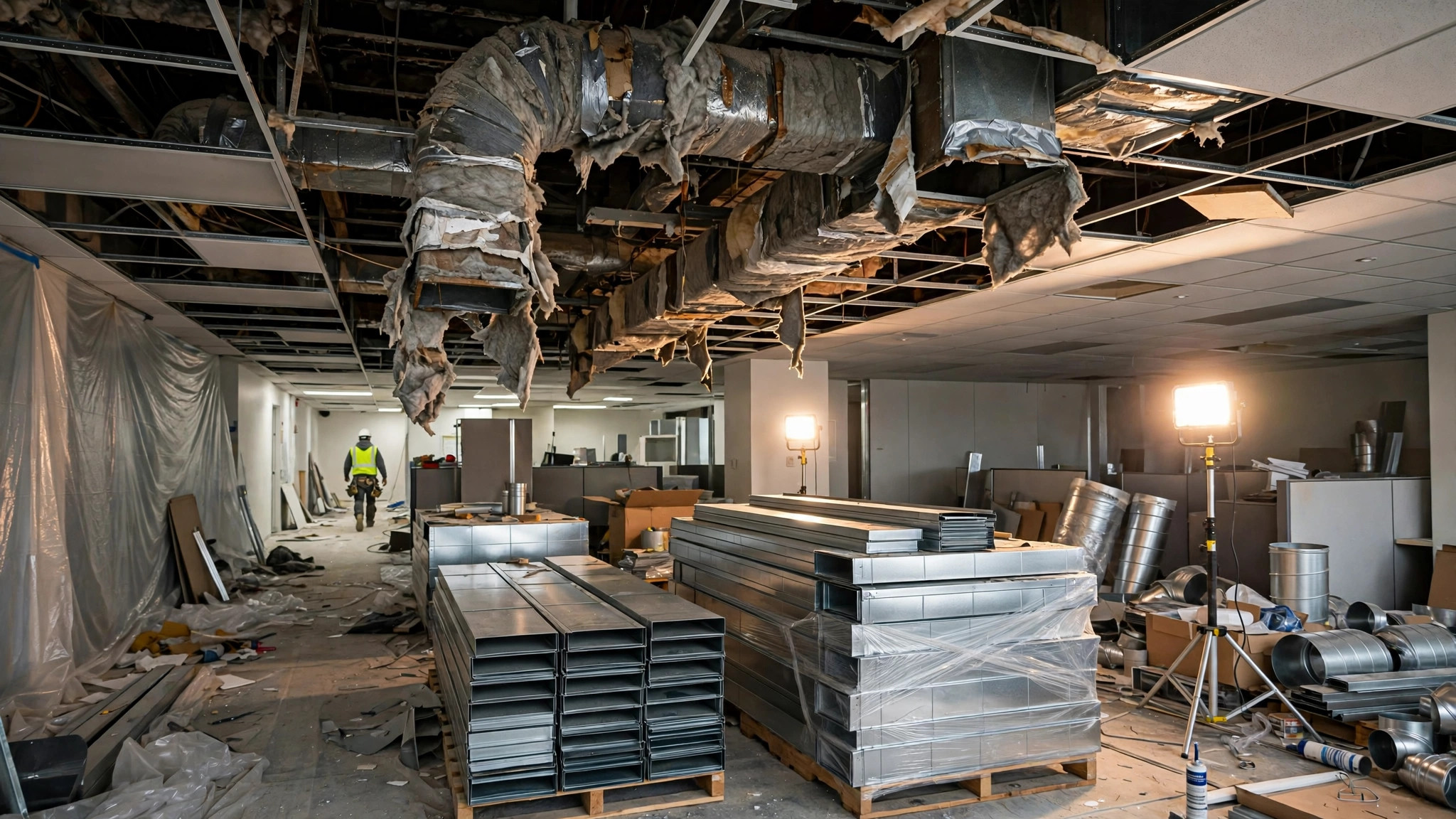
Air duct replacement is the process of removing old ductwork from a commercial building and installing new ducts. Ducts are the hidden highways that carry heated and cooled air from HVAC equipment to every room. When they fail, comfort drops, energy waste rises, and air quality suffers. For building owners across the United States, air duct replacement is a significant project with a long payback in lower bills and happier occupants.
Most duct systems last decades, but they do not last forever. Time, moisture, pests, and poor original installation all take their toll. Because ducts hide above ceilings, problems grow unseen until symptoms appear: stubborn hot spots, dusty vents, or climbing power bills. This guide answers the eight questions owners ask most.
1. What Are the Signs I Need air duct replacement?
Uneven temperatures are the classic sign. When some rooms never reach the thermostat setting while the equipment runs fine, ducts are often the cause. Crushed runs, disconnected joints, and undersized branches starve zones of air.
Rising energy bills point the same way. Leaky ducts waste a large share of conditioned air into unoccupied spaces. The system runs longer to compensate. If usage patterns have not changed but bills have, suspect the ducts.
Visible damage confirms it. Torn insulation, rusted metal, collapsed flex duct, and water stains on accessible runs mean the hidden sections are likely worse. Damage rarely stays in one place.
Poor air quality is another signal. Excessive dust from vents, musty odors when the system runs, or visible mold all suggest duct interiors are compromised. Cleaning helps with dust, but damaged or moldy ducts need replacement.
Noise that grows over time matters too. New whistling, rattling, or booming indicates loosening joints, failing hangers, or airflow forced through damaged sections.
2. How Much Does air duct replacement Cost?
Costs vary widely. Small commercial jobs may run in the thousands of dollars. Large multi-zone buildings can reach well into the tens of thousands. The main drivers are building size, duct accessibility, material choice, and system complexity.
Accessibility is often the biggest cost factor. Ducts above open or drop ceilings are quick to replace. Ducts above hard-lid ceilings, inside shafts, or buried in walls take far longer and cost much more per foot.
Material choice matters. Sheet metal costs more than fiberglass duct board but lasts longer and cleans better. Insulation adds cost where ducts run through unconditioned spaces. Fire and smoke dampers, required by code in many locations, add material and labor.
Get three detailed bids. Each should specify materials, duct sizes, layout, insulation values, damper locations, and testing. Lump-sum bids without this detail cannot be compared fairly.
3. What Materials Are Used in air duct replacement?
Sheet metal is the commercial standard. Galvanized steel ducts are durable, smooth inside for good airflow, and easy to clean. They cost more up front but deliver the longest life. Most quality commercial jobs use sheet metal for main trunks.
Fiberglass duct board is lighter and cheaper. It insulates itself, which simplifies installation. But it is less durable, harder to clean, and can deteriorate over time. It suits budget jobs with easy access for future replacement.
Flexible duct is used for short final connections to registers. It is quick to install in tight spots. Long flex runs with sharp bends kill airflow, so good designs keep flex short and straight.
Insulation wraps any duct in unconditioned space. Without it, ducts lose energy and sweat condensation in humid conditions. Insulation R-value should meet local energy code. Jacketing protects outdoor and rooftop ducts from weather.
4. How Long Does air duct replacement Take?
A small office or retail space may take less than a week. A mid-size building with drop ceilings might take one to three weeks. Large or complex buildings with phased work around occupants can take a month or more.
Phasing extends the schedule. Working zone by zone keeps the business running but adds mobilization time. Off-hours work avoids disruption but costs more per hour and may face noise limits.
Asbestos discovery stops the clock. In older buildings, testing before the project is wise. If asbestos is found in old insulation or sealants, licensed abatement must finish before ductwork begins.
Your contractor should provide a written schedule with phases, milestones, and completion dates. Build in buffer for the surprises that old buildings always hide.
5. Will air duct replacement Disrupt My Business?
Some disruption is unavoidable. Ceilings open, there is noise and dust, and work zones may lose heating or cooling temporarily. But good planning keeps the impact manageable.
Phasing is the main tool. The contractor works one zone at a time, keeping the rest of the building operational. Critical areas like server rooms or kitchens get scheduled carefully.
Dust control matters. Professional crews use barriers, floor protection, and daily cleanup. In sensitive environments like clinics or food service, ask about enhanced containment and off-hours scheduling.
Communication helps most. Tell tenants the schedule in advance, post daily updates, and give a contact for concerns. Most disruption complaints come from surprise, not from the work itself.
6. Repair or Full air duct replacement?
Repair wins for isolated problems. A single damaged section, one disconnected joint, or a short run of torn flex can be fixed without replacing the system. If the layout is sound and leakage tests show modest losses, targeted repairs are the smart spend.
Replacement wins for systemic failure. Widespread leaks, undersized trunks, crumbling duct board, or mold throughout the system will not be fixed by patching. A leakage test showing heavy losses across many runs makes the case.
Age tips the scale. Ducts beyond twenty-five to thirty years, especially flex and duct board, are living on borrowed time. If the HVAC equipment is also aging, replacing both together is usually the best value.
For maintenance that extends duct life, see commercial hvac maintenance checklist. For equipment timing, read ac repair vs replace commercial. For cost planning, see commercial hvac repair cost.
7. How Do I Choose a Contractor for air duct replacement?
Commercial experience comes first. Ask how many commercial duct replacements the company does each year. Commercial jobs involve bigger ducts, fire dampers, code compliance, and trade coordination that residential installers rarely face.
Insist on a design with the bid. Layout drawings, duct sizes, materials, insulation values, and design airflows per zone should be in writing. A bid without design detail is a guess.
Verify licenses and insurance. Ductwork touches life safety through fire dampers and shaft penetrations. The contractor must know local mechanical codes and carry proper insurance. Ask for proof before work starts.
Check references from similar buildings. Call owners and ask about schedule, dust control, disruption handling, and whether comfort improved. Then put acceptance testing in the contract: airflow measurements and leakage tests at completion.
8. What Happens After air duct replacement?
The contractor tests and balances the system. Airflow is measured at every register, dampers are set, and leakage is tested. You receive a written report with the numbers. Walk the job before final payment and confirm cleanup.
Filter maintenance starts immediately. New ducts deserve clean filters from day one. Check monthly at first to learn the loading rate. Good filtration keeps new ducts clean for years.
Watch the first season of operation. Compare energy bills to prior years and note whether problem zones are fixed. Small balance adjustments after a big duct job are normal; call them in while the warranty is fresh.
File everything. Keep the design drawings, test reports, material specs, and invoices with your building records. This documentation helps future service, supports warranties, and adds value at sale.
The Department of Energy provides duct efficiency resources for commercial buildings at https://www.energy.gov/. ASHRAE publishes duct design standards used across the industry at https://www.ashrae.org/.
Good air duct replacement starts with a design, not just a demolition plan, so insist on layout drawings with duct sizes. After air duct replacement, the airflow test results belong in your building file next to the equipment records.
How do I know if I need air duct replacement or just cleaning?
Cleaning removes dust and debris from sound ducts. Replacement is needed when ducts are damaged, undersized, moldy, or leaking heavily. An inspection with airflow and leakage testing gives the answer.
Does air duct replacement include new registers and grilles?
Usually the registers can be reused if they are in good shape, but many owners replace them for appearance and proper fit. Clarify this in the bid so there are no surprises.
Will new ducts work with my old HVAC unit?
Yes, if the unit is correctly sized and in good condition. The new ducts are designed to match its airflow. If the unit is also near end of life, replacing both together is worth considering.
How long do new commercial ducts last?
Sheet metal ducts often last thirty years or more. Duct board and flex have shorter lives. Maintenance, filtration, and dry conditions extend any system.
Is air duct replacement covered by insurance?
Usually not, since it is maintenance-driven. If ducts were damaged by a covered event like a fire or storm, part of the cost might be covered. Check with your insurer for the specific situation.
Next Steps
Start with a professional duct assessment: visual inspection plus airflow and leakage testing. The results will show whether cleaning, repair, or full air duct replacement is right. Get three design-level bids, check references, and schedule the work to minimize disruption. Require testing at completion and keep every report. It is a big project, but the comfort and savings last for decades.



