
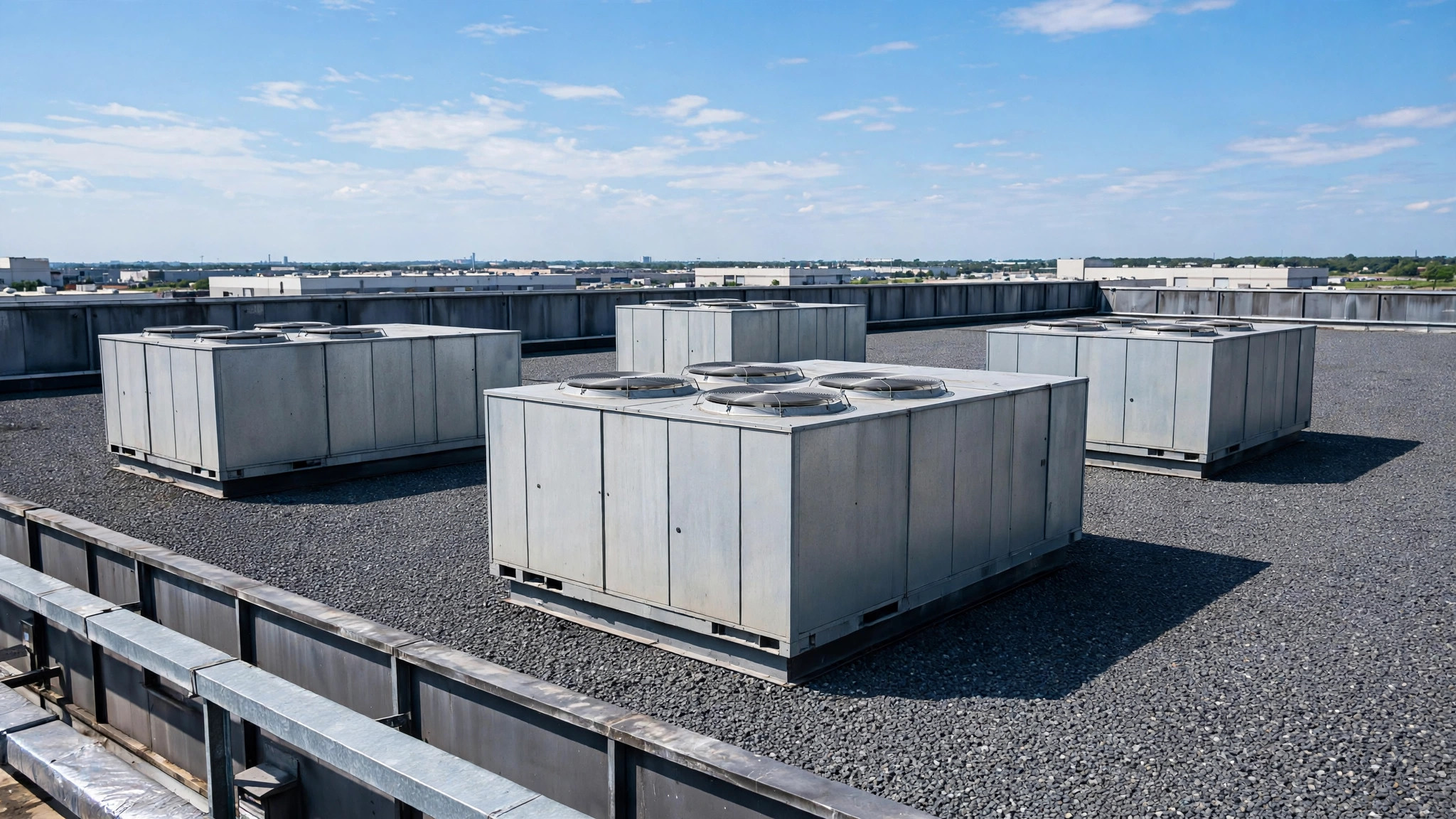
A commercial air conditioning unit is the workhorse behind comfortable indoor air in offices, stores, and warehouses. When it runs well, nobody thinks about it. When it fails on a hot day, everyone notices at once. Building owners who understand their equipment make better decisions about maintenance, repairs, and replacement. This guide covers what a commercial air conditioning unit is, how the main types differ, what they cost, and how to keep yours running.
Read through the sections below before your next service contract renewal. A little knowledge can save real money.
What a commercial air conditioning unit Does
A commercial air conditioning unit moves heat out of a building. It uses a refrigeration cycle to absorb indoor heat and release it outdoors. The same unit often handles ventilation and humidity control too. In many buildings the cooling, heating, and ventilation run through one packaged system.
Commercial equipment differs from home systems in scale and duty. A commercial air conditioning unit serves larger spaces, runs longer hours, and handles heavier loads from people, lighting, and equipment. Components are built for constant use. Controls are more complex, often tied into a building automation system.
Most commercial units come as rooftop packages, split systems, or water-cooled chillers for large buildings. The right type depends on building size, layout, and use. A small office needs something very different from a data center or a restaurant.
Main Types of commercial air conditioning unit Systems
Rooftop packaged units are the most common commercial air conditioning unit in small to mid-size buildings. Everything sits in one cabinet on the roof: compressor, coils, fans, and often a gas heater. Ductwork connects the unit to the space below. They are simple to install and easy to service.
Split systems separate the condenser outdoors from the air handler indoors. This commercial air conditioning unit setup suits buildings where roof access is limited or where quieter indoor operation matters. Larger buildings may use multiple splits, each serving a zone.
Variable refrigerant flow systems use one outdoor unit with many indoor units. Each indoor unit can heat or cool its own zone. This type of commercial air conditioning unit works well in hotels, offices, and schools with varied room needs.
Chilled water systems serve the largest buildings. A chiller cools water, which circulates to air handlers throughout the building. This is a major investment and a complex system, but it handles very large loads efficiently.
Sizing: Why the Right Size Matters
An undersized commercial air conditioning unit cannot keep up on hot days. It runs constantly, wears out early, and still leaves people uncomfortable. Oversizing causes a different problem. The unit cools too fast, shuts off, and never runs long enough to remove humidity. The space feels cold and clammy.
Proper sizing starts with a load calculation. A technician measures the building, checks insulation and windows, counts occupants, and reviews internal heat from equipment and lighting. The industry standard method comes from the Air-Conditioning, Heating, and Refrigeration Institute and ACCA guidelines. Rules of thumb based on square footage alone lead to mistakes.
If you are replacing an old commercial air conditioning unit, do not assume the same size is right. Buildings change. New windows, added insulation, or a different tenant can shift the load. Always size to current conditions.
9 Key Facts Every Owner Should Know
One, the average commercial air conditioning unit lasts 15 to 20 years. Maintenance quality decides whether you get 12 or 22.
Two, most breakdowns trace back to neglected maintenance. Dirty coils, low refrigerant, and worn belts cause the majority of service calls.
Three, refrigerant type matters. Older units use refrigerants being phased out, which makes repairs expensive. Know what your commercial air conditioning unit uses before you approve a big repair.
Four, efficiency ratings let you compare models. Look at EER and IEER ratings on packaged units. Higher numbers mean lower running costs. ENERGY STAR lists efficient commercial equipment at https://www.energystar.gov/.
Five, controls save more than equipment upgrades in some buildings. A commercial air conditioning unit tied to a working thermostat schedule avoids cooling empty space all night.
Six, rooftop units face harsh weather. Hail, high wind, and standing water all shorten life. A hail guard and good curb flashing protect your investment.
Seven, indoor air quality ties directly to the unit. Filters, coils, and drain pans affect what people breathe. Poor maintenance of a commercial air conditioning unit can mean poor air.
Eight, noise complaints often point to equipment problems. New rattles or humming can signal a failing fan motor or loose mounting. Fix it early.
Nine, replacement planning beats emergency replacement. A commercial air conditioning unit that dies in peak season costs more to replace and leaves you negotiating under pressure.
Cost Factors for a commercial air conditioning unit
Equipment and installation costs vary widely. Small rooftop units cost far less than large custom systems. Use this checklist to understand quotes.
- Capacity. Larger tonnage means higher equipment cost. Get the size from a real load calculation.
- Efficiency level. High-efficiency models cost more up front and less to run. Compare lifetime cost, not just purchase price.
- Installation complexity. Crane lifts, curb adapters, and ductwork changes add labor.
- Controls. New thermostats or building automation integration add cost and value.
- Electrical work. Heavier units may need panel or wiring upgrades.
- Permits and inspections. Local codes set requirements and fees.
- Removal of old equipment. Disposal and refrigerant recovery are part of the job.
The Department of Energy offers guidance on efficient commercial cooling at https://www.energy.gov/. For technical standards, the American Society of Heating, Refrigerating and Air-Conditioning Engineers publishes design guidance at https://www.ashrae.org/.
Maintenance That Prevents Breakdowns
A commercial air conditioning unit needs regular care. At minimum, schedule professional service twice a year: once before cooling season and once before heating season. Monthly filter checks fall to building staff in between.
A good maintenance visit covers coil cleaning, refrigerant checks, electrical testing, belt and bearing inspection, drain clearing, and control calibration. The technician should also check the economizer if the unit has one. A stuck economizer wastes energy all season.
Keep the area around outdoor equipment clear. Weeds, trash, and stored materials block airflow and raise head pressure. On the roof, make sure service panels are accessible and curbs stay sealed.
Document everything. Service reports build a history that helps diagnose future problems and supports warranty claims. Many owners keep a simple log per unit with dates, work done, and parts replaced.
Repair or Replace: Making the Call
A commercial air conditioning unit that needs a major repair late in life may not be worth fixing. A common rule: if the repair costs more than half the price of a new unit and the old one is past ten years, replacement usually wins.
Consider efficiency too. A new unit can use much less electricity than one built decades ago. In buildings with high cooling loads, energy savings can offset the replacement cost in a few years.
Also consider refrigerant. If your commercial air conditioning unit uses a phased-out refrigerant, every future leak gets more expensive to recharge. That tips the math toward replacement.
Plan replacements during mild weather when contractors have open schedules and prices are better. Emergency summer replacements cost more and give you no time to compare bids.
Choosing a Service Contractor
Look for a contractor with commercial experience, not just residential. A commercial air conditioning unit has different controls, refrigerants, and safety requirements. Ask how many commercial units the company services and what brands they handle.
Check licensing and insurance. Ask for references from similar buildings. A good contractor offers a written maintenance agreement with a clear task list, visit schedule, and response times.
Compare service agreements carefully. Some cover only inspections while others include parts and labor. Read what is excluded before you sign. For related reading, see our guides to commercial HVAC maintenance checklist and commercial AC service. If you are weighing a formal plan, our article on HVAC service agreements for business breaks down the options.
Frequently Asked Questions
How long does a commercial air conditioning unit last?
Most units last 15 to 20 years with proper maintenance. Neglected units often fail between 10 and 12 years. Harsh environments, constant full-load operation, and poor installation shorten life. A maintenance history is the best predictor of remaining life.
How often should a commercial air conditioning unit be serviced?
At least twice a year by a professional, plus monthly filter checks by building staff. High-use buildings like restaurants may need quarterly visits. Follow the manufacturer schedule to keep the warranty valid.
What size commercial air conditioning unit does my building need?
Only a load calculation can answer that. A contractor should measure the building, assess insulation and windows, and account for occupants and equipment heat. Never size from square footage alone, and recheck the load if the building has changed since the last install.
Why does my commercial air conditioning unit freeze up?
Common causes are low refrigerant, dirty coils, restricted airflow from clogged filters, or a failing blower motor. Shut the unit off and call a technician. Running a frozen unit can damage the compressor.
Is it worth repairing an old commercial air conditioning unit?
It depends on age, repair cost, and efficiency. If the unit is over ten years old and the repair costs more than half of replacement, replacement usually makes more sense. Factor in energy savings and refrigerant availability before you decide.
Next Steps
Walk your building and list every commercial air conditioning unit with its age, brand, and refrigerant type. Schedule maintenance before the next cooling season if any unit is overdue. Get a load calculation before you approve any replacement quote. A planned approach keeps tenants comfortable and costs under control.



