
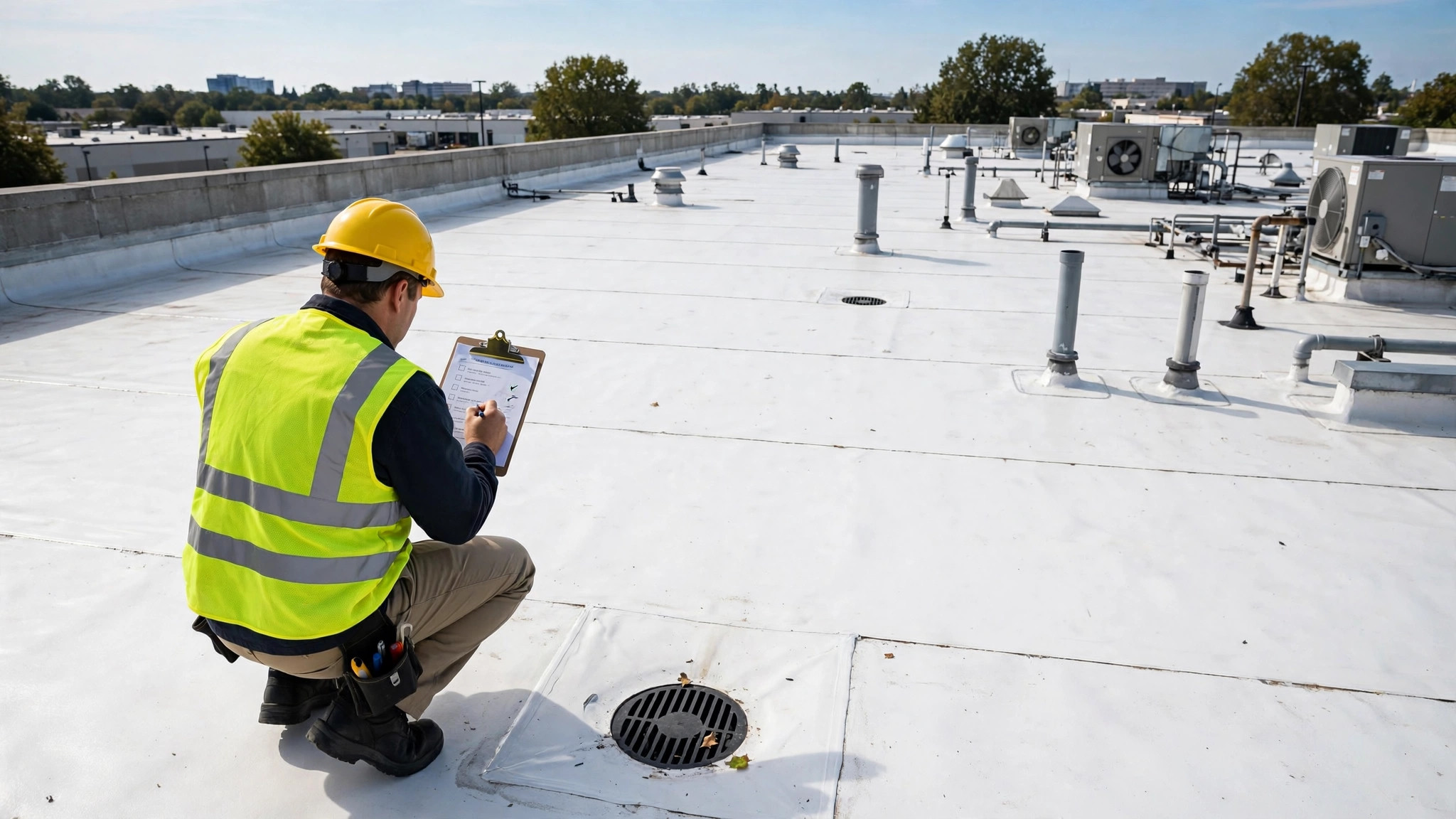
A commercial flat roof protects everything under it. Inventory, equipment, staff, and customers all depend on that surface staying dry. Yet many owners ignore the roof until water drips through the ceiling. By then a small fix has become a big bill.
This guide gives you nine practical maintenance tips for any commercial flat roof. You will learn what to check, how often to check it, and which warning signs demand fast action. A little routine care adds years to your roof’s life.
Tip 1: inspect your commercial flat roof twice a year
Walk the roof every spring and fall. This is the single most useful habit an owner can build. Each visit takes less than an hour on most buildings.
Bring a simple checklist and a camera. Photograph anything that looks off. Compare photos visit to visit. Changes over time tell you which spots need a roofer’s eye.
Look at seams, flashing, drains, and penetrations. These are the failure points on every commercial flat roof. The open field of the membrane rarely fails first. Edges and details do. Give them most of your time on each visit.
Tip 2: keep drains and scuppers clear
Water must leave the roof fast. Clogged drains turn a normal rain into a ponding problem. Standing water adds weight and attacks seams.
Clear leaves, trash, and gravel from every drain before storm season. Check drain strainers after big storms. A strainer knocked loose lets debris plug the pipe below. On roofs with interior drains, make sure the overflow scuppers stay open too. They are your backup when a main drain clogs.
Watch how water flows. If it stands in the same spots two days after rain, the slope may be wrong or a drain may sit too high. Our flat roof ponding water fix guide covers solutions.
Tip 3: clear debris from the surface
Branches, leaves, and trash hold moisture against the membrane. That moisture breaks down the surface over time. It also feeds plant growth in seams and drains.
Sweep the roof clear during each inspection. Pay attention to corners and areas behind rooftop units where wind piles debris. Remove anything sharp that could puncture the membrane.
Trim back overhanging trees. Falling limbs dent and tear roofing. Rubbing branches wear through coatings. A half day of tree work protects a roof worth far more.
Tip 4: check flashing and penetrations on your commercial flat roof
Every pipe, vent, curb, and skylight pierces the roof. Each one is a potential leak. Flashing seals these spots, and flashing moves with heat and cold until it cracks or pulls loose.
Look for gaps, cracks, and lifted edges at every penetration. Press gently on pipe boots. If the rubber feels brittle or split, it needs replacement. Reseal small gaps with products made for your membrane type.
A commercial flat roof with many penetrations needs closer watch. Note each one on your inspection form so none get skipped. Photograph each penetration once so future inspectors can spot changes fast.
Tip 5: protect the surface from foot traffic
Service techs walk your roof to reach HVAC units. Each trip wears the membrane a little. Over years, those paths become thin spots.
Install walkway pads from the roof hatch to each unit. Pads spread the load and shield the membrane. They cost little and save a lot.
Tell every contractor to stay on the pads. Put it in writing in your service agreements. One dragged tool box can slice a membrane open.
Tip 6: fix small problems fast on a commercial flat roof
A blister, a lifted seam, or a cracked sealant joint is cheap to fix today. Left alone, each one becomes a leak. Leaks become wet insulation. Wet insulation becomes a tear-off.
Mark problem spots with bright paint during inspections. Call a roofer for anything beyond a simple patch. Do not wait for the next inspection cycle. Water does not wait.
Keep a repair log with dates and photos. It shows the roof’s history and helps you plan budgets. It also proves upkeep if you sell the building.
Tip 7: watch for ponding water
Ponding means water that stands more than two days after rain. It is the top enemy of a commercial flat roof. The weight strains the structure. The constant soak rots seams and feeds leaks.
Find the cause before you fix the symptom. Clogged drains are the easy answer. Sagging insulation or a crushed deck is harder. Tapered insulation can rebuild slope without tearing off the roof.
If ponding covers a large area, call a roofer for a professional opinion. Our flat roof drain repair guide explains common drain fixes.
Tip 8: keep records of all commercial flat roof work
File every inspection report, repair invoice, and warranty document in one place. Good records do three things for you.
First, they prove maintenance to warranty providers. Many warranties require proof of regular care. No records can mean no coverage when you file a claim.
Second, they help contractors. A roofer who sees the full history diagnoses faster and bids more accurately.
Third, they add value at sale. Buyers pay more for a building with a documented roof history.
Tip 9: know when to call a pro
Some jobs belong to owners. Clearing drains and sweeping debris are fine. Other jobs need a roofer. Seam repairs, flashing replacement, and leak hunting take training and the right materials.
Call a pro when you see active leaks, widespread blistering, or soft spots underfoot. Soft spots mean wet insulation or a bad deck. Walking there is unsafe.
Learn the early warning signs so you call before damage spreads. Our common commercial roof problems guide shows what to watch for.
Seasonal care checklist for a commercial flat roof
Spring checks focus on winter damage. Freeze and thaw cycles crack sealant and lift flashing. Clear the debris winter left behind. Test every drain before spring rains.
Summer checks focus on heat and storms. UV breaks down surfaces. Hail bruises membranes. After a big storm, walk the roof and look for fresh damage. Photograph anything new for your records.
Fall checks prepare for winter. Clear drains before leaves pile up. Reseal joints before freeze cycles start. Make sure rooftop units are serviced so techs are not dragging equipment across a cold, brittle membrane.
Winter means staying off the roof when possible. Cold membranes crack under foot traffic and dropped tools. Ice dams can form at drains and push water backward under flashing. If snow piles deep, have it removed by a crew that knows roofing. Shovels and ice picks tear membranes fast.
Safety rules for roof access
Roof work kills people every year. Falls are the leading cause. Set clear rules for anyone who goes up.
Require fall protection near edges. OSHA sets the standards for low slope roof work. Review them at https://www.osha.gov/. Never let untrained staff wander the roof alone.
Lock the roof hatch. Control who has keys. Every extra visitor is extra risk and extra wear. Log each visit if your building sees a lot of traffic.
When a commercial flat roof needs replacement
Maintenance extends life, but no roof lasts forever. Plan for replacement when leaks keep coming back in new spots. Widespread wet insulation is another sign. A moisture survey shows how far the damage spread. If more than a quarter of the insulation is wet, replacement usually beats patching.
Budget early. A roof fund set aside over several years turns a crisis into a planned project. Get a professional roof assessment every few years once the roof passes fifteen years of age.
Frequently asked questions about a commercial flat roof
How long does a commercial flat roof last?
Twenty to thirty years with good care. Neglect can cut that in half. The membrane type, climate, and maintenance record decide the real number.
Can I walk on my commercial flat roof?
Yes, but keep it to a minimum and stay on walkway pads. Avoid walking on very hot days when some membranes soften. Never walk on a roof with soft spots.
What causes most commercial flat roof leaks?
Failed flashing and clogged drains cause the majority. Membrane field failures are less common. That is why inspections focus on details, not the open field.
Should I coat my commercial flat roof?
A coating can extend life by sealing minor wear and adding reflectivity. It is not a fix for a failed roof. Have a roofer assess the membrane first. Coating over wet insulation wastes money.
How much does commercial flat roof maintenance cost?
Basic owner inspections cost only your time. Professional inspections run a few hundred dollars. Budget a small yearly amount for minor repairs. It beats the cost of early replacement by a wide margin. The National Roofing Contractors Association offers owner resources at https://www.nrca.net/.
A commercial flat roof rewards steady attention. Inspect twice a year. Keep drains clear. Fix small problems fast. Keep good records. Train your staff on the access rules. These nine tips take little time and add years of dry service. Start this week with a walk across your own roof, checklist in hand.



