
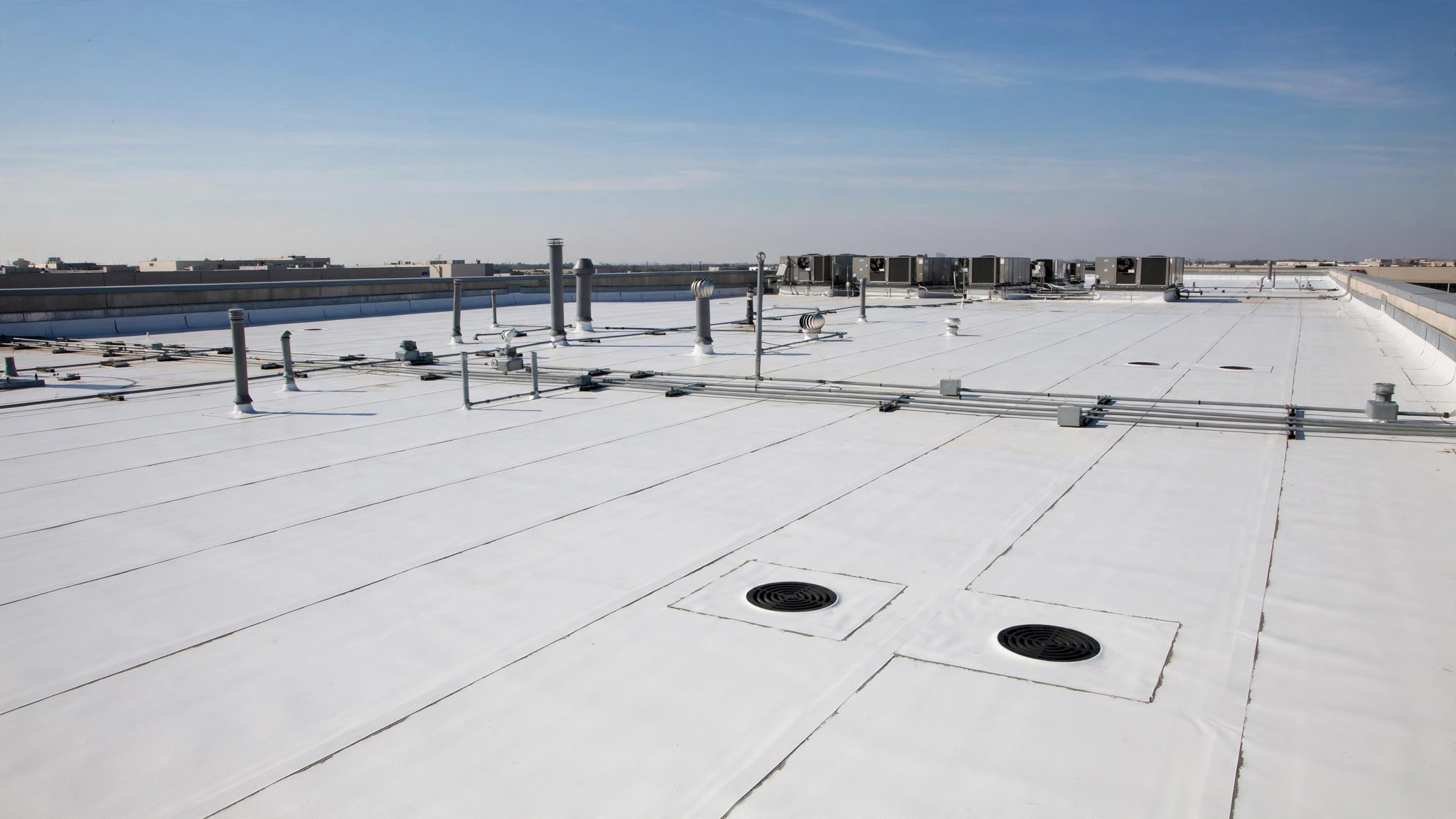
Most commercial buildings have flat or low slope roofs. Warehouses, strip malls, schools, and offices all use them. Commercial flat roofing covers these surfaces with systems built to hold water off and stand up to sun, wind, and foot traffic.
Picking the right system matters. The wrong choice leads to leaks, ponding water, and early replacement. The right choice gives decades of dry, low cost service. This guide compares the main commercial flat roofing options so you can talk shop with contractors and choose well.
Why buildings use commercial flat roofing
Flat roofs cost less to build than steep roofs. They need less material and simpler framing. They also give owners usable space. HVAC units, vents, and solar panels all sit on the flat surface where crews can reach them.
Commercial flat roofing systems are not truly flat. They have a slight slope, usually one quarter inch per foot. That slope moves water to drains and scuppers. Without it, water would pond and find every weak spot.
The trade-off is care. Flat roofs need regular checks. Drains clog. Seams age. Flashing loosens. Foot traffic wears the surface. A roof left alone will fail years before its time. An owner who inspects twice a year gets far more life from any system. Those two visits cost little and catch most problems while they are still cheap to fix.
TPO: the popular single-ply pick
TPO stands for thermoplastic polyolefin. It is a white single-ply membrane that heat welds at the seams. TPO leads the market for new commercial flat roofing in many regions.
Pros: light colored surface reflects heat and cuts cooling bills. Seams weld into one sheet. Material cost sits in the middle range. Install goes fast on open roofs.
Cons: quality varies by maker. Thin or cheap TPO can crack early. Stick with known brands and trained installers. Our tpo flat roof guide goes deeper on this option.
EPDM: the proven rubber roof
EPDM is a black synthetic rubber membrane. Roofers have used it for decades. It comes in large sheets, which means fewer seams on big roofs.
Pros: long track record. It flexes in cold weather without cracking. Repairs are simple with peel and stick patches. Material cost is low.
Cons: black color absorbs heat, which raises cooling costs in warm states. White coated versions exist but cost more. Seams use tape or adhesive instead of heat welding. See epdm flat roof for full details.
Built-up roofing: the classic layered system
Built-up roofing, called BUR, layers felt and hot asphalt or cold adhesive. Gravel or a cap sheet tops the stack. It is the old standard for commercial flat roofing.
Pros: thick and tough. It resists foot traffic well. Many layers mean a puncture rarely reaches the deck. Life span can reach thirty years.
Cons: heavy. The building structure must carry the weight. Install is slow and messy. Fumes from hot asphalt bother occupants. Fewer contractors install BUR today.
Modified bitumen: the torch or peel option
Modified bitumen is asphalt roofing with rubber or plastic added for flex. It comes in rolls applied by torch, hot mop, or self adhesive backing.
Pros: strong and puncture resistant. Works well on smaller roofs and tricky details. Self adhered versions avoid open flames.
Cons: torch work brings fire risk. Seams need skill to seal right. Dark colors run hot unless coated.
PVC: the chemical resistant membrane
PVC is a single-ply membrane like TPO but with a different chemistry. It resists grease, oil, and chemicals better than most membranes.
Pros: great for restaurants and factories where vents exhaust grease or fumes. Heat welded seams. Long life in harsh settings.
Cons: costs more than TPO. It can shrink over time if not installed to spec. Fewer contractors specialize in it.
Metal panels on low slopes
Steel panels can work on low slope roofs with the right design. Standing seam systems handle slopes down to about one half inch per foot with special details.
Pros: very long life. Great wind resistance. Reflective coatings cut cooling costs.
Cons: higher up front cost. Needs a skilled metal crew. Not ideal for roofs crowded with equipment. See our commercial steel roofing guide for more.
Spray foam: the seamless coating
Spray polyurethane foam goes on as a liquid and hardens into a solid layer. A protective coating tops it. There are no seams at all.
Pros: adds insulation value. Seals around every penetration. Light weight. Good for odd shapes.
Cons: the top coating must be recoated on schedule. Hail can damage the foam. Needs a skilled applicator.
Green and ballasted systems
Some owners add a green roof with plants and soil over the membrane. Others use ballast, which is stone or pavers that hold the membrane down.
Pros: green roofs insulate well and manage storm water. Ballasted systems install fast and protect the membrane from sun.
Cons: green roofs add major weight and need care. Ballast makes leak hunting harder. Both need structural review first.
Commercial flat roofing cost factors
Prices change with system, size, and region. Use these factors to read bids with a clear eye:
- Roof size in square feet
- System type and material brand
- Insulation thickness and type
- Tear-off of old layers versus overlay
- Number of drains, vents, and curbs
- Deck repairs needed underneath
- Warranty length
- Local labor rates
The National Roofing Contractors Association offers owner guidance on selecting systems and contractors at https://www.nrca.net/. Always get two or three itemized bids before you decide. A bid that lists every layer and flashing detail is a sign of a careful contractor.
Checklist: choosing your commercial flat roofing system
- What slope does your roof actually have?
- How many more years will you own the building?
- What is the deck made of, and what condition is it in?
- How much foot traffic does the roof get?
- Are there grease vents or chemical exhausts?
- What insulation value does your climate need?
- Does the building structure support a heavy system?
- What warranty does each bid include?
- Which contractors are certified by the material maker?
- How will the crew protect occupants during the work?
Work through these answers with each bidder. The best commercial flat roofing choice fits your building, your budget, and your time horizon.
Maintenance that extends any flat roof
Every commercial flat roofing system lasts longer with basic care. Clear drains and scuppers each spring and fall. Clogged drains cause ponding, and ponding shortens roof life fast. A drain choked with leaves after one storm can leave inches of standing water across a whole roof section.
Walk the roof twice a year with a simple inspection form. Look for blisters, open seams, cracks, and worn spots around penetrations. Pay extra attention to areas near rooftop units where service techs walk most. Mark problem areas with paint and call a roofer before leaks start. Keep a log with dates and photos.
Limit foot traffic. Set walkway pads on paths to HVAC units. Tell service techs to stay on the pads. One careless walk across a hot membrane can do real harm. For task lists, see our commercial roof maintenance checklist.
Safety first. Flat roofs still kill. Falls are the top hazard in roofing work. OSHA requires fall protection on low slope roofs. Review the rules at https://www.osha.gov/ before anyone steps up there.
Frequently asked questions about commercial flat roofing
How long does commercial flat roofing last?
It depends on the system. Single-ply membranes often last twenty to thirty years. Built-up roofs can reach thirty. Metal lasts longest. Maintenance and climate shift every number.
Can you put a new commercial flat roofing system over the old one?
Often yes, if the old roof is dry and sound and local code allows it. An overlay saves tear-off cost. But trapped moisture under the new layer causes trouble. Get a moisture survey first.
What is the cheapest commercial flat roofing option?
EPDM usually costs least up front among common systems. But cheapest material does not mean cheapest over time. Factor in energy costs, maintenance, and life span.
How do I stop ponding water on a flat roof?
First, keep drains clear. If water still stands two days after rain, the slope may be wrong. Tapered insulation can add slope. Talk to a roofer about the fix that fits your roof.
Does a white commercial flat roofing system really save energy?
Yes, in warm climates. Reflective membranes bounce sunlight away and lower roof temperature. The savings show up in summer power bills. In cold climates the benefit is smaller.
Commercial flat roofing gives you many good choices. Match the system to your slope, your budget, and your plans for the building. Get itemized bids. Check contractor certifications. Ask for references from buildings like yours. And plan on twice yearly maintenance from day one. Do that, and your roof will stay dry for decades.



