
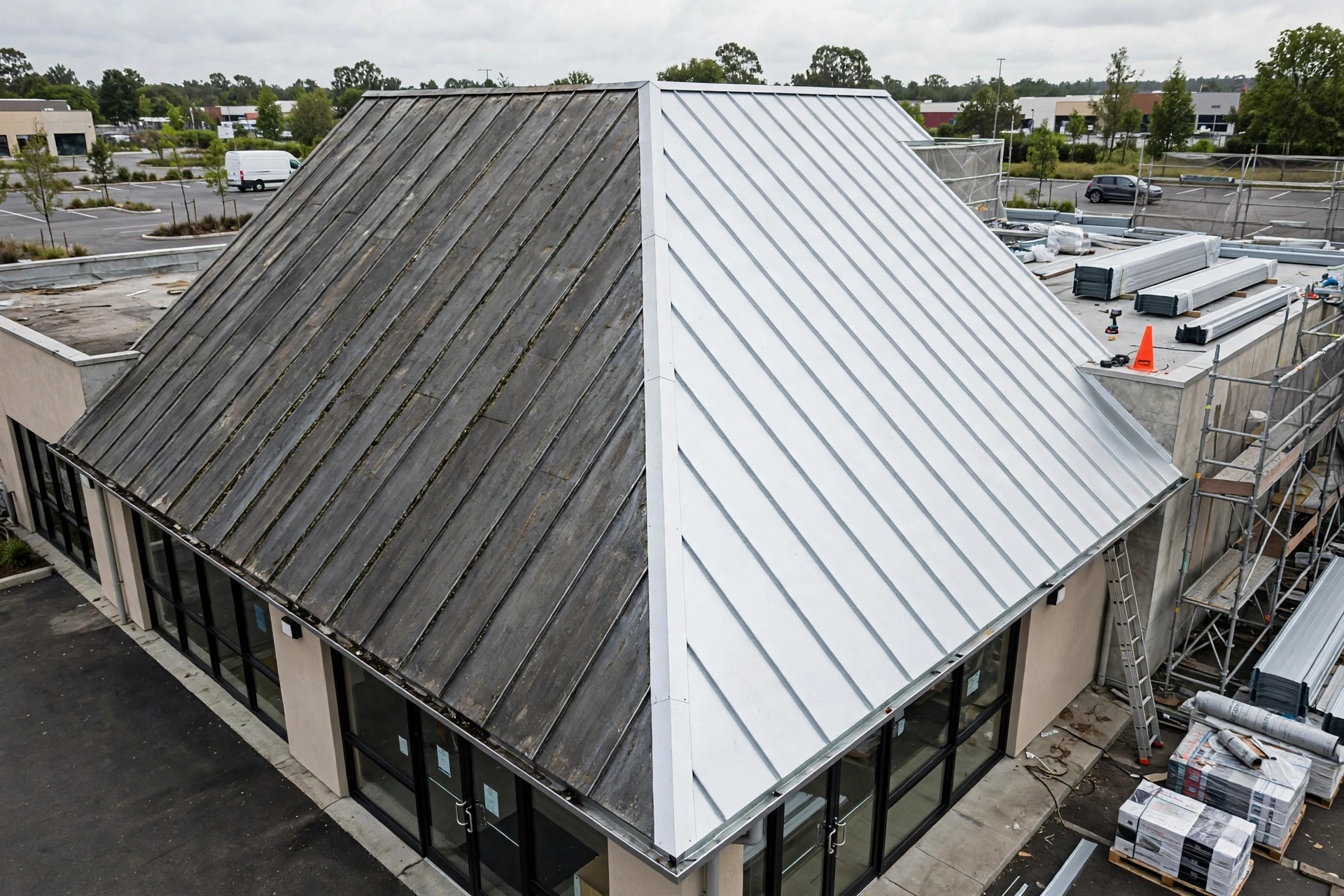
Your metal roof is rusting at the seams. Fasteners are backing out. The coating is chalking off in your hand. Before you price a full replacement, learn about commercial metal roof restoration. It can add decades of life for a fraction of tear-off cost.
Many owners replace metal roofs that could be saved. Replacement means tear-off, disposal, lost business days, and a huge bill. Restoration means repair, seal, and coat in place. This guide walks you through the process so you can judge it fairly.
What commercial metal roof restoration Means
Restoration is not a paint job. It is a engineered system of repairs plus a protective coating, applied over your existing metal roof. The result is a seamless, waterproof, reflective surface. A proper restoration extends roof life by ten to twenty years.
The key word is system. Coating alone over a damaged roof fails fast. Real restoration starts with repairs: rust treatment, fastener replacement, seam sealing. Only then does the coating go on. Firms that skip the prep sell you colored water. Walk away from them.
Restoration works on standing seam, corrugated, and R-panel roofs. It works on steel and aluminum. It does not work on roofs with widespread structural failure or soaked insulation beneath. An honest inspection tells you which camp your roof falls in.
6 Steps of commercial metal roof restoration
Here is the process, in order. Every legitimate commercial metal roof restoration follows these steps.
- Inspection and testing. The crew walks every square foot. They map rust, loose fasteners, failed seams, and ponding areas. They may test coating adhesion on a sample patch.
- Cleaning. Pressure washing removes dirt, chalk, oil, and loose coating. A clean surface is the base the whole system depends on. Skipping this step guarantees failure.
- Rust treatment. Surface rust gets wire-brushed or ground to bare metal, then treated with a rust-inhibiting primer. Deep rust that has eaten through the panel means that panel gets replaced.
- Repair and sealing. Loose fasteners get replaced with oversized, gasketed screws. Seams get sealed with fabric-reinforced sealant. Flashings get rebuilt where they have failed.
- Priming. A primer bonds the coating to the metal. Different metals and conditions need different primers. This is where experience shows.
- Coating application. Two or more coats go on, usually silicone or acrylic elastomeric. Silicone resists ponding water best. Acrylic costs less where drainage is good.
- Roof size. Larger roofs cost more in total but less per square foot. Setup costs spread over more area.
- Rust extent. Light surface rust adds a day of prep. Heavy rust across seams adds many days and primer.
- Fastener count. Thousands of backed-out fasteners mean thousands of replacements. Labor adds up.
- Seam condition. Failed seams need fabric-reinforced sealant. That is slow, careful work.
- Coating type. Silicone costs more per gallon than acrylic. Ponding areas may force silicone regardless.
- Roof access and slope. Steep or high roofs need safety gear and slow the crew. Easy walkable roofs price best.
- Warranty length. Ten-year material warranties are standard. Longer or labor-included warranties cost more.
Each step matters. Ask your contractor to walk you through their version of this list. If they cannot, they are not a restoration firm.
Restoration vs Replacement: The Honest Math
A commercial metal roof restoration typically costs one third to one half of a full replacement. Replacement means tear-off labor, disposal fees, new panels, and often lost business days while the building sits open. Restoration happens over your head with the building in use.
But restoration is not always the answer. Replace when panels are structurally failed across wide areas. Replace when the deck beneath is rotted or soaked. Replace when you need to change the roof slope or add insulation that cannot go over the top.
Run the numbers with your contractor. Compare restoration cost plus expected life against replacement cost plus expected life. Divide each by the years. The lower cost per year usually wins. Most owners find restoration wins this math when the structure is sound.
Coatings Compared: Silicone, Acrylic, and More
Silicone coatings dominate commercial metal roof restoration. They resist ponding water, which metal roofs often suffer. They stay flexible through heat cycles. They reflect sun well when white. Their weakness is dirt pickup and higher cost.
Acrylic coatings cost less and clean up easier. They perform well where drainage is good. They struggle in standing water. If your roof ponds after rain, acrylic is the wrong choice. Your contractor should say this plainly.
Urethane and asphalt-based options exist for special cases. Urethanes handle foot traffic better. Ask what the firm recommends for your roof and why. The answer should mention your drainage, your climate, and your budget. Generic answers mean generic work.
Coating thickness matters more than brand. The crew should apply to the manufacturer’s specified mil thickness and prove it with wet-mil gauges. Thin coating is the most common way restoration jobs fail early.
Cost Factors in commercial metal roof restoration
Prices vary, but these factors set yours.
Typical ranges run 3 to 7 dollars per square foot for a full commercial metal roof restoration system. A 20,000 square foot roof therefore runs 60,000 to 140,000 dollars. Compare that against replacement at 10 to 16 dollars per square foot and the savings are clear.
Energy Savings From a Restored Roof
White reflective coatings bounce solar heat away. The U.S. Department of Energy documents how reflective roofs cut cooling loads, especially in hot climates. Their cool roof guidance at [energy.gov](https://www.energy.gov/energysaver/energy-efficient-home-design) explains the science in plain terms.
For air-conditioned buildings, the savings show on the power bill within the first summer. For warehouses without cooling, the savings show in worker comfort and product protection. Either way, reflectivity is free money after the coating cures.
Some utilities offer rebates for reflective roof coatings. Ask your contractor. If they do not know, call your utility. Rebates can shave a meaningful slice off the project cost.
Choosing a commercial metal roof restoration Firm
Restoration is a specialty. A general roofer who “also does coatings” is not the same as a restoration firm. Ask how many restorations they completed last year. Ask for addresses you can drive past. Coating work is visible. You can judge it from the parking lot.
Ask which coating manufacturer certifies them. Major makers train and certify applicators. Certification means the manufacturer backs the warranty. Without it, the warranty is only as good as the contractor.
Get the warranty in writing before work starts. Know whether it covers labor, materials, or both. Know what maintenance it requires. Most coating warranties require periodic cleaning and inspections. That is fair. Just know the terms.
The [National Roofing Contractors Association](https://www.nrca.net/) offers owner resources on roof systems and hiring. Their guides help you ask sharper questions. Read one before you sign.
Related Reading
For general repair guidance, see [commercial roof repair](/commercial-roof-repair/). For metal-specific repair, read [commercial metal roof repair](/commercial-metal-roof-repair/). For step-by-step repair prep, see [repair commercial roof](/repair-commercial-roof/).
Maintenance After commercial metal roof restoration
The coating is on. Now protect the investment. Inspect the roof twice a year. Look for new rust spots, coating damage from foot traffic, and debris in drains. Small touch-ups are cheap. Ignored damage spreads under the coating.
Keep a simple log. Note each inspection date and what you found. Note every repair. This log proves maintenance if a warranty claim ever arises. Manufacturers ask for it. Owners who keep logs win claims.
Limit foot traffic. Every boot scuff wears the coating. Where traffic is unavoidable, install walk pads. They cost little and save the coating. Tell your HVAC techs to stay on the pads. A short conversation prevents expensive damage.
FAQ
How long does commercial metal roof restoration last?
A properly applied system lasts ten to twenty years. Prep quality decides the outcome. Good prep with specified coating thickness reaches the long end. Skimped prep fails early.
Can commercial metal roof restoration fix leaks?
Yes, when leaks come from seams, fasteners, and flashings, which covers most metal roof leaks. The repair step seals these before coating. Structural failures and rotted decks need replacement instead.
Is commercial metal roof restoration just painting the roof?
No. Paint is cosmetic. Restoration is a waterproofing system: cleaning, rust treatment, seam repair, priming, and thick elastomeric coating. Paint alone over rust fails within a couple of seasons.
What does commercial metal roof restoration cost per square foot?
Typical ranges run 3 to 7 dollars per square foot for a complete system. Rust extent, coating type, and roof access move the number. Get a per-square-foot quote tied to specified mil thickness.
Will restoration void my existing roof warranty?
It can. Check your original warranty terms before work starts. Some makers approve specific restoration systems. Using an approved system keeps coverage intact. Unapproved work can end it.
Next Steps
Walk your metal roof this month. Note rust, loose fasteners, and ponding spots. Get inspections from two restoration firms. Compare their step-by-step plans, not just prices. Ask about coating type, mil thickness, and warranty terms. Choose the thorough firm. A well-done restoration buys you decades at a fraction of replacement cost. Start with the inspection.



