
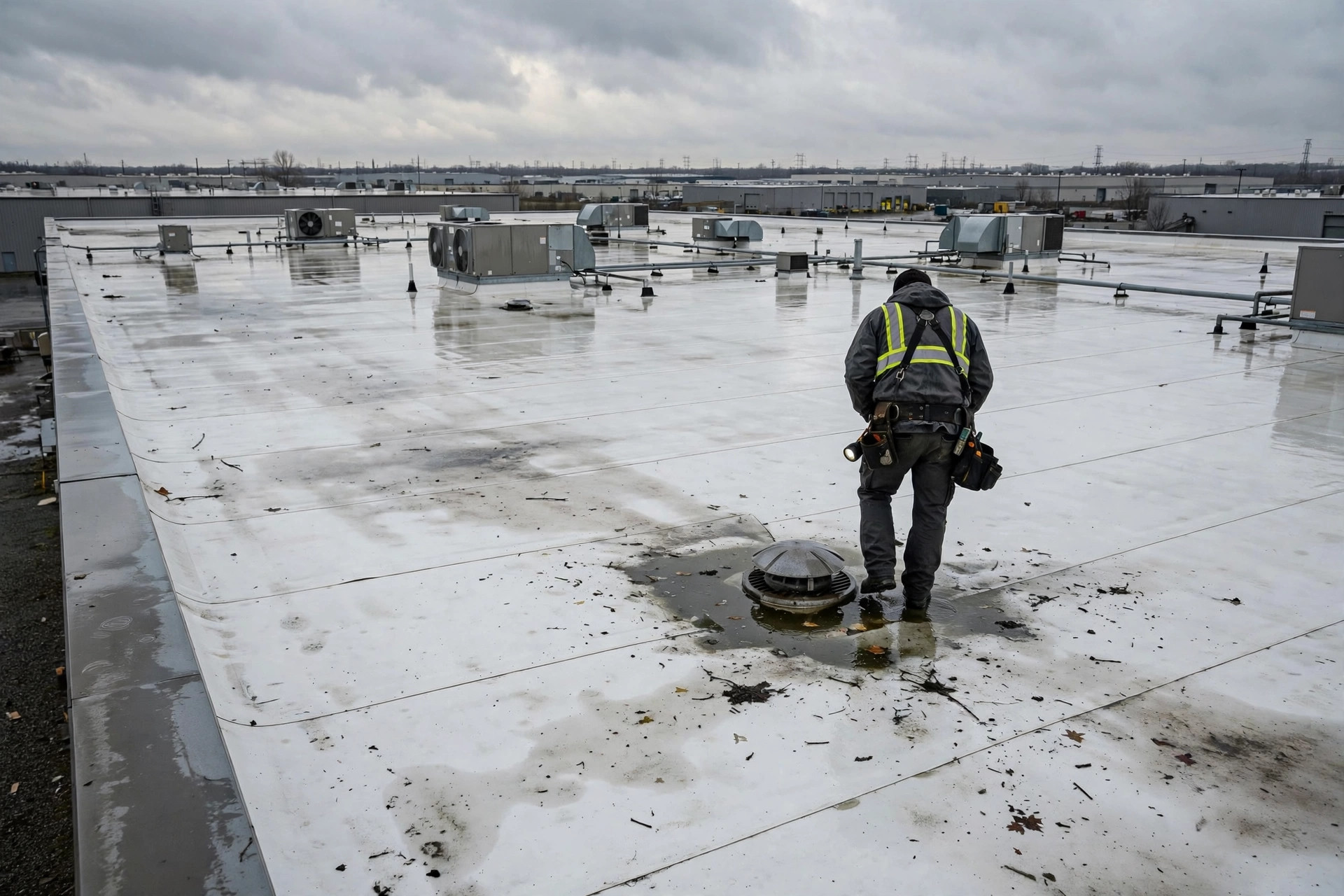
A commercial roof leak is one of the most costly problems a building owner can face. Water that slips through the roof can ruin stock, damage wiring, and shut down parts of a business. The worst part is that many leaks stay hidden for weeks before anyone notices them. By the time water drips from a ceiling tile, the damage may already be spread across a wide area.
Flat and low-slope roofs are common on offices, shops, warehouses, and schools. These roofs shed water more slowly than steep roofs, so small flaws can turn into a steady commercial roof leak over time. Ponding water, cracked seams, and worn flashing give water a path inside. The good news is that most leaks leave early signs. Owners who know what to watch for can catch trouble while it is still cheap to fix.
This guide walks through how a commercial roof leak forms, the seven warning signs, the main causes, and the real cost factors behind repairs. It also lists the steps to take the moment a leak shows up, plus answers to the questions owners ask most often.
How a Commercial Roof Leak Starts
Most roof leaks do not begin with one dramatic event. They begin with a small weak spot. A seam between membrane sheets may pull apart by a fraction of an inch. Flashing around a vent may lift a little after a windstorm. A clogged drain may let water sit for days until it finds a pinhole. Each of these small defects is enough for water to enter.
Once water gets under the surface, it can travel far. It moves along the deck and drips down at a point that may be ten or more feet from the actual hole. That is why a commercial roof leak can be so hard to track. The stain on the ceiling rarely sits right under the breach. Roofers often use moisture scans or careful probing to trace the water path back to the source.
Time makes everything worse. Water trapped in insulation breaks it down and adds weight to the roof structure. Wet steel decks can rust. Wet wood decks can rot. Mold can grow in damp ceiling spaces, and that creates a health risk for staff. Fixing the leak early stops this chain before it gets expensive.
7 Warning Signs of a Commercial Roof Leak
Watch for these seven signs on a regular basis. Any one of them can point to a commercial roof leak that needs a closer look.
1. Water stains on ceilings or walls
Brown rings or yellowish blotches on ceiling tiles are the classic sign. Stains often show up far from the actual leak, so treat any new stain as a reason to inspect the roof above it.
2. Musty smells inside the building
A damp, moldy odor near the top floor or inside ceiling spaces means water is sitting where it should not be. If the smell grows stronger after rain, a commercial roof leak is likely.
3. Bubbling or blistered paint
Paint that bubbles or peels on interior walls near the roof line suggests moisture trapped behind the surface. Check the roof area directly above the damaged paint.
4. Standing water on the roof
Ponds that stay on the roof for more than a day or two after rain add stress to the membrane. Long-term ponding often leads to a commercial roof leak at seams and drains.
5. Cracked or curled membrane seams
A visual check of the roof surface can reveal open seams, splits, or shrinkage cracks. These are direct entry points for water and should be sealed right away.
6. Rust on metal parts and flashing
Rust spots on metal flashing, vents, or edge metal show that water is present and staying too long. Rust weakens metal parts until they fail.
7. Rising energy bills
Wet roof insulation loses its ability to resist heat flow. If heating or cooling costs climb without another cause, a commercial roof leak may have soaked the insulation layer.
Common Causes Behind a Commercial Roof Leak
Knowing what causes a commercial roof leak helps owners prevent the next one. The causes below cover most of the calls roofers get.
Poor drainage. Clogged drains, scuppers, and gutters are a top cause. Debris from nearby trees, leaves, and trash blocks the flow of water. When water cannot leave, it ponds and presses against seams and flashing until something gives.
Damaged flashing. Flashing is the metal or membrane strip that seals the joints where the roof meets walls, vents, pipes, and skylights. Wind, heat cycles, and foot traffic loosen flashing over time. Once a gap opens, water runs straight in.
Aged membrane. Every roof surface has a service life. Single-ply membranes like TPO and EPDM last a long time, but UV light and heat cycles slowly wear them. Older roofs develop hairline cracks and brittle seams that invite a commercial roof leak.
Punctures from foot traffic. HVAC technicians, satellite installers, and maintenance crews walk on the roof. Dropped tools, screws, and sharp objects can pierce the membrane. These punctures often go unnoticed until water stains appear inside.
Storm damage. Hail, high winds, and flying debris tear and lift roof materials. Even a small tear can admit a steady stream of water during the next heavy rain.
Improper installation. A roof installed with poor seam welding, loose fasteners, or wrong details around penetrations starts life with weak points. That is why choosing a skilled contractor matters, and why owners should read a guide to commercial roofing contractors before any big job.
Clogged or failed sealants. Sealants around pipes and curbs dry out and crack. A yearly check of these spots takes little time and stops many leaks before they start.
For a deeper look at spotting the entry point, see the guide on commercial roof leak detection, which covers tracing methods roofers use.
Cost Factors for a Commercial Roof Leak Repair
The cost of fixing a commercial roof leak varies widely. A small seam reseal may cost only a few hundred dollars, while a leak that soaked insulation across a wide area can run into the thousands. Use this checklist of cost factors to understand any quote you receive.
- Leak location and access. Leaks near drains, edges, or simple flat runs are quicker to reach. Leaks under heavy rooftop equipment take more labor.
- Size of the damaged area. A single seam split is cheap to fix. Water that spread through wet insulation over hundreds of square feet means cutting out and replacing the soaked layers.
- Roof system type. EPDM, TPO, modified bitumen, and metal each need different materials and skills. Some patches cost more than others.
- Amount of water damage inside. Stained ceilings, damaged drywall, and ruined stock add to the bill. Fast response keeps these extras low.
- Roof age and condition. On an old roof with worn membrane, a spot repair may not hold, and the contractor may advise a larger section replacement.
- Timing of the call. After-hours or storm-season calls often carry higher rates. A planned repair during normal hours costs less.
- Number of leaks found. Inspections often reveal more than one weak spot. Fixing several at once is usually cheaper per leak than separate visits.
According to the National Roofing Contractors Association, regular maintenance is the single best way to hold repair costs down over the life of a roof. The NRCA offers owner resources on inspection practices that catch small defects early.
What to Do When You Spot a Commercial Roof Leak
Acting fast limits the damage. Follow these steps in order.
Step 1: Protect the interior. Move stock, equipment, and papers away from the drip. Place buckets or bins under active drips. If water is near electrical panels or outlets, treat it as urgent and call an electrician if needed.
Step 2: Document everything. Take photos and short notes of stains, drips, and any visible roof damage. Dated records help with insurance claims and with tracking whether the leak is growing.
Step 3: Trace the likely source. Check the roof above the interior stain, but expect the breach to be some distance away. Look for ponding, open seams, loose flashing, and damaged areas around vents and pipes. Do not walk on a wet membrane if it is slippery. Safety rules from OSHA require fall protection on low-slope roofs, so keep untrained staff off the roof.
Step 4: Call a roofing contractor. Describe what you see and ask for a prompt inspection. A good contractor will find the entry point, test the surrounding area for wet insulation, and propose the smallest sound fix. The guide to commercial roof leak repair explains what a quality repair visit should include.
Step 5: Plan follow-up maintenance. After the repair, set up a regular inspection schedule. Most experts advise checking a commercial roof in the spring and the fall, plus after any major storm. Small issues found during these visits cost far less than the next commercial roof leak.
Commercial Roof Leak FAQs
How do I find where a commercial roof leak is coming from?
Start above the interior stain, then work outward. Look for open seams, loose flashing, ponding water, and punctures. Because water travels along the deck, the hole may sit many feet away from the drip. Roofers use moisture meters, infrared scans, and flood tests to trace the true source with less guesswork.
Can a commercial roof leak be fixed without replacing the roof?
Yes, in most cases. Small seam splits, punctures, and flashing gaps can be patched or resealed. Replacement of a section is needed only when the membrane is widely worn, the insulation is soaked across a large area, or the deck itself is damaged. A sound inspection will show which option fits.
How fast should a commercial roof leak be repaired?
As fast as possible. Water damage grows with every rain. Wet insulation, rusting decks, and mold do not wait. Even a small drip can become a major repair if it sits through a wet season. Call a contractor the same day you confirm the leak.
Does a commercial roof leak always mean the roof is old?
No. New roofs can leak from installation errors, storm damage, or punctures by other trades. Age is only one cause. Poor drainage and loose flashing cause leaks on roofs of every age, which is why regular checks matter more than the roof’s birthday.
Will insurance cover a commercial roof leak?
It depends on the cause and the policy. Sudden storm damage is often covered, while slow wear and lack of maintenance usually are not. Good records of regular inspections and prompt repairs strengthen any claim. Read your policy and talk to your agent before you need it.
Next Steps for Building Owners
A commercial roof leak rewards the owner who acts early and punishes the one who waits. Walk the building interior for stains and smells after heavy rain. Book a professional roof inspection twice a year and after major storms. Keep drains clear, watch flashing and seams, and fix small defects before they grow. These simple habits keep repair bills small and the roof working for its full service life.



