
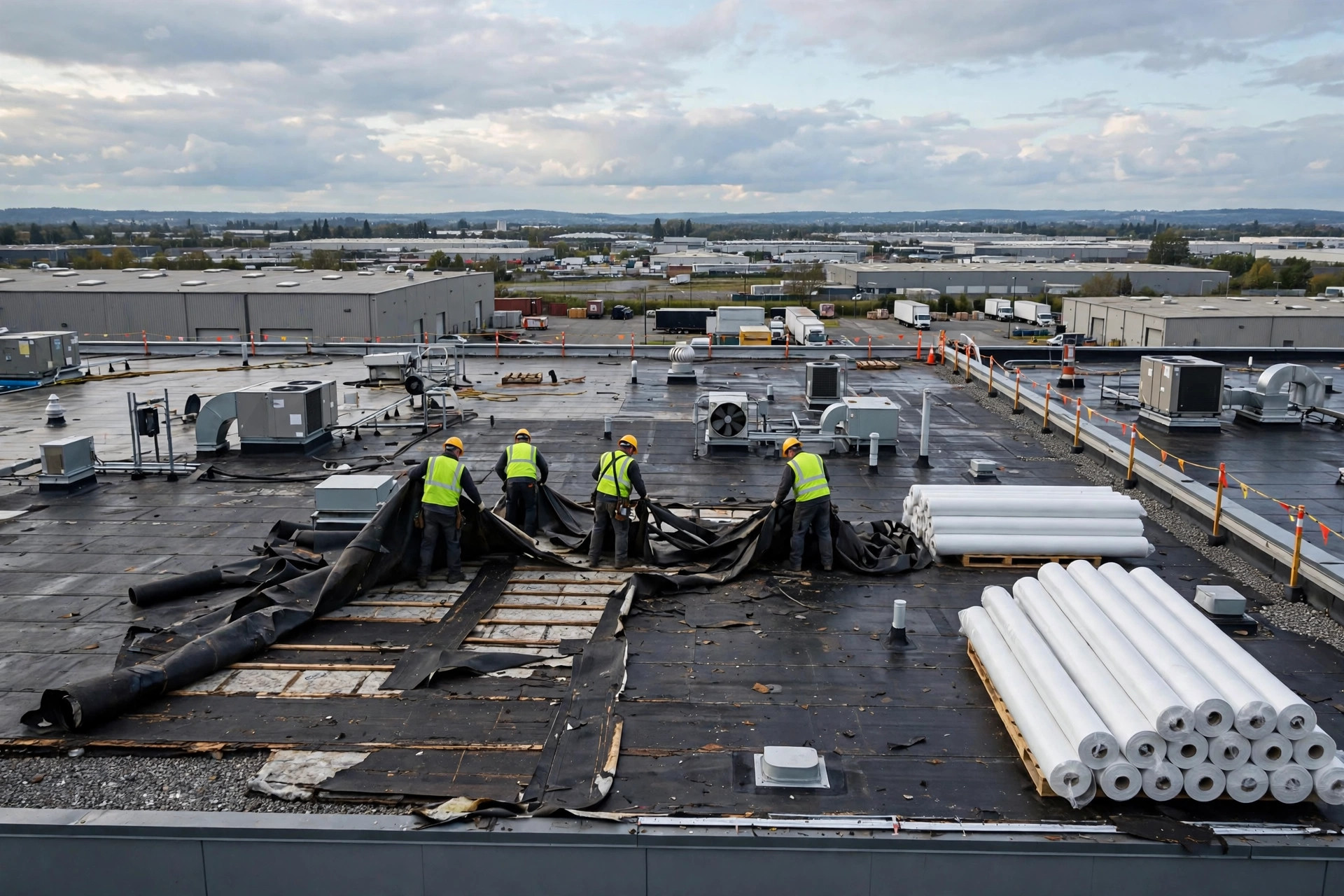
Commercial roof replacement is the complete removal of an old commercial roof and the installation of a new system. It is the biggest roofing decision a building owner makes, and often the most expensive single maintenance project the building will ever see. Done well, a commercial roof replacement protects the building for decades. Done poorly, it brings leaks, callbacks, and regret.
Replacement becomes necessary when repairs no longer hold, the membrane is worn across wide areas, or wet insulation has spread too far to fix in patches. This guide walks through nine planning steps for a smooth commercial roof replacement, the cost factors, and answers to the questions owners ask most.
Step 1: Confirm That Commercial Roof Replacement Is Really Needed
Before committing, make sure replacement is the right call. Get a professional inspection with moisture testing. If damage is limited to a few areas and the membrane has life left, targeted repairs or a restoration may serve better at far lower cost.
Replacement is the honest answer when the membrane is worn out across the roof, wet insulation covers a large share, repairs keep failing, or the deck is damaged. A contractor who pushes replacement without testing is selling, not advising. For help weighing repair against replacement, see commercial flat roof repair.
Step 2: Set the Budget for Commercial Roof Replacement
Get a realistic budget range early. Commercial roof replacement pricing varies by system, size, and region, but owners should plan for a major capital expense. Talk to the building’s financial team about funding: reserves, loans, or phased work.
Ask contractors for budget estimates before detailed bids. This early number prevents wasted time designing a roof the budget cannot support. Also plan a contingency of around ten percent for hidden deck damage found during tear-off. For financing angles, see commercial roof replacement financing.
Step 3: Choose the Right System for Your Commercial Roof Replacement
The system choice shapes cost, life, and performance. The main options:
TPO. Heat-welded white membrane. Reflective, cost-balanced, and widely used.
EPDM. Rubber membrane with a long track record, strong in cold climates.
Modified bitumen. Layered asphalt sheets. Tough under foot traffic.
Built-up roofing. Multi-layer felt and bitumen. Heavy and durable.
Metal. Standing seam panels. Highest upfront cost, longest life.
Spray foam. Seamless with great insulation value, needs recoating over time.
Match the system to the climate, the building use, and the maintenance plan. Ask each bidder to justify their recommendation in writing.
Step 4: Check the Structure Before Commercial Roof Replacement
The tear-off exposes the deck, and what it reveals can change the plan. Before bidding, confirm the deck type and load capacity from building records or an engineer. This matters most if the new system is heavier than the old one or if new equipment will be added.
Budget for some deck repair. It is rare to tear off an old roof and find a perfect deck underneath. Knowing this upfront keeps the contingency real and the schedule honest.
Step 5: Design Drainage into the Commercial Roof Replacement Plan
Replacement is the best chance to fix drainage problems that plagued the old roof. The new plan should show slopes, tapered insulation, drains, scuppers, and overflows. Water should leave the roof within a day after rain.
Walk the old roof during or after rain before the project starts. Note every ponding spot and hand the list to the designer. Fixing ponding in the new commercial roof replacement costs little now and saves much later.
Step 6: Handle Permits and Code for Commercial Roof Replacement
Most cities require permits for commercial roof replacement. Current energy codes may demand higher insulation R-values than the old roof had. Wind and fire ratings must meet today’s standards, not the ones from when the building went up.
The contractor usually pulls the permit, but the owner should confirm it. Plan review takes time, so start early. Work done without permits can bring stop-work orders and fines. The National Roofing Contractors Association tracks code issues affecting owners at NRCA.
Step 7: Bid the Commercial Roof Replacement Properly
Get at least three detailed bids. Each should name the system, materials by brand and thickness, insulation type and R-value, flashing details, warranty terms, schedule, and payment milestones. Vague bids hide costs.
Compare line by line. Check that every bid includes the same scope: tear-off, disposal, deck repair allowance, insulation, membrane, flashing, and cleanup. Ask for references from similar-size replacements and call them. The lowest bid that leaves out key items is the most expensive in the end.
Step 8: Manage the Build
During the work, watch the key stages or hire a roof consultant to do it. Confirm the deck is sound before new material goes down. Check insulation layout and seam work as it happens. Keep a daily photo log of progress and weather.
Protect the building below. Tear-off exposes the interior to weather, so the contractor must plan daily dry-in. Agree upfront on what happens if rain hits mid-project. Good communication between the owner, contractor, and tenants keeps everyone calm. Federal safety rules from OSHA require fall protection, so keep untrained staff off the roof.
Step 9: Close Out the Commercial Roof Replacement Right
Walk the finished roof with the contractor. Check every penetration, seam, drain, and edge. Look for ponding, debris, and damaged details. Test drains with water if possible.
Collect all warranty documents: manufacturer coverage on materials and contractor coverage on workmanship. Know what voids the warranty. Register the manufacturer warranty promptly. File everything where the building team can find it for years to come.
Commercial Roof Replacement Cost Factors
Use this checklist to understand pricing.
- Roof size. Larger roofs cost less per square foot but more in total.
- System choice. Single-ply sits in the middle. Metal costs more upfront.
- Tear-off and disposal. Removing old layers is a major labor and hauling cost.
- Deck repairs. Hidden damage found during tear-off adds cost.
- Insulation thickness. Higher R-values cost more and cut energy bills.
- Roof complexity. Many penetrations and odd shapes add labor.
- Access and staging. Tight urban sites cost more to work on.
- Timing. Storm seasons and peak months carry higher prices.
Timing Your Commercial Roof Replacement
When the work happens matters almost as much as how. The best window for commercial roof replacement is the mild season with the lowest rain risk in your region. Dry weather keeps the schedule tight and lets adhesives and welds cure properly. It also means the building spends less time exposed during tear-off.
Avoid the peak storm season if possible. Emergency demand drives prices up and stretches good crews thin. If the roof cannot wait, ask the contractor how they handle daily dry-in and what the rain plan is. Get it in writing.
Also consider the building’s own calendar. Retail centers prefer work outside the holiday rush. Schools prefer breaks between terms. Offices may want noisy tear-off scheduled around important events. A contractor who plans around the building’s rhythm is worth keeping. The right timing turns a disruptive project into a manageable one.
Commercial Roof Replacement FAQs
How long does commercial roof replacement take?
Most projects take two to six weeks depending on size, system, weather, and tear-off needs. Simple single-ply jobs on mid-size buildings finish faster. Complex jobs with structural work take longer.
Can the building stay open during commercial roof replacement?
Usually yes. Work happens in sections with daily dry-in to keep weather out. Expect noise, some vibration, and occasional odors. A good contractor schedules the loudest work around business hours when possible.
Should I tear off the old roof or roof over it?
Tear-off lets the contractor inspect and fix the deck, and it is required when wet insulation or deck damage is widespread. A recover over one existing layer saves money where code allows and the old roof is sound and dry. The inspection decides.
What warranty should I expect?
Manufacturer warranties on materials often run 15 to 30 years depending on the system. Contractor workmanship warranties are shorter, often two to ten years. Read both sets of terms and know what voids them.
How do I avoid surprise costs during commercial roof replacement?
Insist on a deck repair allowance in the bid, keep a ten percent contingency, and require written change orders for any extra work. Daily photo documentation helps resolve disputes about what was found and what was done.
Next Steps for Building Owners
Commercial roof replacement rewards the owner who plans carefully. Confirm the need with testing, set a real budget, choose the right system, and bid the job properly. Watch the build, document everything, and file the warranties. A roof planned this way protects the building quietly for decades. The effort spent planning pays back every time it rains. Owners who do the homework sleep well, knowing the roof above them was built right. That peace of mind is priceless.



