
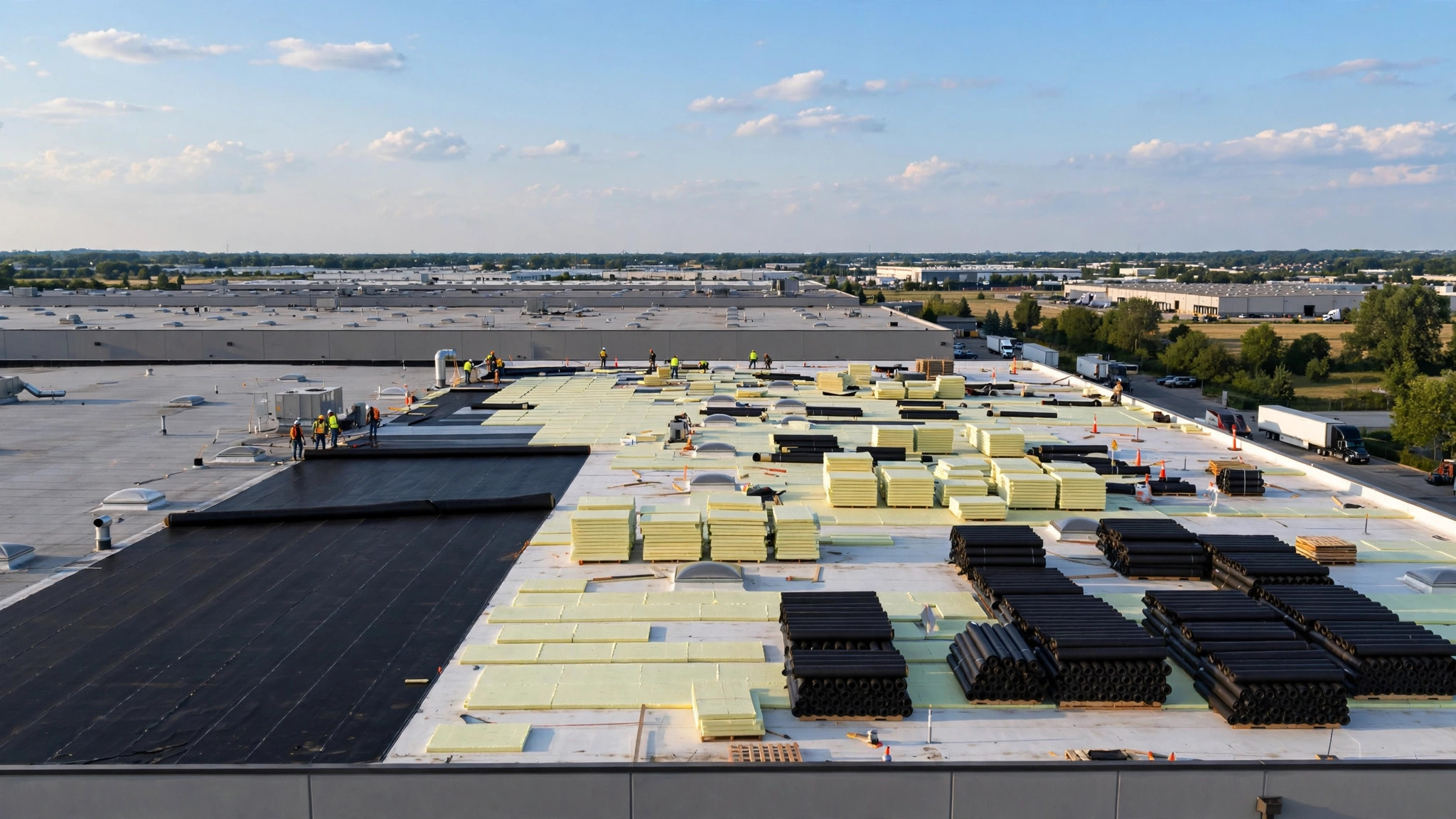
Commercial roof replacement cost is the total price of tearing off an old commercial roof and installing a new one. For building owners across the United States, it is one of the largest capital expenses a property will ever face. Knowing what drives the price helps you budget, compare bids, and avoid overpaying.
Roofs do not last forever. Even with good care, membranes age, insulation gets wet, and seams give out. At some point, repairs stop making sense and replacement becomes the smart move. Understanding commercial roof replacement cost before that day comes lets you plan the project on your terms instead of rushing it after a major leak.
Commercial roof replacement cost: Typical Ranges
Prices vary widely by roof type, size, and region. As a rough guide, full replacement of a commercial flat or low-slope roof often runs from the low single digits to the mid teens per square foot, installed. A 20,000 square foot roof might therefore cost anywhere from sixty thousand to well over two hundred thousand dollars depending on the choices below.
Single-ply membranes like TPO and EPDM usually sit at the lower end of the range. Built-up roofing and modified bitumen sit in the middle. Metal roofing and high-end systems sit at the top. These are broad ranges, not quotes. Your building’s details move the number up or down.
Always get at least three written bids from commercial roofing contractors. Bids should break out labor, materials, tear-off, disposal, insulation, flashing work, and permits. A bid that is far below the others is a warning sign, not a bargain.
9 Factors That Drive commercial roof replacement cost
One, roof size. Larger roofs cost more in total but often less per square foot, since setup and mobilization spread over more area. Small roofs pay a higher per-foot rate because the fixed costs do not shrink.
Two, roof type and material. TPO and EPDM membranes cost less than standing-seam metal or built-up systems. Coatings applied over a sound roof cost far less than a full tear-off. The material you pick is one of the biggest levers on price.
Three, tear-off versus overlay. Tearing off the old roof adds labor and disposal cost. An overlay, where the new roof goes over the old one, skips tear-off but is only allowed when the existing roof is dry and the structure can carry the extra weight. Building codes limit how many roof layers you can stack.
Four, insulation. Replacement is the time to fix insulation. Wet or crushed insulation must come out. Many owners upgrade insulation thickness during replacement to cut energy bills. Better insulation costs more now and pays back through lower heating and cooling costs.
Five, roof complexity. A simple open rectangle is cheap to roof. A roof crowded with HVAC units, pipes, skylights, and drains needs more flashing work, and flashing is skilled labor. Parapet walls, odd angles, and multiple roof levels all add cost.
Six, access. A roof that is easy to reach with a crane and a staging area costs less to work on. Tight urban sites, locked roofs, and buildings where materials must be carried up stairs all add labor hours.
Seven, deck repairs. Once the old roof is off, the contractor may find rotted or rusted deck sections. These must be fixed before the new roof goes on. Deck repair is hard to price until tear-off exposes the deck, so good bids include a unit price for deck replacement per square foot.
Eight, permits and code upgrades. Most cities require a permit for roof replacement. Current energy codes may require more insulation than the old roof had. Wind uplift rules in storm regions can require stronger fastening. These add cost but also add performance.
Nine, timing and market. Roofing prices move with material costs and labor demand. Scheduling in the slower season can sometimes get a better price. Emergency replacements after storm damage cost more because the work is rushed.
Commercial roof replacement cost by Roof Type
TPO single-ply is a common pick for flat commercial roofs. It is heat-welded, reflective, and mid-range in price. Many owners choose it for the balance of cost and energy performance. For more on this membrane, see our guide to tpo roof repair.
EPDM is the black rubber membrane seen on many older commercial roofs. It is durable and often the lowest-cost full replacement option. It absorbs more heat than white membranes, which matters in hot climates. See epdm roof repair for care details.
Modified bitumen is a multi-layer asphalt system, tough and proven. It costs more than single-ply but handles foot traffic well. Built-up roofing, the classic tar and gravel system, is similar in price and very durable.
Metal roofing costs the most up front but lasts the longest, often decades beyond membrane systems. For warehouses and buildings with sloped sections, metal can be the best long-term value. See commercial metal roof repair for upkeep notes.
Roof coatings are the budget option when the existing roof is sound and dry. A coating seals and reflects, adding years of life at a fraction of replacement cost. But coating over wet insulation or failed seams wastes money. Test first.
When Replacement Beats Repair
A roof that leaks in many places at once is telling you something. When repairs become frequent and each one costs more, the math shifts. Add up a year of repair bills. If that total keeps rising, replacement may be cheaper over the next five years.
Wet insulation is the clearest signal. A roofer can take core samples to check. Wet insulation loses its R-value and adds weight. Patching over it does not fix the problem. When a large share of the insulation is wet, replacement is usually the right call.
Age matters too. Every roof type has an expected life. A twenty-five-year-old membrane that is cracking and shrinking will not be saved by more patches. A roof near the end of its rated life deserves a replacement plan, not another repair.
Safety and liability count as well. A roof that ponds badly or has soft spots is a risk to anyone who walks on it. If your maintenance crew avoids parts of the roof, that is a sign the structure needs attention.
How to Budget for commercial roof replacement cost
Start with a professional assessment. A commercial roofer can inspect the roof, take core samples, and give you a realistic replacement estimate years before you need it. This turns a surprise into a planned project.
Set up a roof reserve fund. Divide the estimated replacement cost by the years of life left, and save that amount each year. A roof with ten years left and a two-hundred-thousand-dollar replacement cost needs about twenty thousand dollars per year in reserve. This beats scrambling for financing later.
Consider financing options. Many contractors offer financing, and commercial lenders handle roof loans. Some owners use the project to upgrade insulation and cut energy bills, which improves the payback. See roof financing options for businesses and commercial roof replacement financing for details.
Time the project well. Replacing in dry, mild weather is faster and cheaper than fighting winter or storm season. Plan the work for a period when building disruption hurts least. Coordinate with tenants early so everyone knows the schedule.
Getting Bids You Can Trust
Get at least three bids from contractors who do commercial work full time. Each bid should describe the same scope: tear-off or overlay, membrane type and thickness, insulation type and R-value, flashing details, warranty terms, and cleanup. If scopes differ, the prices cannot be compared.
Check references and past work. Ask for addresses of similar jobs completed in the last few years. Drive by if you can. A roof that still looks good after several years says more than any brochure. The National Roofing Contractors Association publishes guidance on hiring qualified roofing contractors at https://www.nrca.net/.
Read the warranty terms. Material warranties come from the maker. Workmanship warranties come from the contractor. A strong contractor warranty on installation matters as much as the membrane warranty. Ask what voids the warranty and what maintenance it requires.
Verify insurance and licensing. The contractor should carry general liability and workers compensation. Roof work has real fall risks, and OSHA rules apply. Ask for certificates before work starts.
Never pay the full amount up front. A deposit to order materials is normal. The balance should follow progress, with final payment after you or your inspector approve the finished work.
Cost-Saving Moves That Do Not Cut Corners
Choose the right system for the building, not the most expensive one. A warehouse in a mild climate may do fine with a quality single-ply membrane. Spending extra on premium systems only pays when the building needs their strengths.
Fix drainage during replacement. Adding tapered insulation or extra drains costs more now but ends ponding water, which is a top killer of flat roofs. This upgrade pays for itself in longer roof life.
Bundle related work. If rooftop HVAC units need curbs raised or replaced, do it during the roofing project. One mobilization, one disruption, lower total cost than two separate jobs.
Keep up maintenance after the new roof goes on. A new roof with no maintenance plan ages fast. A simple twice-yearly program protects your investment and keeps the warranty valid. The cheapest roof is the one you never have to replace early.
Plan commercial roof replacement cost years before the roof fails, starting with a professional assessment and core samples. Break every commercial roof replacement cost bid into tear-off, insulation, membrane, flashing, and permits, since lump sums hide padding. Remember that commercial roof replacement cost includes decades of energy impact; the Department of Energy covers cool roofing at https://www.energy.gov/. Fund commercial roof replacement cost through a yearly reserve so the project never arrives as a surprise. Get commercial roof replacement cost details in writing, from deck-repair unit rates to warranty terms. Owners who plan commercial roof replacement cost ahead consistently pay less than owners who wait for a catastrophic leak. Schedule commercial roof replacement cost work in dry weather to avoid delay premiums. In short, commercial roof replacement cost rewards preparation.
What is the average commercial roof replacement cost?
It varies widely. Most commercial flat roof replacements fall in the low single digits to mid teens per square foot installed, depending on material, size, and complexity. A 20,000 square foot roof can range from tens of thousands to well over two hundred thousand dollars.
Is tear-off or overlay cheaper?
An overlay is cheaper up front because it skips tear-off labor and disposal. But it only works when the existing roof is dry and codes allow another layer. If the old roof hides wet insulation, tear-off is the only real fix.
How long does a commercial roof replacement take?
A straightforward project on a mid-size building often takes one to three weeks. Large or complex roofs take longer. Weather, deck repairs, and material lead times can extend the schedule. Your contractor should give a written timeline.
Does a new roof lower energy bills?
Often yes, especially if you upgrade insulation and choose a reflective membrane. Cooler roofs cut summer cooling loads. The Department of Energy offers guidance on cool roofs and insulation for commercial buildings at https://www.energy.gov/.
Should I get multiple bids for commercial roof replacement cost?
Yes, always get at least three. Make sure each bid covers the same scope so the prices compare fairly. Check references, warranties, and insurance before you choose.
Next Steps
Get a professional roof assessment with core samples so you know the real condition of your roof. Build a reserve fund based on the estimated cost and remaining life. When the time comes, get three detailed bids, check references, and schedule the work in good weather. Plan the project once, and the new roof will serve the building for decades.



