
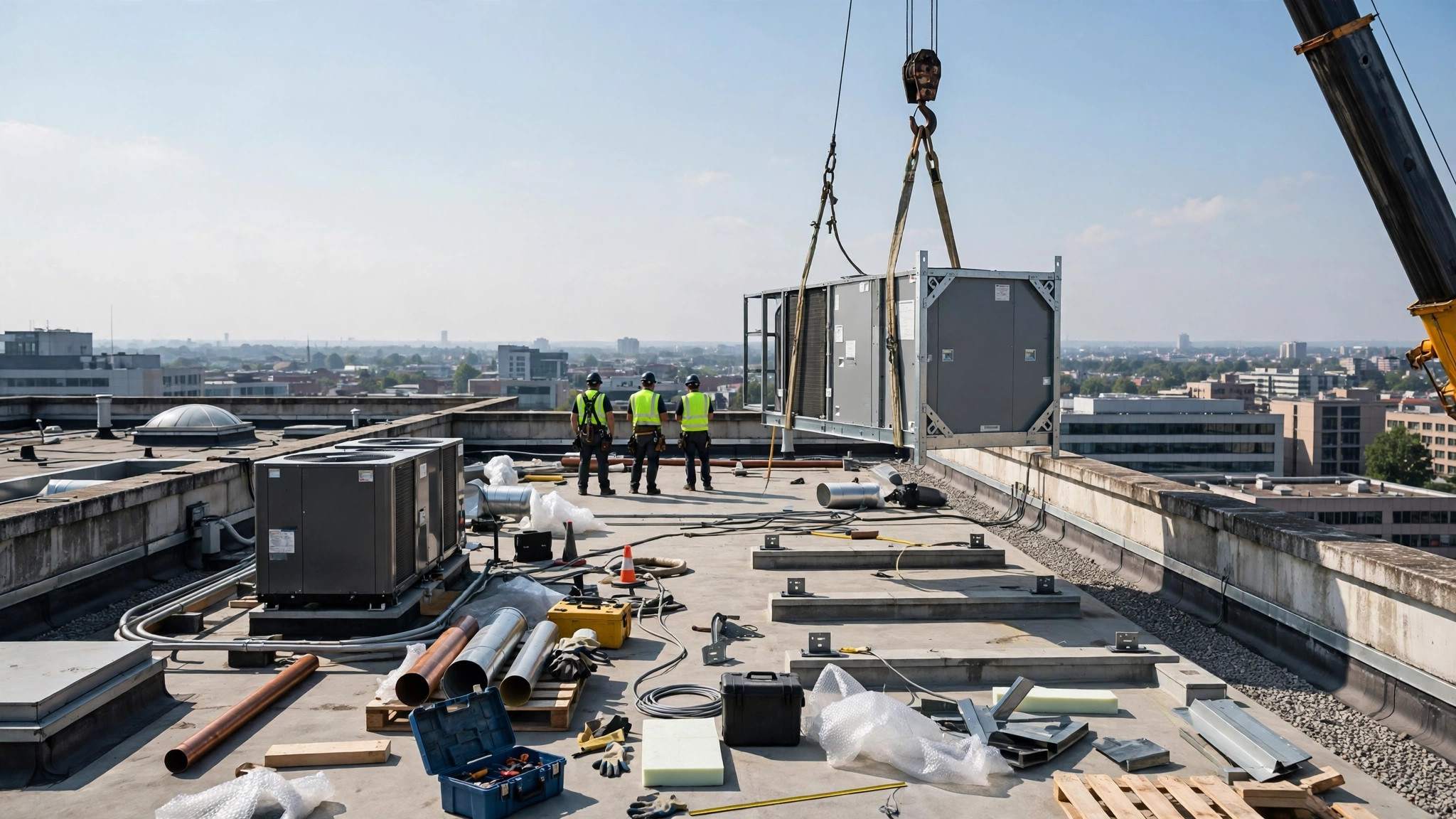
Cooling a commercial building is a major capital project. The cost of installing air conditioning system equipment varies enormously, from a few thousand dollars for a small packaged unit to six figures for a large chilled water plant. Knowing what drives the number keeps the project under control.
This guide breaks down the cost of installing air conditioning system by type, explains the biggest price factors, and shows how to get fair bids. Read on before you sign.
7 Facts About cost of installing air conditioning system
Fact one, system type sets the range. Packaged rooftop units are the most economical per ton for small and mid-size buildings. Split systems cost more per ton but fit where rooftops do not work. Chilled water systems cost the most and serve the largest buildings.
Fact two, capacity drives cost. Tonnage must match the building load. Bigger buildings need more tons, and each ton has a price. Oversizing wastes money twice: at purchase and every month in energy.
Fact three, the cost of installing air conditioning system includes more than equipment. Ductwork, electrical upgrades, controls, permits, and commissioning all sit in the total. Equipment alone is only part of the project.
Fact four, existing infrastructure changes the math. Buildings with usable ductwork and adequate electrical service cost less to fit out. Buildings needing new ducts, panels, or structural work cost far more.
Fact five, efficiency level moves the price. High-efficiency equipment costs more up front and less to run. On long operating hours, the efficient choice usually wins on life-cycle cost.
Fact six, labor markets matter. The same installation costs more in high-cost metro areas. Specialized work like VRF and chilled water needs trained crews that command premium rates.
Fact seven, timing affects price. Emergency summer installations cost more than planned off-season projects. Scheduling the work for mild weather saves money and avoids disruption.
System Types and Their Costs
Packaged rooftop units are the value pick for small commercial spaces. One box per zone, simple ducts, straightforward installation. Most small retail and office projects land here.
Split systems suit buildings where roof mounting is impractical. Indoor air handlers connect to outdoor condensers. Installation costs more per ton than packaged units, but placement flexibility is worth it in many buildings.
VRF systems cost more up front and deliver top efficiency with zone-by-zone control. Hotels, offices, and schools with diverse loads get strong returns. Specialized labor adds to the project cost.
Chilled water plants serve the largest buildings. Chillers, cooling towers, pumps, and air handlers form a central system. First cost is high, but efficiency at scale is excellent. These are engineered projects with long timelines.
Cost Factors Checklist for cost of installing air conditioning system
Use this checklist to compare bids.
- System type and capacity. Tonnage and technology set the base.
- Ductwork. New, modified, or reused ducts change the price greatly.
- Electrical. Service capacity, panels, and wiring upgrades.
- Controls. Thermostats versus full building automation.
- Refrigerant piping. Line sets for splits and VRF.
- Structural. Roof curbs, pads, and equipment supports.
- Permits and inspections. Mechanical and electrical permit fees.
- Commissioning. Testing and balancing to verify performance.
- Old equipment removal. Disposal and recycling costs.
Getting Fair Bids
Start with a load calculation. Every serious bid should rest on proper sizing, not rules of thumb. A contractor who skips this step is guessing with your money.
Demand itemized quotes. Equipment, ductwork, electrical, controls, and labor should be separate lines. Itemization lets you compare bids fairly and spot missing scope.
Check qualifications. Commercial AC installation needs licensed contractors with relevant experience. Ask for references on similar buildings and similar system types.
Plan the schedule. Installation disrupts the building. Good contractors phase the work, protect occupied areas, and commission the system before handover. Get the timeline in writing.
Consider operating cost. The cost of installing air conditioning system is only the first bill. Energy, maintenance, and eventual replacement make up the rest. Compare life-cycle totals, not just install prices.
Planning the Project Around the cost of installing air conditioning system
A smooth installation starts long before the equipment arrives. Owners who plan well control the cost of installing air conditioning system and avoid the chaos of a rushed project.
Begin with a needs assessment. Document what is wrong with the current setup: comfort complaints, high bills, breakdown history, and refrigerant issues. List the zones and their uses. Note any planned building changes, like new tenants or renovations, that affect loads. This assessment becomes the project brief.
Commission a load calculation. Every zone gets a proper heating and cooling load analysis based on the building’s construction, orientation, occupancy, and internal gains. The calculation sizes the equipment correctly. It also reveals opportunities: better insulation or windows can shrink the required capacity and reduce the cost of installing air conditioning system overall.
Evaluate the existing infrastructure honestly. Can the ducts be reused? Is the electrical service adequate? Will the structure support rooftop equipment? Each yes saves money. Each no adds scope. A pre-design survey answers these questions before bidding, so contractors price reality instead of assumptions.
Choose the system type deliberately. Packaged units, splits, VRF, and chilled water each suit different buildings. Compare them on installed cost, operating cost, zoning flexibility, and maintenance needs over a twenty-year horizon. The cheapest first cost rarely wins the long game. The right system for the building does.
Sequence the work with building operations. Schools install in summer. Retail avoids holiday seasons. Offices phase floor by floor. The schedule affects labor cost and disruption alike. A contractor who plans around your calendar earns the business.
Line up permits early. Mechanical, electrical, and sometimes structural permits take time in busy jurisdictions. Starting the paperwork early prevents schedule slips. Your contractor should handle the applications, but you should confirm they are filed.
Plan for commissioning from the start. The cost of installing air conditioning system should always include testing, balancing, and controls verification. Write commissioning into the contract, not as an afterthought. A commissioned system performs as designed from day one. An uncommissioned one may never reach its potential.
Finally, budget a contingency. Hidden conditions in ceilings and walls, electrical surprises, and structural needs appear in real projects. A ten percent contingency keeps the project moving without emergency approvals. Owners who plan the money as carefully as the machinery finish on time, on budget, and with a system that serves for decades.
Permits and the cost of installing air conditioning system
Permits are a real line item in the cost of installing air conditioning system projects. Most jurisdictions require a mechanical permit for commercial AC work, plus electrical permits for wiring changes. Larger projects may trigger structural review for rooftop equipment. Permit fees scale with project value in many cities.
The permit process also affects the schedule. Plan review takes days to weeks depending on the jurisdiction and project complexity. Inspections happen at set stages: rough-in before ceilings close, and final on completion. Failed inspections cause rework and delay, so the contractor should know the local inspectors’ expectations.
Code compliance rides along with permits. Current energy codes may require specific efficiency minimums, economizers, or controls features. Ventilation codes set fresh air rates the new system must deliver. Refrigerant regulations govern handling and leak standards. A qualified contractor designs to the current code, but the owner should confirm the permit set reflects it.
Keep the permit records. The approved drawings, inspection sign-offs, and final certificate belong in the building file. They prove the installation was legal and code-compliant, which matters for insurance, sales, and future renovations. When buyers or insurers ask about the system, permitted work with clean inspections answers every question. Factor permit fees and the time they take into the project plan from day one, and the cost of installing air conditioning system holds no administrative surprises.
Related Guides
For installation context, see HVAC installation Dallas commercial. For contractor selection, read how to find a commercial HVAC contractor. And for company options, see commercial HVAC companies Dallas.
For independent background, ENERGY STAR covers efficient commercial cooling, and the U.S. Department of Energy explains system selection.
FAQ
What is the average cost of installing air conditioning system?
There is no useful average across building sizes. Small packaged installations run a few thousand dollars. Large commercial projects reach six figures. A load calculation and local bids give your number.
How long does installation take?
Small packaged unit swaps take days. Full system installations with new ductwork take weeks to months. Your contractor should provide a written schedule.
Can I install AC in phases?
Yes. Many buildings phase by zone or floor. Phasing spreads cost and limits disruption. Plan the full system design first so phases fit together.
Will a new system lower my energy bills?
Usually yes, especially when replacing old inefficient equipment. Right-sizing, good ducts, and modern controls multiply the savings.
Do I need new ductwork?
Not always. Sound, well-sized ducts can be reused. Leaky or undersized ducts should be replaced or sealed during the project.
Next Steps
Now you understand the cost of installing air conditioning system and what drives it. Start with a professional load calculation and an assessment of your existing infrastructure. Get itemized bids from qualified commercial contractors. Compare life-cycle costs, not just installation prices. And schedule the work for mild weather when possible. Good planning turns a major project into a smooth upgrade.



