
A new heating and cooling system is one of the biggest checks a building owner writes. The equipment gets the attention, but the ducts move the air, and ducts are a large share of the bill. Knowing the cost to install hvac system with ductwork before you sign helps you budget with confidence and spot a bad bid.
Prices swing wide. A small office can cost far less than a warehouse with long duct runs. This guide breaks down the cost to install hvac system with ductwork into the nine factors that matter most, with typical ranges and plain advice on keeping the project on budget. Read it before you take the first bid, and you will ask better questions from the start.
What the cost to install hvac system with ductwork covers
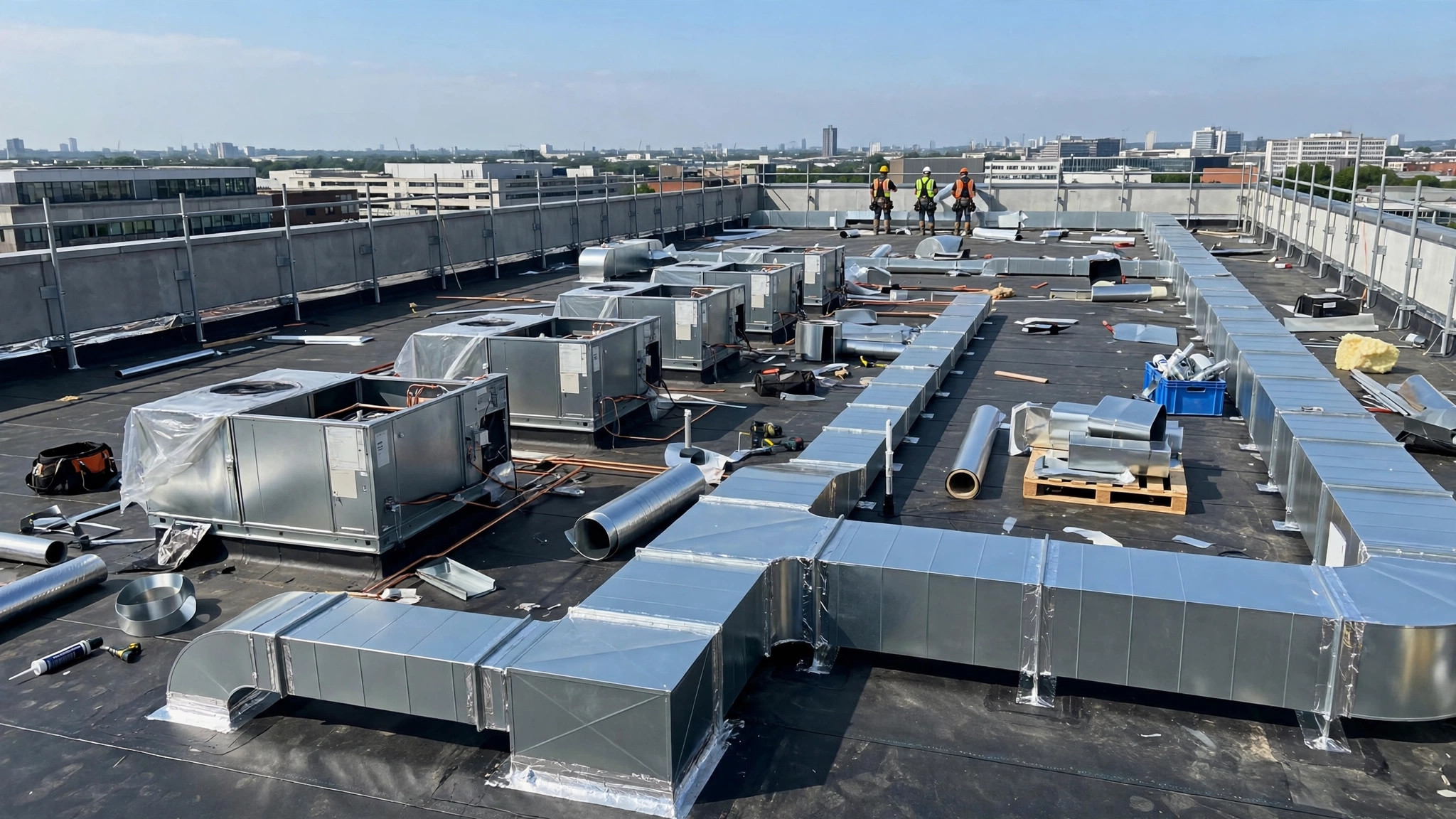
The total price has three parts. First is the equipment: the rooftop unit or split system, the furnace or heat pump, and the controls. Second is the ductwork: sheet metal trunk lines, branch runs, registers, grilles, dampers, and insulation. Third is labor: design, fabrication, installation, startup, and testing.
On many jobs the ductwork is 30 to 50 percent of the total. Long runs, tight ceilings, and fire-rated shafts push that share higher. When you ask for the cost to install hvac system with ductwork, always ask for the duct portion broken out on its own line. A lump-sum bid hides where the money goes.
Design comes before any of it. A proper load calculation sizes the equipment to the building. The American Society of Heating, Refrigerating and Air-Conditioning Engineers publishes the standards behind those calculations. A contractor who skips the math and sizes by rule of thumb will oversize the unit, and you will pay for it in equipment cost and electric bills for years.
The 9 factors behind the cost to install hvac system with ductwork
-
Building size and layout. More square feet means more tons of cooling and more feet of duct. Open warehouses are cheap per square foot. Cut-up office space with many small rooms costs more per square foot because every room needs a run.
-
Equipment type and efficiency. A basic rooftop unit costs less than a high-efficiency system with variable speed drives. Higher efficiency costs more up front and less to run. The U.S. Department of Energy publishes efficiency ratings that let you compare models side by side.
-
Duct material. Standard galvanized sheet metal is the workhorse. Spiral duct costs more but installs fast and looks clean in open ceilings. Fiberglass duct board costs less but needs careful sealing. Your choice moves the cost to install hvac system with ductwork by thousands.
-
Duct length and complexity. Long runs need bigger trunks and more supports. Every elbow, tee, and transition adds labor and material. A straight shot down a hallway is cheap. A maze around beams and pipes is not.
-
Ceiling height and access. High ceilings need lifts and more labor hours. Tight crawl spaces slow every task. If the crew can stand up and move freely, the job goes fast and the price drops.
-
Existing conditions. A retrofit that reuses old ducts costs less than a full new install. But old ducts may be undersized, leaky, or full of dust. Sometimes keeping them is false economy. A good contractor tests the old ducts before recommending reuse.
-
Controls and zoning. A single thermostat is the cheapest control. Multiple zones with dampers and sensors cost more and give better comfort. Smart controls add to the install price and cut operating cost.
-
Permits and code work. Fire dampers, smoke detectors in ducts, and seismic bracing are code items in most cities. They are not optional and they are not free. Ask what the local code requires early so it lands in the bid, not in a change order.
-
Labor market and timing. Prices run higher in busy seasons and in high-cost cities. A job scheduled in the mild months, when contractors are hungry, often prices better than the same job in peak summer.
Typical ranges for the cost to install hvac system with ductwork
Small offices up to about 2,000 square feet often land between $15,000 and $30,000 for a full system with new ducts. Mid-size buildings from 2,000 to 10,000 square feet commonly run $30,000 to $100,000. Large facilities above 10,000 square feet start around $100,000 and climb with complexity. Warehouses with simple open layouts sit at the low end per square foot. Medical offices, restaurants, and buildings with many zones sit at the high end.
These are planning ranges, not quotes. Your building, your city, and your timing will move the number. Get three bids and compare them line by line. If one bid is far below the others on the cost to install hvac system with ductwork, find out what was left out. It is usually the duct sealing, the controls, or the permit fees.
Hidden extras that raise the cost to install hvac system with ductwork
The bid covers equipment, ducts, and labor. But several extras catch owners by surprise. A crane is the big one. Rooftop units do not climb stairs. Setting a unit on the roof needs a crane, a street permit, and sometimes a police detail for traffic. That can add thousands in one day.
Electrical work is next. A new system may need a bigger breaker panel, new disconnects, or longer wire runs. Older buildings often need this upgrade, and the electrician’s bill lands on top of the HVAC bid. Ask early whether the existing panel can carry the new load.
Structural work shows up with heavy units. A rooftop unit can weigh several tons. The roof curb and the structure below must carry it. An engineer may need to check the load path, and weak spots need reinforcement before the unit goes up.
Patching and paint close out the job. Duct runs cut through walls and ceilings. Someone has to patch the holes and repaint. Make sure the bid says who does this work. If it is not in the HVAC bid, it is in your budget anyway.
Temporary cooling is the last surprise. If the old system comes out before the new one runs, the building still needs air. Portable units rent by the week. Plan the schedule to keep this gap short, and the cost to install hvac system with ductwork stays closer to the bid.
How to keep the cost to install hvac system with ductwork down
Start with the design. A tight building envelope and good insulation shrink the equipment size, and smaller equipment costs less to buy and to run. Seal the building first, then size the system.
Keep duct runs short and straight. Every foot of duct and every fitting costs money. A smart layout puts the unit near the middle of the load and runs short branches outward. This is where a good designer earns the fee.
Seal every joint. Leaky ducts waste 20 to 30 percent of the air they carry, according to ENERGY STAR guidance on duct systems. Sealing with mastic during install costs little. Fixing leaks later costs a lot.
Do not oversize. Bigger is not better in HVAC. An oversized unit short-cycles, wears out faster, and leaves humidity behind. Insist on a written load calculation and check the tonnage against it.
Time your bid. Contractors price sharpest when their schedule has gaps, usually in the mild months between peak seasons. If your project can wait a few weeks, ask for pricing in the slow season. The same cost to install hvac system with ductwork can drop noticeably when the crew needs the work.
For help picking the right firm, see our guide on how to find a commercial HVAC contractor. The cheapest bid from an unproven crew is the most expensive mistake in this business.
Frequently asked questions
Is it cheaper to reuse old ductwork?
Sometimes. If the old ducts are the right size, in good shape, and clean, reuse saves real money. But undersized or leaky ducts choke a new system. Have the contractor test static pressure and inspect the runs. Reusing bad ducts to save on the cost to install hvac system with ductwork is a false saving.
How long does the install take?
A small office takes a few days. A mid-size building takes one to three weeks. Large or complex jobs run a month or more. Duct fabrication is often the long pole, since custom fittings take shop time.
Should I get the ducts cleaned before connecting new equipment?
If you reuse old ducts, yes. Dust and debris in old runs blow straight into the new system. A cleaning before startup protects the new coil and keeps the air clean from day one.
Does a higher efficiency unit pay back?
Usually, in buildings that run long hours. Compare the price gap against the expected energy savings over the equipment life. The U.S. Department of Energy offers calculators that make this math simple.
Can the work be phased to spread the cost to install hvac system with ductwork?
Yes, on larger buildings. The contractor can install the main trunk and one zone first, then add zones later. Phasing spreads the cash outlay across budget cycles. It costs a little more in total because of remobilization, but it keeps each phase affordable.
What warranties should I expect?
Equipment makers typically cover parts for several years, with longer terms on high-end lines. The contractor should warrant labor separately, usually for at least one full season of operation. Get both in writing. Our article on commercial HVAC contractors explains what to look for in a service firm.
Next steps for your project
Get a load calculation first, then three itemized bids that break out equipment, ductwork, and labor. Compare the duct designs, not just the totals. The owner who understands the cost to install hvac system with ductwork line by line is the owner who gets a fair price and a system that works from day one.



