A flat roof coating can add years to a commercial roof at a fraction of replacement cost. But not all coatings are the same. Acrylic, silicone, polyurethane, and others each suit different roofs. Choosing wrong wastes money. This guide compares seven flat roof coating types side by side. It covers how each works, what it costs, how long it lasts, and where it fits. It is written in plain language for US building owners and facility managers.
What a flat roof coating does
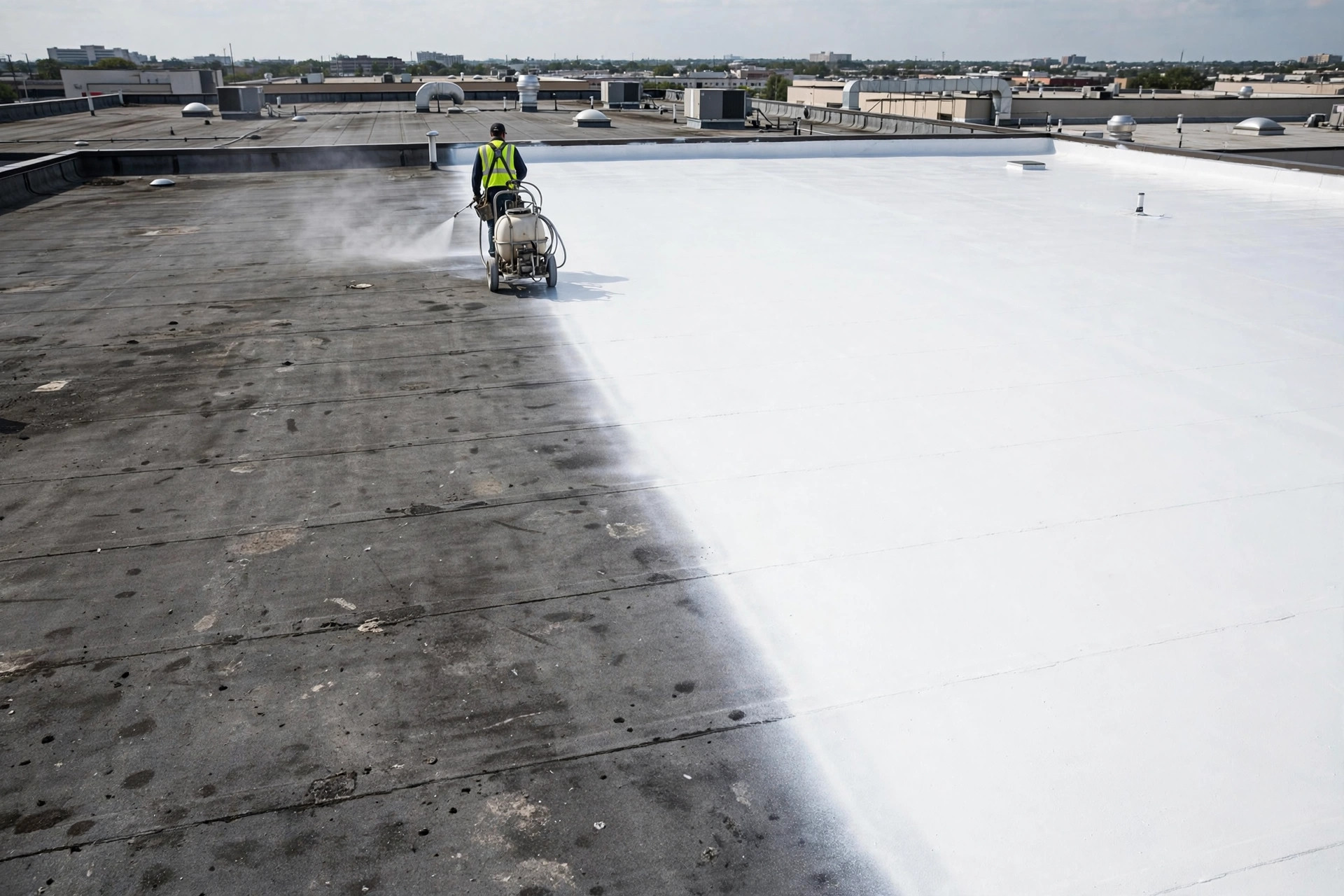
A flat roof coating is a liquid waterproof layer applied over an existing roof. Crews clean the roof, repair seams and flashing, then spray, roll, or brush the coating on. It cures into a seamless membrane. The coating seals small cracks, protects against UV, and extends roof life, often by ten to fifteen years.
Coating is restoration, not replacement. The existing roof must be sound, dry, and well attached. A moisture survey finds wet insulation that must be cut out first. Coatings cannot fix structural problems or rotted decks. For the right roof, a flat roof coating is the best value in commercial roofing. For the wrong roof, it is money thrown away. An honest inspection decides which case you have.
Type 1: Acrylic coatings
Acrylic is the most common flat roof coating. It is water-based, easy to apply, and affordable. It reflects sunlight well when fresh, cutting cooling costs. It comes in many colors. Application needs dry weather and moderate temperatures. Crews often apply two or three coats to reach target thickness.
Acrylic suits roofs with good drainage. Its weakness is ponding water. Standing water softens acrylic over time. On roofs where water stands for days, acrylic fails early. Lifespan often runs five to ten years. It is the budget pick for well-drained roofs in moderate climates. Recoating later is simple since new acrylic sticks to old.
Type 2: Silicone coatings
Silicone is the ponding water champion among flat roof coating types. It cures into a rubbery layer that resists standing water for years. It also resists UV extremely well and stays flexible through temperature swings. Many silicone systems need only one coat at full thickness, which saves labor.
The trade-offs are cost and dirt. Silicone costs more per gallon than acrylic. Its surface grabs dust and loses reflectivity over time. Nothing but silicone sticks to cured silicone, so future coatings must also be silicone. It also tears more easily under foot traffic. For roofs with drainage problems, silicone is often the best flat roof coating choice. Our guide on commercial roof coating contractors explains how to hire the right applicator.
Type 3: Polyurethane coatings
Polyurethane is the tough option. It resists abrasion, foot traffic, and impact better than acrylic or silicone. It handles ponding water well. Two types exist: aromatic and aliphatic. Aromatic forms the base coat. Aliphatic forms the UV-stable top coat. Together they make a hard-wearing system.
Polyurethane suits roofs with heavy foot traffic, like buildings with frequent HVAC service. It costs more than acrylic and needs careful application. Moisture during application causes bubbling. The finished surface is strong but less reflective than white acrylic or silicone unless top-coated light. For hard-use roofs, it is the durability pick.
Type 4: Asphalt-based coatings
Asphalt coatings, including aluminum-fibered types, are the old-school flat roof coating. They go over built-up and modified bitumen roofs. They are cheap and simple. The aluminum versions reflect some sun. They extend the life of aging asphalt roofs by a few years.
These are maintenance coatings, not long-term restoration. Lifespan is short, often three to seven years. They do not bridge cracks well and add little waterproofing strength. They suit owners who need a few more years from an old asphalt roof before replacement. Do not expect premium performance at this price.
Type 5: Polyurea coatings
Polyurea is the premium fast-cure option. It sprays on and cures in seconds. It forms an extremely tough, seamless membrane. It resists chemicals, abrasion, and impact. Some systems handle immersion and harsh industrial exposure. Application needs specialized heated spray equipment and trained crews.
Cost is the barrier. Polyurea is among the most expensive flat roof coating types. It suits industrial buildings, chemical plants, and roofs with extreme demands. For typical offices and warehouses, it is overkill. Where toughness matters most, nothing beats it.
Type 6: SEBS rubber coatings
SEBS, a rubber-based coating, offers good flexibility and adhesion. It sticks well to many surfaces including aged membranes and metal. It handles temperature movement without cracking. It is a middle-ground flat roof coating: tougher than acrylic, cheaper than silicone or polyurethane.
SEBS suits roofs with movement issues, like metal roofs that expand and contract daily. It bridges small cracks well. UV resistance is decent but not class-leading. White versions reflect sun reasonably. It is a solid choice when adhesion and flexibility matter most.
Type 7: Cementitious coatings
Cement-based coatings are the niche pick. They go over concrete decks and some other surfaces. They resist fire and handle foot traffic well. They are cheap and simple to apply. But they are rigid. They crack with building movement. They suit limited cases: concrete roofs in mild climates with little movement.
Few commercial buildings choose this today. It appears mostly in specialty industrial settings. For typical flat commercial roofs, the flexible coatings above serve better. Include it for completeness, but most owners will pick from the first six.
Side-by-side comparison
Here is how the seven flat roof coating types compare on the factors that matter.
- Acrylic: lowest cost, five to ten year life, great reflectivity, poor ponding resistance.
- Silicone: higher cost, ten to fifteen year life, best ponding resistance, dirt pickup issue.
- Polyurethane: higher cost, ten to fifteen year life, toughest surface, needs skilled application.
- Asphalt-based: cheapest, three to seven year life, short-term fix, limited performance.
- Polyurea: highest cost, fifteen-plus year life, extreme toughness, specialized install.
- SEBS rubber: mid cost, eight to twelve year life, great flexibility, good adhesion.
- Cementitious: low cost, five to ten year life, rigid, niche uses only.
Match the coating to the roof. Ponding water points to silicone or polyurethane. Good drainage with tight budget points to acrylic. Heavy traffic points to polyurethane or polyurea. Movement-heavy metal points to SEBS or silicone.
Cost factors for a flat roof coating project
Roof condition drives cost most. A roof needing many seam repairs, new flashing, and wet insulation replacement costs far more to prepare than a clean roof. Preparation often exceeds the coating cost itself. Do not skip it. Coating over problems seals them in.
Roof size sets the base rate. Larger roofs cost less per square foot. Target thickness affects material gallons. More coats mean more labor. Access, regional labor rates, and weather delays all play a role. Get at least three bids. Each should list prep scope, coating brand and type, number of coats, target thickness, and warranty. For hiring help, see commercial roof coating contractors. The National Roofing Contractors Association offers technical resources at https://www.nrca.net/.
Application basics owners should know
Good application follows a sequence. Clean the roof thoroughly. Pressure washing is typical. Repair seams, flashing, and penetrations. Replace wet insulation. Apply primer where the manufacturer requires it. Apply the coating at the specified thickness, checking wet film as the crew goes. Respect weather limits. Most coatings need dry conditions and minimum temperatures.
Ask the contractor about their crew’s experience with your chosen type. Silicone, polyurethane, and polyurea each need specific skills. A crew great at acrylic may fumble polyurea. Manufacturer certification for the product is a good sign. Also confirm the warranty terms. Most coating warranties are material-only for ten to fifteen years. Labor coverage comes from the contractor.
FAQ about flat roof coating
How long does a flat roof coating last?
Five to fifteen years depending on type, thickness, and conditions. Acrylic runs five to ten. Silicone and polyurethane run ten to fifteen. Polyurea can exceed fifteen. Proper prep and thickness decide where in the range you land.
Can coating fix an actively leaking roof?
It can seal small leaks as part of restoration. But coating is not a substitute for repairing the underlying problems first. Seams, flashing, and wet insulation need proper repair before coating. A roof with major structural issues needs more than coating.
How do I know if my roof qualifies for coating?
Get an inspection with a moisture survey. The roof must be mostly dry, well attached, and structurally sound. If wet insulation covers large areas or the deck is failing, replacement makes more sense. An honest contractor tells you which case you have.
Which flat roof coating is best for ponding water?
Silicone handles ponding best. Polyurethane also resists standing water well. Acrylic breaks down under constant ponding. If drains cannot be fixed, choose silicone and accept the higher cost.
Does a white coating really cut cooling bills?
Yes. Reflective white coatings bounce solar heat away and lower rooftop temperatures. Savings are biggest in hot climates with high cooling loads. Energy Star explains cool roof benefits at https://www.energystar.gov/.
Next steps
Get a professional inspection with a moisture survey first. Know your roof’s condition, drainage, and traffic patterns. Then match the problem to the coating type using the comparison above. Get three bids from contractors experienced with your chosen flat roof coating. Each bid should detail prep, product, thickness, and warranty. Choose based on fit for your roof, not just price. A well-chosen flat roof coating buys your building a decade or more of dry, efficient service.