
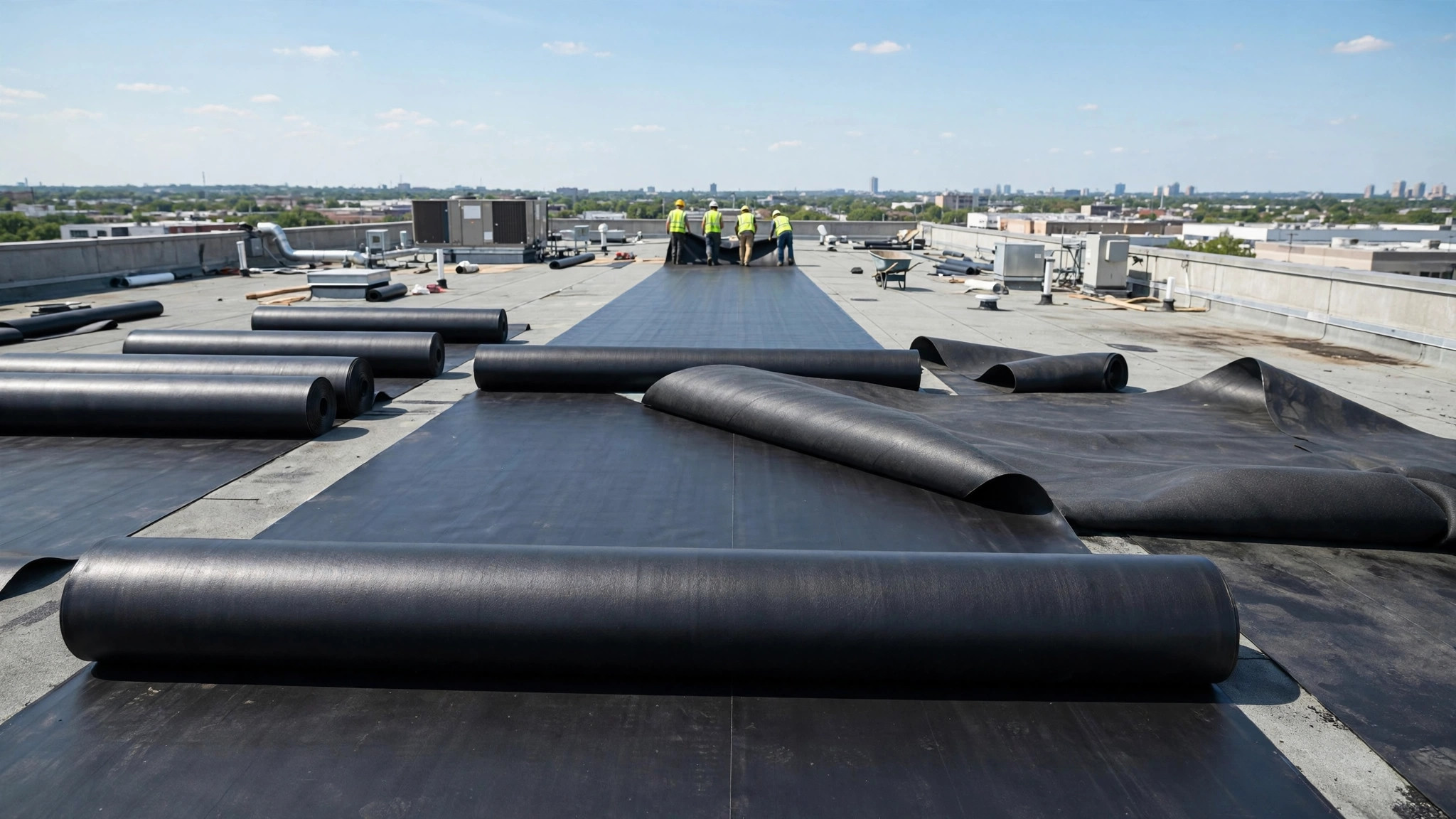
Black rubber roofs cover millions of square feet of commercial buildings across America. That black sheet is usually EPDM, a synthetic rubber that has sheltered warehouses, offices, and stores for decades. If your building needs a new roof, the epdm roofing membrane deserves a close look.
This guide gives you seven facts about epdm roofing membrane: what it is, how it goes on, what it costs, how long it lasts, and where it beats the alternatives. Read it before you sign a roofing contract, and keep it handy while you compare bids for epdm roofing membrane work.
Fact 1: epdm roofing membrane is synthetic rubber built for roofs
EPDM stands for ethylene propylene diene monomer. In plain words, it is a rubber sheet made for roofing. It comes in large rolls, usually 10 to 50 feet wide, which means fewer seams than most roof types. Fewer seams mean fewer places to leak.
The sheet is black by nature. Black absorbs heat, which is a plus in cold climates and a minus in hot ones. White-coated versions exist for buildings that need reflectivity. The rubber stays flexible in cold weather and does not crack the way some plastics do. That flexibility is why epdm roofing membrane handles building movement and temperature swings so well.
Thickness runs 45, 60, or 90 mils. A mil is a thousandth of an inch. Thicker sheets cost more and resist punctures better. Most commercial jobs use 60 mil as the sweet spot between price and toughness.
Fact 2: three install methods fit different buildings
Fully adhered is the premium method. Glue bonds the whole sheet to the insulation below. It holds tight in high wind and gives a smooth finish. It costs the most in labor and adhesive.
Mechanically attached is the common middle ground. Screws and plates fasten the sheet at the seams, and the seams get glued over the fasteners. It installs fast and costs less. Most large warehouses use this method.
Ballasted is the old-school method. Loose stone holds the sheet down by weight. No glue, few fasteners, fast install. But the stone is heavy, so the structure must carry it, and finding a leak under rock is miserable work. Many owners now avoid ballast for that reason.
Your contractor should recommend the method that fits your building, your wind zone, and your budget. Ask why they chose it. A good answer mentions the building, not just the price.
Fact 3: epdm roofing membrane costs less than most alternatives
Material cost for epdm roofing membrane runs lower than TPO, PVC, and most metal systems. Installed price for a mechanically attached system often lands between $4 and $8 per square foot, depending on the market, the insulation, and the building complexity. Fully adhered runs higher. These are planning numbers, so get local bids.
Insulation is a big part of the total. Code requires certain R-values, and thicker insulation costs more. Do not skimp here. Insulation pays back in energy savings and protects the membrane from the deck below.
Tear-off versus overlay changes the price too. Tearing off the old roof costs more up front but lets the contractor inspect the deck. Going over one existing layer saves money where code allows it. More than two roof layers is against code in most places.
Labor markets move the number as well. Big cities price higher than small towns, and busy seasons price higher than slow ones. Get three local bids and the market will tell you where the honest epdm roofing membrane price sits.
Fact 4: the lifespan rewards good installation
A well-installed epdm roofing membrane lasts 25 to 30 years, and many go longer. The rubber itself resists UV, ozone, and weather. What kills these roofs early is bad seams, ponding water, and neglect.
Seams are the weak point. EPDM seams get glued or taped, and a rushed seam fails years before the sheet does. Ask your contractor about their seam method and their crew’s experience. The cheapest bid often hides the fastest seamer.
Ponding water shortens life. EPDM handles standing water better than some membranes, but no roof likes a permanent puddle. Good drainage design, with tapered insulation that slopes to the drains, is worth every penny. Our guide to flat roof ponding water fixes covers the details.
Fact 5: maintenance is simple but not optional
An epdm roofing membrane asks little and gives a lot. Two inspections a season, debris cleared from drains, and prompt patching of punctures will carry the roof for decades. Keep foot traffic on walkway pads. Every service tech who crosses the roof should know where to walk.
Patches are easy. EPDM patches glue on with primer and seam tape, and a good patch becomes part of the roof. Keep a small repair kit on site or a contractor on call. Small cuts from dropped tools or storm debris get fixed in minutes when caught early.
Watch the flashing. The field sheet lasts longer than the flashing at walls and curbs. Most EPDM leaks start at flashing, not in the open field. A sound epdm roofing membrane maintenance plan is the cheapest insurance your roof can have. Inspections should spend extra time at every penetration. See our EPDM roof repair guide for what those repairs look like.
Fact 6: epdm roofing membrane suits cold climates best
Black EPDM absorbs sun and warms the building. In northern states that is free heat for much of the year. In southern states it is an air conditioning penalty. Climate should drive this choice.
White EPDM and white coatings fix the heat issue. A white-surfaced EPDM roof reflects sun like TPO and qualifies for cool-roof programs. The ENERGY STAR program lists reflective roofing options that cut cooling loads. If your building sits in a hot climate, price the white option before deciding.
Hail and foot traffic favor EPDM over thinner membranes. The rubber absorbs impacts that would crack stiffer sheets. Buildings with heavy rooftop traffic or hail exposure get real value from that toughness.
Fact 7: the contractor matters more than the brand
Every major maker sells good EPDM. The difference between a 30-year roof and a 12-year roof is the crew that installs it. Seams, flashing, and details are all hand work, and hand work varies.
Check the contractor’s EPDM experience specifically. How many squares did they install last year? Can you visit a five-year-old job? Do they employ their own crews or sub it out? The answers tell you more than any brochure.
Warranty terms deserve a close read. Maker warranties cover the membrane, and contractor warranties cover the workmanship. You need both. A 20-year maker warranty means little if the contractor’s labor warranty is one year and the seams fail in year three. Our commercial flat roof repair guide shows what good workmanship looks like over time.
Safety is part of the bid too. Roof work carries fall risks, and adhesive fumes need ventilation. The Occupational Safety and Health Administration sets the rules. A contractor who follows them protects your building from liability as well as accidents.
Cost checklist before you sign
Use this list when comparing bids on an epdm roofing membrane project:
- Membrane thickness and maker, in writing.
- Install method: fully adhered, mechanically attached, or ballasted.
- Insulation type and R-value.
- Tapered insulation plan for drainage.
- Seam method and flashing details.
- Tear-off versus overlay, with deck inspection terms.
- Maker warranty length and contractor labor warranty length.
- Start date, schedule, and payment tied to milestones.
If a bid skips any of these, ask why. Vague bids grow on the job. Detailed bids stay honest.
Frequently asked questions
Is EPDM better than TPO?
Neither wins everywhere. EPDM costs less, handles cold better, and resists punctures well. TPO reflects heat better and heat-welds its seams. Cold climates lean EPDM. Hot climates lean TPO. Get bids for both on your building and compare.
Can EPDM go over my old roof?
Often yes, where code allows one overlay. The old roof must be sound, dry, and well attached. A moisture survey finds wet insulation that must come out. Your contractor should test before recommending an overlay.
How do I find a leak in EPDM?
Start at the flashing and penetrations, since most leaks begin there. For field leaks, electronic leak detection finds breaches without cutting the roof. Dye tests and flood tests work on smaller areas.
Does black EPDM raise cooling bills a lot?
In hot climates, yes, enough to matter. That is why white-surfaced EPDM and reflective coatings exist. In mixed and cold climates the winter heating benefit offsets much of the summer penalty.
How long does an epdm roofing membrane install take?
A mid-size commercial roof takes one to three weeks depending on tear-off, weather, and detail work. Fully adhered systems take longer than mechanically attached ones. Your contractor should give a written schedule before mobilizing.
What maintenance does EPDM need?
Two inspections a season, clean drains, prompt patches, and walkway pads for traffic. That is the whole program. Skip it and small problems grow. Follow it and the roof outlasts the payments.
Next steps for your roof
Get three bids from contractors with real EPDM experience, and make each bid answer the eight checklist items above. Compare the details, not just the totals. An epdm roofing membrane installed by a careful crew is one of the best values in commercial roofing, and the bid review is where that value gets locked in. Start the bid process early. Good crews book out weeks ahead in the busy season, and a rushed hire is how bad roofs happen.



