
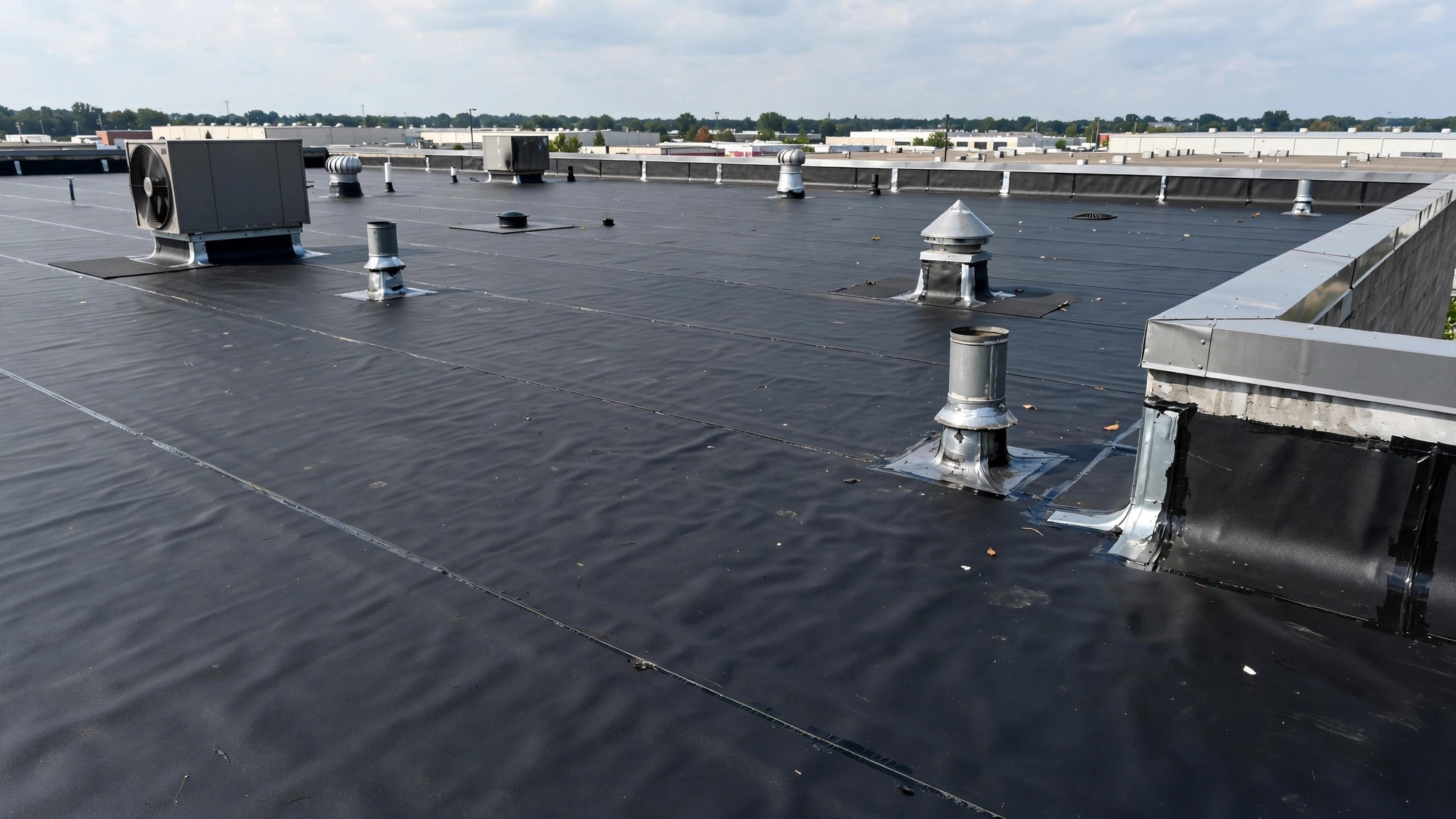
An epdm roofing system is a complete commercial flat roof built around an EPDM rubber membrane. It includes the membrane, insulation, fasteners or adhesive, flashing, and edge metal, all working as one assembly.
Owners choose an epdm roofing system for its long track record, low cost, and simple repairs. This guide walks through every layer, the installation methods, the costs, and how to keep the system working for decades.
Parts of an EPDM Roofing System
An epdm roofing system is more than a rubber sheet. Each layer has a job, and the system fails if any layer fails.
The deck comes first. It can be steel, concrete, or wood. The deck carries the whole roof, so it must be sound and dry. Rotten or rusted deck sections get replaced before anything goes on.
Insulation goes over the deck. Rigid polyiso boards are the common pick. They add R-value for energy code compliance. The U.S. Department of Energy lists cool roof strategies at https://www.energy.gov/energysaver/cool-roofs. Tapered insulation builds slope so water drains instead of ponding.
The membrane is the waterproof layer. EPDM sheets come forty-five, sixty, or ninety mil thick. Sixty mil suits most commercial jobs. Wide sheets mean fewer seams across big roofs.
Attachment holds it all down. Fully adhered systems glue the membrane to the insulation. Mechanically attached systems use screws and plates. Ballasted systems use stone weight. The method must match the building and the wind zone.
Flashing seals the edges. The same EPDM rubber wraps curbs, pipes, and parapets. Preformed boots and corners speed the work. Lap sealant finishes every edge. Edge metal caps the perimeter and locks the system down.
How an EPDM Roofing System Is Installed
Installing an epdm roofing system starts with a clean deck. The crew removes the old roof if a tear-off is planned, repairs bad deck areas, and sweeps everything clean.
Insulation boards go down next. The crew lays them tight with staggered joints and fastens or adheres them per the design. Tapered layouts follow a slope plan that moves water to drains.
The membrane unrolls over the insulation. The crew relaxes the sheet so it lies flat without stress. On adhered jobs, they fold back half the sheet, apply bonding adhesive to both surfaces, let it tack up, then roll the sheet into place.
Seams get glued with seam tape or adhesive. The crew cleans the overlap area, applies the tape, and rolls the seam with firm pressure. Every seam gets probed and checked the same day.
Flashing finishes the job. Pipes get boots. Curbs get wrapped corners. Walls get adhered flashing with a termination bar. Each detail is sealed and inspected. A commercial roof inspection checklist helps verify nothing was missed.
EPDM Roofing System Cost Factors
An epdm roofing system usually costs less than TPO or PVC. Still, several factors move the price on every job.
Roof size sets the base rate. Contractors price by the square. Large simple roofs cost less per square foot than small cut-up ones.
Attachment method changes labor. Ballasted is cheapest to install. Mechanically attached costs more. Fully adhered costs the most but gives the smoothest, most wind-resistant result.
Insulation depth adds cost. Energy codes keep raising R-value minimums. Thicker insulation costs more but cuts heating and cooling bills for the life of the roof.
Tear-off versus overlay is a big swing. A full tear-off adds labor, dump fees, and deck repair. An overlay on a sound dry roof saves all three. A moisture survey tells you which is honest.
Warranty length ties to price. Ten-year warranties cost less than twenty or thirty-year ones. Longer terms demand thicker membrane and stricter installation. Get the full system spec in writing.
EPDM Roofing System Maintenance
An epdm roofing system needs little care, but it needs regular care. Twice-yearly inspections catch the small problems that become leaks.
Clear debris every visit. Leaves and branches hold moisture on the membrane. Clean drains, scuppers, and gutters so water leaves fast.
Check seams and flashing. Look for lifted edges, open laps, and cracked sealant. Press suspect areas and watch for movement. Patch small issues the same day with EPDM primer and patch.
Watch penetrations closely. Pipes and curbs move with temperature. Their flashing takes the stress. Touch up dried sealant before gaps open.
Guard against petroleum. Grease and oil soften EPDM rubber. Kitchen exhausts and equipment drips need protective mats. Clean spills quickly.
Keep a maintenance log. Record dates, findings, and fixes with photos. The log proves care for warranty claims and guides future decisions. Follow a commercial roof maintenance checklist to stay consistent.
EPDM Roofing System vs. Other Single-Ply Systems
Owners often compare an epdm roofing system with TPO and PVC. Each has a place.
EPDM wins on history and price. Fifty years of roofs prove it works. It usually costs less installed than TPO or PVC. Repairs are simple and cheap.
TPO wins on energy in hot climates. Its white surface reflects heat that black EPDM absorbs. TPO seams are heat-welded, which some owners prefer over glued seams.
PVC wins on chemical resistance. Restaurants and factories with grease or chemical exposure often pick PVC. It costs the most of the three but handles harsh environments best.
Climate should guide the pick. Hot southern roofs benefit from reflective TPO or PVC. Northern roofs do fine with black EPDM and its lower cost. Your contractor’s experience with each system matters as much as the material.
The National Roofing Contractors Association at https://www.nrca.net/ publishes guidance on all single-ply systems. Their contractor directory helps you find certified installers.
EPDM Roofing System Wind Ratings
Wind can peel a poorly attached roof like a lid. It earns a wind rating through tested assemblies. Ratings like FM 1-60 or 1-90 describe the uplift pressure the system resists.
Attachment method drives the rating. Fully adhered systems usually rate highest. Mechanically attached systems rate well with the right fastener pattern. Ballasted systems depend on stone weight and suit low wind zones.
Edge metal matters more than most owners think. Most wind failures start at the edge, not the field. Tested edge details with proper cleats hold where cheap drip edge folds. Ask your contractor for the edge metal spec.
Insurance and code may demand a minimum rating. Coastal and high-wind zones set the bar higher. Build to the zone you are in, not the zone you wish you were in.
Common EPDM Roof Problems
Shrinkage hits old roofs. Early EPDM could shrink and pull flashing loose. Modern sheets resist this far better. If your roof predates modern formulations, watch the perimeters.
Seam failures come from rushed work. Dirty laps, cold adhesive, and skipped rolling cause seams that open within years. Good seams outlive the membrane around them. Bad seams fail first.
Punctures come from traffic. Dropped tools, dragged equipment, and hailstones cut the sheet. Walk pads around service areas prevent most of it. Patch cuts the season they happen.
Petroleum damage is silent. Grease from kitchen vents softens the rubber slowly. The damage shows as sticky, swollen spots. Protective mats under exhaust fans stop it before it starts.
FAQ About EPDM Roofing Systems
How long does an epdm roofing system last?
Twenty-five to thirty years is typical with proper installation and care. Many last longer. Thickness, attachment quality, and maintenance decide where in the range your roof lands.
Can an epdm roofing system handle ponding water?
Yes, better than most membranes. EPDM tolerates standing water well. Still, fix drainage when you can. Constant ponding stresses seams and grows algae. See flat roof ponding water fix for options.
Is an epdm roofing system good in cold climates?
Excellent. EPDM stays flexible in deep cold and handles freeze-thaw cycles without cracking. It is a top pick for northern states. Snow load, not cold, is the thing to engineer for.
Can I coat an epdm roofing system white?
Yes. Acrylic coatings made for EPDM add reflectivity and extra life. The surface needs thorough cleaning and the right primer. Coating is smart in hot climates where cooling bills run high.
What voids an epdm roofing system warranty?
Ponding water beyond the allowed limit, unapproved coatings, petroleum damage, and skipped maintenance can all void coverage. Read the warranty terms and keep your maintenance log current.
Next Steps for Building Owners
An epdm roofing system remains one of the smartest buys in commercial roofing. Start with a professional inspection and moisture survey of your current roof. Get quotes that spell out membrane thickness, attachment method, insulation plan, and warranty. Ask contractors how many EPDM jobs they do each year and visit a few past projects. For repair cost background, read epdm roof repair. Choose the system your building needs, hire the crew that installs it best, and maintain it twice a year. That routine keeps the roof watertight for decades. It is the cheapest insurance a building owner can buy. Start with the inspection and go from there. Your roof will thank you. Decades of dry ceilings start here. Make the call.



