
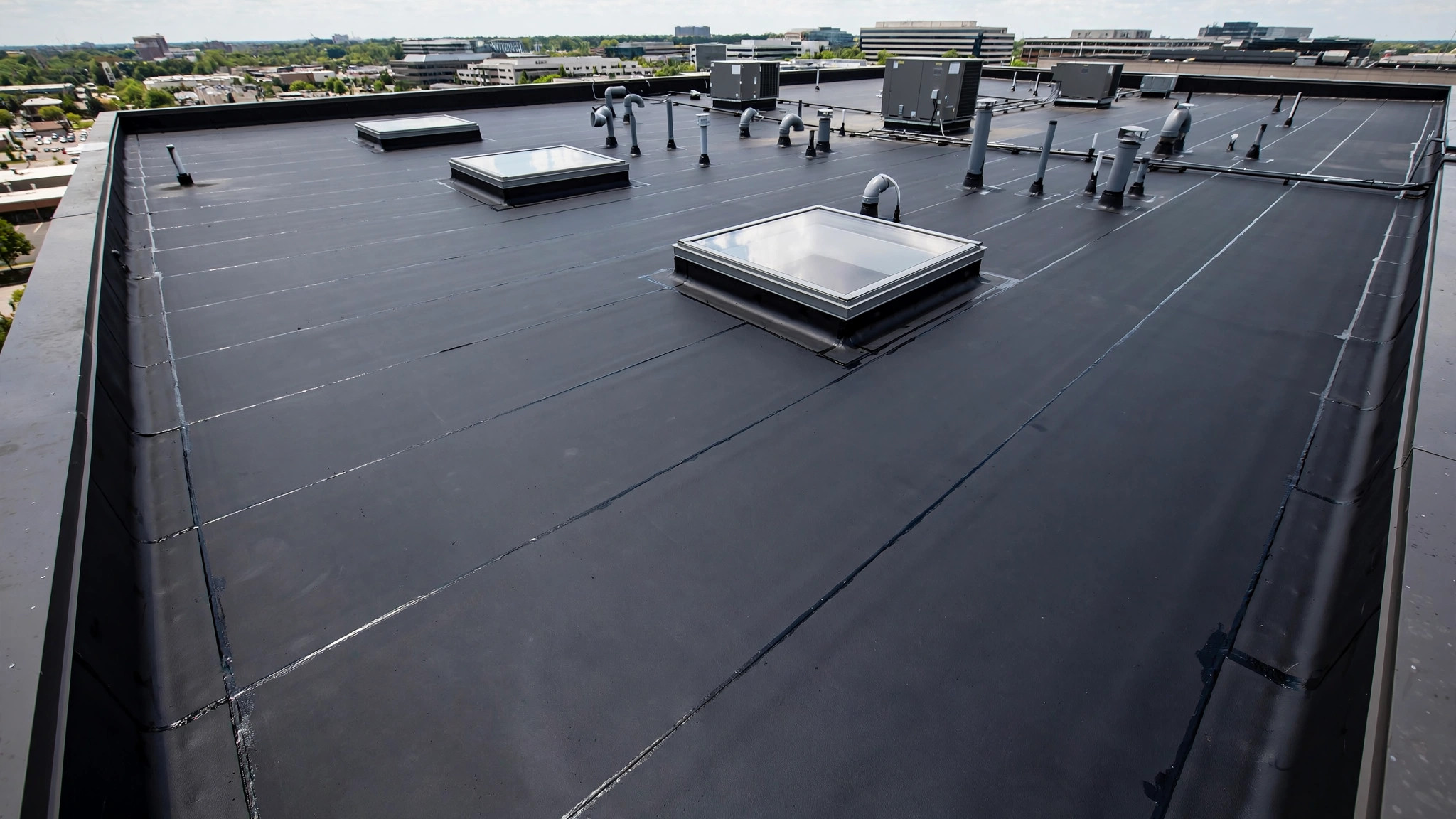
Rubber roofs have sheltered American commercial buildings for over half a century. Warehouses, offices, schools, and stores by the thousand wear black EPDM. If you own a flat or low-slope building, epdm roofing is the option every other system gets compared against.
Here are ten things every owner should know about epdm roofing: what it costs, how long it lasts, how it installs, where it shines, where it struggles, and how to keep it working for decades.
1. Epdm roofing is the value leader
Start with price. EPDM material and installation cost less than TPO, PVC, and metal on most jobs. Installed prices often land between $4 and $8 per square foot for a standard commercial system. On a big roof, the savings against premium systems run into five figures.
Value is not just cheap. It is cheap plus proven. EPDM delivers decades of service at that low price, which is why it remains the default pick for budget-conscious owners who still want a real roof.
2. The lifespan is measured in decades
A well-installed EPDM roof lasts 25 to 30 years, and many go longer. The rubber resists UV and ozone by chemistry. There is no coating to wear off, no surface that exposes weakness with age.
Field history backs the claim. Roofs installed decades ago still serve today. Few roofing materials can show that kind of record. When makers offer long warranties on epdm roofing, the track record behind the paper is real.
3. Cold weather is where epdm roofing shines
Rubber stays flexible in the cold. While some plastic membranes stiffen and crack in freezing weather, EPDM keeps its give. Buildings in northern states get real value from this property through every freeze-thaw cycle.
Flexibility also handles building movement. Structures shift with wind and loads. The EPDM sheet stretches and recovers instead of tearing. That forgiveness adds years in the real world.
4. Installation offers three methods
Fully adhered systems glue the whole sheet to the insulation. Best wind performance, highest labor cost. Mechanically attached systems fasten at the seams and seal over the fasteners. The common middle ground for big roofs. Ballasted systems hold the sheet with stone weight. Cheap to install, heavy on the structure, and fading from use.
Your contractor should recommend the method for your building and wind zone. The choice affects price, performance, and warranty. Ask for the reasoning in terms of your building.
5. Seams decide the roof’s fate
EPDM seams get taped or glued, and the seam work is hand work. A careful crew produces seams that last as long as the sheet. A rushed crew produces the leaks you will chase for years.
This is why the contractor matters more than the brand. Every major maker sells good rubber. The difference between a 30-year roof and a 12-year roof is the crew. Check EPDM experience specifically: how many squares last year, and can you visit an older job?
6. Epdm roofing tolerates ponding better than most
No roof wants standing water. But EPDM handles it better than many membranes. The rubber does not break down under a puddle the way some materials do. Buildings with imperfect drainage get forgiveness from epdm roofing.
Forgiveness is not permission. Ponding still stresses seams and flashing, and it can void warranties past the maker’s limit. Tapered insulation that slopes to the drains remains the right design. Our flat roof ponding water guide covers drainage design.
7. Repairs are simple and cheap
A puncture is a ten-minute fix: clean, prime, patch, roll tight. No torches, no welders, no exotic skills. A good patch becomes part of the roof and lasts.
Keep a repair kit on site or a contractor on call. Small cuts from tools or storm debris get fixed fast when caught early. Our EPDM roof repair guide walks through the common fixes step by step.
8. Black absorbs heat, white options exist
Standard EPDM is black, and black absorbs sun. In hot climates that adds cooling load. White-surfaced EPDM and reflective coatings fix most of the penalty. In northern climates the winter heating benefit offsets much of it.
The ENERGY STAR program lists reflective roofing options for owners weighing the energy case. Let your climate pick the color, and check utility rebates for cool roofs before deciding.
9. Maintenance fits on an index card
Inspect twice a season. Keep drains clear. Patch punctures promptly. Keep traffic on walkway pads. Watch the flashing at walls and curbs. That is the whole program for epdm roofing.
Simple does not mean optional. Owners who follow this routine get the full lifespan. Owners who skip it get leaks at year twelve and wonder why. Our commercial roofing maintenance guide lays out the seasonal routine.
10. Warranties need a close read
Maker warranties cover the sheet against defects, typically 15 to 30 years. They exclude punctures, storms, ponding past limits, and unapproved repairs. Contractor warranties cover the workmanship, usually shorter. You need both, and they need to balance.
Maintenance requirements ride along. Skip the inspections and the maker can deny a claim. Keep every report and photo in one file. Paperwork is the unglamorous half of every warranty.
Where epdm roofing has limits
Honesty requires the downsides. Black EPDM absorbs heat, which penalizes cooling bills in hot climates. White surfaces and coatings fix most of it, but the fix costs money. In the Sun Belt, price the white option from the start.
Glued seams demand skill. TPO’s heat-welded seams are more forgiving of crew quality. An epdm roofing job lives or dies on the seamer’s hand. This is not a material flaw, but it raises the stakes on contractor selection.
Petroleum products attack the rubber. Grease from restaurant vents and oil spills soften EPDM. Buildings with kitchen exhaust on the roof need grease guards or a different membrane. Know what vents onto your roof before choosing.
Steep slopes are not its home. EPDM suits flat and low-slope roofs. Steep-slope buildings belong to metal, shingle, or tile. Putting rubber where it does not belong wastes its strengths.
What epdm roofing costs: the full picture
The sheet is the cheap part. Insulation, edge metal, flashing, and labor make up most of the bid. Code insulation requirements keep rising, and tapered insulation for drainage adds real money. Price the assembly, not the sheet.
Tear-off versus overlay swings the total. Tear-off costs more and exposes the deck. Overlay saves money where the old roof is sound and code allows it. A moisture survey before the decision keeps surprises out. The National Roofing Contractors Association publishes owner guidance on these decisions.
Thickness steps the price. Forty-five mil is light duty. Sixty mil is the commercial standard and the best value for most buildings. Ninety mil is heavy duty for brutal service. Match the grade to the abuse the roof will take.
Bid the same spec three times. Give every contractor the same thickness, install method, and insulation plan. An epdm roofing bid this way reveals the honest market price and exposes the low bidder who left scope out.
Buying checklist for epdm roofing
- Membrane thickness: 45, 60, or 90 mil.
- Install method: adhered, attached, or ballasted.
- Insulation type and R-value.
- Tapered insulation plan for drainage.
- Seam system and flashing details.
- Tear-off versus overlay terms.
- Maker and contractor warranty lengths.
- Contractor’s EPDM project references.
Check every item before signing. A complete bid answers all eight without being asked twice.
Frequently asked questions
Is epdm roofing better than TPO?
Each wins somewhere. EPDM costs less, stays flexible in cold, and has the deeper history. TPO reflects heat and heat-welds its seams. Cold climates lean EPDM. Hot climates lean TPO. Get both bid on your building.
How do I find a leak?
Start at flashing and penetrations, where most leaks begin. For field leaks, electronic detection finds breaches without cutting the roof. Dye and flood tests work on smaller areas.
Can solar go on an EPDM roof?
Yes. Ballasted solar racks sit on the sheet without penetrations on many buildings. Attached systems need flashed mounts. Coordinate the solar and roofing contractors so the warranty survives.
Does EPDM need coating?
Not normally. The rubber is UV stable by chemistry. Owners sometimes coat aging EPDM to extend life, and it can work. But a sound sheet needs no coating to reach its full years.
Does epdm roofing work on steep slopes?
No, not really. EPDM is a flat and low-slope material. Steep buildings need metal, shingles, or tile. A low-slope cutoff around 2:12 generally marks the boundary. Above that, other systems serve better.
When is it time to replace?
Widespread seam failure, brittle flashing everywhere, and leaks in many places at once signal the end. A moisture survey maps wet insulation. Spot problems get repairs. System-wide failure gets a new roof.
Next steps for your building
Get EPDM bid against the alternatives on your specific building, with identical specs for thickness and install method. Compare the details before the totals. Epdm roofing from a careful crew, inspected twice a season, remains one of the smartest dollars in commercial roofing. Start the bidding early, since the best EPDM crews book out in the busy season.



