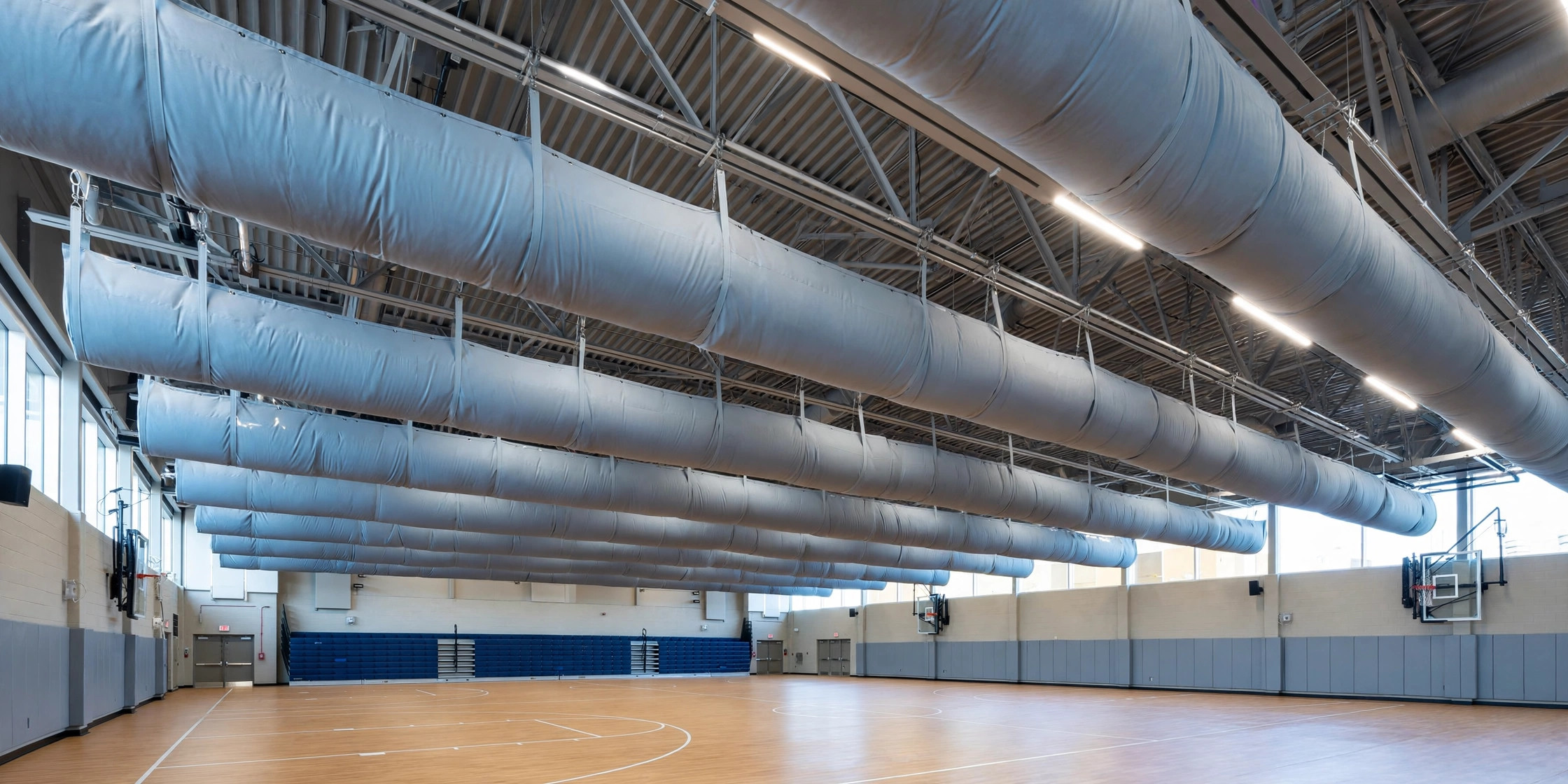
Fabric ductwork is air distribution ducting made from fabric instead of sheet metal. It hangs from the ceiling and releases air evenly through the fabric surface or through small holes. Gyms, pools, food plants, and warehouses across the United States use it.
It costs less to install than metal in many open spaces. It also looks clean and modern. This guide explains how it works, where it fits, what it costs, and how to care for it.
What Fabric Ductwork Is
Fabric ductwork is a tube of engineered fabric, usually polyester, shaped into a round or half-round duct. It hangs from cables or rails under the ceiling. Air from the HVAC unit inflates it like a long balloon.
Air leaves the duct in two ways. Porous fabric lets air seep through the whole surface for gentle, draft-free delivery. Non-porous fabric uses laser-cut holes aimed to throw air where it is wanted.
The fabric comes in many colors. White is standard. Custom colors match branding or decor. Some fabrics have antimicrobial treatments for food plants and hospitals.
Lengths run long with few joints. A single run can stretch over a hundred feet. Fewer joints mean fewer leaks and faster installation than metal duct with its many fittings.
Where Fabric Ductwork Works Best
Fabric ductwork shines in large open spaces with high ceilings. The even air distribution prevents hot and cold spots that plague big rooms.
Gyms and sports halls love it. No drafts on players, no dead zones in corners. The soft look fits the space, and the fabric will not dent when a ball hits it.
Pools need it for humidity control. Even airflow across the water surface and walls prevents condensation. Metal ducts corrode in pool air. The fabric resists the chemicals.
Food plants use washable fabric. The ducts come down, go through the laundry, and go back up. That washability meets sanitation rules that metal ducts struggle with.
Warehouses and factories pick it for cost and speed. Long straight runs install fast. Temporary spaces and tents use fabric ductwork because it packs small and sets up quick.
Offices can use it too, but aesthetics divide people. Some love the modern look. Some prefer hidden ducts. Exposed fabric suits creative and industrial-style spaces best.
Fabric Ductwork Pros and Cons
The biggest pro is even airflow. It delivers air uniformly along its whole length. No blasts at the start, no starvation at the end. Comfort improves in every corner.
Installation is fast and light. A fabric ductwork run weighs a fraction of metal duct. Two workers can hang long sections in hours. That cuts labor cost and keeps projects on schedule.
Cost often beats metal. Material plus labor for fabric runs less than fabricated sheet metal in open spaces. Shipping costs less too, since fabric packs small.
Washability is unique. No metal duct goes through a washing machine. Food plants, gyms, and hospitals value ducts they can truly clean.
The cons start with looks. Exposed fabric is not for every space. Formal offices and lobbies usually hide their ducts. Know your aesthetic before you commit.
Durability is lower than metal. Fabric can tear on sharp edges and sags if not tensioned right. It needs correct hanging hardware and proper inflation pressure.
Condensation needs design care. In humid spaces, cold air inside warm fabric can sweat. Insulated double-wall fabric solves this but costs more. A good designer sizes it right.
Fabric Ductwork Cost Factors
Fabric ducts usually cost less installed than sheet metal for comparable runs. These factors set the price.
Length and diameter lead. Longer runs and bigger diameters use more fabric. But long straight runs are the cheapest per foot because hanging goes fast.
Fabric type changes cost. Standard porous fabric costs least. Antimicrobial or insulated fabrics cost more. Custom colors and printing add to the bill.
Hanging system matters. Simple cable suspension costs less. Aluminum rail systems cost more but look cleaner and make removal for washing easier.
Design and engineering add value. Proper hole sizing and placement need calculation. A designed fabric ductwork layout performs far better than a guessed one. Pay for the engineering.
Installation access rounds it out. High ceilings need lifts. Occupied spaces need off-hours work. Get the full scope in writing before approving.
Fabric Ductwork Maintenance
Its maintenance is simple but different from metal. The main task is washing.
Most fabrics wash in commercial laundry machines. The ducts unzip into sections, wash on gentle cycles, and rehang. Food plants may wash yearly. Gyms every year or two. Offices less often.
Inspect hangers and cables yearly. Fabric is light, but tension matters. Loose cables let the duct sag, which changes airflow. Tighten and adjust as needed.
Check for tears and stains. Small tears get patched with repair kits. Stains that will not wash out may mean replacement of that section. Keep spare sections for critical areas.
Watch airflow over time. The U.S. Department of Energy covers duct efficiency at https://www.energy.gov/energysaver/ducts. If rooms feel stuffy, check that the duct still inflates fully. Low fan pressure or clogged holes change performance. A quick look during filter changes catches most issues.
Keep records. Note wash dates and findings. The log proves sanitation compliance where required and tracks fabric life. Pair duct care with a commercial hvac maintenance checklist.
ASHRAE publishes air distribution guidance that covers fabric systems. Their standards shape good design practice. See https://www.ashrae.org/ for details.
Design Mistakes to Avoid
The top mistake is guessing instead of designing. The layout needs real calculation for hole size, spacing, and placement. Guessed layouts leave dead zones and drafts. Pay for the engineering.
Wrong static pressure is next. Fabric ducts need the right pressure to inflate fully and hold their shape. Too little pressure sags the duct. Too much stresses the fabric and hangers. Match the duct to the air handler.
Skipping the laundry plan causes grief. Every fabric system needs washing eventually. Design for easy removal with zippers and accessible hangers. Ducts that cannot come down do not get washed.
Ignoring condensation ruins good installs. Cold supply air in humid spaces sweats on single-wall fabric. Insulated fabric or a higher supply temperature solves it. Design for the climate, not just the catalog.
Fabric Ductwork vs. Spiral Metal Duct
Owners of open-ceiling spaces often compare fabric ductwork with spiral metal duct. Both look intentional. They perform differently.
Air distribution favors fabric. It releases air along its whole length for even coverage. Spiral duct dumps air at grilles, which can leave zones between them uneven.
Cost favors fabric on long runs. Material and labor run less than fabricated spiral. Spiral needs more hangers, more fittings, and heavier support.
Looks are personal. Spiral metal suits industrial chic. Fabric suits clean modern spaces and comes in colors. Visit installed examples of both before choosing.
Durability favors metal. Spiral duct takes abuse that tears fabric. In rough industrial spaces with forklifts and flying objects, metal wins. In clean controlled spaces, fabric wins on comfort.
FAQ About Fabric Ductwork
How long does fabric ductwork last?
Ten to fifteen years is typical with proper washing and care. Harsh chemicals and UV exposure shorten life. Washable fabrics in clean environments last longest.
Is fabric ductwork noisy?
It is quieter than metal duct. Fabric absorbs sound instead of carrying it. Air noise at the holes is minimal with proper design. Gyms and pools notice the difference right away.
Can fabric ductwork handle heating as well as cooling?
Yes. It distributes warm air evenly, which actually works better than metal in high spaces. Warm air from fabric ducts mixes well instead of stratifying at the ceiling.
Does fabric ductwork meet fire codes?
Quality fabrics carry fire ratings for commercial use. Check the specific rating against your local code. Keep the rating certificates on file for inspectors.
Can I retrofit fabric ductwork into an existing building?
Yes, and it is often easier than metal. The light weight needs less support. Long runs thread through open ceilings fast. A designer should verify airflow and pressure with your existing air handler.
Next Steps for Building Owners
If your space has high ceilings, humidity, or sanitation needs, fabric ductwork deserves a quote. Get a designed layout, not a guess, with hole placement calculated for your rooms. Compare the installed cost against sheet metal for your specific space. Ask for fabric samples and washing instructions before you buy. For service planning, read commercial hvac service to keep the whole air system healthy. Ask the designer for a maintenance manual with washing intervals, and keep spare fabric sections on hand for quick swaps. Photograph the installed layout before the crew leaves, so future staff know how each section hangs and connects. Good records make every future service visit faster and cheaper. Label each duct section with its location, so rehanging after washing never becomes a puzzle. Small habits like these keep the whole system working at its best. Your occupants will feel the difference. Even air is comfortable air. Choose wisely.