A furnace hvac setup is the backbone of winter comfort in many commercial buildings. Offices, warehouses, retail stores, and restaurants across the United States rely on a furnace hvac system to keep workers and customers warm. Yet most building owners know little about the unit heating their space. They see a gas bill and a thermostat. Everything in between is a mystery. This guide opens up that mystery. It explains the five main types of furnace hvac equipment used in commercial buildings, how to size one, what drives cost, and how to keep it running for years.
What a furnace hvac system actually is
The phrase furnace hvac sounds odd at first. It simply means a heating, ventilation, and air conditioning system built around a furnace. The furnace burns fuel or uses electricity to make heat. The HVAC part moves that heat through the building with fans, ducts, and controls. Together, a furnace hvac system handles heating and air movement in one package.
Commercial versions differ from home units in scale. A home furnace might heat two thousand square feet. A commercial furnace hvac installation can heat a hundred thousand square feet or more. Commercial systems often use multiple furnaces working in zones. Each zone has its own thermostat. That way an office can stay warm while a warehouse next door runs cooler.
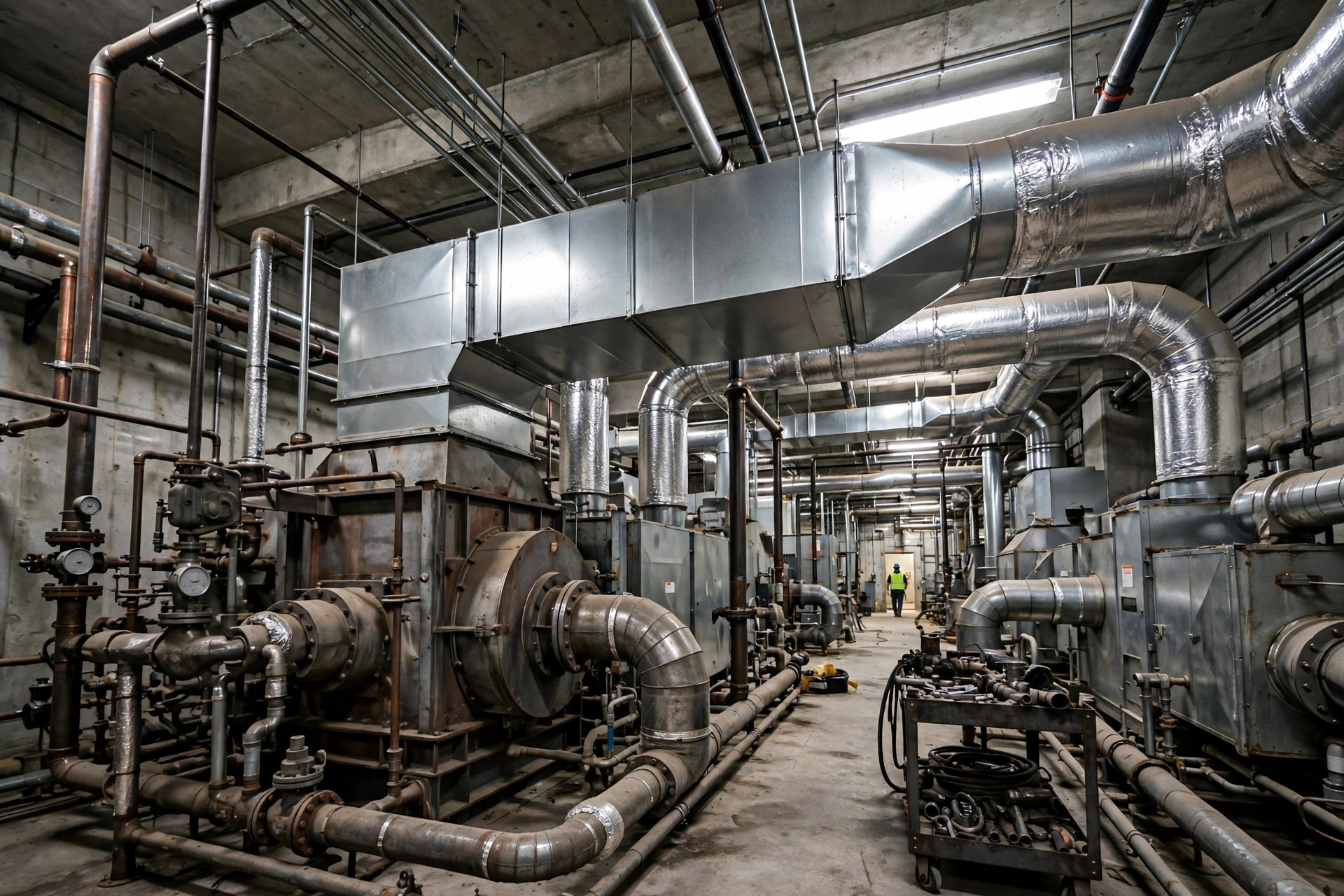
Most commercial furnace hvac equipment sits in a mechanical room, on the roof, or in a basement. Rooftop packaged units are common. They combine the furnace, the cooling coil, and the fan in one box on the roof. Split systems keep the furnace indoors and the cooling equipment outside. Both count as furnace hvac systems. The choice depends on the building layout and the local climate.
5 Types of furnace hvac equipment for commercial buildings
1. Gas-fired furnace hvac units. Natural gas is the most common fuel for commercial heating in the United States. A gas furnace hvac system burns gas in a heat exchanger and blows air across it. These units heat large spaces fast and cost less to run than electric models where gas service is available. Efficiency ratings for commercial gas furnaces vary. Higher efficiency models use a second heat exchanger to squeeze more heat from the exhaust. For a good overview of heating options, the U.S. Department of Energy covers commercial heating basics at https://www.energy.gov/.
2. Oil-fired furnace hvac units. In areas without natural gas lines, oil is a common choice. An oil furnace hvac unit works much like a gas unit but burns heating oil from a storage tank. Oil delivers strong heat and works well in very cold regions. The trade-offs are fuel delivery, tank maintenance, and price swings. Buildings in the Northeast use oil heat more than any other region.
3. Electric furnace hvac units. An electric furnace hvac system uses heating elements instead of a flame. It is simple, compact, and needs no fuel lines or venting for combustion. That makes it a good fit for small commercial spaces and mild climates. The downside is operating cost. Electricity usually costs more per unit of heat than gas. Electric furnace hvac units make sense where gas is not available and heating loads are light.
4. Packaged rooftop furnace hvac units. These combine heating and cooling in one rooftop box. A packaged furnace hvac unit is popular for strip malls, restaurants, and low-rise offices. One unit serves one zone. If it fails, only that zone loses heat. Installation is simpler because everything arrives in one cabinet. Maintenance is easy too, since a technician services the whole unit from the roof. The trade-off is that roof space fills up fast on large buildings.
5. Split-system furnace hvac setups. A split furnace hvac system keeps the furnace indoors, often in a mechanical room, with the air conditioner or heat pump outside. This setup suits larger buildings with central mechanical spaces. It allows bigger, more efficient furnaces than a rooftop box can hold. Duct runs are shorter when the furnace sits near the center of the building. The downside is the indoor space the equipment occupies.
How to size a furnace hvac system correctly
Sizing is the most important decision in any furnace project. Too small, and the building never gets warm on cold days. Too big, and the unit short-cycles. Short-cycling means the furnace turns on and off constantly. That wastes fuel, wears parts, and leaves cold spots.
Proper sizing starts with a heat load calculation. A contractor measures the building’s walls, windows, roof, and insulation. They factor in the local climate, the number of occupants, and heat from lighting and equipment. The result is the heating load in BTUs per hour. The furnace equipment is then matched to that load. Rules of thumb based on square footage alone often miss by a wide margin.
Oversizing is the classic mistake. Some contractors add a safety margin on top of a safety margin. The result is a furnace unit that blasts heat for five minutes, shuts off, and repeats. Tenants feel temperature swings. Fuel bills run high. A right-sized unit runs longer, steadier cycles and keeps temperatures even. Always ask the contractor to show the load calculation in writing.
Zoning helps too. A large building rarely needs the same heat everywhere. A warehouse with tall ceilings needs less heat at the thermostat level than a glass-front office. Multiple smaller furnace units, or one system with zone dampers, match heat to each area. Zoning cuts fuel waste and improves comfort at the same time.
Cost factors for a commercial furnace installation
Several factors drive the price of a furnace project. Equipment size is the biggest. A small gas furnace for a retail shop costs far less than a set of rooftop units for a distribution center. Fuel type matters. Gas units usually cost more to install than electric ones but less to run. Efficiency rating adds to the upfront price while cutting fuel bills for years.
Installation labor is the next big factor. Crane lifts for rooftop units, new ductwork, gas line runs, and electrical upgrades all add cost. Older buildings often need more of this work. Permits and inspections are required in most US cities. A good contractor includes them in the quote.
Operating cost deserves equal attention. A cheap furnace unit with low efficiency can cost more over ten years than a pricier high-efficiency model. Ask for the annual fuel cost estimate, not just the install price. Maintenance agreements usually run a few hundred dollars per unit per year and catch small problems early. For related reading, see our guides on commercial heating and cooling, commercial hvac service, and commercial hvac repair cost. ASHRAE publishes equipment efficiency standards at https://www.ashrae.org/ that many US building codes follow.
Furnace maintenance checklist
Regular service keeps a furnace system safe and efficient. Use this checklist each fall before heating season.
- Replace or clean air filters. Check them monthly during heavy use.
- Inspect the heat exchanger for cracks or rust. Cracks can leak carbon monoxide.
- Test carbon monoxide detectors in the building and replace batteries.
- Clean the blower wheel and check belt tension on belt-drive units.
- Verify that all vents and flues are clear of nests, leaves, and debris.
- Check the thermostat calibration against a separate thermometer.
- Lubricate fan motors that have oil ports.
- Inspect gas connections and the gas valve for leaks or corrosion.
- Test safety controls, including the high-limit switch and flame sensor.
- Review the last year of fuel bills for unexplained jumps that signal lost efficiency.
A cracked heat exchanger is the most serious finding. It can send carbon monoxide into the air supply. If a technician finds one, shut the unit down and replace it. No repair is worth the risk.
Common furnace problems and warning signs
Watch for these signs between service visits. Cold spots in rooms that used to be warm. A furnace that runs constantly but never reaches the set temperature. Strange smells when the heat starts, especially burning or rotten-egg odors. A rotten-egg smell can mean a gas leak. Leave the building and call the gas company first, then your contractor.
Listen for new noises. Banging can mean delayed ignition. Squealing points to a worn belt or motor bearing. Rattling may be a loose panel or a failing blower. Short-cycling, where the unit starts and stops every few minutes, signals a sizing or control problem. Rising fuel bills with no change in weather or hours point to falling efficiency.
Pilot and ignition troubles are common on older gas units. Electronic ignition systems fail with age. Flame sensors get dirty and shut the unit down as a safety measure. These are quick fixes for a technician but frustrating for a building manager in January. A fall tune-up catches most of them.
FAQ about furnace systems
How long does a commercial furnace unit last?
Most commercial gas furnaces last fifteen to twenty years with regular maintenance. Electric units can last a bit longer because they have fewer parts that wear. Rooftop packaged units often run shorter lives because they face full weather exposure. A unit past fifteen years with rising repair bills is a candidate for replacement.
Is a furnace system better than a heat pump for a business?
It depends on the climate. In cold regions, a gas furnace system delivers strong heat at lower cost than most heat pumps. In mild regions, a heat pump can heat and cool with one unit and may cost less to run. Many buildings use both, with the heat pump handling mild weather and the furnace taking over in deep cold.
What efficiency rating should I look for?
Look for the highest efficiency your budget allows. For commercial gas furnaces, thermal efficiency in the eighties is standard, and the nineties is high efficiency. Higher efficiency means lower fuel bills every month for the life of the unit. Check that the model meets current ASHRAE and local code minimums.
Can one furnace unit heat a whole warehouse?
Sometimes. Open warehouses with high ceilings are hard to heat with forced air because heat rises. Destratification fans that push warm air back down often matter more than furnace size. In very large spaces, multiple smaller units or radiant heaters usually beat one giant furnace unit.
How often should a commercial furnace system be serviced?
At least once a year, in the fall before heating season. Buildings that run heat hard, like restaurants with make-up air or warehouses with open dock doors, benefit from twice-yearly service. Filter checks should happen monthly during the heating season.
Next steps
Start by finding your equipment nameplates. Note the make, model, age, and fuel type of each furnace unit in the building. Then schedule a fall tune-up with a licensed commercial contractor and ask for a written report on the heat exchanger, safety controls, and efficiency. If any unit is past fifteen years or needs frequent repair, ask for a replacement quote with a proper load calculation. Good records and yearly service turn a furnace system from a winter worry into a background utility you rarely think about.