
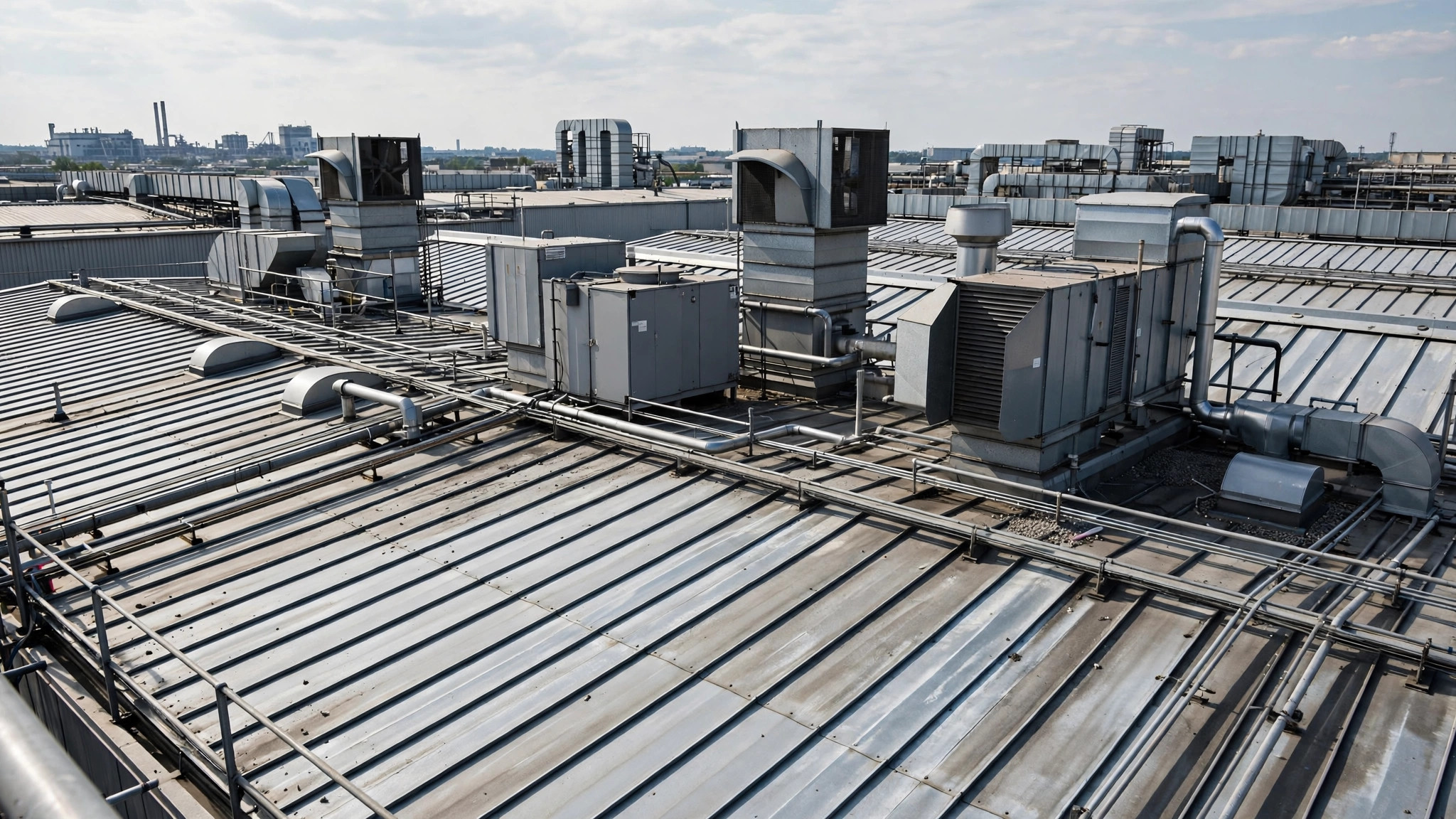
Factories and warehouses punish roofs. Heat, chemicals, heavy equipment, and constant vibration wear membranes fast. An industrial roofing contractor knows these demands. This guide lists six signs you need one and shows how to hire right.
A general roofer may do fine work on offices and stores. Industrial sites are a different trade. Drains clog with process dust. Flashing meets exhaust stacks. Foot traffic never stops. Hire an industrial roofing contractor who has seen it all before.
What an industrial roofing contractor Does
An industrial roofing contractor installs and services roofs on plants, warehouses, and heavy facilities. The roofs are large, often hundreds of thousands of square feet. The systems must handle heat plumes, chemical exposure, and heavy rooftop equipment.
The work goes beyond membrane. These firms coordinate with plant operations. They schedule around production. They stage work to keep lines running. Safety plans are stricter. Permits are heavier. The best industrial roofing contractor thinks like a plant manager, not just a roofer.
They also know the extras. Grease and chemical resistant membranes. Reinforced walkway pads for constant traffic. Special flashing for stacks and vents. Ask what industrial extras they recommend for your process. The answer reveals their depth fast.
6 Signs You Need an industrial roofing contractor
If any of these sound familiar, call a specialist.
- Your roof takes chemical or grease exposure. &Quot;Process exhaust eats standard membranes. Grease from food plants softens many materials. An industrial roofing contractor specs resistant systems. A general roofer may not know the difference. Wrong material fails in months."
- Rooftop equipment crowds the field. &Quot;Units, ducts, pipes, and stacks everywhere. Each penetration is a leak risk. Specialists flash them right and plan walkways around them. Generalists caulk and hope. Hope is not a flashing method."
- Production cannot stop for the work. &Quot;Lines run around the clock. The crew must stage work in zones and seal each night. An industrial roofing contractor plans this routinely. Ask how they protect active production. Vague answers mean no real plan."
- Your roof is simply huge. &Quot;Scale changes everything. Material staging, crew size, and waste handling all grow. Small firms drown on big roofs. Hire a firm that has finished roofs your size before. Ask for the square footage of their last three jobs."
- Safety rules are strict on your site. &Quot;Plants have their own safety programs. Contractors must meet them plus federal rules. Ask for the safety record. Ask for the site safety plan. An industrial roofing contractor arrives with both. Others scramble."
- Past repairs keep failing. &Quot;Patches peel. Seams reopen. Leaks return to the same zones. That pattern means the wrong system or the wrong method. A specialist diagnoses the root cause instead of selling another patch. Root cause work costs more once and less forever."
- License and insurance verified by your own calls.
- Three industrial references, all called.
- Experience with your process type and roof size.
- Written safety plan for your site.
- Production protection plan in writing.
- Materials spec'd for your chemical and heat exposure.
- Line-item quote with start and end dates.
- Workmanship warranty terms in writing.
How to Vet an industrial roofing contractor
Start with license and insurance, verified by phone. Then ask for industrial references only. Office roofs do not count. Call plant managers. Ask about shutdowns, safety behavior, and whether the roof held through the seasons.
Ask about your process by name. A firm that knows food plants, chemical plants, or logistics hubs will speak your language. Ask what membrane they recommend for your exposure and why. Vague answers mean thin experience. Specific answers mean real jobs done.
Review the safety plan in writing. Fall protection, hot work permits, and chemical handling all belong in it. Ask for the incident rate. The [Occupational Safety and Health Administration](https://www.osha.gov/) record should be clean. Walk away from evasive answers. Safety talk is cheap. Safety paper is real.
Hiring Checklist
Work through this list with each candidate firm. Write down every answer.
Pricing on Industrial Work
Industrial jobs price by scale and complexity. Large open fields price per square foot. Complex zones with equipment price higher. Chemical resistant materials cost more than standard. Night and weekend work around production adds premium.
Get the scope in writing first. Mark work zones on a roof plan. Name the production protections. Then compare bids on that same scope. Low bids on industrial work usually skip safety or staging. Find what got cut before you sign.
Hold back final payment until the walk-through. Check every zone. Check every tie-in. Check the cleanup. Industrial sites punish sloppy closeouts. Loose debris becomes a hazard the next windy day. The [National Roofing Contractors Association](https://www.nrca.net/) publishes guidance on managing large roofing projects.
Industrial Roof Systems Worth Knowing
Three systems dominate industrial roofs. Single-ply membranes lead on large flat fields. They go down fast and weld tight. Chemical resistant grades handle process exhaust. Ask which grade suits your site.
Built-up and modified bitumen still cover many older plants. Layered and tough. They handle foot traffic well. Repairs need hot work and skill. Match the crew to the system or pay for their learning curve.
Metal stands on many warehouses. Long life and simple repairs. Matched panels matter for patches. Exposed fasteners need regular resealing. Each system has its care list. Your industrial roofing contractor should name yours and its list without hesitation.
Working Around Production: The Real Test
This is where industrial work separates from the rest. The plant runs. The crew works above it. Both must stay safe. The plan starts with zones. Work moves zone by zone. Each zone seals watertight every night. No open roof sleeps exposed.
Dust and debris control matters. Intakes must stay clean. Product areas must stay covered. The crew coordinates shutdowns of rooftop units with your team. Hot work needs permits and fire watch. Every step is agreed before the first bundle goes up.
Ask candidates how they handled this on past jobs. The good ones tell stories with details. Zones, schedules, surprises, fixes. The weak ones speak in general words. An industrial roofing contractor who has lived it will sound like it.
The Bid Meeting
Hold a bid meeting on site. Walk the roof with each firm. Let them see the access, the equipment, the production below. Good firms ask sharp questions. They probe the deck. They count penetrations. They ask about shutdown windows.
After the walk, demand equal scopes. Write one scope document. Send it to all bidders. Each prices the same work. Then the numbers compare cleanly. Without equal scope, bids are just guesses in different languages.
Score the bids on more than price. Safety plan weight. Production plan weight. Reference strength weight. Price matters but it is one column. The cheapest bid with no safety plan is the most expensive choice you can make.
After the Job: Closeout Done Right
The last day matters as much as the first. Walk every zone with the foreman. Check each tie-in and flashing. Look for debris and loose fasteners. Test the drains with a hose. Punch list everything in writing.
Get the closeout packet. Warranty papers. Material lists. As-built notes on what changed. Photos of the finished work. File it all with the project records. Future crews will thank you.
Release final payment only when the punch list clears. Money is your last leverage. Use it. A firm that finishes clean earns the next job. Say so when they do.
Related Reading
For repair cost detail, read [commercial roof repair](/commercial-roof-repair/). For metal systems common on plants, see [commercial metal roof repair](/commercial-metal-roof-repair/). For step-by-step repair prep, visit [repair commercial roof](/repair-commercial-roof/).
FAQ
What makes an industrial roofing contractor different?
Scale, exposure, and operations. Bigger roofs, harsher conditions, and work around live production. The skill set and the planning both differ from standard commercial work.
Can a regular commercial roofer handle a warehouse?
Sometimes, for simple dry storage with a standard membrane. Add chemicals, heat, or heavy traffic and the answer changes. Match the firm to the demands of the site.
How do I check a safety record?
Ask for the incident rate and the OSHA log summary. Call references and ask about safety behavior on site. Clean records and strict habits go together. Evasive answers are a red flag.
Should the firm coordinate with my operations team?
Yes. Work zones, shutdown windows, and emergency contacts must be agreed in writing. A good industrial roofing contractor asks for this meeting early. A bad one skips it and improvises.
What warranty should I expect?
Maker warranty on materials, often long on industrial systems. Workmanship warranty from the firm, commonly several years on big jobs. Read both documents. Know what voids them before you need them.
Next Steps
Walk your roof with your operations manager this month. Note the exposures and the equipment zones. Call three firms and ask for industrial roofing contractor references you can visit in person. Compare safety plans and written quotes. Pick the firm that knows your process. A plant roof is production infrastructure. Treat it that way.



