
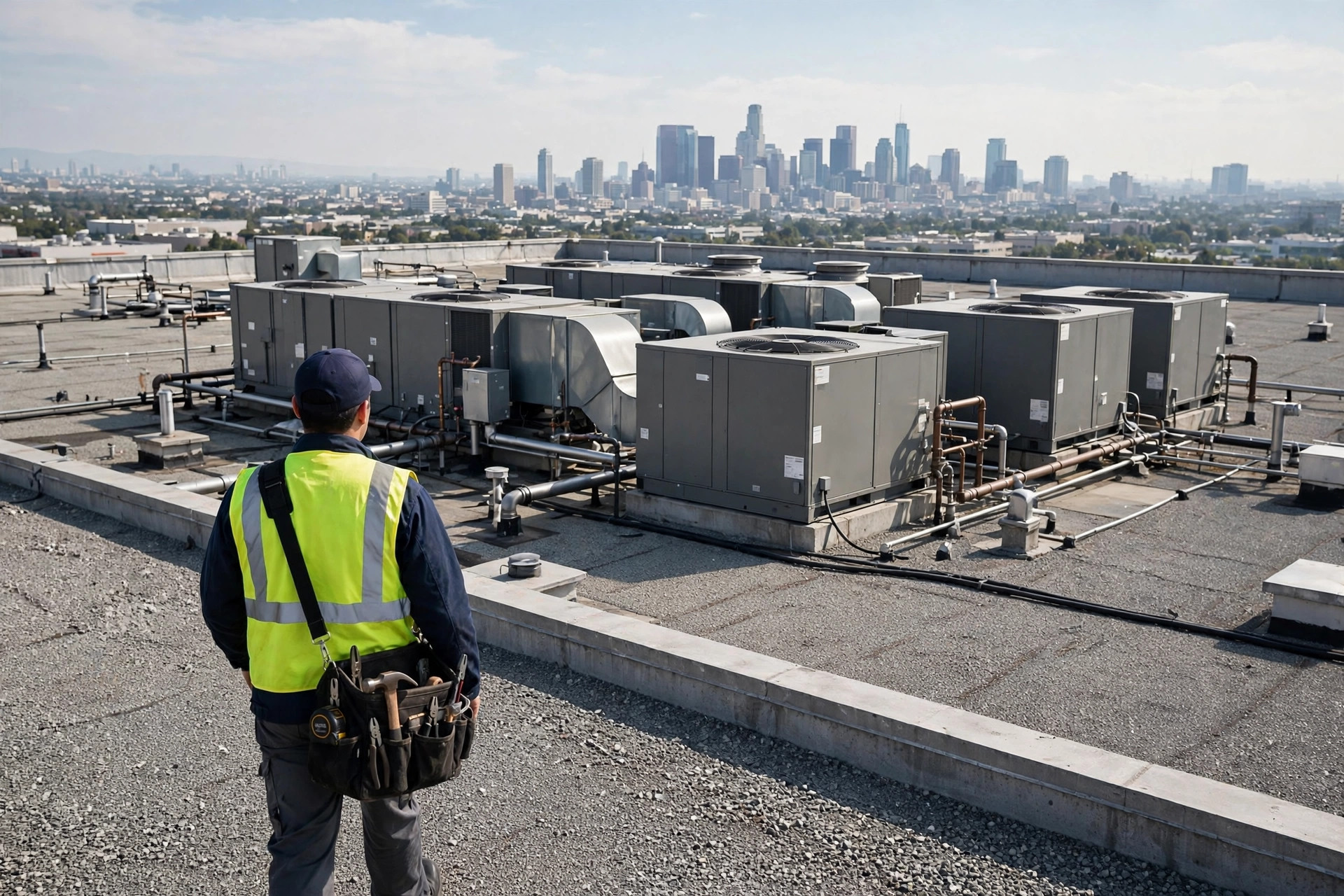
Commercial heating services cover the installation, repair, and upkeep of heating systems in offices, stores, warehouses, schools, and other non-residential buildings. A building that loses heat in cold weather faces more than discomfort. Pipes can freeze and burst, stock can be damaged, and staff may have to stop work. For many businesses, heat is not a luxury. It is part of keeping the doors open.
Commercial heating systems are bigger and more complex than home furnaces. They include rooftop packaged units, boilers, furnaces, heat pumps, and unit heaters, often tied together with controls and ductwork. Good commercial heating services keep all of this running at peak efficiency, fix breakdowns fast, and plan replacements before old equipment fails at the worst moment. This guide explains the six core services every provider should offer, what they cost, and how to choose the right company.
Service 1: Heating System Installation by Commercial Heating Services
New installations are the foundation of commercial heating services. When a building goes up or an old system retires, the provider sizes and installs the right equipment. Sizing matters. A unit that is too small runs nonstop and wears out early. A unit that is too large short cycles, wastes fuel, and leaves humidity problems.
A quality install starts with a load calculation based on the building’s size, insulation, windows, and use. The provider then selects the system type: packaged rooftop units for many offices and stores, boilers for buildings with radiators or radiant floors, or split systems for smaller spaces. The crew sets the equipment, connects gas or electric lines, wires controls, and tests everything before handover. Ask for the startup report and keep it with the building records.
Service 2: Preventive Maintenance from Commercial Heating Services
Maintenance is the most cost-effective of all commercial heating services. A technician visits on a set schedule, cleans burners and coils, checks gas pressure and electrical connections, tests safety controls, and replaces worn parts. Small problems get fixed before they cause a breakdown.
Most providers offer maintenance agreements with two visits per year, one before the heating season and one after. These agreements often include priority service and discounts on repairs. Buildings on a maintenance plan see fewer emergency calls and lower fuel bills. For related guidance, see commercial heating and cooling services, which covers combined service plans.
Service 3: Emergency Heating Repair
When heat fails, speed matters. Strong commercial heating services offer fast emergency repair, often around the clock. The technician diagnoses the fault, which may be a failed igniter, a bad gas valve, a cracked heat exchanger, or a control board issue, and restores heat as quickly as safety allows.
Ask any provider about their emergency response time and whether they stock common parts for your equipment brand. A company that must order every part adds days to each outage. Keep the emergency number posted where building staff can find it, and make sure staff know how to shut the system down safely if something looks dangerous.
Service 4: Boiler Services Within Commercial Heating Services
Many older and larger buildings heat with boilers. Boiler work is a specialty inside commercial heating services. It includes annual cleaning and tuning, water treatment to prevent scale and corrosion, safety valve testing, and repair of pumps, controls, and burners.
Boilers need a technician trained on the specific type, whether fire-tube or water-tube, and the fuel used. Poor water treatment is a quiet killer of boilers, so ask the provider how they test and treat the system water. A well-kept boiler can serve for decades, while a neglected one fails early and expensively.
Service 5: Controls and Thermostat Services
Modern commercial buildings run heating through building automation systems or programmable thermostats. Controls services include installing new thermostats, calibrating sensors, setting schedules, and fixing zones that run too hot or too cold.
Good controls cut fuel waste. Setting back temperatures during unoccupied hours and fixing a single stuck damper can save a surprising amount of money. If the building has hot and cold spots, ask the provider to check the controls before blaming the equipment. The equipment is often fine; the settings are not.
Service 6: Heating System Replacement Planning
Every system reaches the end. Commercial heating services should help owners plan replacement before failure forces a rushed decision. Warning signs include rising fuel bills, frequent repairs, uneven heat, and equipment past its expected life.
A good provider gives an honest assessment: repair or replace, with the numbers for each. They explain efficiency gains from new equipment, available rebates, and the best timing for the swap. Replacing in the off-season costs less and avoids the premium pricing of emergency winter work. For broader HVAC planning, see commercial heating and cooling.
Commercial Heating Services Cost Factors
Use this checklist to understand what drives pricing for commercial heating services.
- System type and size. Boilers and large rooftop units cost more to service than small furnaces. Bigger systems mean more parts and more labor.
- Building size and complexity. Multi-zone buildings with automation take longer to check than a single open space.
- Service agreement level. Basic plans cover inspections and cleaning. Premium plans add parts discounts, priority response, and more visits.
- Equipment age. Older systems need more repair time and harder-to-find parts. Very old units may need custom work.
- Emergency versus scheduled work. After-hours calls cost more. Planned visits during business hours are the best value.
- Fuel type. Gas, oil, and electric systems each have different service needs and part costs.
- Local labor rates. Prices vary by market, and remote sites may carry travel charges.
The US Department of Energy offers guidance on commercial building efficiency and heating system care. Their resources at energy.gov help owners compare equipment efficiency ratings. ENERGY STAR offers complementary commercial resources at energystar.gov.
How to Choose a Commercial Heating Services Provider
Picking the right company matters as much as picking the right equipment. Start with licensing and insurance. The company should hold the state licenses for the work and carry proper liability and workers’ compensation coverage.
Check experience with your system type. A firm that mostly services rooftop units may not be the best pick for a boiler plant. Ask for references from similar buildings and call them. Ask about response times, billing clarity, and whether repairs held up.
Get the service agreement in writing. It should list what each visit includes, the schedule, the price, and what counts as an extra charge. Beware of vague agreements that promise “full service” without detail. For tips on vetting HVAC firms generally, see commercial HVAC service.
Warning Signs Your Building Needs Commercial Heating Services Now
Do not wait for a full breakdown. Call a provider when you notice:
- Rooms that never reach the set temperature.
- Strange smells, banging, or rattling from heating equipment.
- Fuel bills climbing without a change in weather or use.
- Yellow or flickering burner flames instead of steady blue.
- Frequent cycling on and off.
- Staff complaints about cold spots or drafts.
Each of these points to a problem that is cheaper to fix early. A short service call now can prevent a long outage later.
Commercial Heating Services FAQs
How often should commercial heating equipment be serviced?
At least once a year before the heating season, and twice a year for larger or older systems. Regular service keeps efficiency up and catches worn parts before they fail. Buildings with maintenance agreements get priority scheduling and often pay less per visit.
What is included in a typical commercial heating services agreement?
A solid agreement covers scheduled inspections, cleaning of burners and heat exchangers, safety control testing, filter changes where applicable, and a written report after each visit. Many plans add priority emergency service and repair discounts. Read the fine print for exclusions.
How long do commercial heating systems last?
Furnaces and rooftop units often last 15 to 20 years with good care. Boilers can last 25 years or more. Heat pumps fall in a similar range to furnaces. Lifespan depends on maintenance quality, run hours, and the operating environment.
Should I repair or replace an old commercial heater?
Compare the repair cost to the value of the remaining life. If repairs are frequent, parts are scarce, or efficiency is far below modern units, replacement usually wins. A provider should show the math for both options so the choice is clear.
Can commercial heating services lower my fuel bills?
Yes. Clean, well-tuned equipment burns less fuel. Fixed controls and sealed ductwork cut waste further. Many owners see noticeable savings after the first full maintenance cycle, especially on systems that were neglected.
Next Steps for Building Owners
Commercial heating services protect the building, the budget, and the people inside. Set up a maintenance agreement with a licensed provider, schedule the pre-season visit, and keep repair records in one place. When equipment ages out, plan the replacement in the off-season. Steady care today means reliable heat tomorrow.



