
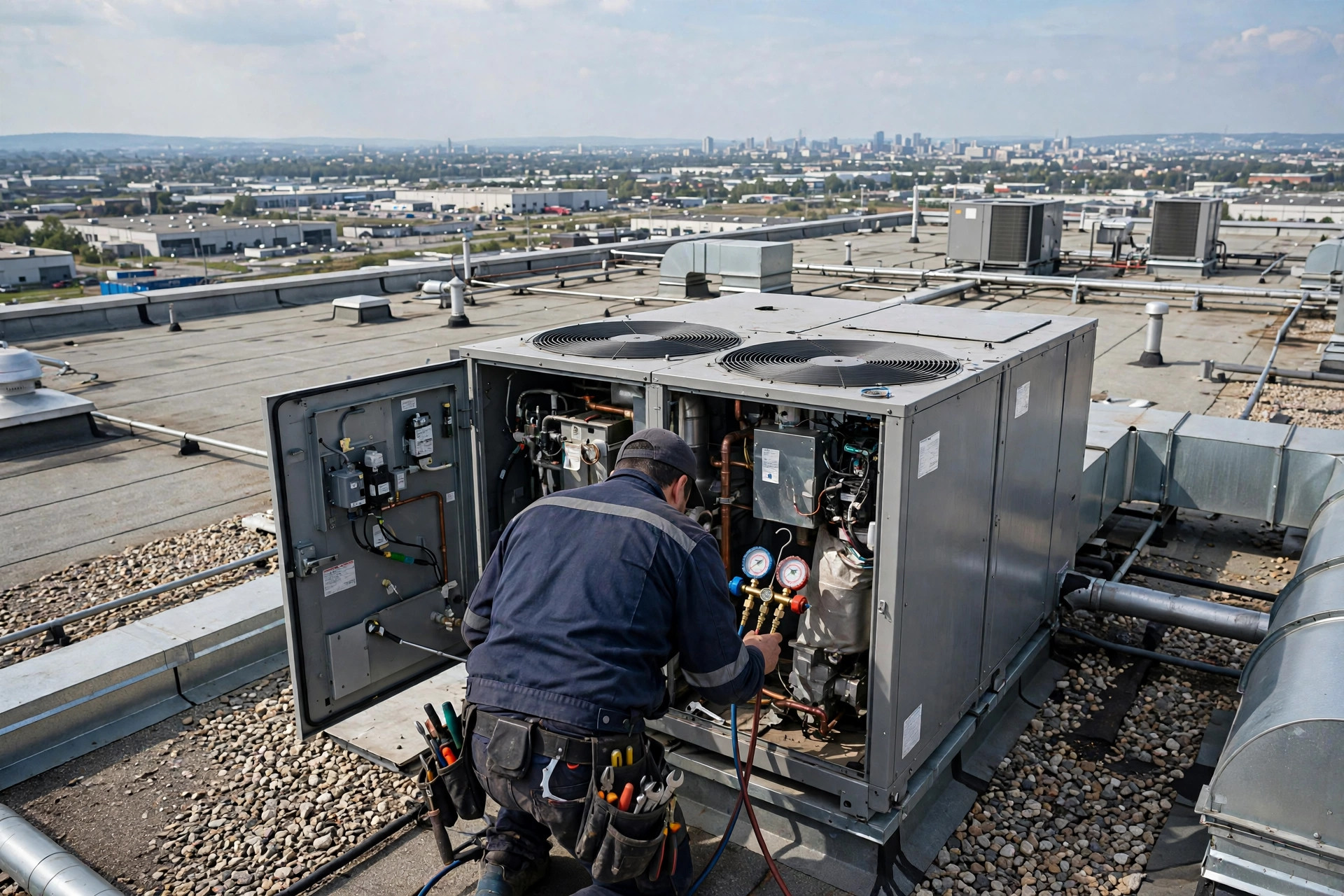
Commercial heating repair covers the diagnosis and fixing of heating faults in offices, stores, warehouses, schools, and other non-residential buildings. When heat fails, the stakes are high. Frozen pipes can burst and flood a building. Stock can be ruined. Staff may have to stop work. Fast, skilled commercial heating repair is what stands between a minor fault and a major loss.
Heating systems in commercial buildings range from rooftop packaged units and furnaces to boilers and heat pumps. Each has its own failure patterns. This guide explains the eight most common problems that call for commercial heating repair, what the fixes involve, the cost factors, and how to get help fast when heat goes down.
Problem 1: No Heat at All Needs Commercial Heating Repair
The most urgent call is a system that produces no heat. Common causes include a failed igniter or pilot, a bad gas valve, a tripped safety control, or a dead control board. The technician works through the startup sequence to find where it stops.
If the system is gas-fired, the tech checks gas supply, pressure, and valve operation. For electric heat, the check covers elements, sequencers, and breakers. Most no-heat calls get fixed the same visit when the technician stocks common parts. This is why asking a provider about stocked parts matters. For broader service planning, see commercial heating and cooling services.
Problem 2: Weak or Uneven Heating
Some areas stay cold while others overheat. Causes include clogged filters, failing blower motors, leaky ducts, stuck dampers, or an undersized system. The technician measures airflow and temperatures zone by zone to find the weak link.
Duct leaks are a frequent culprit. Conditioned air escapes into ceiling spaces before it reaches the rooms. Damper and control issues come next. Only after ruling these out should the equipment itself take the blame. Targeted commercial heating repair of the real cause beats guessing with parts.
Problem 3: Strange Noises from Heating Equipment
Banging, rattling, squealing, or booming all signal trouble. Banging in ducts often means pressure issues or loose sections. Squealing points to worn belts or bearings. Booming at startup can mean delayed ignition, which is a safety concern on gas equipment.
Do not ignore new noises. They almost always get worse. A quick commercial heating repair visit for a noise complaint often finds a small problem that would have become a big one. Describe the noise type and when it happens to help the technician diagnose faster.
Problem 4: Short Cycling Calls for Commercial Heating Repair
Short cycling means the system turns on and off rapidly without finishing a heating cycle. It wastes fuel, wears parts, and leaves the building uncomfortable. Causes include an oversized unit, a clogged filter, a bad thermostat, or a faulty limit switch.
The fix depends on the cause. Sometimes it is as simple as a filter change or thermostat relocation. Sometimes the unit is oversized for the space, which is a design problem needing a longer-term fix. Either way, short cycling should trigger a commercial heating repair call, not a wait-and-see approach.
Problem 5: Rising Fuel Bills
When fuel use climbs without colder weather or longer hours, the system is losing efficiency. Dirty burners, weak airflow, failing controls, and leaky ducts all waste fuel. A tune-up often restores much of the lost efficiency.
Compare bills across similar periods to spot the trend. Bring the numbers to the service visit. They help the technician focus on efficiency killers. The US Department of Energy offers commercial heating efficiency guidance at energy.gov. ASHRAE publishes heating system standards at ashrae.org.
Problem 6: Pilot and Ignition Failures
Systems with pilots or electronic ignition fail to light for many reasons: dirty flame sensors, weak igniters, gas pressure problems, or venting issues. The symptom is a system that tries to start, then shuts down.
Flame sensor cleaning is a quick fix that solves many of these calls. Igniter replacement is also common and fast. But repeated ignition failure needs deeper diagnosis, since it can point to heat exchanger or venting problems that affect safety.
Problem 7: Thermostat and Control Failures Need Commercial Heating Repair
Sometimes the equipment is fine and the controls are not. Dead thermostats, miscalibrated sensors, broken zone dampers, and automation glitches all stop heat from reaching where it should. The building feels broken while the heater sits idle.
Control diagnosis takes a methodical tech who tests each link in the chain. Ask whether the provider has controls expertise, not just equipment skills. Many commercial heating repair calls end at a thermostat or sensor, and the fix costs far less than the worry suggested.
Problem 8: Carbon Monoxide and Safety Concerns
Any sign of carbon monoxide, soot, or unusual smells from gas equipment is an emergency. Cracked heat exchangers can leak carbon monoxide into the air stream. This is life-safety territory, not a routine repair.
If alarms sound or symptoms appear, get people out and call for help. Do not run the equipment until a qualified technician clears it. Make sure the building has working carbon monoxide detectors near gas-fired equipment. No repair is worth rushing when safety is on the line.
Commercial Heating Repair Cost Factors
Use this checklist to understand pricing.
- Problem type. Sensor cleaning costs little. Heat exchanger or compressor replacement costs a lot.
- System type. Boilers and large rooftop units need more labor and pricier parts than small furnaces.
- Part availability. Common parts mean same-day fixes. Rare parts mean waiting and higher prices.
- Emergency timing. After-hours, weekend, and holiday calls carry premium rates.
- Equipment age. Older systems take longer to diagnose and may need harder-to-find parts.
- Access. Rooftop or cramped mechanical room work adds labor time.
- Diagnostic depth. A proper diagnosis costs a service fee but prevents wasted spending on wrong parts.
Getting Fast Commercial Heating Repair When It Matters
Speed comes from preparation. Keep the service provider’s emergency number posted where staff can find it. Know the equipment brand, model, and age so the dispatcher sends the right tech with the right parts. Describe the symptoms clearly: what happened, when it started, and any noises or smells.
A maintenance agreement usually includes priority dispatch. Buildings without one wait behind those with one during cold snaps. If heat is critical to the operation, the agreement pays for itself the first time it jumps the queue. For help choosing a firm, see commercial HVAC service.
What to Tell the Technician on a Commercial Heating Repair Call
Good information speeds the fix. Before calling, gather these details. The equipment brand and model from the nameplate. The age of the system if known. What exactly is happening: no heat, weak heat, noise, smell, or error code. When the problem started and whether it is constant or comes and goes. Any recent work done on the system.
Also note which areas are affected and whether other building systems are acting up. A clear, calm report helps the dispatcher send the right technician with the right parts. It also helps the tech start diagnosing the moment they arrive instead of spending the first half hour on basic questions. A few minutes of preparation can cut real time off a commercial heating repair visit.
Commercial Heating Repair FAQs
How fast should commercial heating repair respond?
For a no-heat call in cold weather, same-day response is the standard to expect from a good provider. Less urgent issues like uneven heating or noise can usually wait for the next business day. Ask any provider for their written response promise before you need it.
What does a typical commercial heating repair visit include?
Diagnosis first, then the fix. The tech tests the system, finds the fault, explains it, and repairs it with proper parts. The visit should end with a system test and a written note of what was done. Beware of techs who replace parts without real testing.
How much does commercial heating repair cost?
Small fixes like sensor cleaning or igniter replacement are modest. Major part replacements cost far more. Emergency timing adds a premium. Get the diagnosis and price approved before the work starts, except in true safety emergencies.
Can I prevent most commercial heating repair calls?
Many of them, yes. Regular maintenance catches worn parts, dirty components, and control drift before they cause failures. Filter changes, annual tune-ups, and prompt attention to small symptoms prevent most breakdowns.
When should repair give way to replacement?
When repairs are frequent, parts are scarce, efficiency is far below modern units, or a major part like a heat exchanger fails on an old system. A trustworthy tech will show the math for both options instead of pushing one.
Next Steps for Building Owners
Commercial heating repair works best as part of a plan, not a panic. Line up a qualified provider before the cold arrives. Keep the emergency number handy and the equipment records organized. Fix small symptoms fast, maintain the system on schedule, and replace equipment when the numbers say so. The building stays warm and the budget stays intact.



