
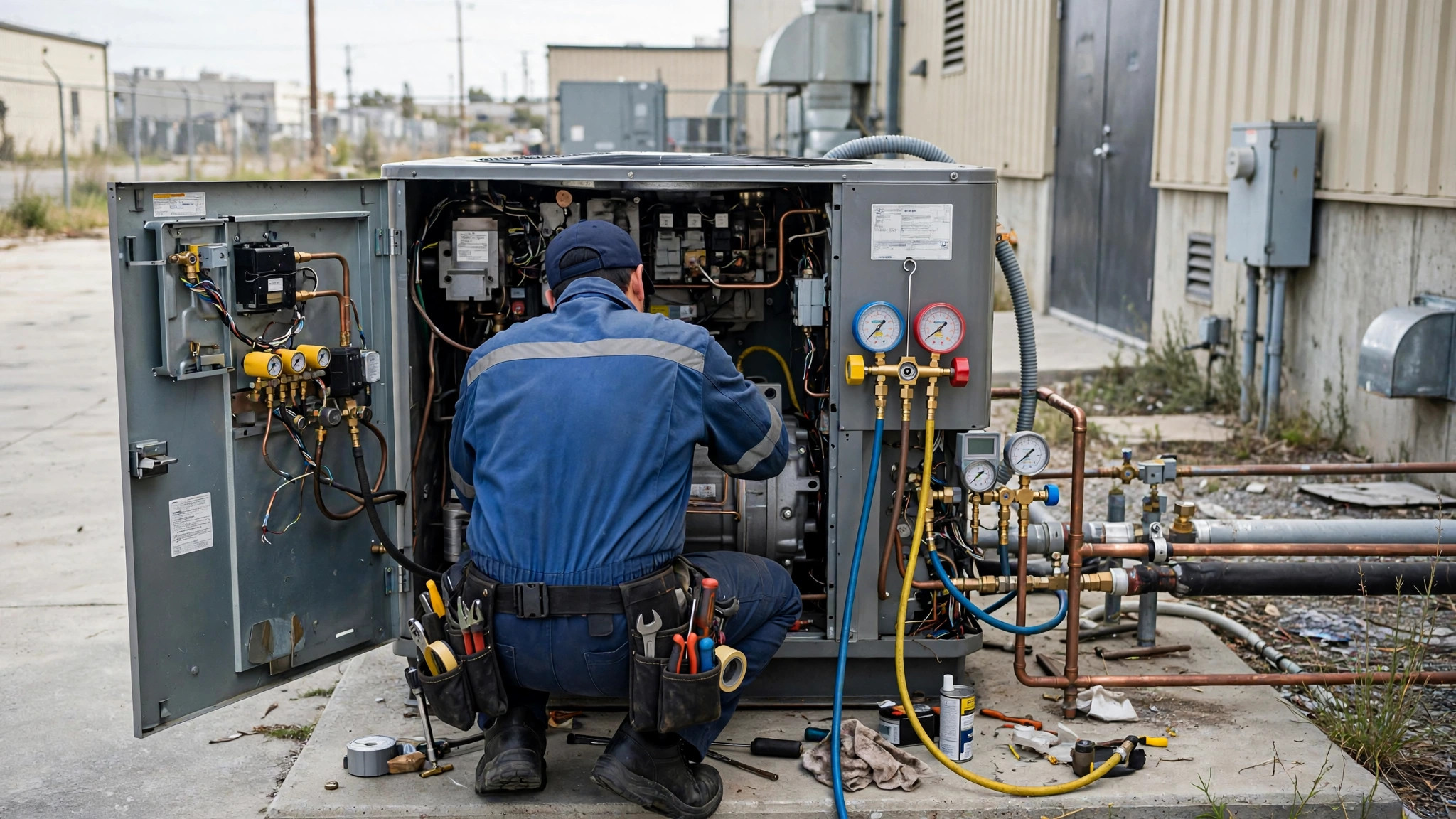
The compressor does the heavy lifting in every air conditioning system. When it struggles, cooling suffers. When it fails, the system stops entirely. Knowing the signs of trouble helps you act before a breakdown. This guide to air con compressor repair covers warning signs, what technicians do, costs, and the repair-or-replace decision.
Read this before you approve any major compressor work. The right knowledge saves money and prevents repeat failures.
What the Compressor Does
The compressor pumps refrigerant through the system. It squeezes low-pressure gas into high-pressure gas, which lets the system move heat from inside to outside. Every cooling cycle depends on it. No compressor, no cooling.
Compressors work hard. In commercial buildings they may run thousands of hours per year. Heat, pressure, and constant motion wear internal parts over time. Most last 10 to 15 years. Poor maintenance shortens that significantly.
Common compressor types include reciprocating, scroll, and screw designs. Each has different repair characteristics. Your technician should know which type your system uses before quoting air con compressor repair.
6 Signs You Need air con compressor repair
1. Warm Air From Vents
A system that runs but blows warm air may have a failing compressor. It cannot build enough pressure to cool properly. Check the thermostat and filters first. If those are fine, the compressor is suspect.
2. Strange Noises
Grinding, rattling, or screeching from the outdoor unit signals internal damage. Compressors should hum steadily. New noises mean worn parts. Turn the system off and call for air con compressor repair before the damage spreads.
3. Hard Starting
A compressor that struggles to start, dims lights, or trips breakers has electrical or mechanical problems. Hard starting wears the motor fast. A technician can test capacitors and windings to find the cause.
4. Tripped Breakers
Repeated breaker trips point to a compressor drawing too much current. Do not keep resetting the breaker. That risks wiring damage and fire. Get a professional diagnosis.
5. Shaking or Vibration
Excessive vibration means internal mounts or parts have failed. The unit may walk across its pad. Vibration damages refrigerant lines and electrical connections over time.
6. Rising Energy Bills
A compressor losing efficiency works harder for the same cooling. Bills climb while comfort drops. If your energy use rises without explanation, the compressor may be the cause.
What air con compressor repair Involves
Diagnosis comes first. The technician checks electrical readings, refrigerant pressures, and temperatures. They test windings, capacitors, and contactors. A good diagnosis separates compressor problems from control or airflow issues that mimic them.
Minor repairs fix external causes. Replacing a failed capacitor, contactor, or start kit can restore a compressor that will not start. Cleaning dirty coils reduces head pressure that overworks the compressor. These air con compressor repair jobs cost far less than replacement.
Major repair means replacing the compressor itself. The technician recovers refrigerant, removes the old unit, cleans the system, installs the new compressor, and recharges. Burnout failures need extra cleanup to remove acid and debris.
After repair, the technician tests everything. Pressures, temperatures, and electrical draw must match specifications. Proper testing proves the air con compressor repair solved the root problem.
Costs to Expect
Minor electrical repairs cost the least, often a few hundred dollars. Component replacements like capacitors and contactors stay in that range. These are worth doing on any system with life left.
Compressor replacement costs much more. Small commercial systems run from a few thousand dollars upward. Larger systems cost more. The total includes the part, refrigerant, labor, and testing. Emergency service adds premium charges.
Get the quote in writing. It should list the compressor model, refrigerant type and amount, additional parts, labor hours, and warranty terms. Compare at least two quotes for major work.
Repair or Replace the System
A failed compressor forces a bigger question. If the system is young and the rest is sound, air con compressor repair makes sense. The unit has years of life ahead.
If the system is old, run the numbers. Compare repair cost to replacement cost. If repair exceeds half the replacement price and the system is past ten years, replacement usually wins. Factor in efficiency gains from new equipment.
Refrigerant type matters. Systems using phased-out refrigerants face costly recharges. Spending big on air con compressor repair for obsolete refrigerant is poor value. New systems use current refrigerants with stable pricing.
Consider the whole system. Coils, fans, and controls age together. A new compressor in a worn-out system buys little time. Our guide to AC repair vs replace for commercial buildings details this math.
Preventing Compressor Problems
Most compressor failures are preventable. Change filters on schedule. Dirty filters restrict airflow and overwork the compressor. Clean condenser coils yearly. Dirty coils raise pressure and temperature.
Keep refrigerant charge correct. Low charge from leaks is a top killer. Fix leaks instead of topping off repeatedly. Service electrical parts yearly. Weak capacitors and loose connections cause hard starting.
Maintain the whole system. The Department of Energy explains how maintenance extends equipment life at https://www.energy.gov/. A maintained system protects its compressor.
For ongoing care, see our guides to commercial air conditioner repair and commercial AC repair.
Choosing a Repair Contractor
Compressor work needs real skill. Look for a contractor with commercial experience on your equipment type. Ask how they diagnose compressor failures. A good tech shows you readings, not just opinions.
Check licensing and insurance. Refrigerant handling requires EPA certification. Electrical work needs qualified technicians. Safety follows OSHA standards at https://www.osha.gov/.
Ask about warranties. Compressor part warranties vary. Labor warranties come from the contractor. Get both in writing. Also ask what caused the failure and what prevents it from happening again.
Electrical Causes of Compressor Failure
Many compressor failures start in the electrical system, not the compressor itself. Weak capacitors are a top cause. The capacitor helps the motor start and run. When it weakens, the compressor strains, overheats, and eventually fails. Capacitors are cheap. Replacing them on schedule prevents expensive air con compressor repair.
Loose connections cause trouble too. Heat cycles loosen terminals over time. Loose connections create resistance, which creates heat, which damages windings. Annual electrical inspection with tightened connections prevents this slow failure.
Voltage problems kill compressors fast. Low voltage from undersized wiring or utility issues makes motors draw excess current. High voltage stresses insulation. Three-phase systems need balanced voltage across all legs. A phase monitor shuts the system down before imbalance damages the compressor.
Power surges from lightning or grid switching can destroy a compressor instantly. Surge protection at the panel and at the unit is cheap insurance. After any major surge event, have the system checked even if it seems to run fine.
What to Ask Before Approving the Work
Before you approve air con compressor repair, ask the technician direct questions. What exactly failed and how did you test it? Ask to see the readings. A professional welcomes the question.
Ask what caused the failure. A new compressor installed without fixing the root cause will fail again. Common root causes include dirty coils, low airflow, refrigerant leaks, and electrical problems. Make sure the quote addresses the cause, not just the symptom.
Ask about the replacement part. Is it OEM or aftermarket? What is the part warranty? Who handles the warranty claim if it fails? How long will the part take to arrive?
Ask about the full scope. Does the quote include refrigerant, filter driers, system flushing, leak testing, and startup? A complete air con compressor repair covers all of these. Missing steps lead to early failure.
Finally, ask for the repair-versus-replace comparison in writing. A trustworthy contractor gives you both numbers and an honest recommendation. One who only quotes the repair may be avoiding the harder conversation.
Frequently Asked Questions
Can a compressor be repaired or must it be replaced?
Small external problems like bad capacitors can be repaired. Internal mechanical failure usually means replacement. Sealed compressors are not rebuilt in the field.
How long does air con compressor repair take?
Minor repairs take hours. Full compressor replacement takes one to two days including testing. Parts availability can add time for uncommon models.
Will air con compressor repair lower my bills?
If the old compressor was failing, yes, somewhat. But a new compressor in an old system will not match a full high-efficiency replacement for savings.
What causes compressors to fail?
Electrical problems, overheating from dirty coils, low refrigerant from leaks, moisture contamination, and power surges. Most trace back to neglected maintenance.
Is it safe to run a system with a bad compressor?
No. A failing compressor can trip breakers, damage wiring, and contaminate the system. Shut it down and call a technician.
Next Steps
If you suspect compressor trouble, shut the system down and call a qualified technician. Get the diagnosis in writing with test readings. Compare air con compressor repair cost against replacement using honest numbers. Fix the root cause so the repair lasts. Acting early turns a potential emergency into a planned project.



