
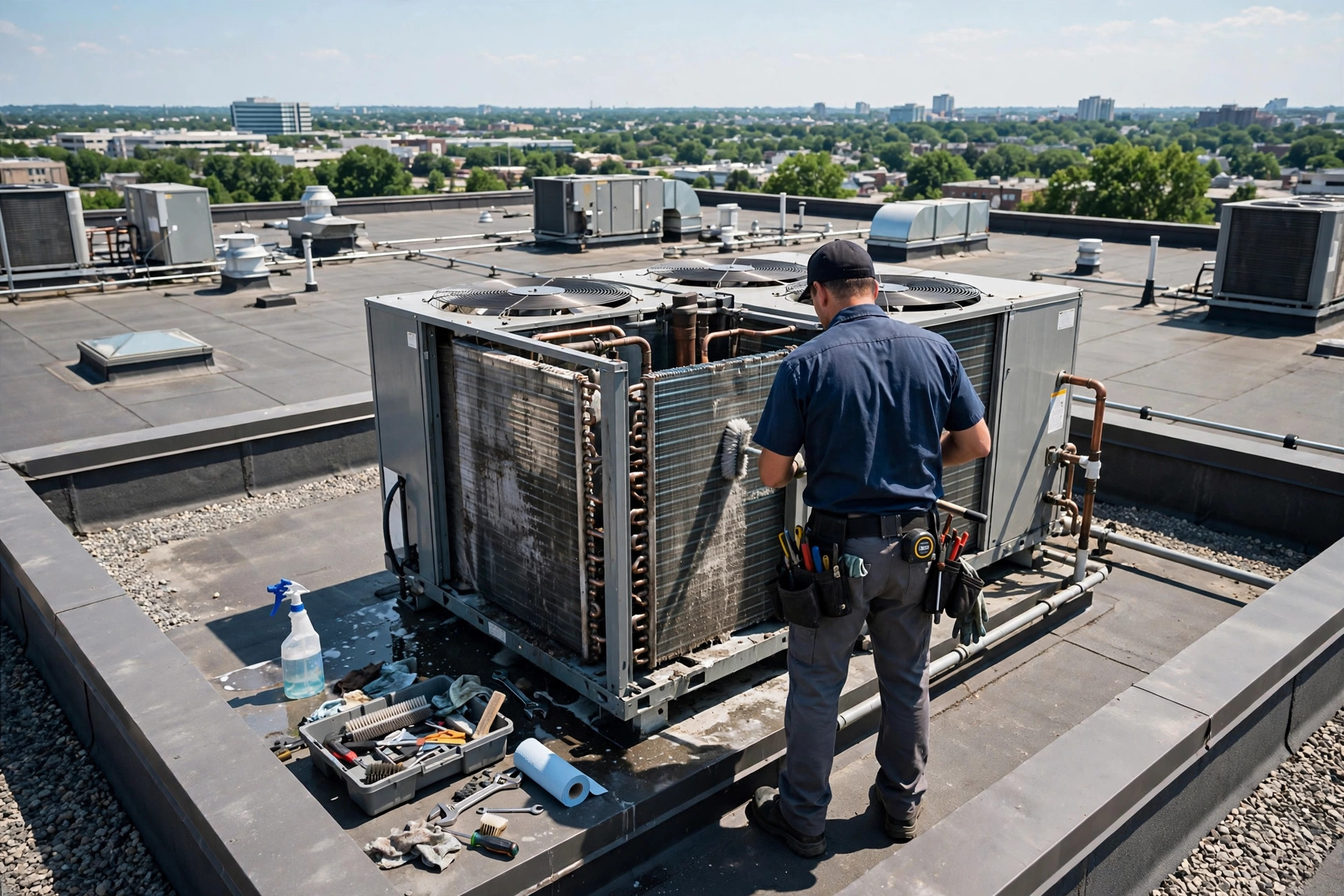
Air conditioning service is the professional care that keeps commercial cooling systems running well. In offices, stores, warehouses, and restaurants, cooling is not just comfort. It protects stock, keeps equipment safe, and keeps people working. When the air conditioning fails on a hot day, the cost shows up fast.
Good air conditioning service follows a clear task list on every visit. The technician does not just glance at the unit and leave. They test, clean, measure, and report. This guide explains the nine tasks every visit should include, how to schedule service, the cost factors, and answers to the questions owners ask most.
Task 1: Filter Check in Every Air Conditioning Service Visit
Filters are the first line of defense. Clogged filters choke airflow, strain fans, cut cooling capacity, and let dirt reach the coils. Every air conditioning service visit should include a filter check and replacement as needed.
In commercial buildings, filters may need monthly changes during heavy use. The technician should note the filter size and type so the building stocks the right ones. Clean filters are the cheapest efficiency measure in the whole system.
Task 2: Coil Cleaning in Air Conditioning Service
Dirty condenser and evaporator coils force the system to work harder for less cooling. Cleaning restores capacity and cuts energy use. This single task often delivers the biggest efficiency gain of any air conditioning service visit.
Coils in dusty or greasy environments, such as near kitchens or loading docks, need more frequent cleaning. The technician should use proper coil cleaner and rinse methods that do not damage the fins. Bent fins get straightened to restore airflow.
Task 3: Refrigerant Check During Air Conditioning Service
Low refrigerant means poor cooling and risks compressor damage. The technician checks pressures against the maker’s specs, looks for oil stains that mark leaks, and tests for leaks if the charge is low.
Refrigerant handling requires EPA Section 608 certification. Leaks get repaired before recharging, not just topped off. A system that needs frequent recharging has a leak that must be found. For related repair guidance, see commercial AC repair.
Task 4: Electrical Testing in Air Conditioning Service
Loose or corroded connections cause voltage drops that burn out motors, capacitors, and boards. The technician tightens terminals, inspects contactors and relays, and measures voltage and amperage against the nameplate ratings.
Capacitors get special attention since weak capacitors are a leading cause of summer breakdowns. Testing takes minutes and prevents the most common no-cooling calls. This is core work in any professional air conditioning service visit.
Task 5: Belt, Bearing, and Motor Inspection
Belts need correct tension and good condition. Bearings need lubrication. Motors need to run smooth and cool. The technician checks all three, replaces worn belts, and notes motors that run hot or noisy.
A snapped belt stops all airflow. A seized bearing takes down a motor. Both are cheap to prevent and expensive to fix as emergencies. This inspection is quick and pays for itself.
Task 6: Condensate Drain Clearing in Air Conditioning Service
Cooling pulls moisture from the air, and that water must drain away. Clogged drains back water into the unit, the ceiling, and the equipment. The technician flushes drain lines, cleans pans, and tests float switches.
This small task prevents some of the messiest failures in commercial buildings. Algae tablets or treatments may be added in problem systems. If drains clog repeatedly, the technician should find why rather than just clearing them again.
Task 7: Thermostat and Control Checks
Miscalibrated sensors and wrong schedules waste energy all season. The technician verifies setpoints, checks sensor accuracy, and confirms the system follows the programmed schedule for occupied and unoccupied hours.
In buildings with automation, the check extends to the sequences that control staging and economizers. Many commercial systems waste energy through control issues that a careful air conditioning service visit can fix in minutes. The US Department of Energy offers commercial cooling guidance at energy.gov. ENERGY STAR certifies efficient commercial cooling equipment at energystar.gov.
Task 8: Airflow and Duct Inspection
Weak airflow means weak cooling no matter how well the unit runs. The technician checks registers for proper airflow, looks for disconnected or crushed duct sections, and inspects accessible seals.
Major duct issues get flagged for follow-up. Sealing duct leaks is one of the cheapest comfort improvements available. Airflow problems found during air conditioning service often explain comfort complaints that blamed the equipment.
Task 9: Written Report After Air Conditioning Service
Every visit should end with a written report: what was done, measurements taken, parts replaced, and recommended actions with priorities. This report builds the equipment history that guides future decisions.
No report means no accountability. Ask the provider for a sample report before signing an agreement. Good documentation also supports warranty claims and helps the next technician work faster. For help choosing a firm, see commercial AC service.
Warning Signs Your Building Needs Air Conditioning Service Now
Do not wait for the next scheduled visit when these symptoms appear. Call for air conditioning service promptly.
Weak or warm airflow. Registers blowing weak or warm air point to low refrigerant, dirty coils, compressor trouble, or duct problems. The longer it runs this way, the more damage it does.
Strange noises. Grinding, squealing, banging, or hissing from the unit all signal mechanical or refrigerant trouble. New noises deserve a quick check before they become failures.
Short cycling. The system turns on and off rapidly without finishing a cooling cycle. It wastes energy and wears parts fast. Causes range from low refrigerant to bad thermostats to oversized equipment.
Water where it should not be. Puddles near the indoor unit, stained ceilings, or dripping from ductwork mean drain or coil problems. Water damage grows fast, so act quickly.
Rising energy bills. Cooling costs climbing without hotter weather or longer hours means efficiency is slipping. Dirty coils, low charge, and control drift are the usual suspects.
Bad smells. Musty odors suggest mold in drains or ducts. Burning smells suggest electrical trouble and need immediate attention.
Each of these is cheaper to fix early. A prompt air conditioning service call for a symptom often prevents the emergency call that follows when symptoms are ignored.
Scheduling Air Conditioning Service for Commercial Buildings
Most commercial systems need professional air conditioning service at least twice a year, with the cooling visit in spring before the hot season. Heavy-use buildings and harsh environments do better with quarterly visits.
Between visits, staff handle monthly filter checks and keep outdoor units clear of debris, plants, and stored items. Write the schedule into the building calendar with named responsibilities. A missed cooling startup visit is how small problems become summer emergencies.
Air Conditioning Service Cost Factors
Use this checklist to understand pricing.
- Number and size of units. More units and larger tonnage raise the cost.
- Visit frequency. Quarterly plans cost more per year than twice-yearly ones.
- System type. Packaged units, splits, and chillers each have different service needs.
- Environment. Dusty, greasy, or coastal settings need more intensive care.
- Equipment age. Older systems take longer to check.
- Agreement versus per-visit. Annual plans usually cost less per visit and add priority service.
Air Conditioning Service FAQs
How often should commercial AC be serviced?
At least twice a year, with the main cooling service in spring. High-use or harsh-environment buildings benefit from quarterly visits. Monthly filter checks by staff cover the gaps.
What does a standard air conditioning service visit include?
Filters, coil cleaning, refrigerant check, electrical testing, belt and motor inspection, drain clearing, control checks, airflow review, and a written report. If visits skip these, the service is not complete.
How much does air conditioning service cost?
Annual agreements vary by unit count, size, and frequency, from a few hundred to a few thousand dollars per unit per year. Compare the per-visit cost and the task list, not just the total.
Can staff do some air conditioning service tasks?
Yes for filters, visual checks, and keeping units clear. Refrigerant, electrical, and rooftop work belong to licensed technicians. A mix of both controls cost without taking risks.
Will regular service lower my cooling bills?
Yes. Clean coils, correct refrigerant charge, tight electrical connections, and accurate controls all cut waste. Many owners see the service cost returned through lower bills within the first year.
Next Steps for Building Owners
Air conditioning service works when every visit covers the nine tasks and ends with a written report. Put the schedule in writing with a qualified provider, handle the staff-level tasks between visits, and keep the reports filed. Steady care keeps the cooling strong, the bills reasonable, and the breakdowns rare. Start with a provider who shows you their checklist before you sign, and hold every visit to that standard. Review the reports each season and adjust the plan as equipment ages. Good service is a partnership, and the building benefits every day it runs well. Make the call today. Now.



