
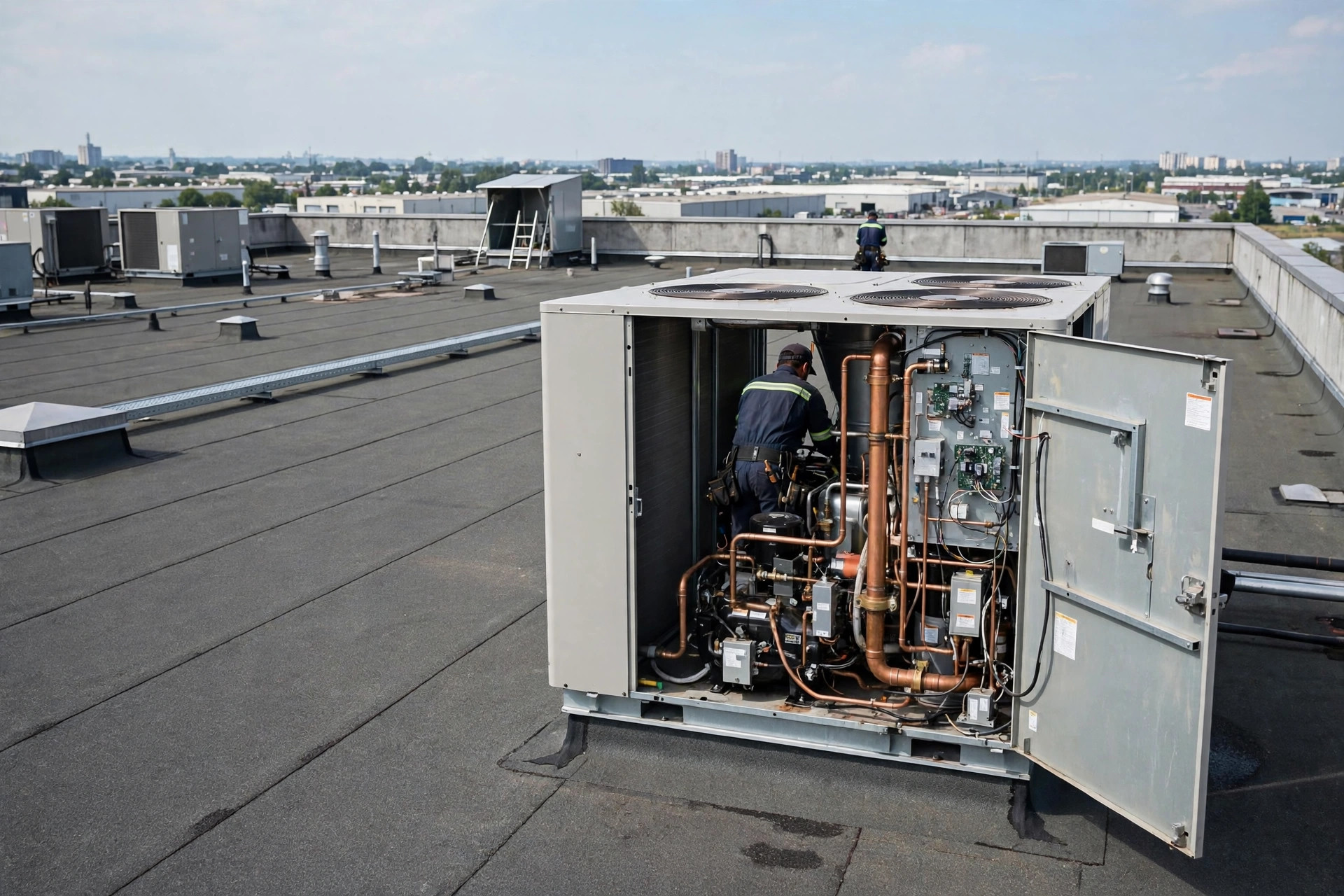
The compressor is the heart of any air conditioning system. It pumps refrigerant through the coils, making cooling possible. When it fails in a commercial building, owners face a tough choice: repair or replace. Understanding central air compressor cost helps you make that call with confidence instead of under pressure.
This guide explains what drives central air compressor cost in commercial systems, typical price ranges, the five factors that shape your quote, and how to decide whether a repair is worth it or a full replacement makes more sense.
What the Compressor Does and Why It Matters
Before talking about central air compressor cost, it helps to know what you are paying for. The compressor squeezes refrigerant gas into a hot, high pressure state, then sends it to the condenser coil where it releases heat. That cycle is what moves heat out of your building. Without a working compressor, there is no cooling at all.
Commercial compressors come in several types. Scroll compressors are common in rooftop package units. They are efficient, quiet, and reliable. Reciprocating compressors appear in older equipment. Screw compressors serve larger systems. The type in your unit affects central air compressor cost directly, since larger and more specialized compressors cost more.
Compressors usually fail for a reason. Electrical issues, overheating from dirty coils, refrigerant problems, and simple old age all kill compressors. When a technician says the compressor is dead, ask what caused it. Fixing the cause matters as much as replacing the part, or the new compressor may fail early too.
Typical central air compressor cost Ranges
For commercial systems, central air compressor cost varies widely with unit size and compressor type. A small commercial unit might need a compressor in the low thousands including parts and labor. Mid size rooftop units often land in the mid thousands. Large systems with big screw or scroll compressors can reach well into five figures for the part alone.
Labor is a big part of central air compressor cost. Replacing a compressor is skilled work. The technician must recover the old refrigerant, cut out the failed compressor, braze in the new one, pressure test the system, pull a deep vacuum, and recharge with exact refrigerant amounts. The job often takes a full day for one technician, sometimes two.
Related parts add to the bill. A smart replacement often includes a new filter drier, contactor, and sometimes a hard start kit. Refrigerant itself costs money, and older systems using phased out refrigerants face steep refrigerant prices. Ask for an itemized quote so you see parts, labor, and refrigerant as separate lines.
5 Factors That Drive central air compressor cost
These five factors explain why central air compressor cost differs from one job to the next.
First, unit size and capacity. Larger systems need larger compressors, and the part price climbs with size. A 20 ton rooftop unit needs a far bigger compressor than a 5 ton unit, and everything about the job scales up.
Second, compressor type. Scroll compressors for common package units are widely available and competitively priced. Less common types, or compressors for older equipment, can cost more and take longer to source. In some cases the part must come from the manufacturer with a wait of days or weeks.
Third, refrigerant type. Systems using older refrigerants face higher refrigerant costs and sometimes need conversion work. Newer refrigerants are cheaper and easier to source. Your technician should tell you which refrigerant your system uses and what it means for central air compressor cost.
Fourth, accessibility. A compressor in a ground level unit with clear access is a straightforward job. One buried in a tight rooftop unit, or in a mechanical room with poor access, takes longer. Crane needs, confined spaces, and occupied building constraints all add labor hours.
Fifth, warranty status. If the compressor is under manufacturer parts warranty, the part may cost you little or nothing, though labor is rarely covered. Out of warranty, you pay the full central air compressor cost. Check your warranty documents before you authorize work. Many owners discover coverage they forgot they had.
Repair or Replace: Making the Call
The hardest question is not the central air compressor cost itself. It is whether to pay it. Use these guidelines to decide.
Consider the unit’s age. If the system is near the end of its expected life, putting a costly new compressor into old equipment is often throwing good money after bad. Other parts will likely fail soon. If the unit is mid life and otherwise sound, a compressor replacement can buy many more years.
Look at overall condition. Are the coils clean and intact? Is the ductwork sound? Are the controls working? A compressor in an otherwise healthy system is a reasonable repair. A compressor in a rusted, leaking, inefficient unit is a sign to replace the whole system.
Do the math. Compare the central air compressor cost against replacement cost. A common rule of thumb: if the repair costs more than half the price of a new unit, and the unit is old, replacement usually wins. New equipment also brings better efficiency, which trims operating costs for years. Our guide to commercial AC repair costs can help you benchmark.
Think about refrigerant. If your system uses an older refrigerant that is costly or hard to get, that pushes toward replacement with a modern system. Pouring expensive refrigerant into aging equipment is a poor investment.
Finally, consider downtime risk. A building that cannot afford cooling interruptions, like a medical office or data room, may prefer the reliability of new equipment over a repaired older unit. Factor the cost of lost business into your decision.
Getting a Fair Quote
When you get quotes for central air compressor cost, make sure each one covers the same scope. A complete compressor replacement should include refrigerant recovery, the new compressor, filter drier replacement, system flushing if needed, pressure testing, evacuation, recharge to factory specs, and full startup testing.
Ask whether the quote includes related electrical parts. Contactors and capacitors often fail alongside compressors, and replacing them during the same visit saves a second service call. Ask about the warranty on both the part and the labor. A one year parts and labor warranty on the replacement is a reasonable expectation.
Get at least two quotes for a job this size. Prices for central air compressor cost can vary widely between contractors based on their parts sourcing and labor rates. An established commercial rooftop AC unit repair specialist will have the tools and experience for a clean job.
Be wary of anyone who diagnoses a dead compressor without proper testing. A good technician checks electrical readings, pressures, and temperatures before condemning the part. Misdiagnosis wastes your money and leaves the real problem unfixed.
Preventing the Next Failure
Once you have paid the central air compressor cost, protect the investment. Most compressor failures are preventable with basic care.
Keep coils clean. Dirty condenser coils make the compressor run hot, and heat kills compressors. Dirty evaporator coils cause liquid refrigerant to reach the compressor, which damages it mechanically. Coil cleaning belongs in every maintenance visit.
Change filters on schedule. Restricted airflow starves the system and stresses the compressor. It is the cheapest protection you can buy.
Fix refrigerant issues early. Low charge makes the compressor overheat. Have leaks found and repaired rather than just topping off. Topping off without fixing the leak guarantees a repeat failure.
Keep electrical components healthy. Weak capacitors and pitted contactors strain the compressor motor. A technician can spot these during routine service and replace them for little cost. Pair this care with a regular commercial AC maintenance agreement.
Watch the system. Short cycling, unusual noises, tripped breakers, and weak cooling are early warnings. Call for service at the first sign instead of waiting for a full failure. The Department of Energy explains how proper maintenance protects efficiency at energy.gov.
Frequently Asked Questions
How long does a commercial compressor replacement take?
Most replacements take one full day. Larger systems or difficult access can stretch to two days. Your contractor should be able to give a firm timeline after seeing the unit. Plan for the building to be without cooling from that unit during the work.
Is central air compressor cost covered by warranty?
The part may be covered if the unit is within the manufacturer’s parts warranty period, often 5 to 10 years for commercial equipment. Labor is rarely covered. Check your documents and registration status before authorizing the work.
Can a compressor be repaired instead of replaced?
Internal compressor failures almost always require replacement. Electrical issues in the compressor circuit, like a bad capacitor or contactor, can be repaired. A good technician will test thoroughly to make sure the compressor itself is truly dead before quoting replacement.
Why did my compressor fail?
Common causes include dirty coils causing overheating, low refrigerant from leaks, electrical problems, and age. Ask your technician for the specific cause. If the cause is not fixed, the new compressor faces the same fate.
Should I replace the whole unit instead?
If the unit is old, inefficient, or needs other major repairs, replacement often makes more sense than paying the central air compressor cost. Compare the repair quote against replacement, factor in energy savings from new equipment, and consider reliability needs. ENERGY STAR guidance on commercial equipment is available at energystar.gov.
Next Steps
You now understand central air compressor cost, what drives it, and how to decide between repair and replacement. If your system is down, get two itemized quotes that cover parts, labor, refrigerant, and related components. Check your warranty status first. Weigh the unit’s age and condition honestly, and do not pour money into equipment that is ready for retirement. Once the work is done, lock in regular maintenance to protect your new compressor for years.



