
Sooner or later every commercial HVAC system reaches the end. Repairs get frequent. Parts get scarce. Electric bills climb. When that day comes, the first question is the cost to replace hvac system equipment, and the second is whether replacement really beats another repair.
This guide answers both. You will learn the typical cost to replace hvac system units in commercial buildings, the ten factors that move the price, and the simple math that tells you when to stop repairing and start replacing.
When the cost to replace hvac system beats the cost of repair
There is a rule of thumb contractors use. Multiply the age of the unit by the repair quote. If the result tops the price of a new unit, replace it. A 12-year-old rooftop unit with a $2,000 repair gives 24,000. If a new unit costs $18,000, the math says replace.
Age alone is a signal. Most commercial units give 15 to 20 years of solid service. Past that point, efficiency drops and breakdowns cluster. Pouring money into a unit past its prime is like patching bald tires. Our guide to repair versus replace decisions walks through this call in more detail.
Rising energy bills are another signal. An old unit works harder to make the same cold air. If your summer electric bills climb while the thermostat setting stays put, the unit is losing efficiency. A new high-efficiency unit can cut that portion of the bill sharply, and the savings chip away at the cost to replace hvac system equipment every month.
Refrigerant issues force the call. Older units run on refrigerants that are costly or hard to find. A leak in an old system can cost more to recharge than the unit is worth. When the refrigerant bill approaches the replacement price, the decision makes itself.
The 10 factors behind the cost to replace hvac system units
-
Building size. Bigger buildings need bigger units, and bigger units cost more. A 5-ton unit for a small office is a different purchase than a 25-ton rooftop unit for a warehouse.
-
Unit type. Packaged rooftop units are the common choice and price in the middle. Split systems cost more to install because the parts go in two places. High-efficiency models with variable speed drives cost more up front and less to run.
-
Efficiency rating. Each step up in efficiency adds to the purchase price. It also cuts the electric bill. The U.S. Department of Energy publishes ratings that let you compare models on equal terms.
-
Ductwork condition. If the old ducts are sound, the new unit bolts up to them and the cost to replace hvac system gear stays lower. If the ducts need replacement too, the project grows. Have the ducts tested before you decide.
-
Electrical service. New units may draw more power or need different wiring. Panel upgrades, new disconnects, and longer wire runs add to the bill. Older buildings are the usual suspects.
-
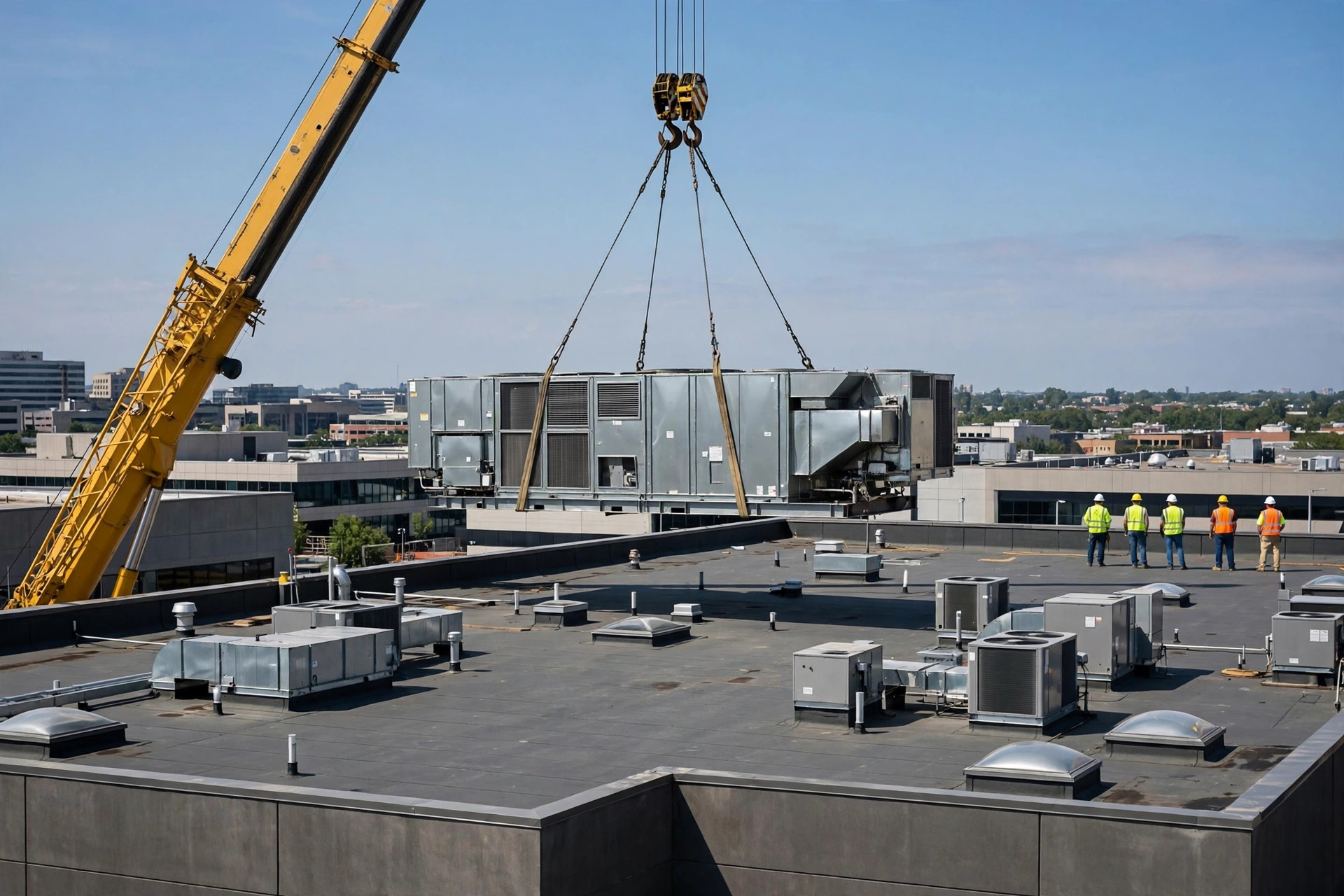
Roof or pad work. Rooftop units need a sound curb and sometimes a crane to set them. Ground units need a level pad and clear airflow. Structural or site work around the unit is easy to forget in the budget.
-
Controls. A basic thermostat keeps the price down. Zoned controls with sensors and dampers add cost and comfort. Smart building controls add the most and save the most over time.
-
Refrigerant and line sets. New units use current refrigerants. If the old line set cannot be reused, new copper lines run through the building, and copper is not cheap.
-
Permits and inspections. Most cities require a mechanical permit for a full replacement. Plan for the fee and the inspection visits. Code upgrades, like new smoke detectors in the duct, can ride along.
-
Labor and timing. A straightforward swap takes a day or two. A complex replacement with duct and electrical work takes weeks. Peak-season scheduling costs more than off-season work, since every contractor is booked solid.
Typical cost to replace hvac system ranges
Small commercial units for offices up to 2,000 square feet typically run $8,000 to $20,000 installed. Mid-size rooftop units for buildings up to 10,000 square feet commonly land between $20,000 and $60,000. Large systems for big facilities start at $60,000 and climb past $150,000 for complex multi-unit jobs.
These ranges assume the ducts and electrical service are reusable. Add ductwork or panel upgrades and the numbers move up. Get three itemized bids. If one bid on the cost to replace hvac system work is far below the rest, check what it leaves out. The missing items show up later as change orders.
Financing softens the blow. Many owners spread the cost over several years through equipment loans or leases. The energy savings from a new efficient unit offset part of the payment from the first month. Ask each bidder about financing options and compare the total cost, not just the monthly figure.
What bids on the cost to replace hvac system work should include
A good bid reads like a scope of work, not a single number. Each bid should list the exact equipment: maker, model number, tonnage, and efficiency rating. Without model numbers you cannot compare bids, because a cheap bid may hide a cheap unit.
The bid should spell out the full scope. Does it include duct changes, electrical work, crane rental, permits, and old unit removal? Each item should be its own line with its own price. Lump sums hide gaps. When every bidder prices the same line items, the totals become honest comparisons.
Startup and testing belong in writing. The bid should promise a full startup: refrigerant charge check, airflow measurement, and controls testing. Ask for the startup sheet as a deliverable. A contractor who balks at this step plans to skip it.
Warranty terms need ink. Parts coverage from the maker and labor coverage from the contractor should both appear, with the length of each stated plainly. So should the maintenance the warranty requires. File this page with the equipment manuals.
Payment terms close it out. A fair schedule ties payments to milestones: a deposit, a payment at equipment delivery, and the balance after startup and your sign-off. Never pay the full cost to replace hvac system work before the unit runs right.
Getting the most from the cost to replace hvac system spending
Size it right. An oversized unit short-cycles and dies young. An undersized unit runs nonstop and never quite cools. Insist on a written load calculation using current standards from ASHRAE. The right size is the cheapest size over the life of the unit.
Do not skip the startup. A proper startup includes checking refrigerant charge, airflow, and controls. A unit that starts wrong runs wrong for years. Make the contractor show you the startup sheet before final payment.
Plan the maintenance from day one. A new unit with no maintenance plan is an old unit in the making. Our guide to commercial HVAC repair costs shows what neglect costs. A simple service agreement with two visits a season keeps the warranty valid and the efficiency high.
Consider the ENERGY STAR label. Certified commercial units meet strict efficiency tests. The label makes it easy to compare models and often qualifies the purchase for utility rebates. Rebates cut the net cost to replace hvac system equipment, sometimes by thousands.
Frequently asked questions
How long does a commercial replacement take?
A simple like-for-like swap takes one to two days. Jobs with duct changes, electrical upgrades, or crane work take one to three weeks. Your contractor should give you a written schedule before work starts.
Can I replace just one unit in a multi-unit building?
Yes. Buildings with several rooftop units can replace them one at a time as each fails. This spreads the cost to replace hvac system units across budget cycles. Replace the worst unit first and plan the rest on a schedule.
Will a new unit lower my electric bill?
Almost always. A 15-year-old unit can use 30 to 50 percent more energy than a current high-efficiency model. The exact savings depend on your hours of operation and local rates. Ask the bidder to estimate the savings in dollars, not just percentages.
Should I switch fuel types during replacement?
Sometimes. Heat pumps have improved greatly and suit many climates. But switching fuels means new gas lines or bigger electrical service. Run the numbers on both options before you commit. Our commercial HVAC service guide covers system types in more depth.
Do I need new ductwork with a new unit?
Not always. If the old ducts are sized right, sealed tight, and clean, they can serve the new unit for years. But mismatched ducts choke even the best equipment. Have the contractor measure static pressure and inspect the runs. Replacing bad ducts is part of the honest cost to replace hvac system projects, not an upsell.
What should the warranty cover?
Look for parts coverage from the maker and a separate labor warranty from the contractor. Get the maintenance requirements in writing, since skipping service can void the parts warranty. Keep every receipt and service record in one file.
Next steps for your building
Start with an honest look at your current unit: its age, its repair history, and its energy use. Run the age-times-repair math and write the answer down. Then get three itemized bids with load calculations attached. The owner who understands the cost to replace hvac system equipment before the first bid arrives is the owner who gets a fair price and a unit sized to last. The owner who understands the cost to replace hvac system equipment before the first bid arrives is the owner who gets a fair price and a unit sized to last.



