
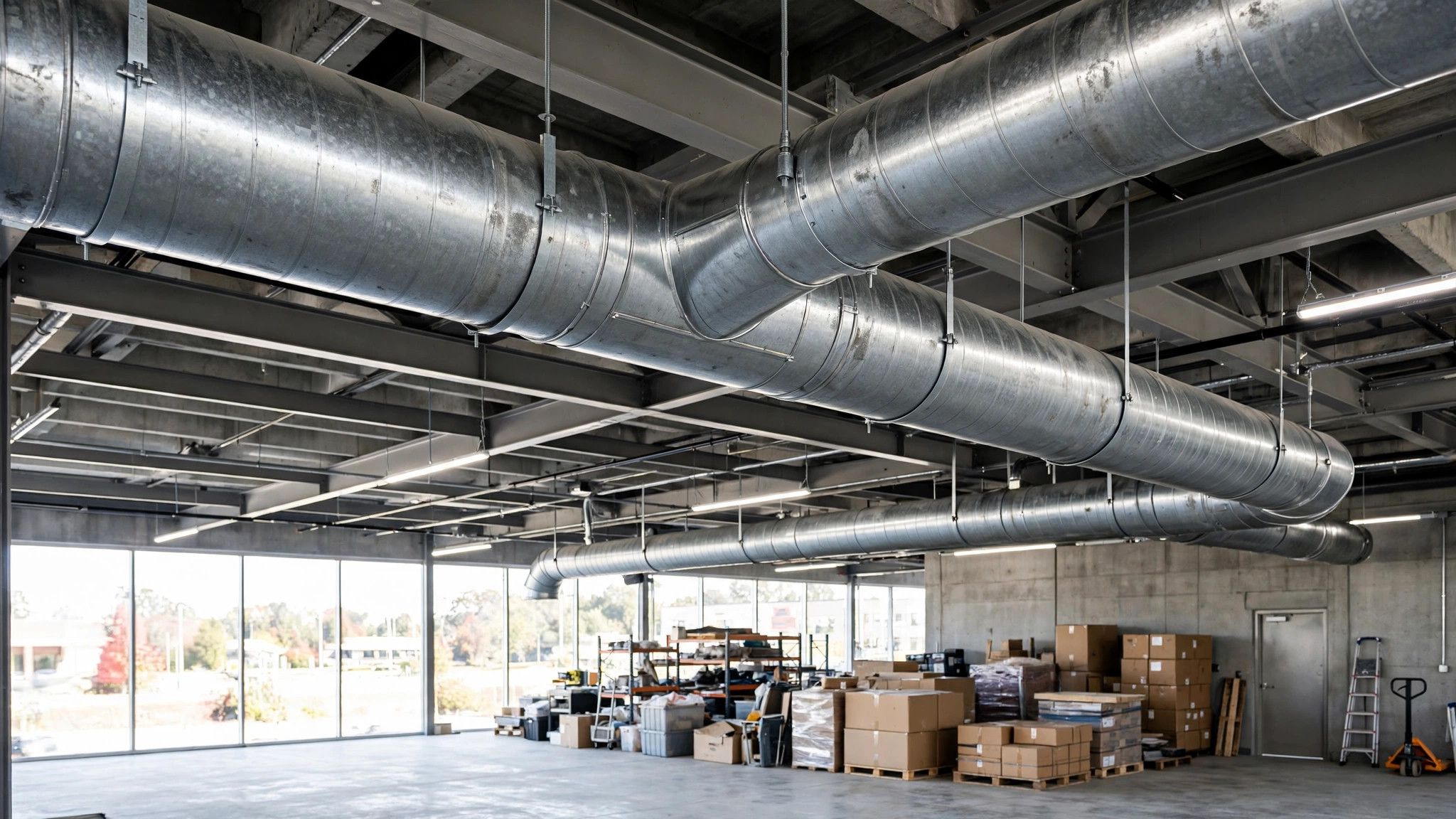
A duct hvac system moves heated and cooled air from your HVAC equipment to every room in the building. The ducts are the lungs of the system. Even the best furnace or air conditioner cannot do its job through bad ducts.
Commercial buildings depend on duct hvac networks that run through ceilings, walls, and rooftops. This guide explains duct types, sizing, sealing, and maintenance in plain language.
What a Duct HVAC System Includes
A duct hvac network has more parts than the metal tubes you see. Each part has a job in moving air quietly and evenly.
Supply ducts carry conditioned air from the unit to the rooms. They branch from large trunks into smaller runs. Each run ends at a diffuser or grille that spreads air into the space.
Return ducts pull room air back to the unit. They keep pressure balanced so doors close normally and air keeps moving. Undersized returns choke the whole system.
Dampers control flow. Manual dampers balance the system at startup. Motorized dampers open and close with zones or schedules. They let one unit serve areas with different needs.
Insulation wraps the ducts. It stops heat gain in cooling season and heat loss in heating season. It also quiets air noise. Uninsulated ducts in hot attics or cold plenums waste real money.
Grilles, diffusers, and registers are the visible ends. They shape airflow into the room. Adjustable models let you fine-tune throw and spread. Painted-shut grilles are a common cause of comfort complaints.
Types of Duct HVAC Materials
Duct hvac runs use several materials. Each suits different parts of a commercial building.
Sheet metal is the standard. Galvanized steel ducts last decades, handle high pressure, and resist damage. They cost more to fabricate and install but need the least maintenance.
Flexible duct is cheap and fast. It snakes around obstacles without fittings. But it kinks easily, sags between supports, and costs more in energy when crushed. Use it only for short final runs.
Fiberglass duct board insulates itself. It cuts noise well and installs fast. But its inner surface can collect dust and grow mold if it gets wet. Many owners avoid it in humid climates.
Spiral round duct shows up in open ceilings. It looks clean, moves air efficiently, and needs fewer supports. Restaurants and retail stores often leave it exposed as a design choice.
Fabric ducts are a newer option. They hang from ceilings and diffuse air through the fabric surface. They suit gyms, pools, and food plants where even airflow and washability matter.
Duct HVAC Sizing Basics
Sizing a duct hvac network starts with airflow. Each room needs a set number of cubic feet per minute based on its heating and cooling load. The load calculation drives everything.
Trunk ducts carry the most air and run the largest. Branch ducts split off smaller. The design tapers sizes as air peels off, keeping airspeed steady. Steady speed means quiet operation and even delivery.
Friction matters. Every foot of duct and every fitting adds resistance. Long runs and sharp turns need larger ducts to push the same air. Good designers keep runs short and turns gentle.
Static pressure is the system’s blood pressure. Too high means the blower strains and rooms starve. Too low means wasted blower capacity. A test and balance contractor measures and adjusts pressure at startup.
Oversized ducts waste money and space. Undersized ducts whistle, starve rooms, and wear out blowers. Always size from the load calculation, never from habit. Poor sizing shows up in comfort complaints for the life of the building.
Duct HVAC Leaks and Sealing
Leaky ducts are an energy thief. Studies by the U.S. Department of Energy show duct leaks can waste a large share of heating and cooling energy. Learn more at https://www.energy.gov/energysaver/ducts.
A duct hvac network leaks at joints, seams, and connections. Old duct tape dries out and fails. Screws loosen with vibration. Sections pull apart over years of thermal movement.
Signs of leaks are easy to spot. Some rooms never reach temperature. Energy bills run high. Ducts in unconditioned spaces sweat or grow mold. Dust streaks near joints mark air escaping.
Sealing fixes it. Mastic sealant painted over joints lasts for years. Foil tape rated for ducts beats old cloth tape. Aeroseal, a process that seals from inside, reaches leaks no crew can touch.
Insulation comes after sealing. Seal first, then insulate. Insulating leaky ducts just hides the waste. A sealed and insulated duct hvac system delivers the air you paid to condition.
Test after the work. A duct leakage test proves the improvement. Ask for before and after numbers in writing. Good contractors welcome the test because it proves their work.
Duct HVAC Maintenance Checklist
A duct hvac network needs regular attention. Add these tasks to your maintenance plan.
- Inspect visible ducts twice a year for damage, sagging, and disconnected joints.
- Check flexible duct runs for kinks, crushing, and torn outer jackets.
- Look for water stains that signal roof leaks dripping onto ducts.
- Verify dampers move freely and sit in the right position.
- Clean grilles and diffusers so airflow stays unblocked.
- Check insulation for gaps, compression, and moisture damage.
- Listen for whistling that signals leaks or restrictions.
- Confirm all access panels are closed and sealed.
Schedule professional duct inspection every few years. Pros use cameras to see inside long runs. They catch mold, debris, and damage you cannot see from outside. Pair duct care with a commercial hvac maintenance checklist for full system health.
ASHRAE publishes duct design and construction standards used across the industry. Their guidance shapes commercial practice nationwide. See https://www.ashrae.org/ for details.
Duct Noise Problems
A quiet duct system is a designed system, not a lucky one. Noise comes from airspeed. Push air too fast through small ducts and it roars. Size ducts right and the system whispers.
Rattling means loose parts. Hangers loosen with vibration. Access panels buzz when their latches wear. A tech with a screwdriver fixes most rattles in minutes.
Booming on startup points to pressure. Undersized returns or closed dampers make the blower fight. The duct walls flex and pop. Fix the pressure problem and the booming stops.
Humming near the unit is normal. Humming in distant rooms is not. Sound travels through rigid ducts like a speaker wire. Lined ducts or sound traps break the path. Bedrooms, offices, and clinics deserve the extra quiet.
Ducts and Building Renovations
Renovations change loads, and loads change ducts. A duct hvac network designed for offices struggles when the space becomes a restaurant. New equipment heat and new exhaust needs demand new airflow.
Plan ducts early in the renovation. Moving walls is cheap compared to moving ducts later. Show the mechanical contractor the final floor plan before framing starts.
Old buildings hide surprises. Ducts run where no drawing shows. Asbestos insulation wraps some old ducts and needs licensed removal. Budget a contingency for what the ceiling hides.
Balance the system after the work. New walls and new grilles change every pressure in the network. A test and balance contractor measures each outlet and sets dampers right. Skip this step and comfort complaints follow the renovation for years.
FAQ About Duct HVAC
How often should duct hvac systems be cleaned?
Clean when inspection shows real buildup, mold, or pests. Most commercial systems need cleaning every three to five years. Buildings with heavy dust, renovations, or smoking need it more often.
Can a duct hvac system make people sick?
Dirty ducts can spread dust and mold spores. Wet insulation grows mold. But most indoor air problems come from poor filtration and ventilation, not the ducts alone. Fix the source, then clean.
What does duct hvac sealing cost?
It depends on access and leak severity. Sealing accessible ducts in open ceilings costs less. Sealing buried ducts in walls costs more. Aeroseal pricing runs by system size. Get quotes with before and after leakage tests.
Should I replace or repair old duct hvac runs?
Repair when the ducts are sound but leaky or poorly insulated. Replace when they are crushed, rusted, moldy inside, or badly undersized. A pro inspection with camera footage makes the call clear.
Does a duct hvac system need insulation?
Yes, wherever ducts run through unconditioned spaces. Supply ducts need it most. Return ducts benefit too. Insulation R-value should meet local energy code. Uninsulated ducts waste energy every hour they run.
Next Steps for Building Owners
Walk your building and look at every visible duct run. Note damage, sagging flex, and disconnected joints. Book a professional duct inspection with leakage testing. Seal and insulate what the test finds, then schedule regular checks. Your commercial ac maintenance plan should include duct tasks so nothing gets forgotten. Good ducts are invisible when they work, and they make every dollar of heating and cooling count. Give them the attention they deserve. Your comfort depends on it. Breathe easy and stay comfortable.



