
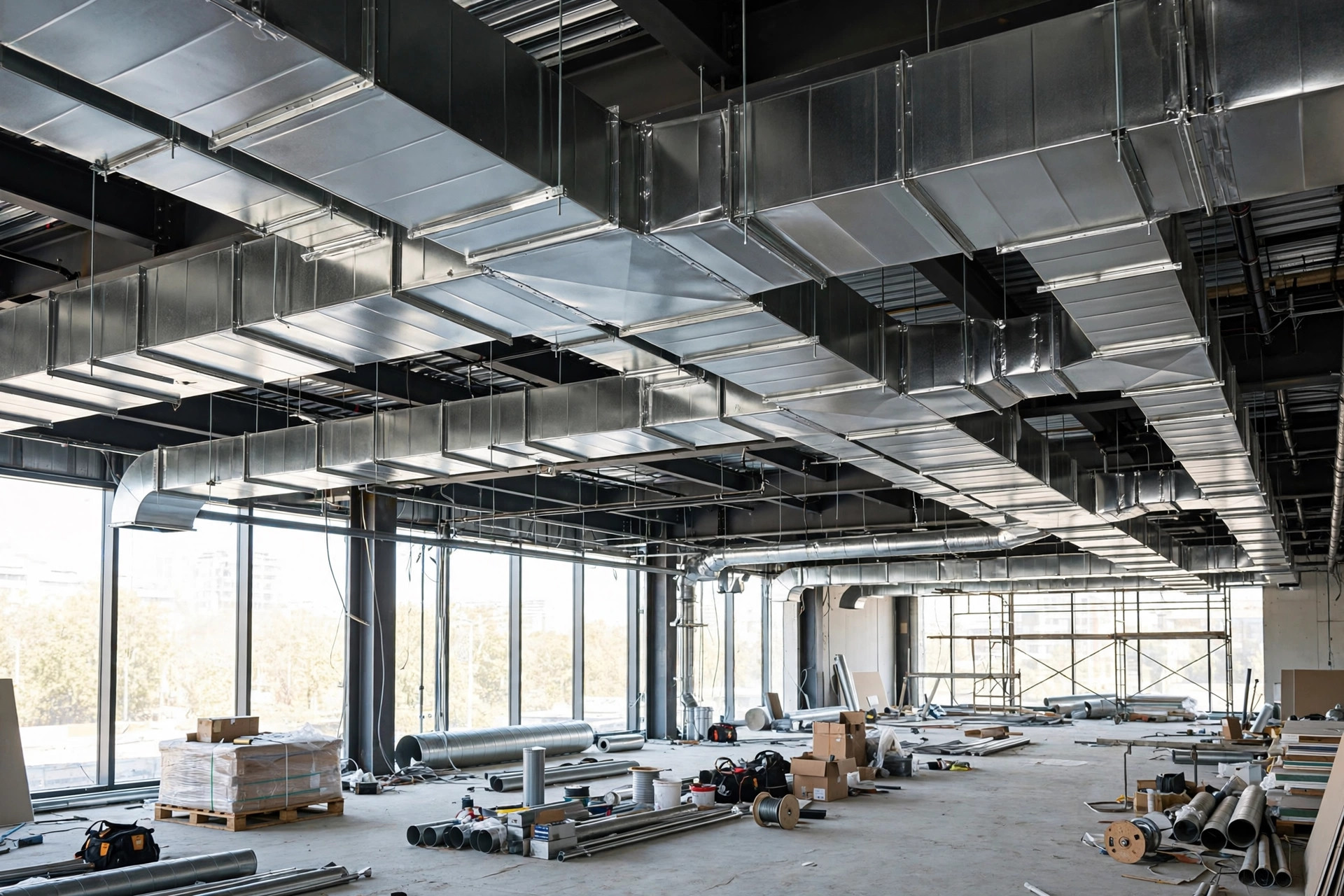
Ductwork is the hidden highway that carries heated and cooled air through a commercial building. When ducts leak, collapse, or corrode, comfort drops and energy bills climb. At some point patching no longer works, and full replacement is the answer. Understanding ductwork replacement cost helps you budget wisely and spot a fair quote.
This guide explains what drives the price, typical cost factors, and how to decide between repair and replacement. You will also learn how to choose a contractor and what questions to ask before signing.
What Commercial Ductwork Does
Ductwork moves conditioned air from HVAC equipment to every room. Supply ducts carry cooled or heated air out. Return ducts bring room air back to be reconditioned. The system must be sealed and sized right to work well.
In commercial buildings, ducts run above ceilings, through shafts, and across rooftops. They are larger and more complex than home ducts. A warehouse, office, and restaurant each need different duct designs. Poor ductwork wastes a large share of the energy the HVAC system uses.
Duct materials include galvanized sheet metal, aluminum, and flexible duct. Sheet metal lasts longest and costs most. Flexible duct is cheap and easy to install but damages easily. Fiberglass duct board insulates well but can break down over time.
Signs Your Ductwork Needs Replacement
Age is the first sign. Commercial ductwork lasts 20 to 25 years in good conditions. Older systems with original ducts in an aging building are candidates for replacement.
Poor airflow is another sign. Rooms that never get comfortable despite a working HVAC unit often have crushed, disconnected, or undersized ducts. High energy bills with no other explanation point to leaking ducts dumping conditioned air into ceiling spaces.
Visible damage tells the story too. Rusted metal, torn flexible duct, collapsed sections, and mold inside ducts all mean replacement time. Musty smells from vents suggest moisture problems in the ductwork. If repairs keep failing, the system is telling you it is done, and it is time to get serious about ductwork replacement cost.
7 Factors That Set ductwork replacement cost
Every building is different, so ductwork replacement cost varies widely. Use this checklist to understand quotes.
- Total duct length and size. More linear feet and larger diameters mean more material and labor.
- Duct material. Sheet metal costs more than flexible duct or duct board but lasts longer.
- Building access. Tight ceilings, occupied spaces, and multi-story runs slow the work and raise labor cost.
- System complexity. More zones, branches, and fittings mean more fabrication time.
- Insulation needs. Insulated ducts cost more but cut energy loss, especially in unconditioned spaces.
- Demolition and disposal. Removing old ducts, especially asbestos-containing materials, adds cost and requires specialists.
- Permits and testing. Code compliance, duct leakage testing, and inspections add to the total.
Get itemized quotes that separate materials, labor, and extras. That is the only way to compare bids on ductwork replacement cost fairly.
Typical Price Ranges
Small commercial spaces with simple duct runs cost the least. Expect a few thousand dollars for straightforward jobs. Mid-size offices and retail spaces with moderate complexity run higher. Large buildings with extensive duct networks can reach well into the five figures.
Material choice moves the number a lot. Flexible duct systems cost less up front. Sheet metal systems cost more but last decades longer. Insulation adds cost per foot but pays back in energy savings. When you compare ductwork replacement cost across bids, make sure the material specs match.
Labor is often the biggest piece of ductwork replacement cost. Commercial sheet metal work is skilled labor. Complex routing through finished spaces takes time. Occupied buildings may need night or weekend work, which costs more.
Repair or Replace: When ductwork replacement cost Is Justified
Small isolated problems favor repair. A disconnected joint, a crushed flexible run, or a single rusted section can be fixed for a fraction of replacement cost. Sealing accessible leaks with mastic is cheap and effective.
System-wide problems favor replacement. If ducts are undersized for the building, no repair fixes that. If corrosion or mold affects large sections, replacement is safer. If the HVAC system is being replaced too, new ducts sized to the new equipment make sense, and bundling the work can lower the total ductwork replacement cost.
Consider energy impact. Leaky old ducts can waste 20 to 30 percent of conditioned air. The Department of Energy explains duct efficiency at https://www.energy.gov/. New sealed ducts can cut that waste sharply, which improves the payback math on ductwork replacement cost.
Choosing Duct Materials
Galvanized sheet metal is the commercial standard. It is durable, easy to clean, and handles high air volumes. It costs more to fabricate and install but lasts 25 years or more with basic care.
Aluminum ducts resist corrosion and weigh less, which helps on rooftops. They cost more than galvanized steel. Flexible duct is cheap and fast but should be limited to short runs. Long flexible runs sag, kink, and restrict airflow.
Fiberglass duct board provides built-in insulation and quieter operation. It can harbor mold if it gets wet and is harder to clean. Your contractor should recommend materials based on your building use and budget.
What to Expect During the Project
A ductwork replacement project starts with a survey. The contractor measures existing ducts, checks access, and designs the new layout. Good design matters as much as good installation. Poorly designed ducts perform poorly no matter the material, and they inflate the ductwork replacement cost without adding value.
Installation disrupts the space. Ceiling tiles come down, dust spreads, and noise is constant. Plan the work for off-hours or low-occupancy periods. Protect inventory and equipment from dust.
Testing comes last. The contractor should test for air leakage and verify airflow to each zone. Ask for the test results in writing. Proper commissioning proves the ductwork replacement cost bought real performance.
The American Society of Heating, Refrigerating and Air-Conditioning Engineers publishes duct design standards at https://www.ashrae.org/. Safety during installation follows OSHA rules at https://www.osha.gov/.
For related reading, see our guide to commercial HVAC repair cost for budgeting context. If comfort problems persist, read about commercial AC not cooling. For ongoing care, see commercial HVAC service.
Ductwork Replacement and Indoor Air Quality
Old ductwork affects the air people breathe. Dust, mold, and debris build up inside ducts over decades. Gaps and leaks pull in dirty air from ceiling spaces and wall cavities. That dirty air then circulates through occupied rooms. Employees with allergies notice first.
Replacement gives you a clean start. New sealed ducts keep contaminants out of the airstream. If indoor air quality matters in your building, ask the contractor about smooth interior linings that resist dust buildup. Consider upgrading filtration at the same time. Better filters catch more particles before they enter the ductwork.
Moisture control matters too. Ducts in humid spaces can grow mold inside. Insulated ducts with proper vapor barriers prevent condensation on cold duct surfaces. During replacement, make sure insulation is continuous with no gaps. A small gap becomes a cold spot where water condenses and mold grows.
How to Read a Ductwork Quote
A good quote for ductwork replacement cost tells a clear story. It should list the total linear feet by duct size, the material type, insulation R-value, and the number of fittings, dampers, and grilles. Labor should be separated from materials. Demolition, disposal, permits, and testing should each appear as line items.
Watch for vague quotes. A single lump sum with no breakdown hides shortcuts. A quote that does not mention leakage testing or airflow balancing is incomplete. A quote far below the others usually means thinner material, skipped insulation, or unlicensed labor. Any ductwork replacement cost that looks too good to be true probably is.
Ask each bidder the same questions. What material and gauge are you using? How will you seal the joints? Will you test for leakage when done? What is the warranty on workmanship? Compare answers side by side. The best value in ductwork replacement cost is rarely the lowest number on the page.
Frequently Asked Questions
How much does ductwork replacement cost?
It varies by building size, material, and complexity. Small simple jobs run a few thousand dollars. Large complex commercial systems can reach five figures. Itemized quotes are the only reliable way to know your number.
How long does ductwork replacement take?
Small projects take a few days. Large buildings can take weeks. Occupied spaces slow the work. Your contractor should give a written schedule before starting.
Can I replace ductwork in sections?
Yes, phased replacement works when budget is tight. Start with the worst sections. Make sure each phase is designed to work with the rest of the system so you do not create new problems.
Does new ductwork lower energy bills?
Usually yes. Old leaky ducts waste a large share of conditioned air. New sealed and insulated ducts cut that waste. Savings depend on how bad the old system was.
Should ducts be replaced with the HVAC unit?
Often yes. New equipment sized to old undersized ducts performs poorly. Doing both together ensures matched design. It also avoids paying for ceiling access twice.
Next Steps
Have your ductwork inspected if the building is over 20 years old or comfort problems persist. Get three itemized quotes for any ductwork replacement cost proposal. Compare materials, design, and testing plans, not just price. Good ducts are invisible when they work and expensive when they do not.



