
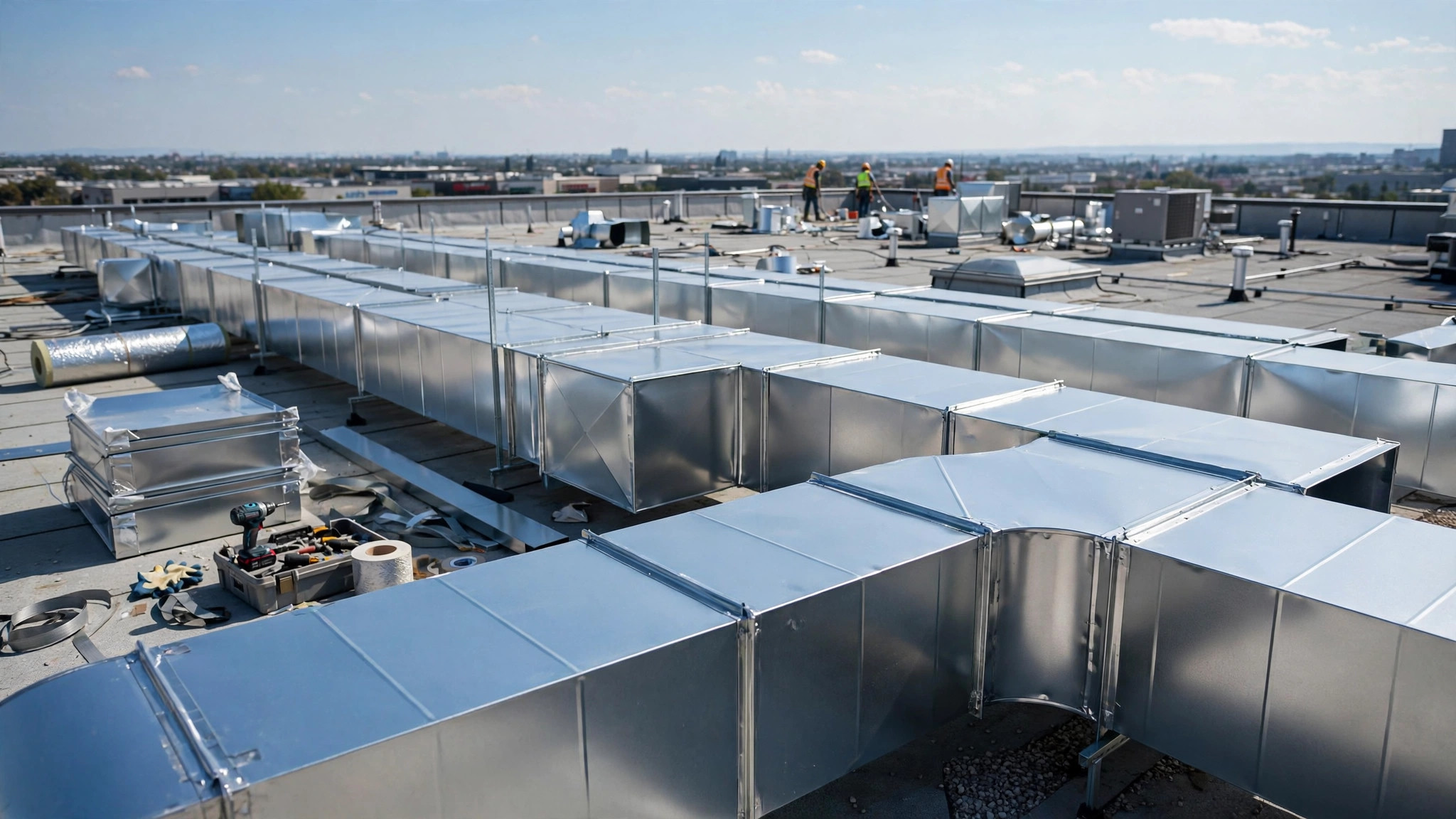
Ductwork is the hidden highway of your HVAC system. It carries heated and cooled air to every room in the building. When ducts work, nobody thinks about them. When they fail, comfort drops, bills climb, and air quality suffers. Old, leaky, or damaged ducts waste a huge share of the energy your system produces. Knowing the signs of failure helps you plan a ductwork replacement before the problems cost you more than the fix. This guide covers eight warning signs, what the job involves, and what it costs.
8 Signs You Need Ductwork Replacement
1. Uneven temperatures across zones. One area is freezing while another is stuffy. Leaky or crushed ducts starve some zones of air. If balancing and damper adjustments do not fix it, the ducts themselves are the problem. Persistent hot and cold spots are the classic sign.
2. Rising energy bills. Leaky ducts dump conditioned air into ceilings and walls. The system runs longer to make up the loss. Studies have found duct leakage wastes a large share of HVAC energy in commercial buildings. If bills climb with no change in rates or hours, suspect the ducts.
3. Weak airflow at registers. Vents barely push air even though the unit runs fine. Ducts may be crushed, disconnected, or blocked. In older buildings, ducts sometimes collapse internally where you cannot see. A airflow test confirms what eyes cannot.
4. Visible damage. Dents, crushed sections, disconnected joints, and rusted metal are all visible during a ceiling or rooftop check. Damaged ducts leak air at every break. Small damage can be sealed. Widespread damage needs ductwork replacement.
5. Old age. Ductwork lasts decades, but not forever. Systems past 25 to 30 years often have failing seals, corroded metal, and outdated design. If your ducts are that old and problems keep appearing, replacement beats another round of patches.
6. Dust and debris blowing from vents. Dirty ducts shed dust into the space. Gaps in the ductwork pull in dust from ceilings and walls. If cleaning does not solve it, the ducts are too far gone. Replacement gives you a clean start.
7. Musty or stale smells. Mold grows in damp ducts. Musty air from the vents means moisture is getting in, usually through leaks or poor insulation. Mold in ductwork is a health issue. Do not just mask the smell. Fix the cause, which often means ductwork replacement.
8. Noisy ducts. Banging, popping, and whistling signal problems. Loose joints bang. Undersized ducts whistle. Popping happens when thin metal flexes under pressure. Some noise can be fixed with sealing and supports. Widespread noise points to a system that needs replacing.
What Ductwork Replacement Involves
The job starts with an assessment. The contractor inspects the existing ducts, tests for leakage, and reviews the HVAC design. Sometimes the duct layout itself is the problem: poor design from decades ago that never delivered even airflow. A good ductwork replacement fixes the design, not just the metal.
Next comes the plan. The contractor sizes new ducts for the actual loads, plans the routes, and schedules the work to limit disruption. In occupied buildings, work often happens in phases or off-hours. The plan should state what gets replaced, what gets sealed and kept, and how the building stays comfortable during the work.
Then the old ducts come out and the new ones go in. New ductwork is fabricated to fit, hung with proper supports, sealed at every joint, and insulated where it runs through unconditioned space. Sealing matters enormously. Mastic or approved tape at every joint stops the leaks that plagued the old system. The U.S. Department of Energy highlights duct sealing as one of the most cost-effective efficiency upgrades.
Finally, the system is tested and balanced. Airflow gets measured at every register. Dampers get set. The contractor should provide a test report showing the new ductwork meets the design. The test report proves the ductwork replacement worked. Do not accept the job without it.
Ductwork Replacement Cost Factors
Size of the system is the biggest driver. More square footage means more ductwork. Complexity adds cost: many zones, tight ceilings, and long runs take more labor. Accessibility matters a lot. Open ceilings are easy. Finished spaces with no access panels are slow and costly.
Material choices affect price. Sheet metal is the standard for commercial work. Flexible duct costs less but suits only short runs. Insulation adds cost but pays back in energy savings. Do not skip insulation on ducts in unconditioned spaces. Uninsulated ducts sweat, lose energy, and grow mold.
Phased work costs more than a straight run. Working nights and weekends to avoid disrupting business adds labor premiums. But shutdowns cost money too. Compare the premium against lost business and pick the cheaper path. Get the schedule and the phasing plan in writing before work starts.
Asbestos is a special factor in older buildings. Old duct insulation may contain it. Testing is cheap. Removal by licensed abatement crews is not, but it is required by law. Never let a contractor disturb suspect material without testing. The health risk and legal risk are both severe.
Repair or Replace: Making the Call
Small, isolated damage can be repaired. A crushed section here, a disconnected joint there: a good crew seals and fixes these fast. Sealing existing ducts with mastic is cost-effective when the ducts are basically sound. A duct leakage test tells you how bad the losses are.
Replacement wins when damage is widespread. If the test shows heavy leakage across the system, sealing alone will not fix it. If the layout is bad, with long runs and sharp turns strangling airflow, new design beats patching old mistakes. If the ducts are past their useful life, stop feeding them repair money. Do not keep patching when ductwork replacement is clearly due.
Age plus efficiency is the tiebreaker. New ductwork, properly sized, sealed, and insulated, can cut HVAC energy use sharply. In buildings with long operating hours, the savings pay back the ductwork replacement faster than owners expect. Ask the contractor for an energy savings estimate with the bid.
Choosing a Ductwork Replacement Contractor
Pick a contractor with commercial duct experience, not just residential. Commercial systems are bigger, the codes are stricter, and the coordination is harder. Ask how many commercial duct jobs they have done. Ask for references from building owners and call them.
Check licensing and insurance. Ductwork touches the HVAC system and the building structure. The contractor should carry proper coverage. Workers in ceilings and on roofs need fall protection per OSHA rules. Ask about the safety plan.
Get detailed bids. Each bid should state the duct material, sizes, sealing method, insulation R-value, and the testing to be done at completion. Vague bids lead to arguments. Compare scope line by line, not just the bottom number. The cheapest bid that skips sealing and testing is no bargain.
For related HVAC contractor guidance, see how to find a commercial hvac contractor and hvac commercial contractors.
FAQ
How long does ductwork replacement take?
Small jobs take days. Large commercial jobs take weeks. Phased work in occupied buildings takes longer. Ask for a schedule with milestones. Weather rarely affects indoor ductwork, but equipment deliveries can.
Can the building stay open during ductwork replacement?
Usually yes. Work is phased by zone or done off-hours. Temporary cooling or heating may be needed for the active zone. Tell the contractor your operating hours upfront and put the work windows in the contract.
How much energy does bad ductwork waste?
Leaky ducts can waste a large share of heating and cooling energy. The exact amount depends on leakage rate and system hours. A duct leakage test before and after the job quantifies the improvement. Most owners see a clear drop in bills.
Should I clean or replace old ducts?
Cleaning helps when ducts are sound but dirty. It does not fix leaks, crushed sections, or bad design. If the ducts are old, leaky, or poorly laid out, ductwork replacement is the better investment. A pro assessment tells you which path fits.
What maintenance does new ductwork need?
Little. Inspect accessible sections yearly for damage. Change filters on schedule, since dirty filters raise duct pressure. Keep the area around rooftop ductwork clear. Sealed, insulated ducts mostly take care of themselves for decades.
Protecting Your New Ductwork
New ducts deserve a little protection. Keep filters changed so pressure stays normal. Do not let storage or new construction crush runs in ceiling spaces. When other trades work near ducts, remind them the ducts are not walkways or hangers. One crushed run undoes the sealing work you paid for. A quick look at accessible ductwork during each HVAC service visit keeps small damage from growing. Your ductwork replacement should serve quietly for decades. Give it the basic care it needs.
Next Steps
If your building shows any of the eight signs, get a duct leakage test and a professional assessment this month. Compare repair against ductwork replacement with real numbers, including energy savings. Hire a commercial duct contractor with solid references, get the scope in writing, and insist on testing at completion. Good ducts are invisible. That is exactly how they should stay.



