
A roof is the most abused part of any commercial building. Sun, rain, wind, hail, foot traffic, and rooftop equipment all attack it every day. Choosing durable roofing materials is how owners fight back. The right material lasts decades with basic care. The wrong one leaks in year five and eats your maintenance budget.
This guide compares eight durable roofing materials used on commercial buildings across the United States. You will see how long each lasts, what it costs, where it shines, and where it falls short. Pick with numbers, not sales talk.
Why Durable Roofing Materials Matter
A commercial roof replacement is one of the biggest checks a building owner writes. Prices run from five to fifteen dollars per square foot installed, and a mid-size building can top six figures fast. Durable roofing materials stretch that investment over more years, which cuts the cost per year of service.
Durability is not just lifespan. It is puncture resistance, wind uplift rating, UV stability, and how well the material handles ponding water and foot traffic. A membrane that lasts thirty years in a lab but tears when a tech drops a tool is not durable in the real world. Ask about all of these before you choose.
The National Roofing Contractors Association publishes guidance on selecting commercial roof systems. Their resources at https://www.nrca.net/ are worth a read before you meet contractors. Also note that the roof and the rooftop HVAC often share the warranty picture, so coordinate any equipment work with your roof plan.
8 Durable Roofing Materials Compared
Here are the eight durable roofing materials most common on American commercial buildings, from single-ply membranes to old school built-up systems.
1. TPO Membrane
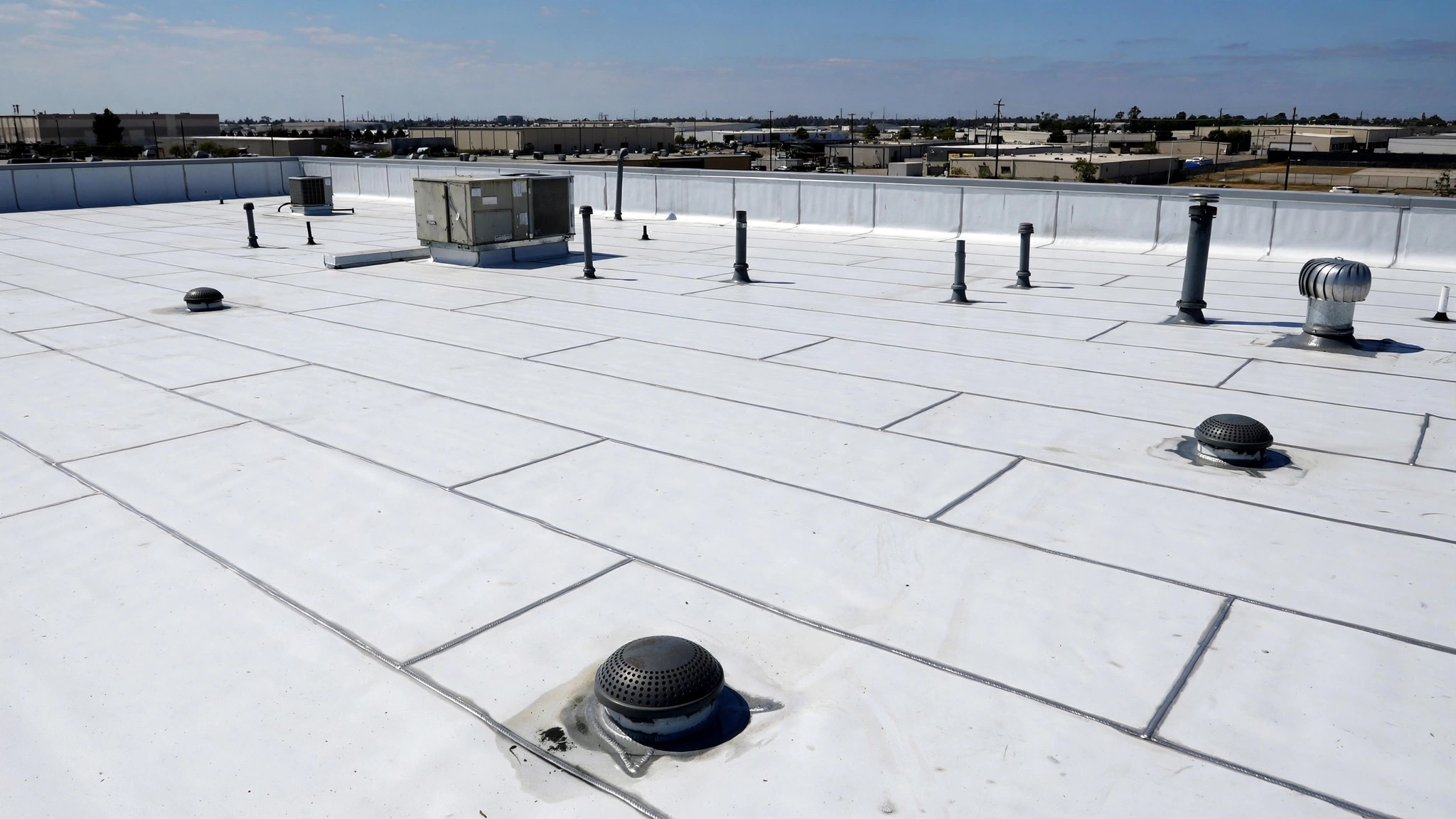
TPO, or thermoplastic polyolefin, is the most installed commercial membrane today. It is a single-ply white sheet, heat welded at the seams. Lifespan runs twenty to thirty years. Installed cost runs five to nine dollars per square foot. Its white surface reflects sun and cuts cooling costs, which is why it dominates in hot climates. Weak points include seam quality, which depends heavily on installer skill, and thinner sheets that puncture more easily. Among durable roofing materials, TPO wins on value for most low slope buildings. See our repair guide at https://commercialguides.com/tpo-roof-repair/.
2. EPDM Rubber
EPDM is a black synthetic rubber membrane with a track record going back decades. Lifespan runs twenty five to thirty five years, among the longest for single-ply. Installed cost runs four to eight dollars per square foot. It handles cold, hail, and building movement well. The black surface absorbs heat, which helps in northern climates but raises cooling costs in the south. White coated versions exist. Seams are taped or glued rather than welded, so seam care matters. For a proven long life pick among durable roofing materials, EPDM is hard to beat. See https://commercialguides.com/epdm-roof-repair/.
3. Standing Seam Metal
Metal roofing with raised seams is one of the most durable roofing materials made. Lifespan runs forty to sixty years, sometimes more. Installed cost runs eight to sixteen dollars per square foot. It sheds water fast, resists fire and hail, and needs little maintenance. It costs more upfront and needs skilled installers. On sloped commercial roofs, warehouses, and retail, it is a lifetime roof. See https://commercialguides.com/standing-seam-metal-roof-maintenance/.
4. Built-Up Roofing (BUR)
BUR is the classic tar and gravel roof: layers of felt and bitumen topped with gravel or a cap sheet. Lifespan runs twenty to thirty years. Installed cost runs five to ten dollars per square foot. The layered build resists punctures and foot traffic better than most single-ply. It is heavy, so the structure must handle the load, and installation smells and takes longer. For buildings that already carry BUR, staying with it is often smart.
5. Modified Bitumen
Modified bitumen, or mod bit, is asphalt roofing upgraded with polymers for flexibility. It comes in rolls, torched or self adhered. Lifespan runs fifteen to twenty five years. Installed cost runs four to eight dollars per square foot. It handles foot traffic well and repairs easily with a torch and patch. Among durable roofing materials it is the budget friendly workhorse for low slope roofs.
6. PVC Membrane
PVC is a single-ply membrane similar to TPO but with stronger chemical resistance. Lifespan runs twenty to thirty years. Installed cost runs six to ten dollars per square foot. Restaurants and industrial buildings that vent grease or chemicals favor PVC because it resists what eats other membranes. It costs more than TPO, so match the material to the exposure.
7. Spray Polyurethane Foam (SPF)
SPF is sprayed on as a liquid and expands into a seamless foam, then coated for UV protection. Lifespan runs twenty to thirty years with recoating. Installed cost runs four to eight dollars per square foot. It adds insulation value and seals every seam and penetration in one pass. The coating must be maintained, usually recoated every ten to fifteen years. Where insulation and waterproofing must happen together, SPF earns its place among durable roofing materials.
8. Stone Coated Steel and Concrete Tile
For sloped commercial roofs with visible pitches, stone coated steel panels and concrete tile both last forty to fifty years. Installed cost runs nine to eighteen dollars per square foot. They look sharp on retail and hospitality buildings and shrug off weather. Weight and cost limit them to the right structures.
Cost Factors When Choosing Durable Roofing Materials
Material is only part of the price. These factors move any quote.
Tear-off versus overlay changes cost fast. Tearing off the old roof adds one to three dollars per square foot but lets the contractor inspect the deck. Overlaying saves money now but can trap problems and may void warranties.
Insulation adds cost and value. Most codes now demand minimum R-values. Adding tapered insulation to fix ponding water costs more but solves drainage for the life of the roof.
Roof penetrations add labor. Every vent, drain, skylight, and HVAC curb needs flashing detail. Buildings crowded with rooftop equipment cost more per square foot than clean open roofs.
Warranty length affects price. A twenty year manufacturer warranty costs more than a ten year one and demands stricter installation and inspection. Read what the warranty actually covers before you pay for the longer term.
Climate narrows the field. Hot southern roofs benefit from reflective white membranes, and ENERGY STAR lists certified cool roof products at https://www.energystar.gov/. Northern roofs face freeze thaw cycles where EPDM and metal shine. Match durable roofing materials to your weather, not to a national sales pitch.
Checklist: Buying Durable Roofing Materials
- Get a professional roof inspection first. Know the deck condition, moisture levels, and drainage before you pick a material.
- Ask for installed cost per square foot and cost per year of expected life. The cheapest bid is rarely the cheapest roof.
- Check wind and fire ratings. Ask for the specific ratings, not just “commercial grade.”
- Confirm installer certification. Most manufacturers require certified installers for full warranties.
- Plan for rooftop equipment. If HVAC units will be replaced during the roof life, add walkway pads and plan curb details now.
- Get the warranty in writing. Separate the manufacturer material warranty from the contractor workmanship warranty.
- Schedule maintenance. Even the most durable roofing materials need twice yearly inspections and prompt repairs. See https://commercialguides.com/commercial-roof-maintenance-checklist/.
Frequently Asked Questions
What are the most durable roofing materials for flat commercial roofs?
TPO, EPDM, PVC, built-up roofing, and modified bitumen lead for low slope buildings. EPDM and BUR have the longest proven track records. TPO leads on energy savings in hot climates.
How long do durable roofing materials last?
Single-ply membranes last twenty to thirty five years. Built-up and modified bitumen last fifteen to thirty years. Metal lasts forty to sixty years. Maintenance and installation quality move these numbers more than brand names.
Which durable roofing materials cost the least over time?
EPDM and TPO usually win on cost per year of service for flat roofs. Metal wins for sloped roofs because it can last twice as long as anything else.
Do white roofs really save energy?
Yes, in cooling dominated climates. Reflective membranes cut rooftop temperatures sharply and trim air conditioning loads. The Department of Energy explains cool roof benefits at https://www.energy.gov/.
Can I put a new roof over the old one?
Often yes, if the deck is sound and local code allows it. An overlay saves tear-off cost but adds weight and can hide deck damage. A moisture survey before overlaying is smart money.
Next Steps
Get your roof inspected and ask the inspector to rank two or three durable roofing materials for your specific building, climate, and budget. Get three line item bids on the same scope and warranty. Then pick the system with the lowest cost per year of expected service, not the lowest bid. Your roof protects everything under it. Choose like it matters, and revisit the choice each time a major repair comes up so the next roof decision is planned, not forced.



