
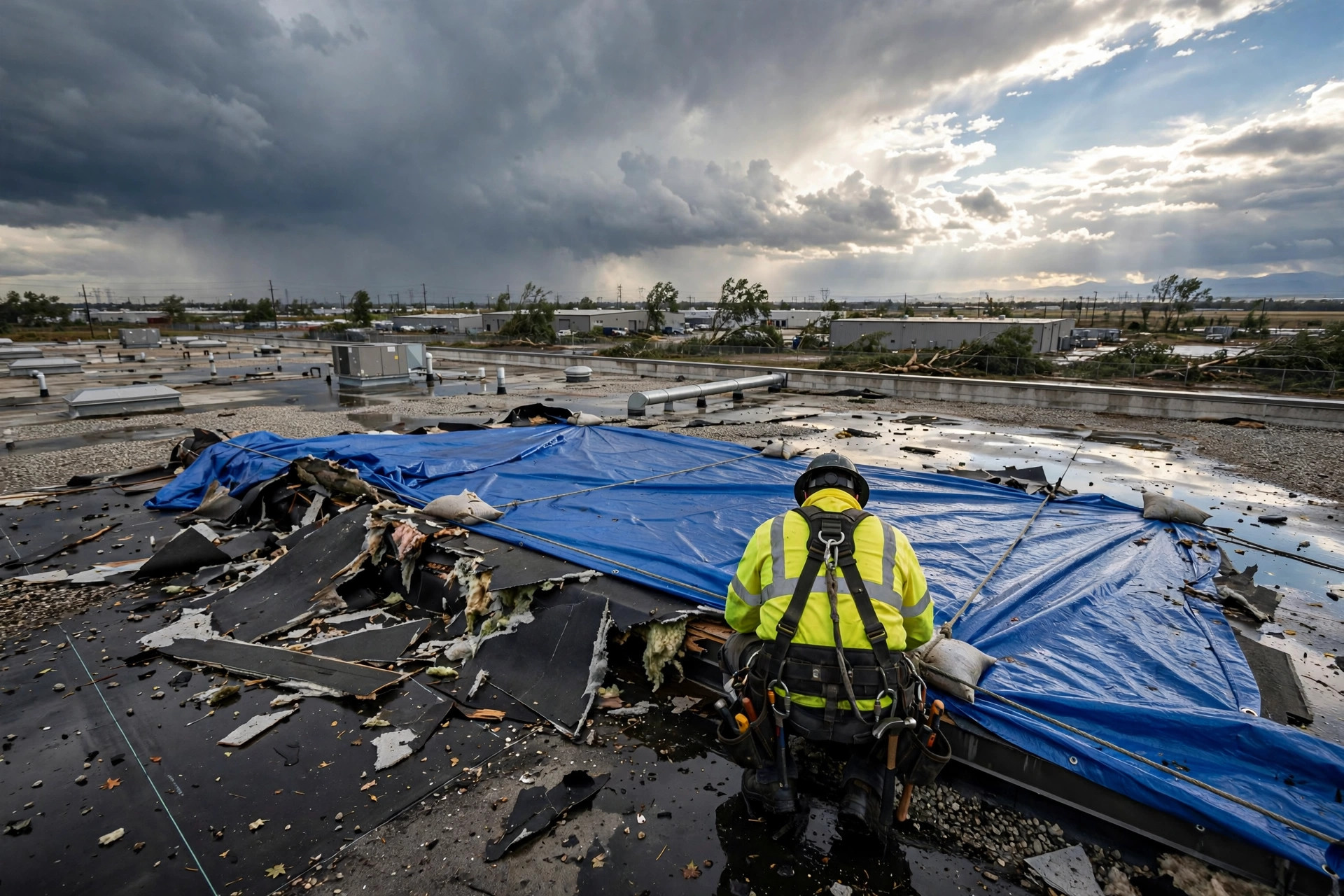
Emergency roofing is the fast-response service that stabilizes a damaged commercial roof after storms, accidents, or sudden failures. When wind tears off membrane, a tree limb punches through the surface, or a leak turns into a flood, there is no time to wait for a normal scheduling process. Emergency roofing crews come out quickly, stop the damage from spreading, and protect the building until permanent repairs can be made.
Every building owner should know what counts as a roofing emergency, what to do in the first minutes, and how emergency roofing services work. Quick action limits water damage, protects stock and equipment, and keeps insurance claims clean. It also shortens the downtime that costs businesses money every hour the building is impaired. This guide walks through the seven steps to take when disaster strikes, the cost factors, and answers to the questions owners ask most.
Step 1: Stay Safe and Assess from the Ground
Safety comes first. Do not climb onto a damaged roof in the dark, in high wind, or on a wet surface. Fall injuries are common after storms when owners rush to look. Federal safety rules from OSHA require fall protection on commercial roofs, and untrained staff should never go up.
Assess what you can see from the ground and from inside. Look for missing membrane sections, hanging debris, active water entry, and sagging ceilings. If a ceiling bulges with trapped water, keep people away from that area. Note everything you see for the contractor and the insurance company.
Step 2: Protect the Interior Right Away
While waiting for emergency roofing help, limit the damage inside. Move stock, papers, and equipment away from active leaks. Place buckets or bins under drips. Cover sensitive equipment with tarps or plastic sheeting.
If water is near electrical panels, outlets, or machinery, treat it as urgent. Shut off power to the affected area if it is safe to do so, and call an electrician if there is any doubt. Fast interior protection often saves more money than the roof repair itself.
Step 3: Call for Emergency Roofing Service
Call a roofing contractor that offers true emergency roofing response. Describe the damage clearly: what happened, where the water is entering, and how bad it looks. Ask when a crew can arrive and what they will do on the first visit.
If you have a maintenance agreement, call that contractor first. Agreement customers usually get priority dispatch. If not, call two or three firms to compare response times. During wide-area storm events, crews are stretched thin, so the earlier you call, the sooner help arrives. For storm-related repairs, see emergency commercial roof repair.
Step 4: Document Everything for Emergency Roofing Claims
Take photos and short videos of all damage, inside and out, before anything is moved or covered. Capture wide shots for context and close shots of the damage. Note the date and time of the event and of each photo.
Keep every receipt from the emergency roofing visit and from any interior protection work. Insurance claims go much smoother with complete records. Write down who you spoke with and what was promised. Good documentation is the difference between a fast claim and a long fight.
Step 5: Let the Crew Stabilize the Roof
The first emergency roofing visit focuses on stabilization, not permanent repair. Crews install tarps or temporary membranes over breached areas, seal active leaks, clear blocked drains, and remove loose debris that could cause more damage.
Temporary fixes are meant to hold until a full repair can be scheduled in dry weather. Do not mistake them for a lasting solution. Ask the crew what the temporary work covers and what still needs a permanent fix. Get the follow-up plan in writing before they leave.
Step 6: Get a Full Inspection After Emergency Roofing Stabilization
Once the building is protected, schedule a full inspection. Storm damage often hides beyond the obvious breach. The contractor should check the whole roof for lifted seams, punctures, damaged flashing, and wet insulation.
This inspection decides the real scope of work. It may reveal that a section needs replacement rather than repair. The findings also feed the insurance claim, so make sure the report is detailed and includes photos. For related guidance, see roofing emergency repairs.
Step 7: Plan the Permanent Repair
With the inspection done, get a written quote for the permanent fix. This may be a section repair or, if damage is wide, a larger restoration or replacement. Compare the quote against the insurance adjuster’s assessment.
Schedule the permanent work as soon as weather and materials allow. Temporary coverings have limited life. Leaving them too long invites the next storm to finish what the first one started. The National Roofing Contractors Association offers owner resources on storm response at NRCA.
Emergency Roofing Cost Factors
Use this checklist to understand emergency pricing.
- Response timing. Night, weekend, and holiday calls cost more than business-hour calls.
- Damage size. A small tarp job costs little. Stabilizing a large torn section costs far more.
- Roof access. Difficult access or dangerous conditions add labor time.
- Temporary materials. Tarps, temporary membranes, and emergency sealants are line items.
- Follow-up repair scope. The permanent fix is quoted separately and depends on the damage found.
- Storm demand. After wide-area storms, high demand can push prices up.
- Interior damage. Water damage to ceilings, stock, and equipment adds to the total loss.
What Counts as a Roofing Emergency
Not every leak needs emergency roofing. Call for emergency service when:
- Water is actively entering the building in volume.
- Storm damage has opened the roof surface.
- A ceiling is sagging or bulging with trapped water.
- Debris or a fallen object has pierced the roof.
- Wind has peeled back large membrane sections.
- Water threatens electrical systems or critical equipment.
Slow drips and old stains can usually wait for a scheduled visit. When in doubt, call and describe the situation in detail. A good contractor will tell you honestly whether it needs a crew tonight or can safely wait until morning without risking further damage.
Build an Emergency Roofing Plan Before Disaster Strikes
The best time to plan for emergency roofing is before anything goes wrong. A simple written plan saves precious hours when damage happens. Start by choosing a contractor with true emergency response and saving their number in the building’s emergency contacts. Make sure night staff and managers know where to find it.
Next, walk the building and note the shutoff points for water and power near the roof, the locations of drains and access hatches, and where tarps and buckets are stored. Keep a basic kit on hand: heavy tarps, plastic sheeting, buckets, and a camera for documentation. Review the insurance policy so you know what is covered and what the deductible is.
Finally, run the plan past the team once a year. A five-minute review keeps everyone sharp and ready to act. When a storm hits, the building with a plan gets stabilized fast while others scramble for help. That speed is worth real money in prevented damage.
Emergency Roofing FAQs
How fast can emergency roofing crews respond?
It depends on the contractor, the time of day, and storm demand. Good firms aim for same-day response for true emergencies. During major storm events, waits can stretch longer. Having a maintenance agreement usually moves you to the front of the line.
What does an emergency roofing visit include?
Stabilization: tarps or temporary membranes over breaches, sealing of active leaks, drain clearing, and debris removal. The crew should also document the damage and outline the permanent repair plan. Full repairs come later in dry conditions.
Will insurance cover emergency roofing?
Most commercial policies cover sudden storm damage and the emergency work needed to prevent further loss. They usually do not cover wear, neglect, or old leaks. Document everything and call your agent promptly to start the claim.
Can emergency roofing be done in the rain?
Temporary stabilization can be done in wet weather. Tarps and emergency sealants work when permanent repairs cannot. Full lasting repairs need dry surfaces to bond properly, so the crew will return for those when conditions allow.
How do I find a reliable emergency roofer before I need one?
Research now, not during a crisis. Ask your maintenance contractor about emergency coverage. Check licenses, insurance, and reviews. Save the emergency number where building staff can find it. Preparation turns a crisis into a managed event.
Next Steps for Building Owners
Emergency roofing is about speed and judgment. Know what counts as an emergency, protect the interior first, call early, and document everything. Line up a contractor with true emergency response before disaster strikes. When it does, you will have a plan instead of a panic. The owners who prepare calmly are the ones who recover fastest, with the smallest bills and the least disruption to their business.



