
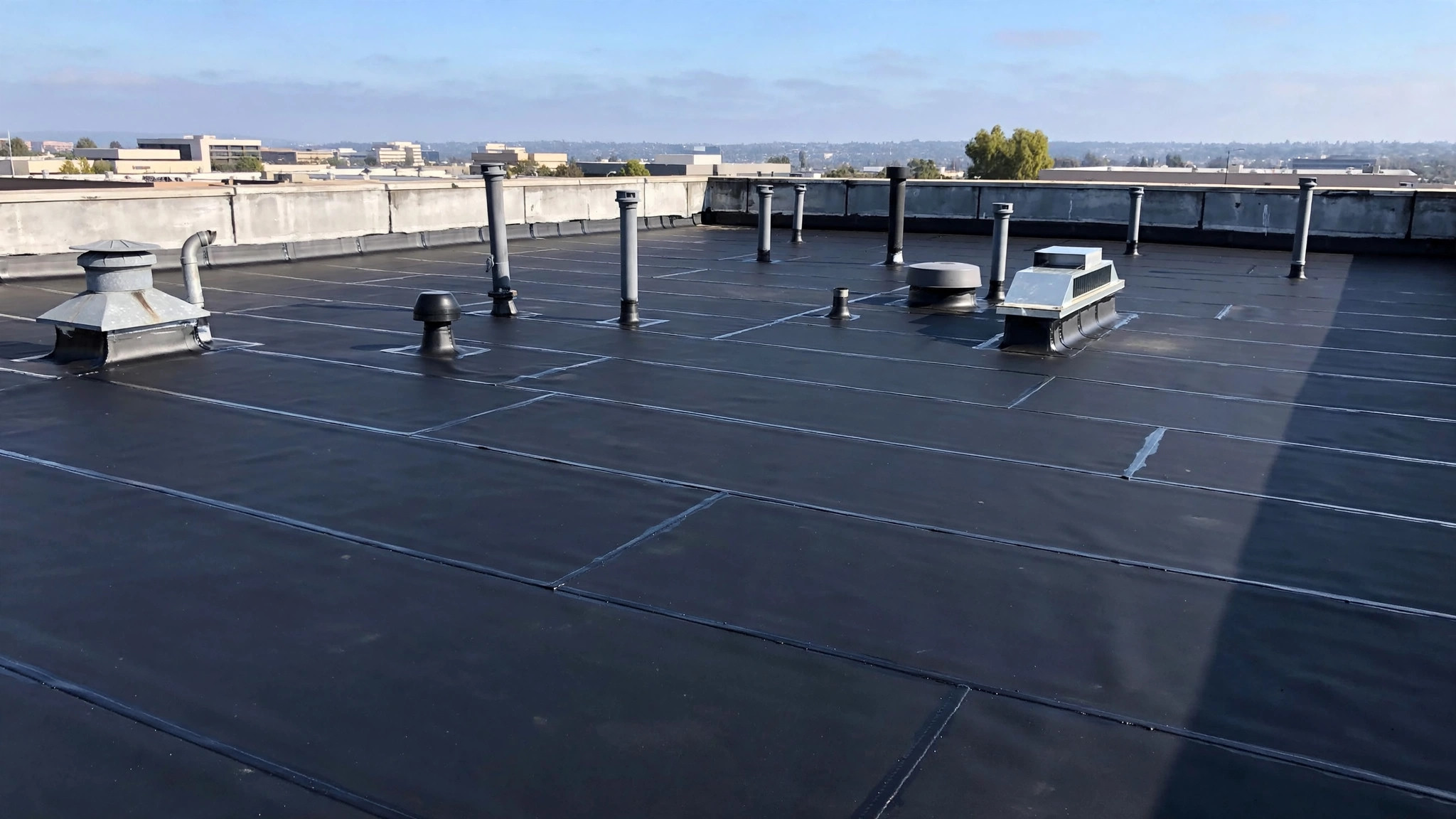
EPDM is the black rubber membrane seen on countless commercial roofs. An epdm flat roof has protected warehouses, offices, and schools for decades. It costs less than many rivals, installs fast on big roofs, and handles cold weather well.
But black rubber is not perfect. It absorbs heat. Seams glue rather than weld. This guide gives you seven facts to weigh before you choose an epdm flat roof for your building.
Fact 1: what an epdm flat roof is
EPDM stands for ethylene propylene diene monomer. It is a synthetic rubber sheet. Rolls come in widths up to fifty feet, which means fewer seams on large roofs.
The sheet is usually black. White coated versions exist for reflectivity. Thickness runs forty five, sixty, or ninety mils. Thicker sheets resist punctures better.
Seams join with tape or adhesive, not heat welding. Properly cleaned and primed seams hold well. But glued seams are the weak point to watch over time.
Fact 2: how an epdm flat roof gets installed
Three methods cover most jobs. Fully adhered systems glue the sheet to insulation or the deck. Ballasted systems lay it loose under stone. Mechanically attached systems fasten it with screws and plates at the seams.
Install is fast on open roofs. Big sheets cover ground quickly. Fewer seams mean less detail work. A skilled crew finishes large roofs in days.
Detail work still matters. Flashing at pipes, curbs, and edges needs care. Corners get preformed boots. A rushed crew leaves the details weak, and weak details leak first. Ask the foreman to walk you through the flashing plan before work starts. Good crews welcome the question.
Fact 3: epdm flat roof cost factors
EPDM usually prices lowest among common single-ply systems. These factors move the bid:
- Membrane thickness (45, 60, or 90 mil)
- Attachment method
- Insulation type and thickness
- Tear-off versus overlay
- Number of penetrations
- Deck repairs
- Warranty length
Material savings are real but modest. Labor dominates most bids. The difference between EPDM and TPO on material alone rarely decides a project. Get itemized quotes from two or three contractors. Our commercial roof repair cost per square foot guide explains pricing.
Fact 4: strengths of an epdm flat roof
Cold weather performance tops the list. EPDM stays flexible far below freezing. Northern buildings benefit most. The sheet does not crack in deep cold.
The long track record reassures. Decades of installs prove the material. Contractors know it well. Repairs are simple with peel and stick patches that any roofer can apply. You will never struggle to find someone who can service it.
Large sheets cut seams. Fewer seams mean fewer failure points. On big simple roofs, this is a real advantage. A fifty foot wide sheet can span from edge to edge with no mid-roof seams at all. UV resistance is strong too. The rubber handles sun exposure for decades.
Fact 5: weaknesses to know
Heat absorption is the main drawback. Black surfaces run hot in summer sun. In warm states, cooling bills rise compared to white membranes. On a big roof, the extra heat can be felt in the top floor. White coated EPDM helps but costs more.
Seam aging needs watching. Tape and adhesive seams can weaken over decades. Regular inspection catches opening seams early. Resealing is cheap when caught in time. Add seam checks to every spring and fall visit. A tube of the right sealant and an hour of time prevent most seam leaks.
Shrinkage occurs on some installs. The sheet can pull at edges and penetrations over time. Proper attachment and edge details prevent most of it. Ask your contractor how they detail edges. Termination bars and proper fastening patterns hold the sheet in place.
Punctures happen. Forty five mil sheets tear under sharp debris. Step up to sixty or ninety mil on roofs with service traffic. Walkway pads add more protection. The upgrade cost is small next to leak repairs.
Fact 6: maintenance for an epdm flat roof
Inspect twice a year. Walk seams and look for openings. Check flashing at every penetration. Look for shrinkage pulling at edges. Photograph anything suspicious so you can compare at the next visit.
Keep drains clear. Ponding water stresses any roof. EPDM handles standing water better than some systems, but drainage still matters. Clear debris each visit. Check that drain strainers sit properly and have not been knocked loose.
Patch damage fast. EPDM patches easily. Clean the area, apply primer, and stick the patch. Roll it firmly for full adhesion. Small punctures become cheap fixes when handled early. See our epdm roof repair guide for step details. Ignored punctures let water spread under the sheet.
Watch for ponding areas. Standing water that never drains may signal sagging insulation. Our flat roof ponding water fix guide covers solutions.
Fact 7: when an epdm flat roof is the right pick
Cold climates favor EPDM. Flexibility in freezing weather is unmatched. Northern warehouses and schools do well with it. Freeze and thaw cycles that crack stiffer materials leave EPDM unfazed.
Tight budgets favor EPDM. Lowest material cost among common membranes helps. Simple big roofs install fast, which trims labor too. On a large warehouse, the savings over premium systems add up to real money.
Long term owners like the track record. Decades of performance data beat marketing claims. If you hold buildings for the long run, proven matters. Ask for case studies of EPDM roofs past twenty years in your climate.
Hot climates may suit white membranes better. Kitchens with grease exhaust may need PVC. Match the membrane to the building, not just the price.
EPDM versus TPO: the common debate
Owners often choose between these two. Both are single-ply. Both last twenty to thirty years. The differences decide.
Seams differ most. An epdm flat roof glues its seams. TPO heat welds them. Welded seams resist water better long term. That is TPO’s edge.
Color differs next. EPDM is black and absorbs heat. TPO is white and reflects it. In warm states, TPO cuts cooling costs. In cold states, the gap shrinks.
Price favors EPDM slightly. Install speed is similar. Repairs are easy on both. Warranties run comparable lengths. Pick EPDM for cold and budget. Pick TPO for heat and reflectivity.
Checklist: hiring an EPDM contractor
- What membrane brand and thickness are quoted?
- Which attachment method is used and why?
- How are seams cleaned and primed before taping?
- How are edges detailed against shrinkage?
- Are walkway pads included to equipment?
- Does the bid cover new flashing at penetrations?
- What does the warranty cover and for how long?
- How are deck repairs priced if found?
- What is the plan for rain during install?
- Can you see past jobs of similar size?
A contractor who answers in detail earns trust. The National Roofing Contractors Association offers owner guidance at https://www.nrca.net/.
Coatings on an epdm flat roof
White coatings can add reflectivity to black EPDM. Acrylic and silicone coatings both work with proper prep. A coating also seals minor surface wear.
Coating is not a fix for failed seams or wet insulation. Survey the roof first. Coat only sound roofs. Done right, a coating adds years and cuts cooling costs. The Department of Energy explains reflective roof benefits at https://www.energy.gov/.
Frequently asked questions about an epdm flat roof
How long does an epdm flat roof last?
Twenty to thirty years with good care. Thickness, install quality, and maintenance decide the range. Ninety mil sheets on well kept roofs run longest.
Can an epdm flat roof go over my old roof?
Often yes, if the old roof is dry and code allows. A moisture survey comes first. Most codes cap total layers at two.
Is black EPDM bad in hot climates?
It runs hotter than white membranes, which raises cooling costs. White coated EPDM or a reflective coating narrows the gap. In very hot states, white TPO or PVC may pencil out better. Run the energy math for your climate before you decide.
How do I find leaks in an epdm flat roof?
Check seams and penetrations first. Most leaks start there. Infrared scans find wet insulation below. Electronic leak detection works on EPDM too.
Does an epdm flat roof need to be ballasted?
No. Ballast is one option. Fully adhered and mechanically attached systems need no stone. Ballast adds weight and hides the surface, which complicates inspections. Many owners prefer to see their membrane.
An epdm flat roof gives owners proven performance at a fair price. It shines in cold climates and on big simple roofs. Choose sixty mil or thicker from a known maker. Hire a crew with real EPDM experience. Inspect twice a year and patch damage fast. Keep seams and flashing on your regular check list. Do that, and your black rubber roof will serve for decades. Get two itemized bids this week to start.



