
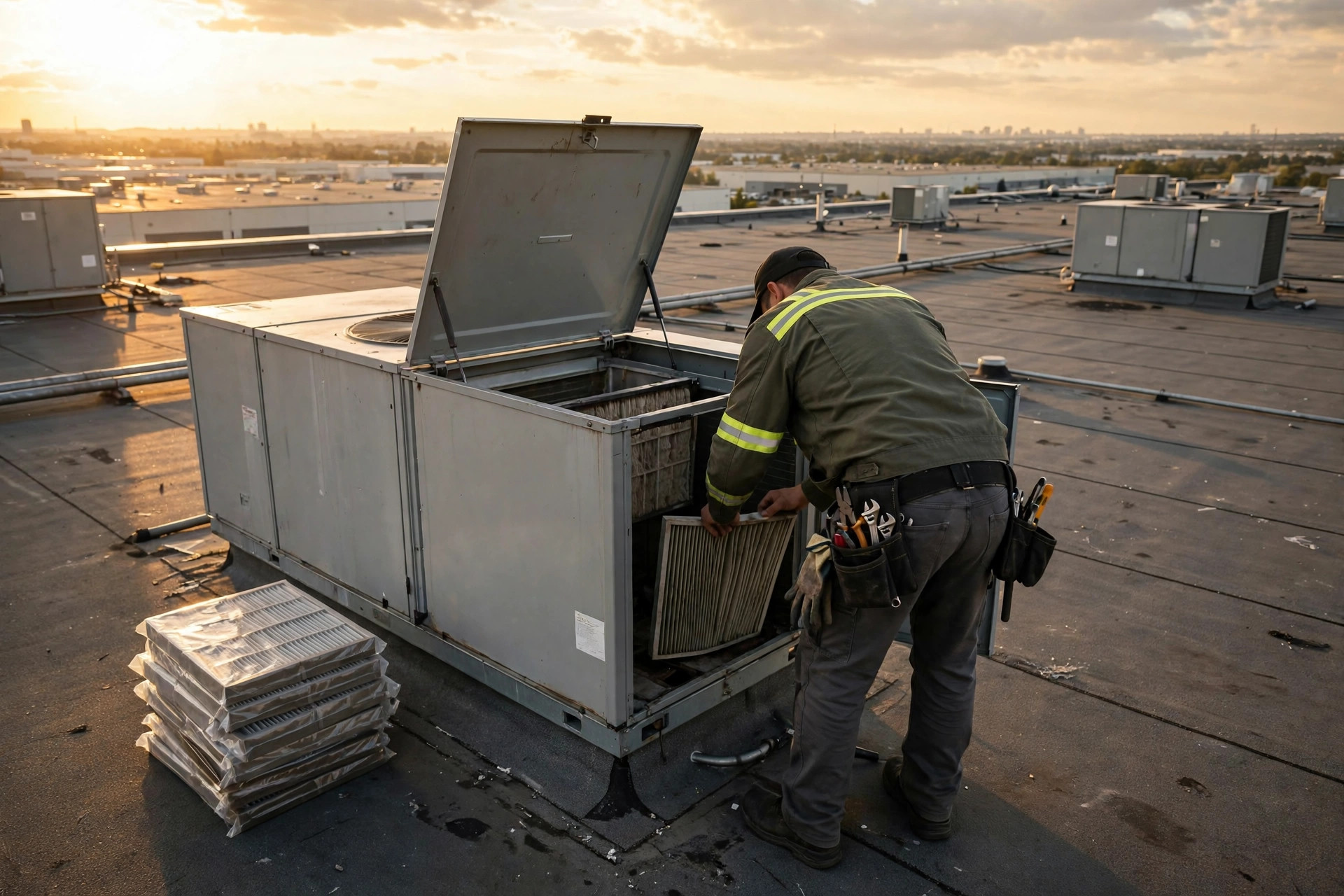
Commercial HVAC maintenance is the routine care that keeps heating, cooling, and ventilation systems in commercial buildings running at their best. It covers the scheduled inspections, cleanings, and tune-ups that prevent breakdowns, cut energy waste, and extend equipment life. For offices, stores, warehouses, schools, and restaurants, commercial hvac maintenance is one of the smartest operating expenses on the books.
Systems that get steady care simply perform better. They use less energy, break down less often, and last years longer than neglected ones. This guide lays out a 10-point checklist for commercial hvac maintenance, the right schedule, the cost factors, and answers to the questions owners ask most.
Why Commercial HVAC Maintenance Pays for Itself
The math is straightforward. Emergency repairs cost more than planned visits. Wasted energy from dirty, poorly tuned systems adds up every month. Early equipment replacement burns capital that steady care would have preserved.
The US Department of Energy notes that neglected commercial systems can waste a large share of the energy they consume. Their building resources at energy.gov show how maintenance cuts that waste. ASHRAE publishes maintenance standards for commercial HVAC at ashrae.org. Add fewer breakdowns, longer equipment life, and protected manufacturer warranties, and commercial hvac maintenance returns its cost many times over.
The 10-Point Commercial HVAC Maintenance Checklist
Use this checklist as the standard for every professional visit. A thorough commercial hvac maintenance program covers all ten points.
1. Filters changed or cleaned
Clogged filters choke airflow and strain the whole system. Check monthly, replace on schedule. Dusty buildings and high-traffic spaces need more frequent changes.
2. Coils cleaned
Dirty condenser and evaporator coils cut capacity and raise energy use. Cleaning restores performance. This is often the highest-value task of the visit.
3. Refrigerant checked
Low charge means poor cooling and compressor risk. The tech checks pressures, hunts leaks, and repairs them before recharging. Refrigerant work needs EPA-certified techs.
4. Electrical connections tightened and tested
Loose terminals cause voltage problems and burn out parts. The tech tightens connections, inspects contactors, and measures voltage and amperage against the nameplate.
5. Belts, bearings, and motors inspected
Worn belts slip and snap. Dry bearings seize. The tech checks tension, lubricates where needed, and replaces worn parts before they fail.
6. Condensate drains cleared
Clogged drains flood ceilings and equipment. The tech flushes lines, cleans pans, and tests float switches. Small task, big protection.
7. Thermostats and controls calibrated
Drifting sensors and wrong schedules waste energy for months. The tech verifies setpoints, checks accuracy, and confirms the system follows the real occupancy schedule.
8. Ductwork inspected for leaks
Leaky ducts dump conditioned air into empty spaces. The tech checks accessible joints and flags major leaks for sealing. Tight ducts mean better comfort and lower bills.
9. Rooftop units and housings checked
Weather beats up outdoor equipment. The tech inspects panels, gaskets, curbs, and mounting, clears debris, and confirms seals keep rain out.
10. Safety controls tested
High-limit switches, safety interlocks, and economizers must work when needed. The tech tests each one. Failed safety devices are both dangerous and wasteful.
A visit that covers all ten is real commercial hvac maintenance. Ask the provider for their checklist and compare. For a related detailed model, see commercial HVAC maintenance checklist.
Scheduling Commercial HVAC Maintenance
Most commercial systems need professional commercial hvac maintenance at least twice a year: a cooling visit in spring and a heating visit in fall. Heavy-use buildings like restaurants and hospitals, plus harsh environments, do better with quarterly visits.
Between visits, building staff handle monthly filter checks, keep outdoor units clear, and report odd noises or smells. Write the schedule into the building calendar with named responsibilities. Missed seasons are when expensive failures happen. For help choosing a firm, see commercial HVAC service.
Commercial HVAC Maintenance Cost Factors
Use this checklist to understand pricing for commercial hvac maintenance.
- Number and size of units. More units and larger tonnage raise the annual cost.
- Visit frequency. Quarterly plans cost more per year than twice-yearly ones.
- System complexity. Automation, chillers, and boilers need more skilled labor.
- Environment. Dusty or corrosive settings need more frequent care.
- Equipment age. Older systems take longer to service.
- Filter grade. High-efficiency filters cost more per change.
- Contract versus per-visit. Annual agreements usually cost less per visit and add priority service.
Getting the Most from Your Commercial HVAC Maintenance Plan
A plan works best when it is measured and managed. Keep a log for each unit: visit dates, tasks done, parts replaced, and key readings. Add monthly energy use from the bills. Review the log with the provider yearly to spot trends and plan replacements.
Hold the provider to the checklist. After each visit, the written report should show what was done against the ten points. If tasks are skipped repeatedly, raise it or change firms. Commercial hvac maintenance is only as good as its execution.
Also keep staff engaged. Train them on filter checks and symptom reporting. A team that notices a strange noise early saves the building from the breakdown that follows. The plan belongs to the whole building, not just the contractor.
Common Problems Found During Commercial HVAC Maintenance
Technicians see the same issues again and again during commercial hvac maintenance visits. Knowing them helps owners understand what each visit prevents.
Dirty filters and coils. The most common find. They cut airflow and efficiency, and they are cheap to fix on the spot.
Low refrigerant. Small leaks grow over time. Early repair saves the compressor, the most expensive part to replace.
Worn belts and capacitors. Caught early, these are low-cost parts. Ignored, they take down motors and fans at the worst times.
Clogged drains. A flushed drain line costs little. A flooded ceiling costs a lot. Drain clearing belongs in every visit.
Stuck economizers. Many economizers sit broken for years, wasting free cooling. Testing during commercial hvac maintenance finds them fast.
Control drift. Sensors and schedules drift out of tune. Recalibration during visits restores the efficiency the building paid for.
Each of these is a small fix during a planned visit and a big bill as an emergency. The checklist exists to catch them all.
Choosing a Commercial HVAC Maintenance Provider
The provider matters as much as the plan. Look for commercial experience with your equipment type, proper licensing and insurance, and technicians with real certifications. Ask for the written checklist they follow and a sample service report.
Check references from similar buildings. Ask about response times, billing clarity, and whether the techs explain their findings. Get the agreement in writing with the visit schedule, the included tasks, the price, and the response promises.
Compare two or three qualified firms before signing. The cheapest bid with a thin checklist is no bargain. Choose the provider whose plan is most thorough and whose communication is clearest. For broader hiring guidance, see commercial HVAC services.
Commercial HVAC Maintenance FAQs
How often should commercial HVAC maintenance be done?
At minimum twice a year, before the cooling and heating seasons. High-use or harsh-environment buildings benefit from quarterly visits. Monthly filter checks by staff fill the gaps between professional visits.
What does a maintenance visit include?
The ten checklist points: filters, coils, refrigerant, electrical, belts and motors, drains, controls, ductwork, housings, and safety testing. The visit should end with a written report of findings and recommendations.
How much does commercial HVAC maintenance cost?
Annual agreements range from a few hundred to a few thousand dollars per unit per year, depending on size, count, and frequency. Compare per-visit cost and included tasks rather than the headline number.
Can staff handle some maintenance tasks?
Yes for filters, visual checks, and keeping units clear. Refrigerant, electrical, gas, and rooftop work belong to licensed technicians. A mix of both controls cost without taking risks.
Does maintenance really extend equipment life?
Yes. Clean, well-tuned systems suffer less wear and avoid the failures that kill equipment early. A maintained unit often serves several years longer than a neglected one, which delays major capital spending.
Next Steps for Building Owners
Commercial hvac maintenance is protection for the equipment, the budget, and the people inside. Put the 10-point checklist into a written agreement with a qualified provider, schedule the visits, and keep the logs. Review results yearly and adjust as equipment ages. Steady care keeps the systems strong, the bills down, and the breakdowns rare. Start by listing every unit in the building with its age, type, and service history. Then get written proposals from two or three qualified providers and compare their checklists against the ten points in this guide.
Sign with the firm that offers the most thorough plan at a fair price, not just the lowest number. Put the schedule on the building calendar, assign the staff tasks, and keep the logs from day one. Review the results with the provider each year and refine the plan as equipment ages and needs change.



